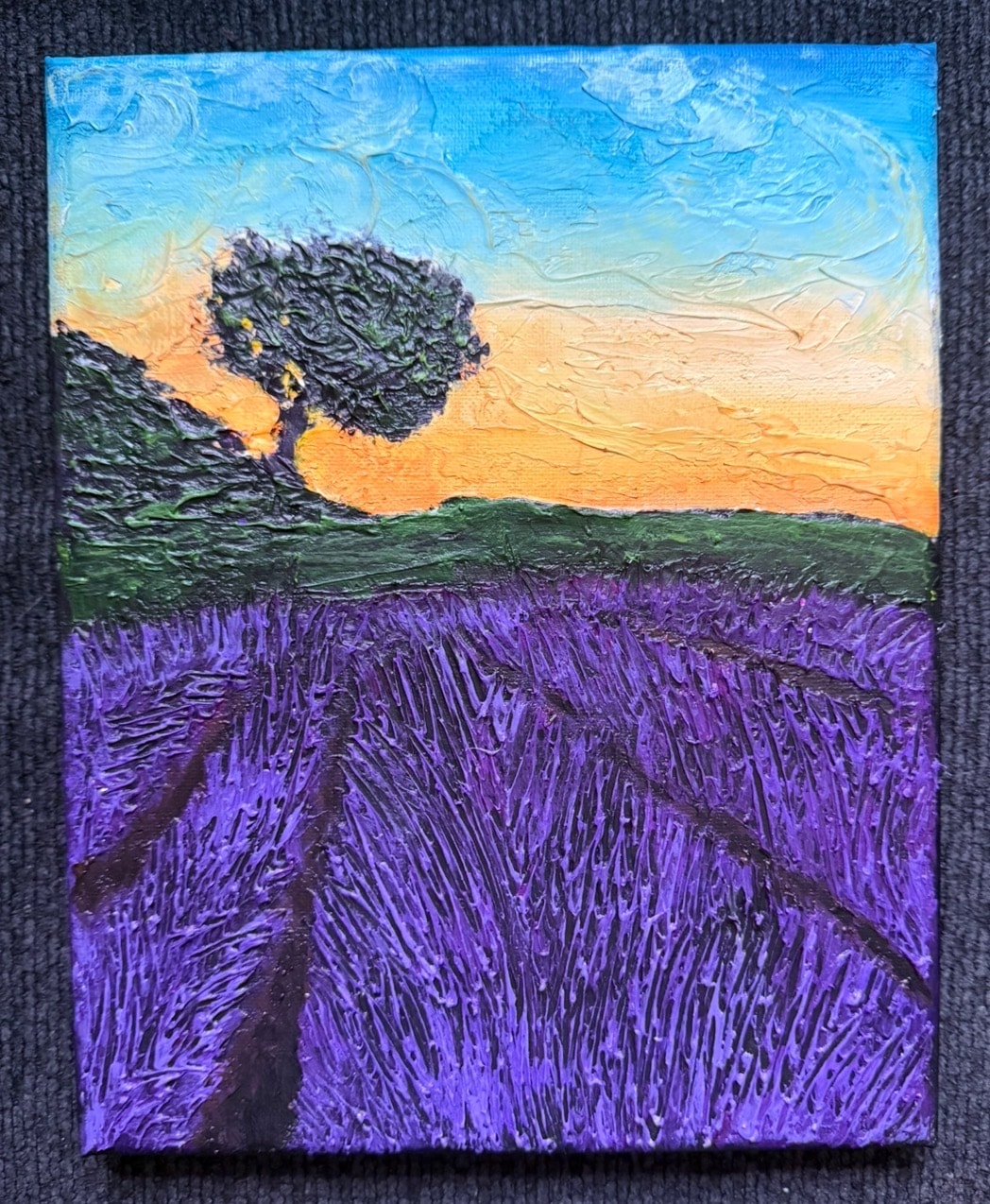
How to Evaluate a Texture Artist's Portfolio Before You Buy
Not every textured painting is worth collecting. Here's a buyer's guide to evaluating a texture artist's portfolio — the 6 things to look for before you spend money, and how Jay the Painter's work holds up against every standard.
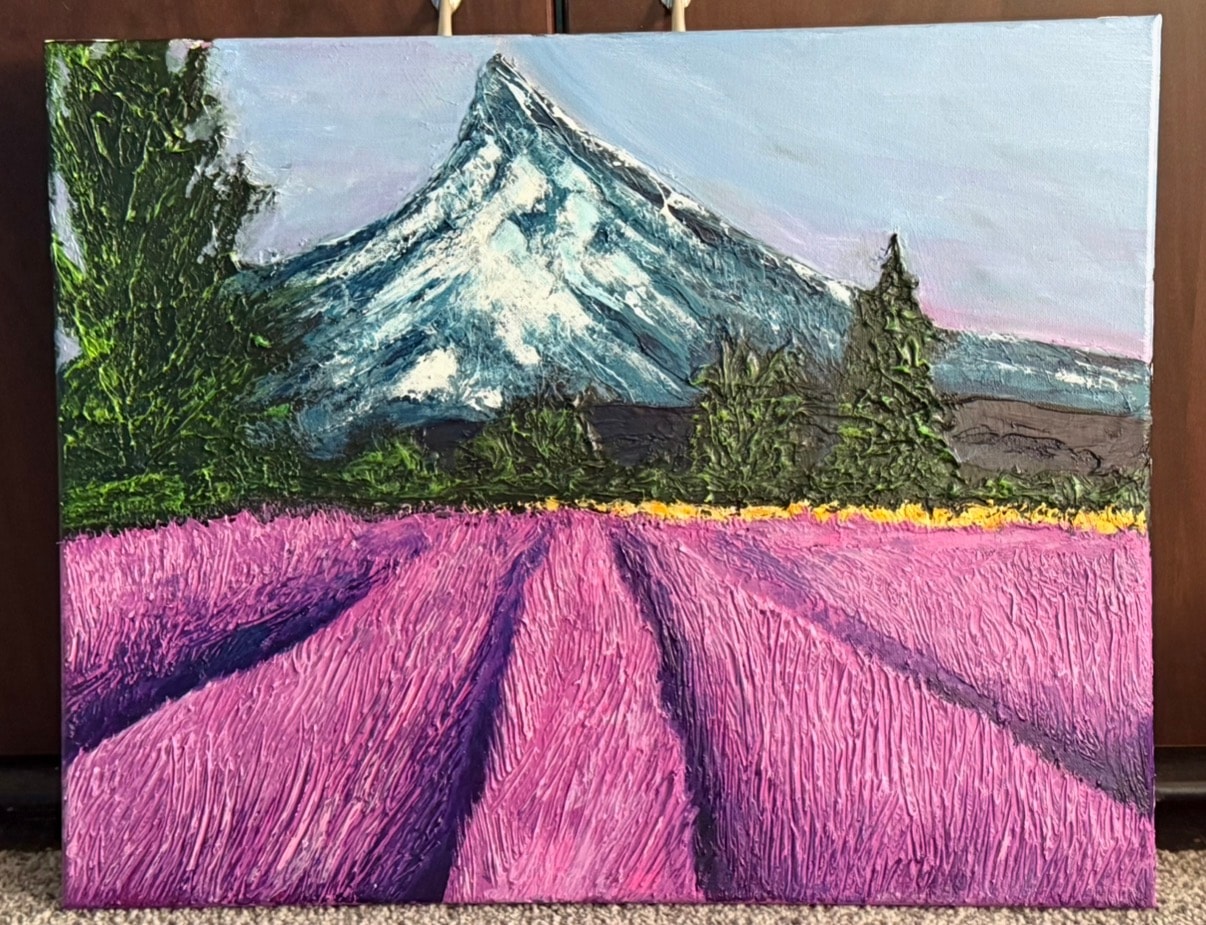
How to Evaluate a Texture Artist's Portfolio Before You Buy
The textured painting market has exploded in recent years. Search "texture art" on any online marketplace and you'll find thousands of results — everything from genuine dimensional originals to flat paintings with a thin layer of modeling paste applied as an afterthought.
Not all of it is worth collecting. Some of it won't last. Some of it looks better in photographs than in person. Some of it is technically competent but artistically thin.
Here's a practical buyer's guide to evaluating a texture artist's portfolio before you spend money — the 6 things that separate work worth collecting from work that isn't.
1. Look for Texture That Reads from a Distance
The first test of a serious texture artist's portfolio is simple: can you see the texture from across the room?
Genuine dimensional texture — the kind built with caulk, thick modeling paste, or heavy impasto — creates a surface that reads as three-dimensional even in a small photograph. The shadows cast by the raised surfaces are visible. The depth is apparent.
Shallow texture — a thin layer of paste or lightly thickened paint — only shows up under close inspection or in macro photography. It looks impressive in a close-up shot but disappears when the painting is hung on a wall.
What to look for in a portfolio: Photos taken from a normal viewing distance that still show clear texture. If every photo in the portfolio is a close-up macro shot, ask yourself why. A serious texture artist is proud of how their work reads at every distance.
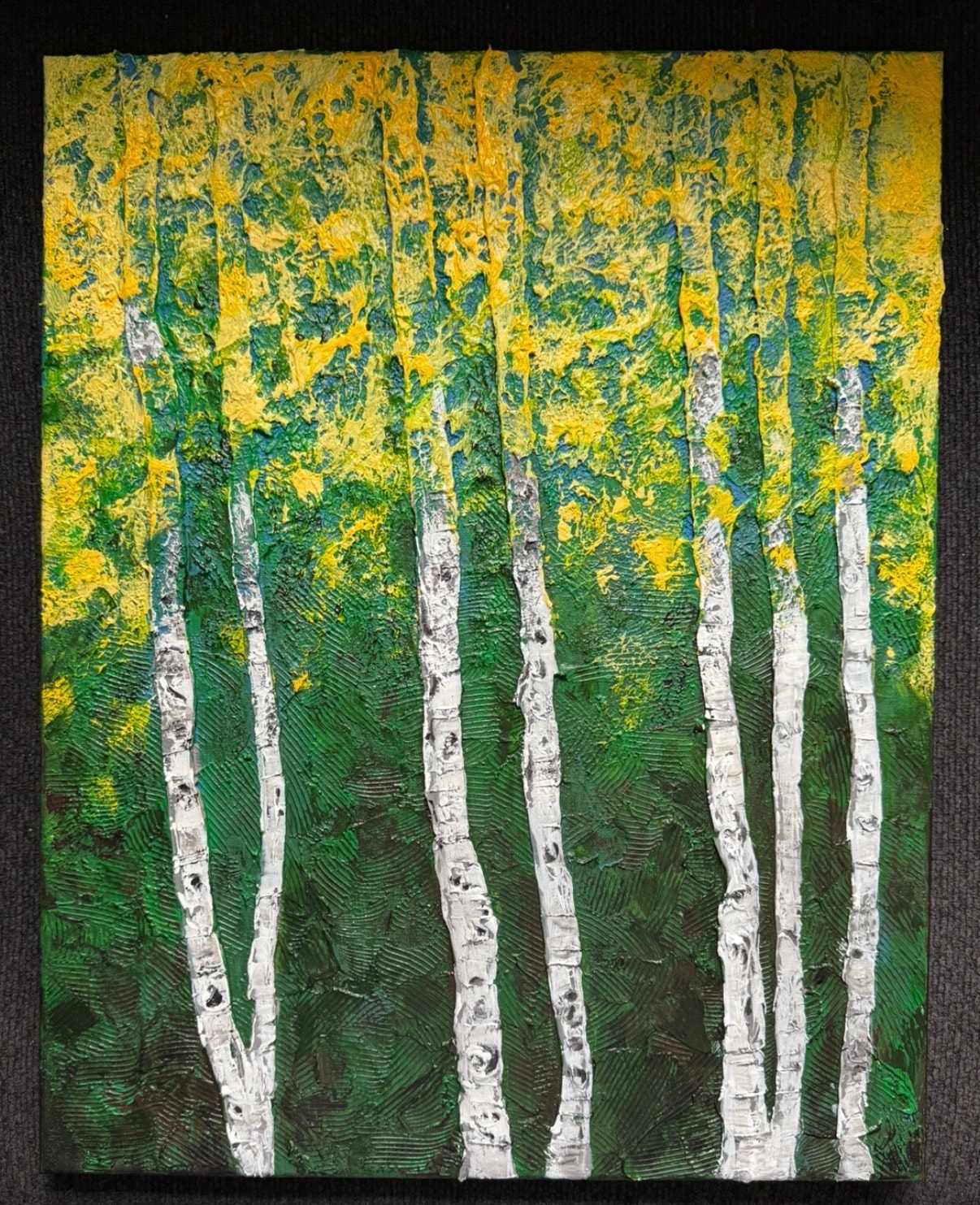
The caulk texture in Birch Forest in Autumn reads clearly at any distance — the bark ridges and foliage depth are visible from across the room.
2. Look for Texture That Follows the Subject
Random surface texture is easy. Structural texture — texture that follows the anatomy of the subject — is the mark of a serious texture artist.
In a floral painting, the petal ridges should follow the natural direction of petal growth. The veins should be physical ridges, not painted lines. The center of the flower should have a different texture than the petals.
In a landscape, the bark should have a different texture than the foliage. The ground should have a different texture than the sky. The texture should be specific to each element of the composition, not applied uniformly across the surface.
In an abstract, the texture should create forms that have visual logic — ridges that build toward a focal point, valleys that create depth, peaks that catch light in a way that reinforces the composition.
What to look for in a portfolio: Texture that varies across the painting and relates to the subject. If the texture looks the same everywhere — the same ridge pattern across the entire surface — it's probably applied with a roller or stamp rather than sculpted by hand.
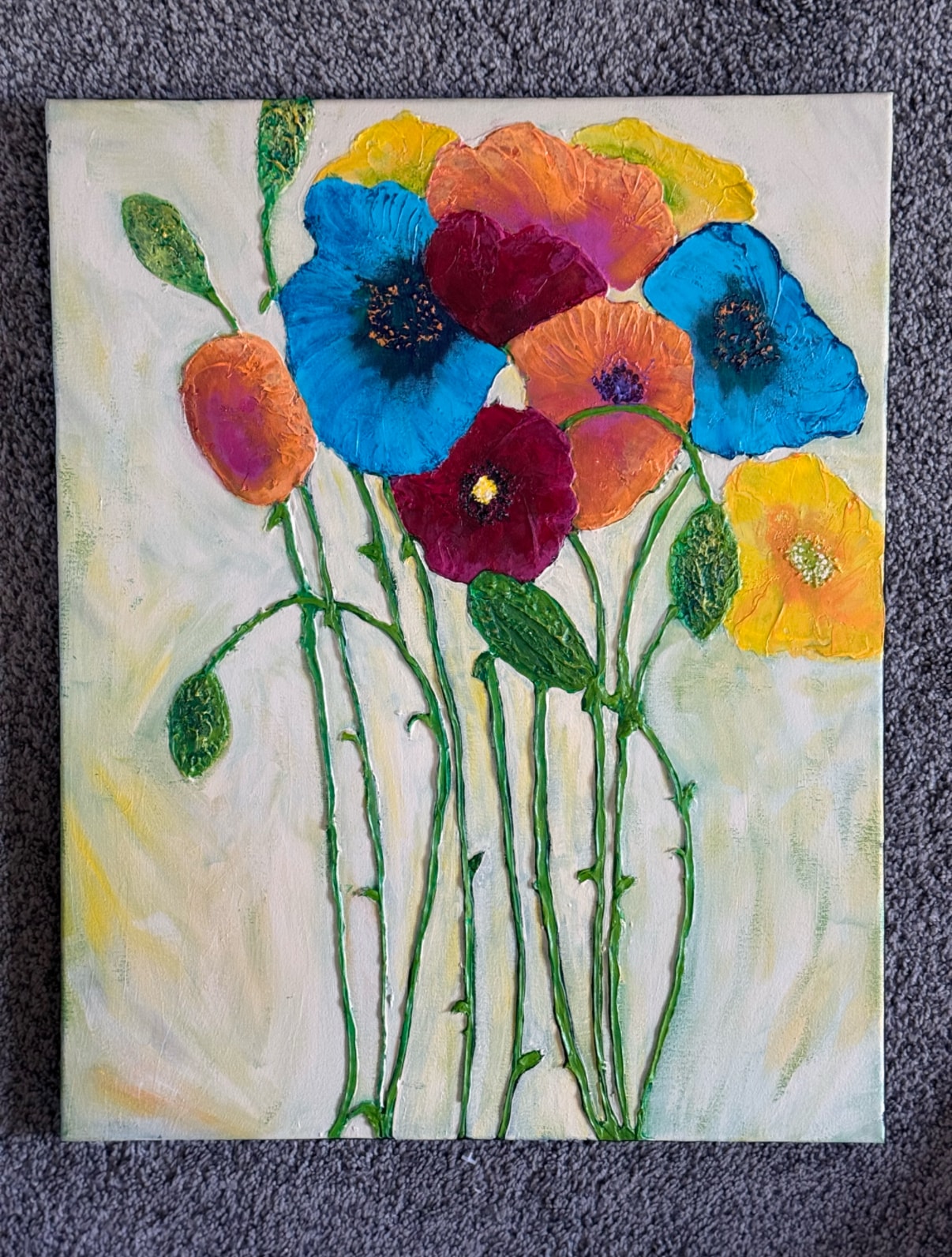
In Poppies, the caulk texture follows the natural curve and overlap of each petal. The texture is specific to the subject, not generic surface treatment.
3. Ask About the Medium and Its Durability
The texture medium determines how long the painting will last. This is one of the most important questions a buyer can ask — and one that many buyers never think to raise.
Thick acrylic paint (impasto): The most common texture medium. Creates beautiful surfaces but has durability limitations. Thick acrylic can crack over time, especially on flexible canvas, as the paint shrinks during curing and the canvas moves with temperature and humidity changes.
Modeling paste or gel medium: More stable than thick paint, but still subject to cracking in very thick applications. Better than impasto for durability, but not as stable as flexible materials.
Flexible acrylic caulk: The most durable option. Designed to flex and move without cracking — that's its purpose as a construction material. On canvas, it moves with the canvas rather than fighting it. A properly built caulk texture painting will not crack or deteriorate for decades.
Mixed media (sand, fabric, paper): Varies widely. Some mixed media surfaces are extremely stable; others can delaminate or deteriorate over time. Ask specifically about the materials used and how they're bonded to the canvas.
What to ask: "What do you use to build the texture, and how long will it last?" A serious texture artist should be able to answer this question clearly and confidently.
4. Look for Process Documentation
A texture artist who documents their process is a texture artist who is confident in their technique. Process photos — showing the texture stage before painting begins — are the clearest possible evidence that the work is genuine.
Anyone can apply a thin layer of texture paste to a finished painting and call it texture art. Very few artists build a complete three-dimensional sculpture on canvas before painting begins. Process documentation shows which category an artist falls into.
What to look for: Before-and-after photos showing the texture stage. Video of the technique. Written explanation of the process that goes beyond "I use thick paint." The more specific and detailed the documentation, the more confident you can be in the technique.
Jay the Painter has process documentation for several paintings:
- Rooster: white caulk sculpture to finished painting →
- Butterfly: white caulk sculpture to finished painting →
- Blue Forest Path: three stages →
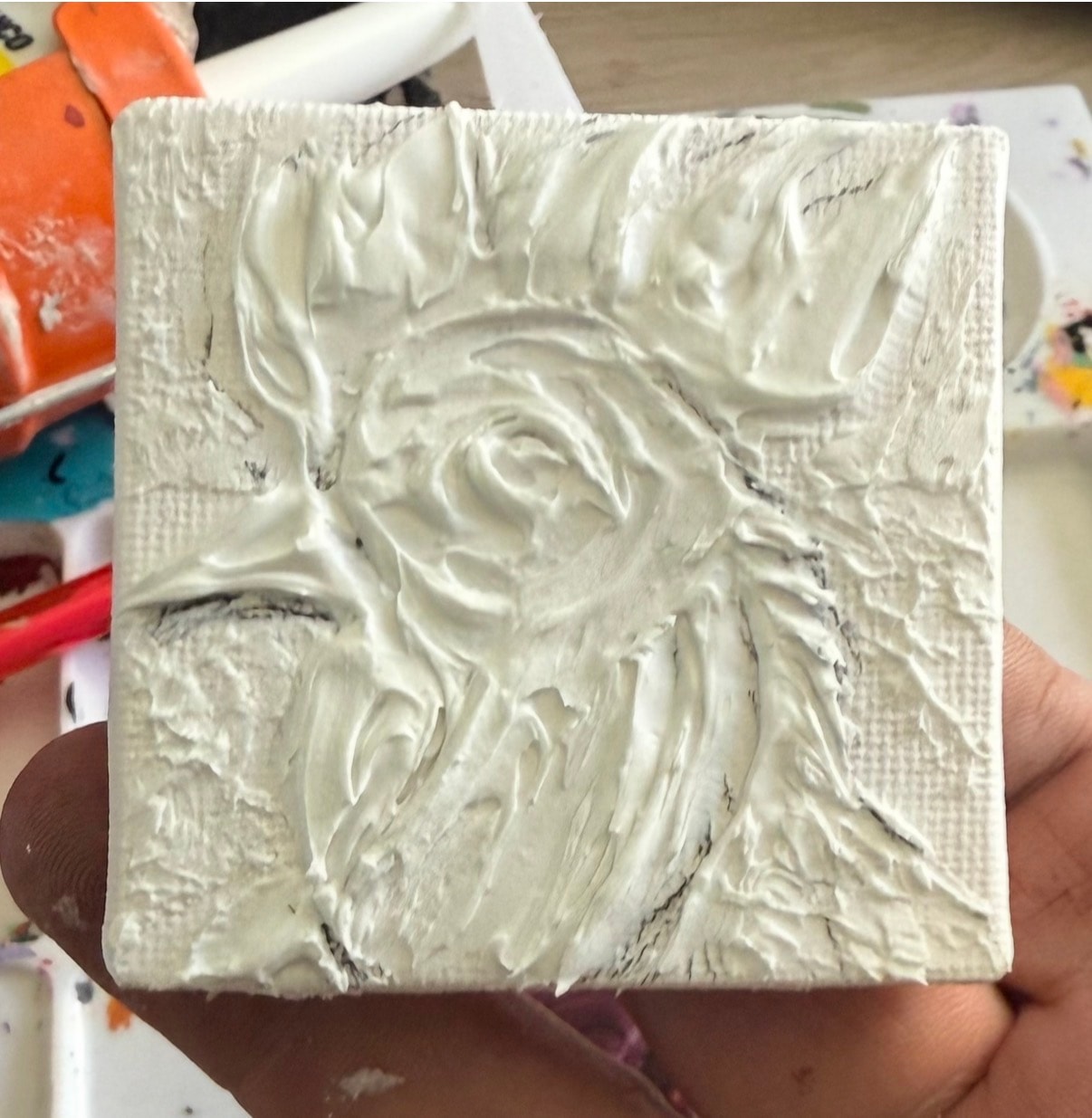
This is what a Jay the Painter original looks like before any paint is applied. The technique is documented and verifiable.
5. Evaluate the Range of the Portfolio
A strong texture artist's portfolio shows range — different subjects, different scales, different levels of texture complexity. This demonstrates that the technique is genuinely mastered, not just applied to one type of subject where it happens to work.
Red flags in a portfolio:
- Only one subject type (all florals, all abstracts, all landscapes)
- Only one scale (all small, all large)
- Texture that looks identical across every painting
- No evidence of development or evolution in the work
Green flags:
- Multiple subject types handled with equal confidence
- Texture that adapts to each subject's specific needs
- Work at multiple scales, all with consistent quality
- Evidence that the artist has been developing the technique over time
Jay the Painter's gallery includes forests, florals, landscapes, abstracts, animal portraits, and mini paintings — all built on the same caulk texture foundation, all with texture that's specific to each subject.
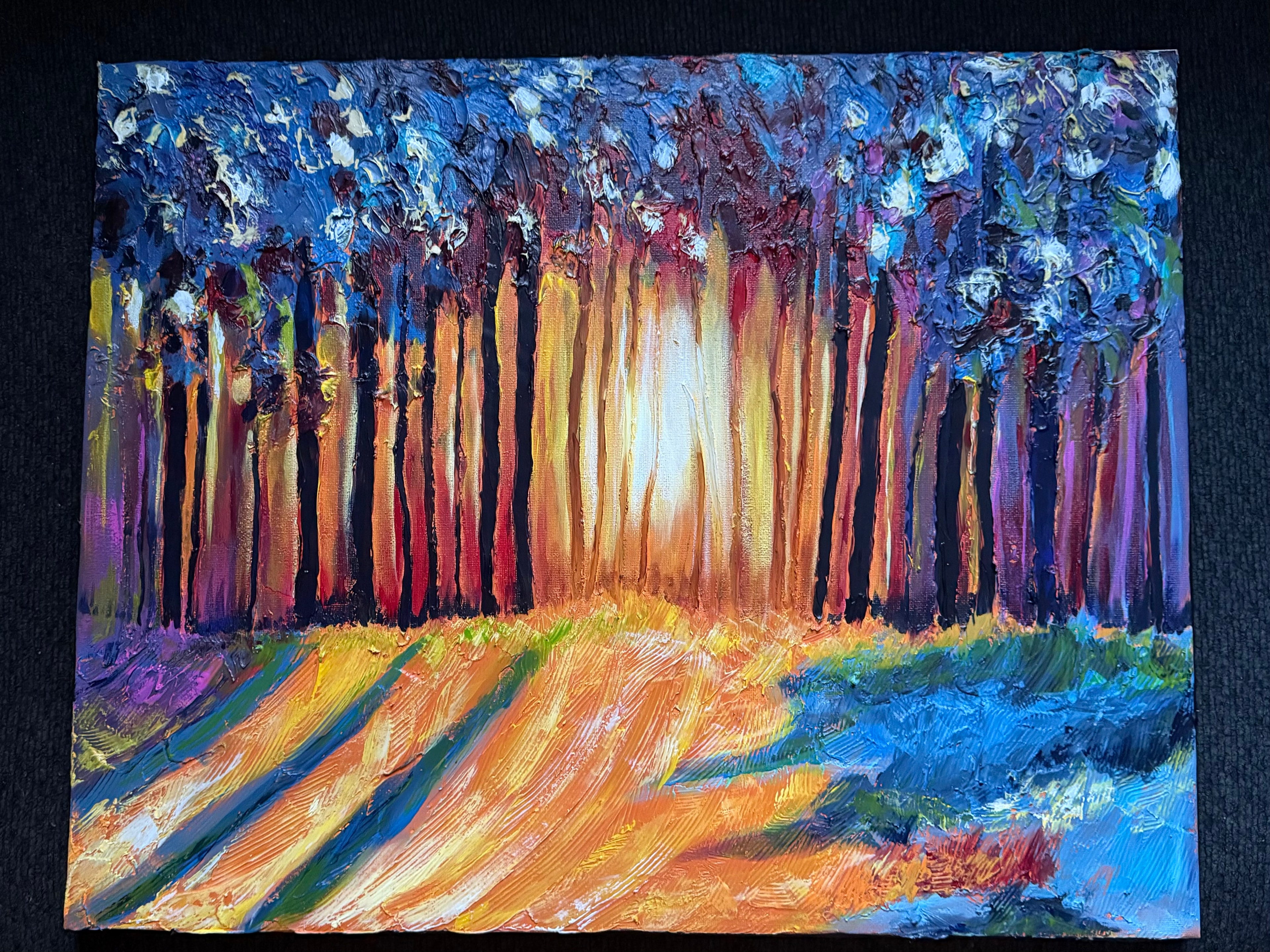
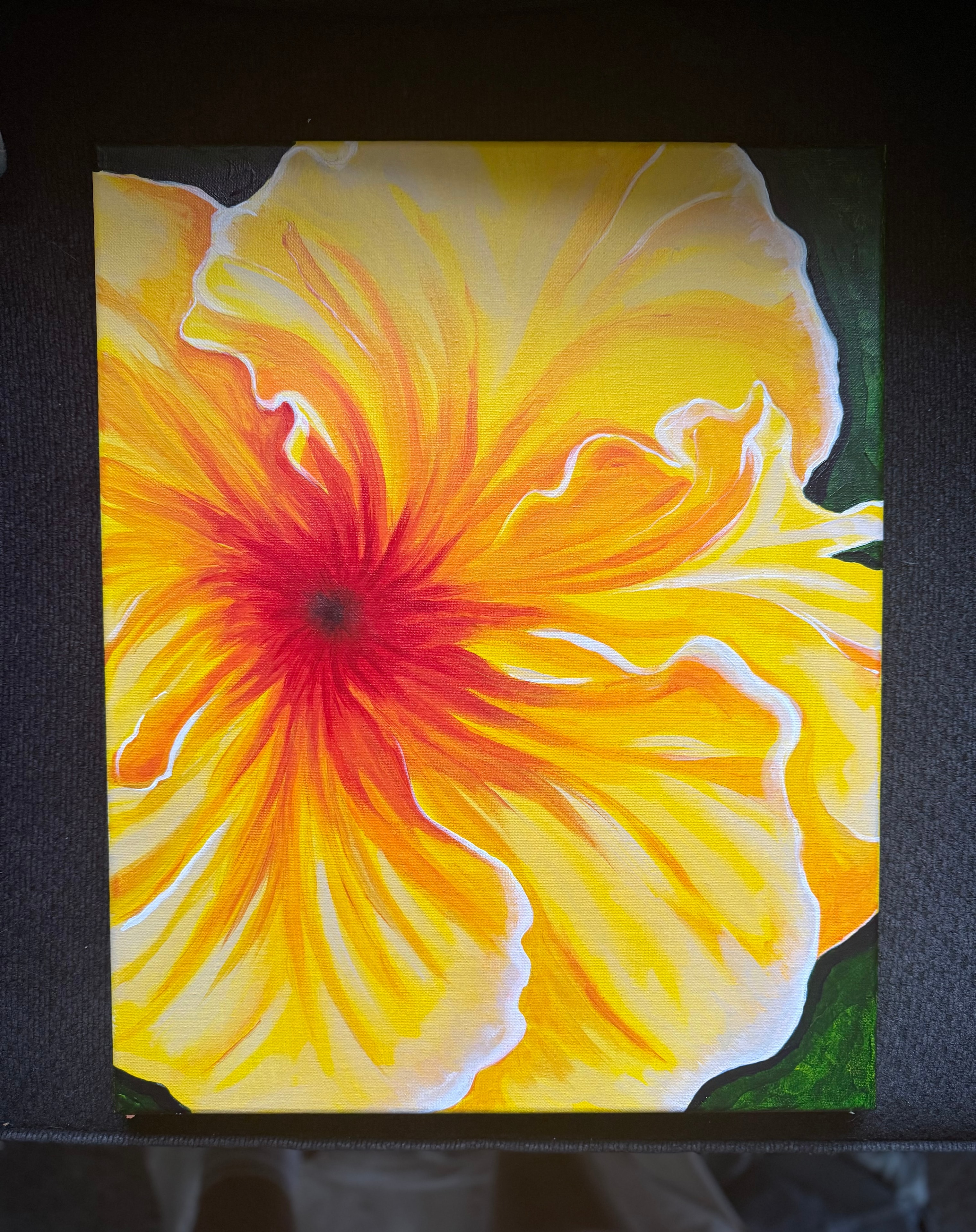
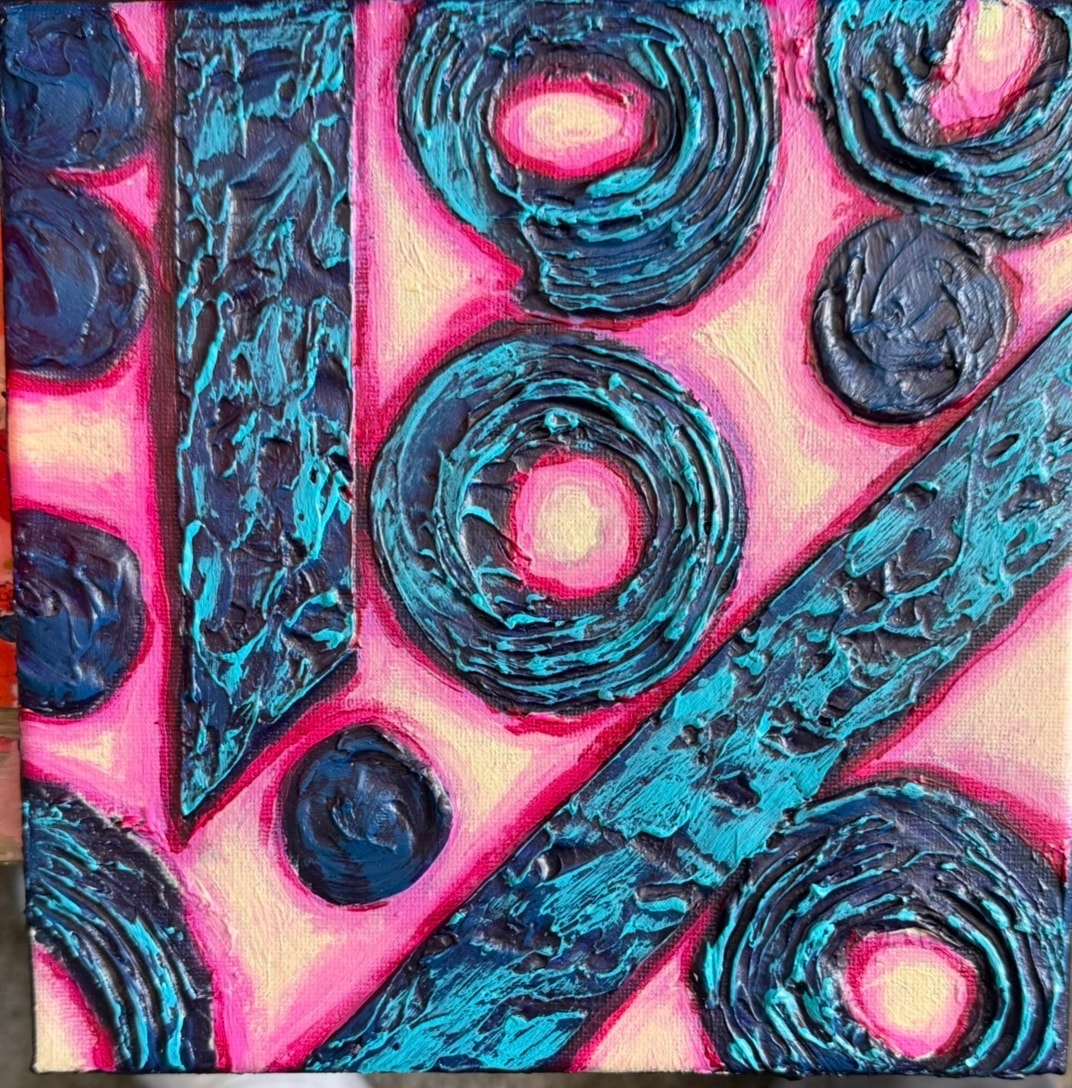
Three different subjects, three different texture approaches — all from the same artist, all built on the same caulk technique.
6. Confirm: Originals Only, No Prints
This is the final and non-negotiable standard for serious texture art collecting.
A print of a texture painting is a flat photograph of a three-dimensional object. It captures one image in one light. The original painting changes every time the light changes — the shadows shift, the highlights move, the depth reads differently from every angle. None of that is in a print.
If an artist sells prints of their textured work, the originals are less unique. The image exists in multiple forms. The physical object you're buying is one of many representations of the same image.
If an artist sells originals only — no prints, no reproductions — you own something that genuinely cannot be replicated. The painting on your wall is the only one that will ever exist.
Jay the Painter makes no prints. Every painting in his gallery is a one-of-a-kind original. When a painting sells, it's gone.
Apply These Standards to Jay the Painter's Portfolio
Jay's gallery holds up against every standard in this guide:
✅ Texture reads clearly at distance — visible in every gallery photo
✅ Texture follows the subject — petal ridges in florals, bark in trees, feathers in birds
✅ Medium is flexible caulk — the most durable texture medium available
✅ Process is fully documented — before-and-after photos for multiple paintings
✅ Portfolio shows range — florals, landscapes, abstracts, animals, minis
✅ Originals only — no prints, no reproductions, ever
Browse the full gallery → | Browse mini paintings from $40 →
Questions about a specific painting? Text Jay at 330-285-3136.
What is caulk art? → | What makes a caulk art painting worth collecting? → | Famous texture artists →
Jay the Painter — original caulk art and caulk texture paintings from Akron, Ohio. Dimensional texture. One of a kind. Free shipping. Text 330-285-3136.