Textured Art: What to Look For When You Are Ready to Buy
Ready to buy textured art but not sure what separates great from mediocre? This collector's guide covers the 7 things that distinguish exceptional textured paintings — and how to find them.
Textured Art: What to Look For When You Are Ready to Buy
The market for textured art has never been larger. More collectors are seeking out dimensional, handmade paintings — work that has physical presence, that responds to light, that feels genuinely different from the flat prints and mass-produced canvases that fill most homes.
But with more demand comes more supply, and not all textured art is created equal. There is a significant difference between textured paintings that are genuinely exceptional — where the dimensional surface serves the composition, where the technique is mastered, where the work will last for decades — and textured art that uses texture as a gimmick, applied randomly or uniformly without real skill or intention.
This guide is for collectors who are ready to buy textured art and want to know what separates the great from the mediocre. We will cover seven specific qualities to look for, explain why each one matters, and show you how to evaluate them even when you are buying online.
1. Intentional Texture: Does the Surface Serve the Subject?
The first and most important quality to look for in textured art is intentionality. The dimensional surface of a great textured painting is not applied randomly or uniformly — it responds to the subject, following the natural forms and directions of what is being depicted.
In a great textured floral painting, the ridges follow the natural direction of the petals — radiating outward from the center, curling at the edges, building up in the areas where petals overlap. The texture tells you something about the flower that the color alone cannot.
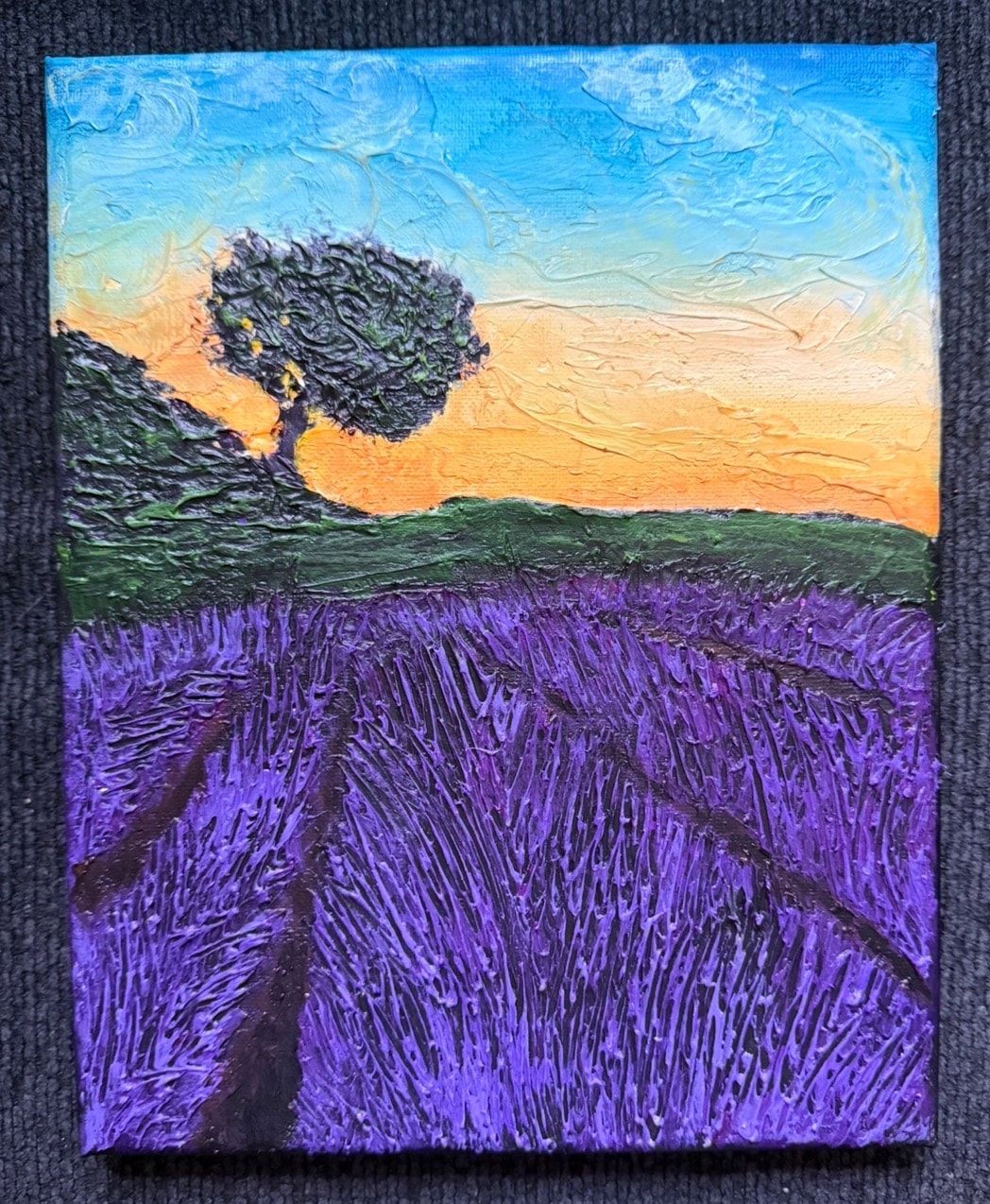
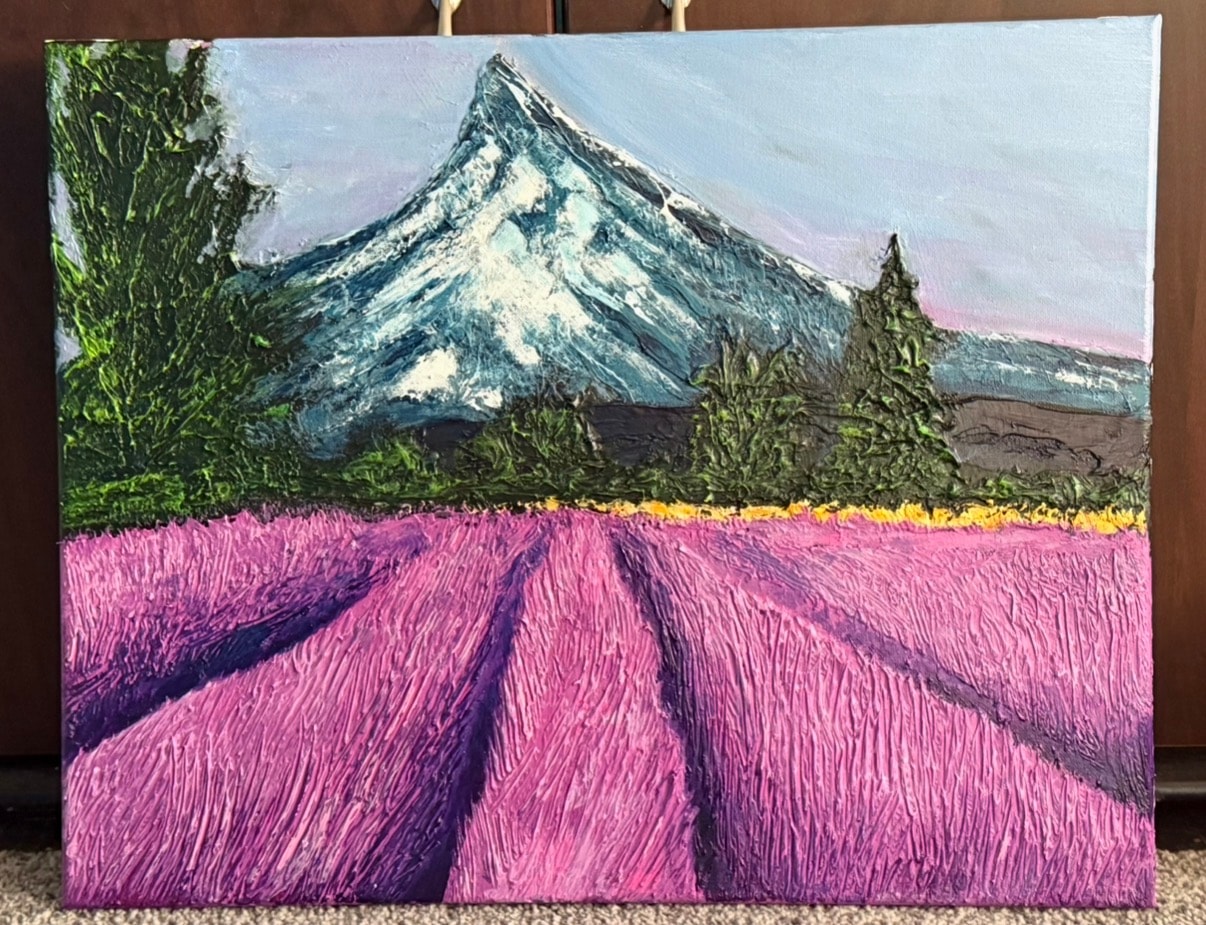
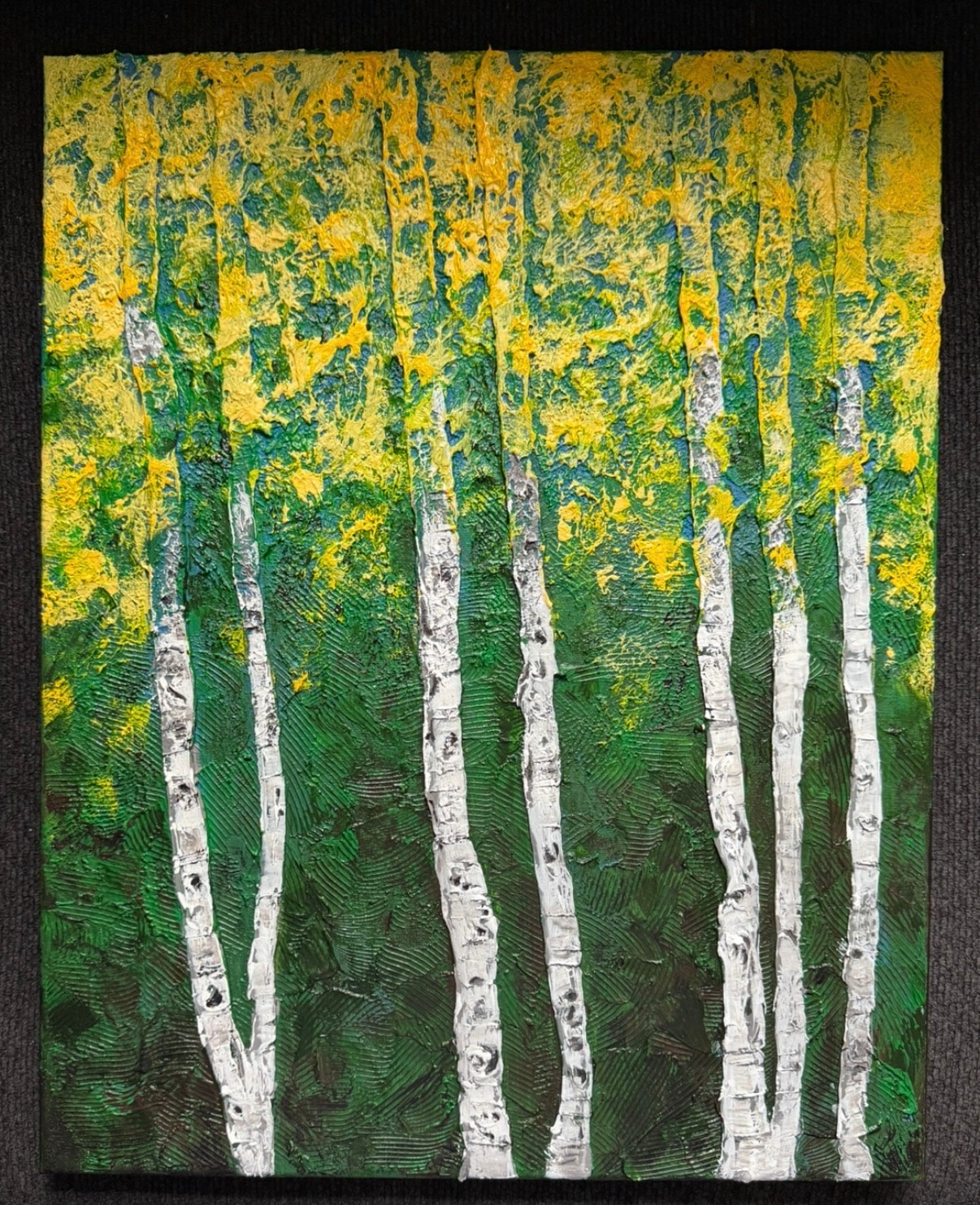
In a great textured landscape, the texture differentiates the elements of the scene. The bark of a tree has a different texture than the leaves. The water has a different surface quality than the sky. The path has a different texture than the grass beside it. Each element of the scene is built up in a way that is specific to that element.
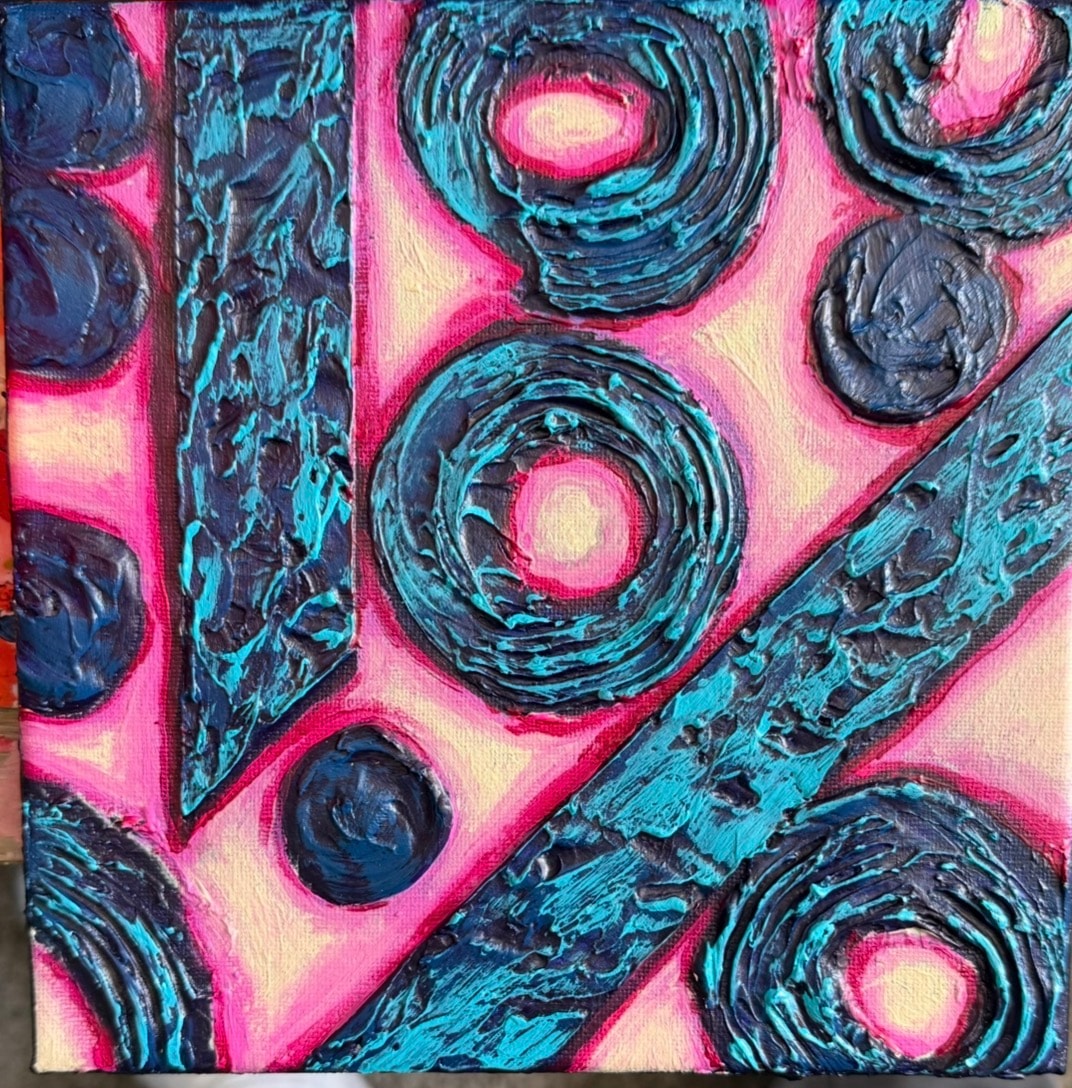
In a great textured abstract, the texture creates movement, rhythm, and depth. The dimensional surface is part of the visual language of the piece — not decoration applied on top of it.
How to evaluate this when buying online: Look at the detail photographs of the painting, not just the overall shot. Do the ridges and valleys seem to follow the forms of the subject? Does the texture seem to be responding to something specific, or does it look like the same pattern applied everywhere? A great textured painting will show clear intentionality in the detail shots.
2. Color Depth: Is the Color Layered Into the Texture?
In mediocre textured art, the color is painted on top of the texture — a flat coat of paint applied over a dimensional surface. The result looks like a textured surface with color on it, rather than a painting where color and texture are integrated.
In exceptional textured art, the color is layered into the texture. The valleys of the surface hold deeper, richer color. The peaks catch lighter, more highlighted color. The color transitions from shadow to highlight follow the three-dimensional form of the surface. The result is a painting where color and texture are inseparable — where the dimensional surface is part of how the color works.
This quality — color depth — is what gives great textured paintings their luminosity and richness. When you look at a painting where the color is layered into the texture, the surface seems to glow from within. The shadows have depth. The highlights have brilliance. The whole painting has a quality of light that flat-colored textured surfaces cannot achieve.
How to evaluate this when buying online: Look for photographs taken in raking light — light coming from the side that creates strong shadows in the texture. In these photographs, you should be able to see color variation between the peaks and valleys of the texture. If the color looks uniform regardless of the texture, the color is probably painted on top rather than layered in.
3. Technique Mastery: Is the Texture Controlled or Chaotic?
There is a difference between textured art that is expressive and textured art that is simply messy. Great textured paintings show evidence of a mastered technique — the artist knows exactly what they are doing with the texture medium, and the result is controlled, intentional, and consistent.
This does not mean that great textured art is rigid or mechanical. Expressive, gestural textured paintings can be extraordinary. But even in the most expressive textured art, there is a quality of control — the artist is making choices, not just applying material randomly.
Signs of mastered technique in textured art:
- Consistent surface quality — the texture has a consistent character throughout the painting, even if it varies in direction and density
- Clean edges — the edges of the canvas are clean and finished, not ragged or unintentional
- Controlled transitions — where the texture transitions from one area to another, the transition is deliberate, not accidental
- Appropriate density — the texture is dense enough to create the desired effect without being so thick that it becomes unstable or prone to cracking
Jay the Painter's caulk texture technique is a good example of mastered technique. The caulk is applied in thick, directional ridges that follow the natural forms of the subject — but the application is controlled and intentional. The ridges are consistent in character, the edges are clean, and the transitions between areas of different texture are deliberate.
How to evaluate this when buying online: Look at the edges of the canvas and the transitions between different areas of the painting. Do the edges look clean and finished? Do the transitions between areas look deliberate? Does the texture have a consistent character throughout, or does it look random and uncontrolled?
4. Durability: Will the Textured Art Last?
Textured art presents specific durability challenges that flat paintings do not. Thick texture can crack if the underlying medium is not flexible enough. Texture that is not properly sealed can absorb moisture and deteriorate. Texture that is applied too thickly can become unstable and begin to separate from the canvas.
When buying textured art, ask about the materials and process. Specifically:
What is the texture medium? Caulk, modeling paste, gel medium, and impasto medium all have different durability profiles. Caulk — the medium Jay the Painter uses — is particularly durable because it is designed to be flexible and weather-resistant. It does not crack as it ages, and it maintains its dimensional quality indefinitely.
Is the texture sealed? A properly finished textured painting should be sealed with acrylic medium or varnish to protect the surface from moisture and dust. Ask whether the painting has been sealed and what product was used.
Is the canvas properly prepared? The canvas or support should be properly primed and prepared before the texture is applied. A properly prepared canvas provides a stable foundation for the texture and prevents the texture from separating over time.
How thick is the texture? Very thick texture — more than about a quarter inch — can become unstable over time, particularly if the underlying medium is not flexible. Ask about the thickness of the texture and whether the artist has experience with paintings of similar thickness.
How to evaluate this when buying online: Ask the artist directly about materials and process. A legitimate textured art artist will be happy to explain their technique and materials. If a seller cannot or will not answer questions about materials and durability, that is a red flag.
5. Originality: Is This Truly One of a Kind?
The word "original" is used loosely in the art market. Make sure you understand exactly what you are buying.
Truly original textured art is a one-of-a-kind painting made by hand by a specific artist. There is only one. It cannot be exactly reproduced, even by the same artist. When you buy it, you own the only version of that painting that exists or will ever exist.
"Hand-embellished" prints are reproductions with texture added by hand — typically a gel or varnish coating applied over a printed image. These are not original paintings. They are prints with texture added.
"Hand-painted" reproductions are copies of existing paintings made by factory workers. They are technically "hand-painted" but they are not original art in any meaningful sense.
Limited edition prints are reproductions made in a controlled quantity. Even if numbered and signed, these are not original paintings.
When you buy original textured art from Jay the Painter, you are buying the actual painting — the only one that exists. No prints, no reproductions, no editions. The painting you buy is the painting Jay made, and it will never exist anywhere else.
How to evaluate this when buying online: Read the listing carefully. Look for explicit language: "one of a kind," "original painting," "no prints." If the listing is ambiguous, ask directly: "Is this an original painting or a print?" A legitimate seller will answer clearly.
6. Artist Authenticity: Is There a Real Person Behind the Work?
Great textured art comes from a real person with a real story, a real process, and a real artistic vision. When you buy original textured art, you are not just buying an object — you are buying a piece of someone's creative life.
Signs of artist authenticity:
A documented process — Great textured art artists document their process. They show how the texture is built up, how the color is layered in, how the painting develops from blank canvas to finished work. This documentation is evidence of a real artist with a real technique.
A consistent body of work — A real artist has a consistent artistic voice that runs through their work. You can look at multiple paintings and recognize the same hand, the same sensibility, the same approach to texture and color.
A real story — A real artist has a story: where they are from, how they developed their technique, what subjects and ideas drive their work. This story is part of what you are buying when you buy original textured art.
Direct communication — A real artist is available to answer questions about their work. They can tell you about the specific painting you are considering, how it was made, what inspired it, and what makes it special.
Jay the Painter is a real person — a caulk art and textured painting artist based in Akron, Ohio, with a documented process, a consistent body of work, and a real story. His caulk texture technique was developed over years of experimentation, and every painting in his collection reflects a specific artistic vision.
How to evaluate this when buying online: Look for process photos, artist bio, and evidence of a real person behind the work. Can you find the artist on social media? Do they post process photos and behind-the-scenes content? Is there a real story behind the work? If a seller has no artist information and no evidence of a real person making the work, be skeptical.
7. Value: Is the Price Fair for What You Are Getting?
Pricing for original textured art varies enormously, and it can be hard to know what is fair. Here is a framework for evaluating value.
Consider the time and materials — A large, complex original textured painting takes significant time and materials to produce. A 16x20 caulk texture painting might represent 8 to 12 hours of work, plus the cost of canvas, caulk, paint, and finishing materials. A price that seems impossibly low for a large, complex painting is a red flag.
Consider the artist's reputation and experience — An established artist with a documented body of work, exhibition history, and collector base commands higher prices than an emerging artist. Both can offer excellent value — the question is whether the price is appropriate for the artist's level of development.
Consider the direct-from-artist advantage — Buying directly from the artist, rather than through a gallery, typically means better prices because there is no gallery commission (usually 40 to 50 percent of the sale price). Jay the Painter sells directly at jaythepainter.com, which means his prices reflect the actual value of the work without gallery markup.
Consider the uniqueness — A one-of-a-kind original textured painting is worth more than a print or reproduction because it is the only one. The uniqueness has real value — you own something that no one else in the world has.
How to evaluate this when buying online: Compare prices across multiple artists and sellers for similar sizes and subjects. If a price seems significantly lower than comparable work, ask why. If a price seems high, look for evidence that justifies it — artist reputation, exhibition history, collector base, complexity of technique.
The 7 Qualities at a Glance
| Quality | What to Look For |
|---|---|
| Intentional texture | Ridges follow the natural forms of the subject |
| Color depth | Color varies between peaks and valleys; surface glows |
| Technique mastery | Consistent, controlled, clean edges and transitions |
| Durability | Flexible medium, properly sealed, stable canvas |
| Originality | One of a kind; no prints or reproductions |
| Artist authenticity | Real person, documented process, consistent body of work |
| Fair value | Price appropriate for size, complexity, and artist level |
Jay the Painter: Textured Art That Meets Every Standard
Jay the Painter's original caulk texture paintings meet every quality standard in this guide.
Intentional texture — Every painting uses caulk ridges that follow the natural forms of the subject. Petals radiate from centers. Bark follows the grain of the tree. Water has its own surface quality. The texture is always responding to something specific.
Color depth — Jay layers acrylic color into the caulk texture, building up shadows in the valleys and highlights on the peaks. The result is paintings with extraordinary luminosity and depth.
Technique mastery — Jay's caulk texture technique has been developed over years of practice. The application is controlled, consistent, and intentional. Every painting shows evidence of a mastered technique.
Durability — Caulk is one of the most durable texture mediums available. It is flexible, weather-resistant, and does not crack as it ages. Every painting is sealed with acrylic medium for long-term protection.
Originality — Every painting is one of a kind. No prints, no reproductions, no editions. The painting you buy is the only one that exists.
Artist authenticity — Jay is a real person with a real story, a documented process, and a consistent body of work. His caulk art technique is distinctive and recognizable. He is available to answer questions about any painting in his collection.
Fair value — Jay sells directly from his studio at jaythepainter.com, with no gallery markup. His prices reflect the actual value of the work — fair to collectors, fair to the artist.
Browse the full collection at jaythepainter.com/artwork. Every painting ships free anywhere in the United States.
Frequently Asked Questions About Buying Textured Art
How do I know if a textured painting is genuinely original?
Ask the seller directly: "Is this a one-of-a-kind original painting, or a print?" A legitimate seller will answer clearly. Also look for process photos, artist information, and evidence of a real person making the work.
What is the best way to display textured art?
Hang textured art with a directional light source — a picture light or spotlight aimed at the painting from above or the side. This reveals the full depth of the texture in a way that ambient room lighting cannot. The center of the painting should be at eye level, approximately 57 to 60 inches from the floor.
How should I care for original textured art?
Dust gently with a soft, dry brush. Avoid moisture, direct sunlight, and extreme temperature changes. Do not use cleaning products on the surface. A properly sealed textured painting will last for decades with basic care.
Can I commission a custom textured painting?
Jay the Painter accepts commissions for custom caulk texture paintings. Visit jaythepainter.com/commissioned for more information.
What makes caulk texture painting different from palette knife painting?
Both are textured painting techniques, but they use different materials. Palette knife painting uses thick paint applied with a metal blade. Caulk art uses construction-grade caulk as the texture medium, which allows for thicker, more dimensional surfaces that are more durable and flexible than thick paint alone. The result is textured art with extraordinary dimensional depth that palette knife painting cannot achieve.
Ready to Buy Textured Art?
Now that you know what to look for, you are ready to find the textured painting that belongs in your collection.
Jay the Painter's original caulk texture paintings are available now at jaythepainter.com. Every piece meets the standards in this guide — intentional texture, layered color, mastered technique, durable materials, genuine originality, real artist authenticity, and fair direct-from-artist pricing.
Every painting ships free anywhere in the United States. Every painting is one of a kind. And every painting is made by hand in Akron, Ohio by a real artist who cares about the work.
Browse the collection at jaythepainter.com/artwork and find the textured art that is right for you.