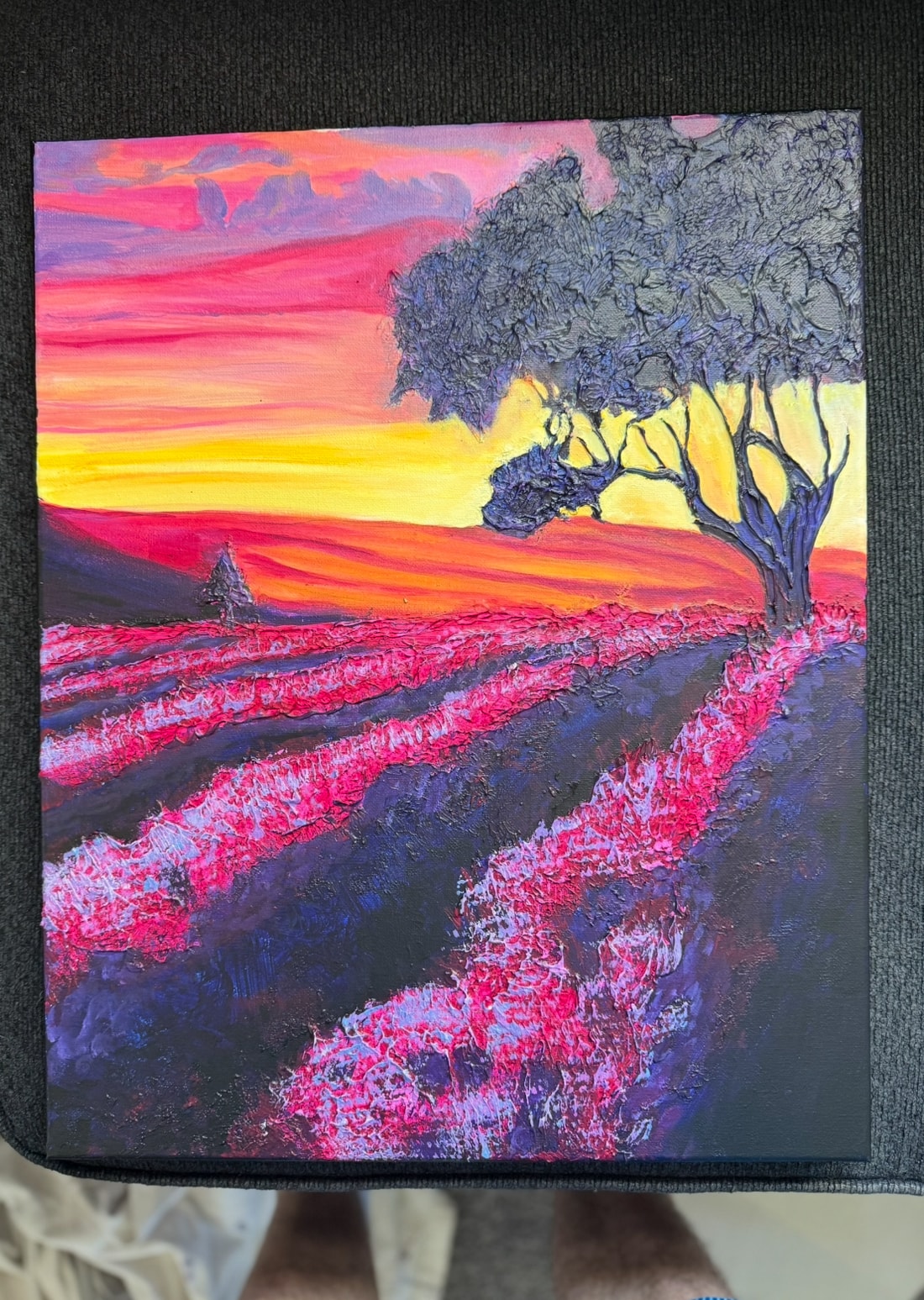
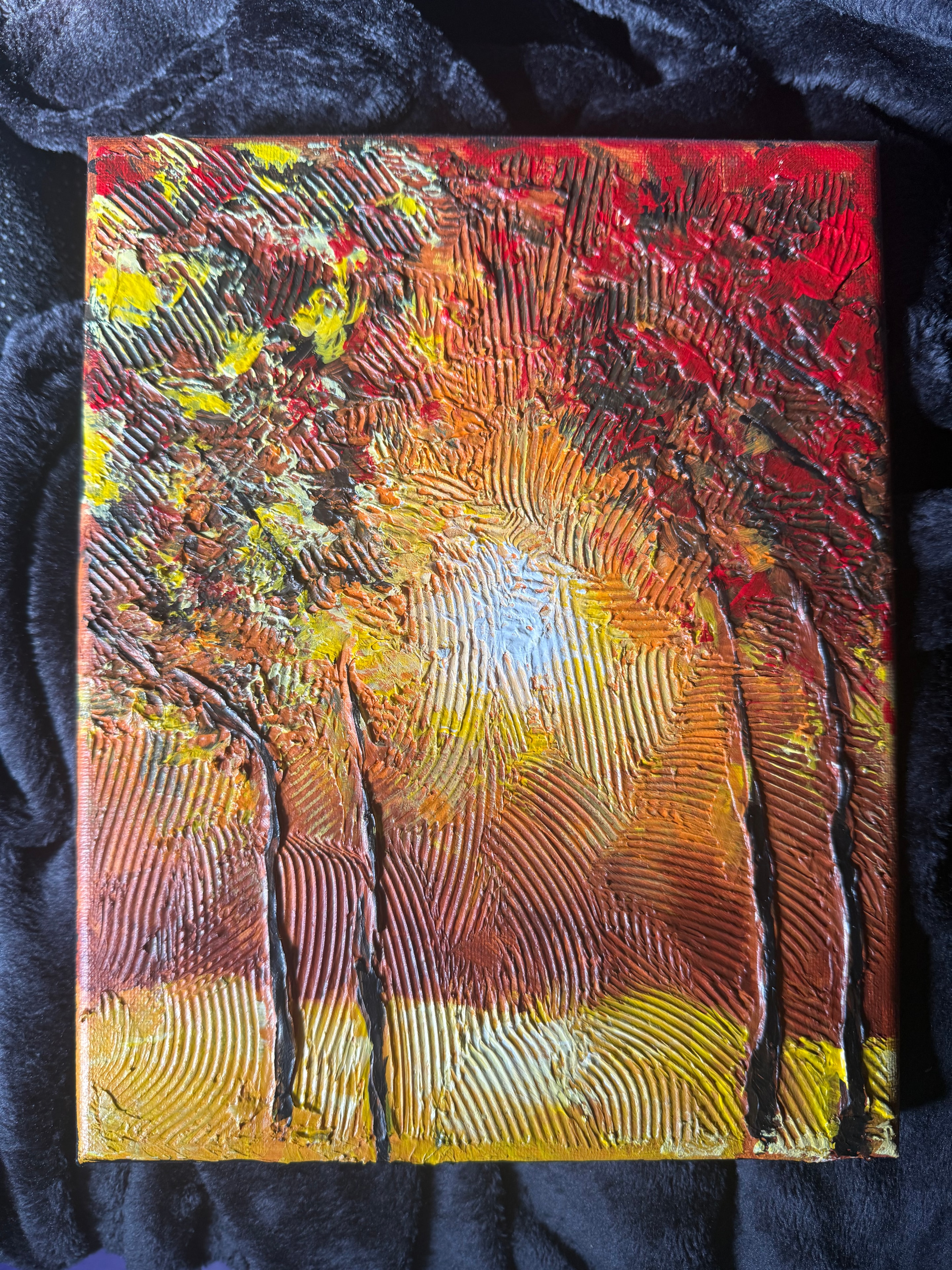
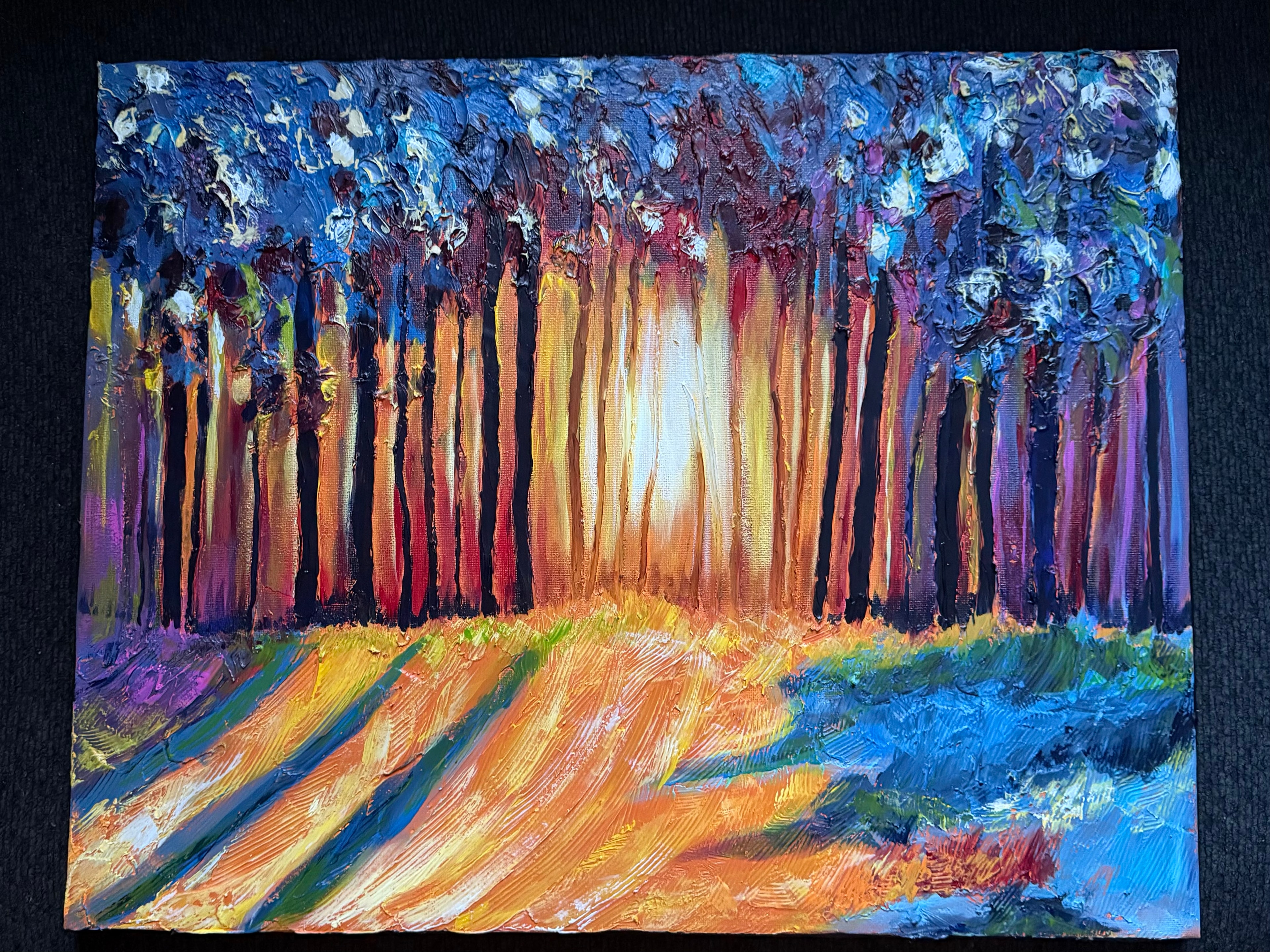
How to Choose a Textured Painting for Your Wall: Size, Subject, and Light
Buying a textured painting is different from buying a flat print. The raised surfaces respond to your home's light, look different from different angles, and need to be matched to the right wall. Here is how to choose the right textured painting for your specific space.
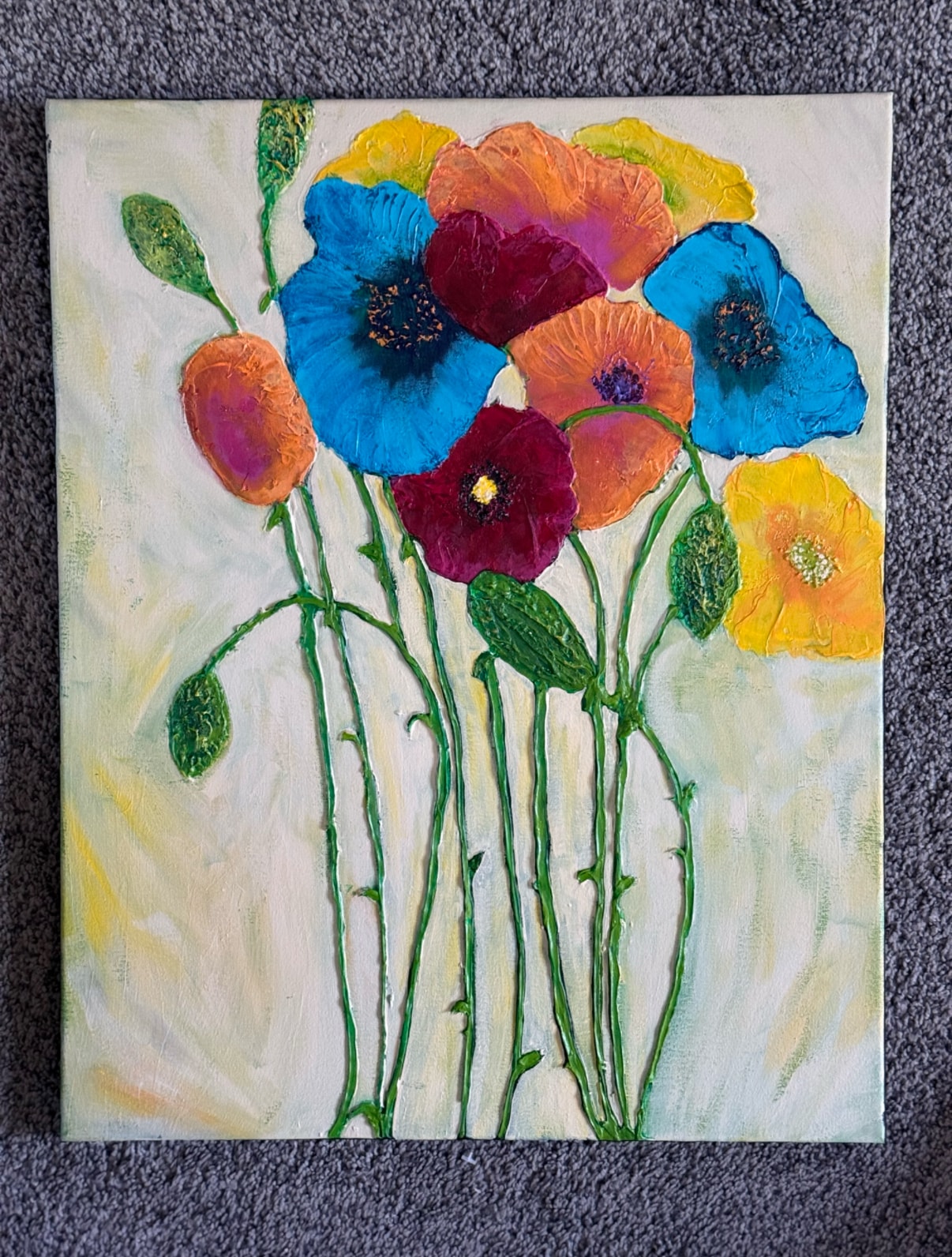
There is a moment that happens when someone sees a textured painting for the first time in person.
They look at it from across the room and think it looks interesting. They walk closer. They lean in. And then they reach out — almost involuntarily — to touch it.
That is the power of a textured painting. It has a physical presence that a flat painting or a print simply cannot replicate. It exists in three dimensions. It catches light differently from every angle. It changes as you move around it.
Buying a textured painting is a different decision than buying a flat print or a conventional painting. The raised surfaces respond to your home's light. The painting looks different from different angles. The right placement matters more than it does with flat art.
Here's how to choose the right textured painting for your specific wall.
Step 1: Consider Your Light Source
This is the most important factor that most buyers overlook.
A textured painting's raised surfaces cast real shadows — and those shadows change with the light. A painting that looks one way in direct sunlight looks completely different under a lamp. A painting on a north-facing wall in diffuse light looks different from the same painting on a south-facing wall in direct afternoon sun.
Direct light (sunlight, spotlights) creates dramatic shadows on textured surfaces. The peaks catch bright highlights and the valleys fall into deep shadow. This creates maximum visual impact — the texture is most visible and most striking.
Diffuse light (north-facing windows, overhead fluorescents) creates softer shadows. The texture is still visible but less dramatic. The painting reads more as color and form, less as sculptural relief.
Lamp light (table lamps, floor lamps) creates directional shadows that shift as you move around the room. This is often the most interesting lighting for textured paintings — the shadows are real and dynamic.
Recommendation: If you have a wall with a strong directional light source (a window that gets direct sun, or a spot where you can add a picture light), that's the ideal location for a textured painting. The light will do the work.
Step 2: Match Size to Wall Space
Textured paintings have more visual presence than flat paintings of the same size. The three-dimensional surfaces create visual weight — a 16×20 caulk texture painting reads as larger than a 16×20 flat print.
For a large wall (over 6 feet wide): A large original (24×30 or larger) or a grouping of medium originals works well. Jay's large originals range from $250–$400.
For a medium wall (3–6 feet wide): A medium original (16×20 to 18×24) is ideal. These are Jay's most popular size range, priced $150–$300.
For a small wall or accent space: A small original (8×10 to 11×14) or a grouping of miniatures creates impact without overwhelming the space. Small originals start at $100; miniatures are $40.
For a gallery wall: Miniatures work beautifully in gallery wall arrangements. A grouping of 6–9 miniatures creates a cohesive collection that shows the range of Jay's subjects and technique.
Step 3: Choose a Subject That Works With Your Space
The subject of a textured painting affects how it reads in a room.
Flowers and botanicals work in almost any room — living rooms, bedrooms, dining rooms, entryways. The organic forms are visually warm and inviting. Jay's hibiscus series (blue, peach, yellow) and botanical paintings (morning glory, poppies, pansies) are his most versatile subjects.
Landscapes work best in living rooms, offices, and spaces where you spend time looking at the wall. The depth of a landscape painting — the way the foreground texture recedes into a smoother background — creates a sense of space that's particularly effective in smaller rooms.
Abstract work is the most flexible in terms of placement — it works in any room and with any decor. Jay's abstract originals (neon vortex, golden circles) are particularly effective in modern or contemporary spaces.
Wildlife (the white rooster, the rooster miniatures) works well in kitchens, dining rooms, and spaces with a farmhouse or country aesthetic.
Step 4: Consider Hanging Height
Textured paintings should be hung at eye level — the same rule as flat paintings. But "eye level" for a textured painting means the center of the painting at approximately 57–60 inches from the floor, which is the standard museum hanging height.
The reason this matters more for textured paintings: the shadows cast by the raised surfaces change with viewing angle. A painting hung too high will show the undersides of the raised surfaces (more shadow, less highlight). A painting hung too low will show the tops of the raised surfaces (more highlight, less shadow). Eye level gives you the most balanced view of the texture.
Step 5: Think About the Room's Color Palette
Textured paintings work with any color palette, but the relationship between the painting's colors and the room's colors affects how the painting reads.
High contrast (a painting with strong color against a neutral wall) makes the painting a focal point. Jay's blue hibiscus against a white or gray wall is a strong example.
Tonal harmony (a painting whose colors echo the room's palette) creates a more integrated look. A fall landscape painting in a room with warm earth tones reads as part of the space rather than a focal point.
Complementary contrast (colors opposite on the color wheel) creates visual energy. A painting with strong purples and yellows against a warm-toned room creates a vibrant, dynamic effect.
Browse Jay's Gallery
Full gallery of original caulk texture paintings: jaythepainter.com/artwork
Miniature paintings from $40: jaythepainter.com/myminipaintings
Call or text Jay with questions about placement: 330-285-3136
Jay the Painter is an independent caulk texture artist based in Akron, Ohio. He creates original dimensional paintings and sells directly to collectors nationwide.
Explore Topics
Written by
Jay the Painter
Content creator and writer sharing insights and stories.