Caulk Texture Painting vs Palette Knife: Which Creates More Texture?
Both caulk texture painting and palette knife painting create dramatic 3D surfaces. But they're not the same — and one creates significantly more texture than the other.
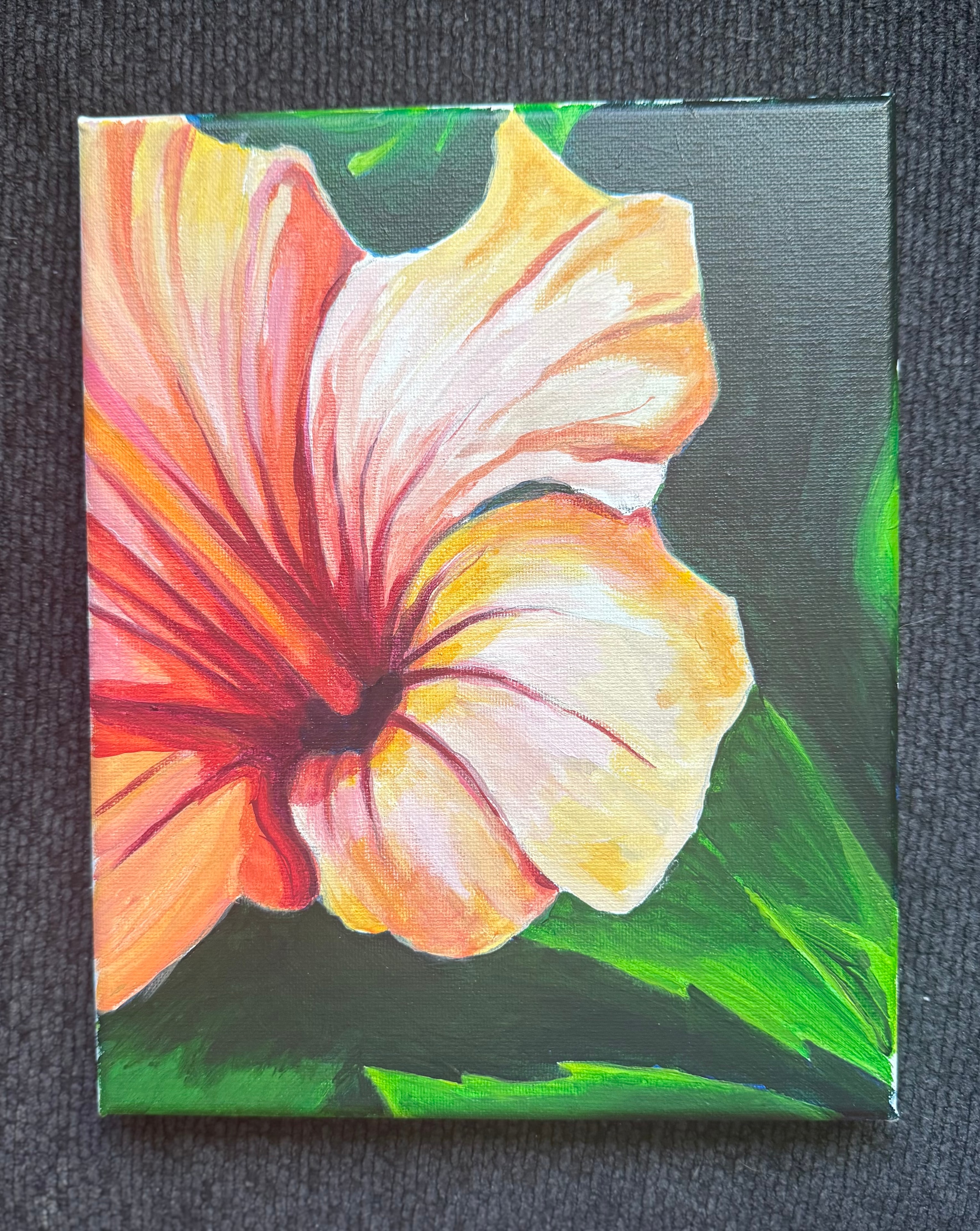
If you've been researching textured painting techniques, you've probably come across two main approaches: palette knife painting (also called impasto) and caulk texture painting. Both create paintings with real three-dimensional surfaces. Both are visually striking. Both are a long way from flat, conventional painting.
But they're not the same technique, and they don't produce the same results.
Here's an honest comparison — what each technique does well, where each one falls short, and which one actually creates more texture.
What Is Palette Knife Painting?
Palette knife painting (impasto) uses thick applications of paint — usually oil or acrylic — applied with a palette knife rather than a brush. The paint itself creates the texture. By loading the knife with thick paint and dragging, pressing, or flicking it across the canvas, artists build up a surface with visible ridges, peaks, and directional marks.
It's a technique with a long history. Van Gogh's swirling, heavily textured surfaces are some of the most famous examples of impasto in art history. Contemporary artists like Leonid Afremov have made palette knife painting their signature.
The appeal is immediate: the texture is visible, tactile, and expressive. The marks of the knife are part of the painting's character.
What Is Caulk Texture Painting?
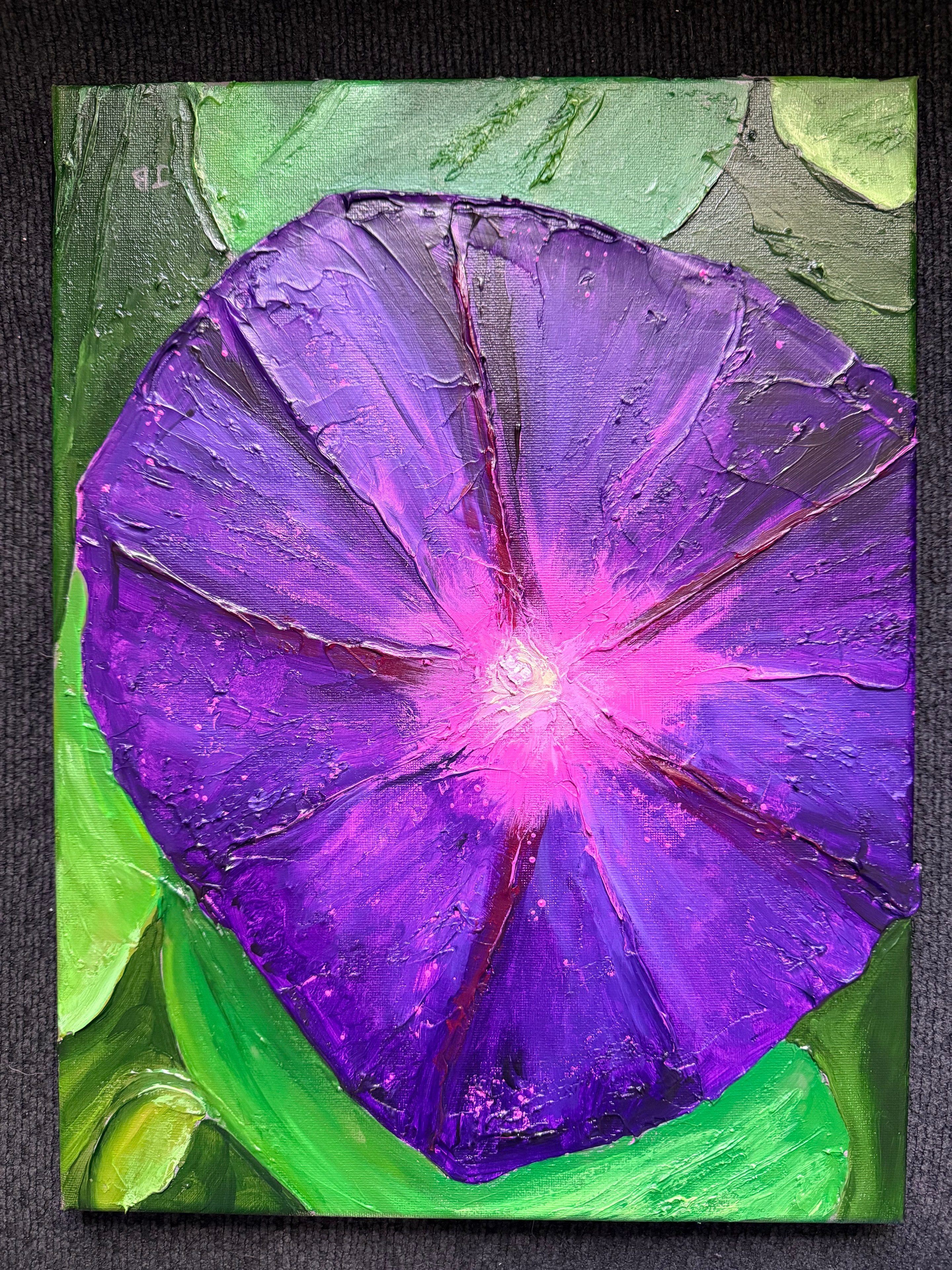
Caulk texture painting uses flexible acrylic caulk — applied before any paint — to build the three-dimensional surface. The caulk is shaped with palette knives, spreaders, and other tools, then allowed to cure fully before paint is applied on top.
The key difference: in caulk texture painting, the texture and the color are separate layers. The caulk builds the structure. The paint provides the color. They're applied independently.
This separation is what makes caulk texture painting fundamentally different from impasto — and what allows it to achieve things impasto can't.
Which Creates More Texture?
Caulk texture painting creates significantly more texture. Here's why:
The Limits of Impasto
Thick paint has physical limits. As you build up layers of acrylic or oil paint:
- Acrylic paint shrinks as it dries — up to 30% volume reduction in very thick applications. This shrinkage creates internal stress that can cause cracking, especially in the thickest areas.
- Oil paint takes months or years to fully cure in thick applications. The outer layer dries first, trapping wet paint underneath. This can cause wrinkling, cracking, and long-term instability.
- There's a practical limit to how thick you can go before the paint becomes unstable. Most impasto painters work in layers of a few millimeters at most.
The result is that impasto texture, while beautiful, is relatively shallow. You can see it and feel it, but it's measured in millimeters.
What Caulk Allows
Caulk doesn't have these limitations. Because it's designed to flex and move with surfaces, it doesn't crack from shrinkage. Because it cures to a rubbery, stable finish rather than a brittle one, it can be applied in much thicker layers without structural problems.
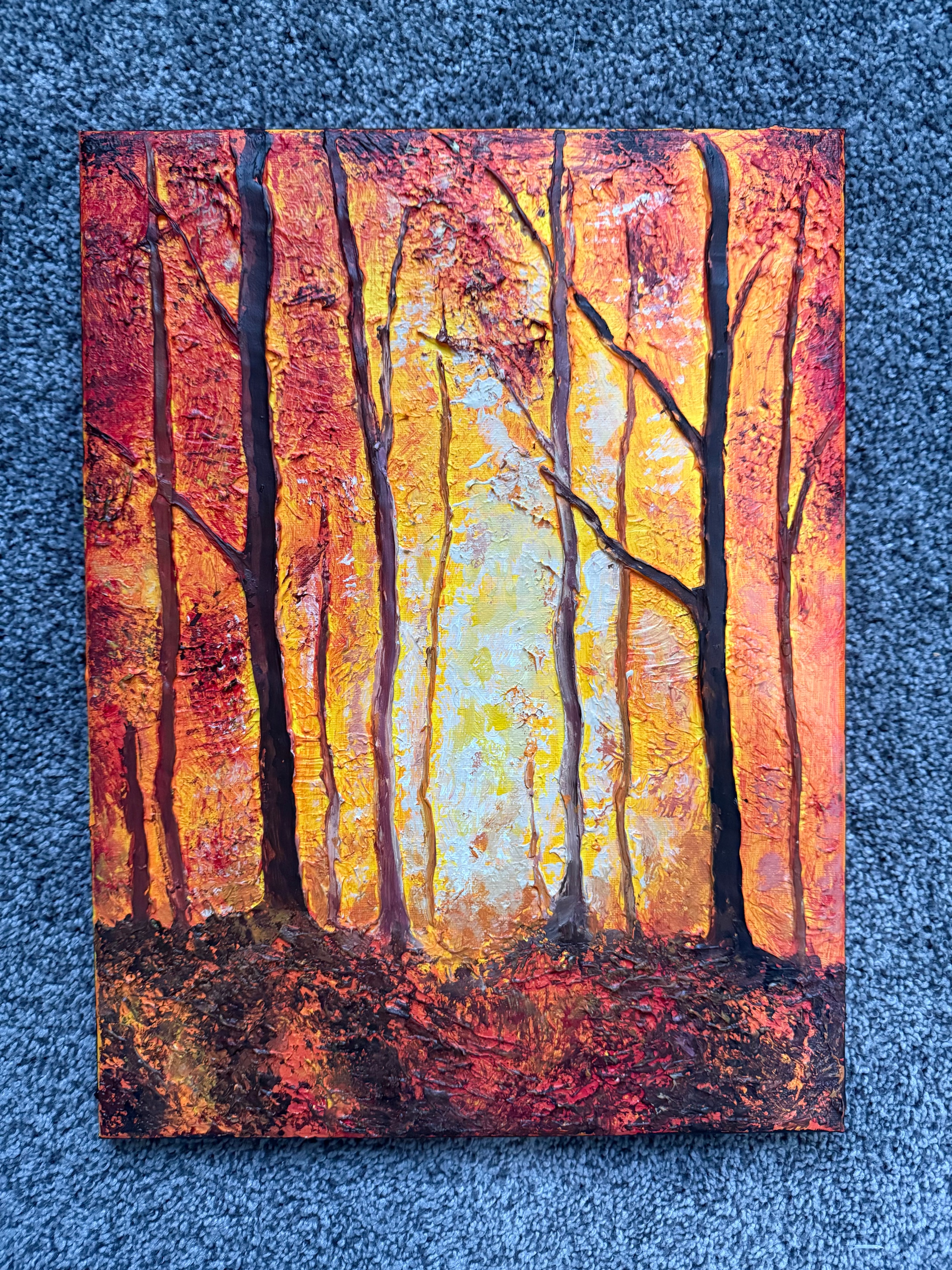
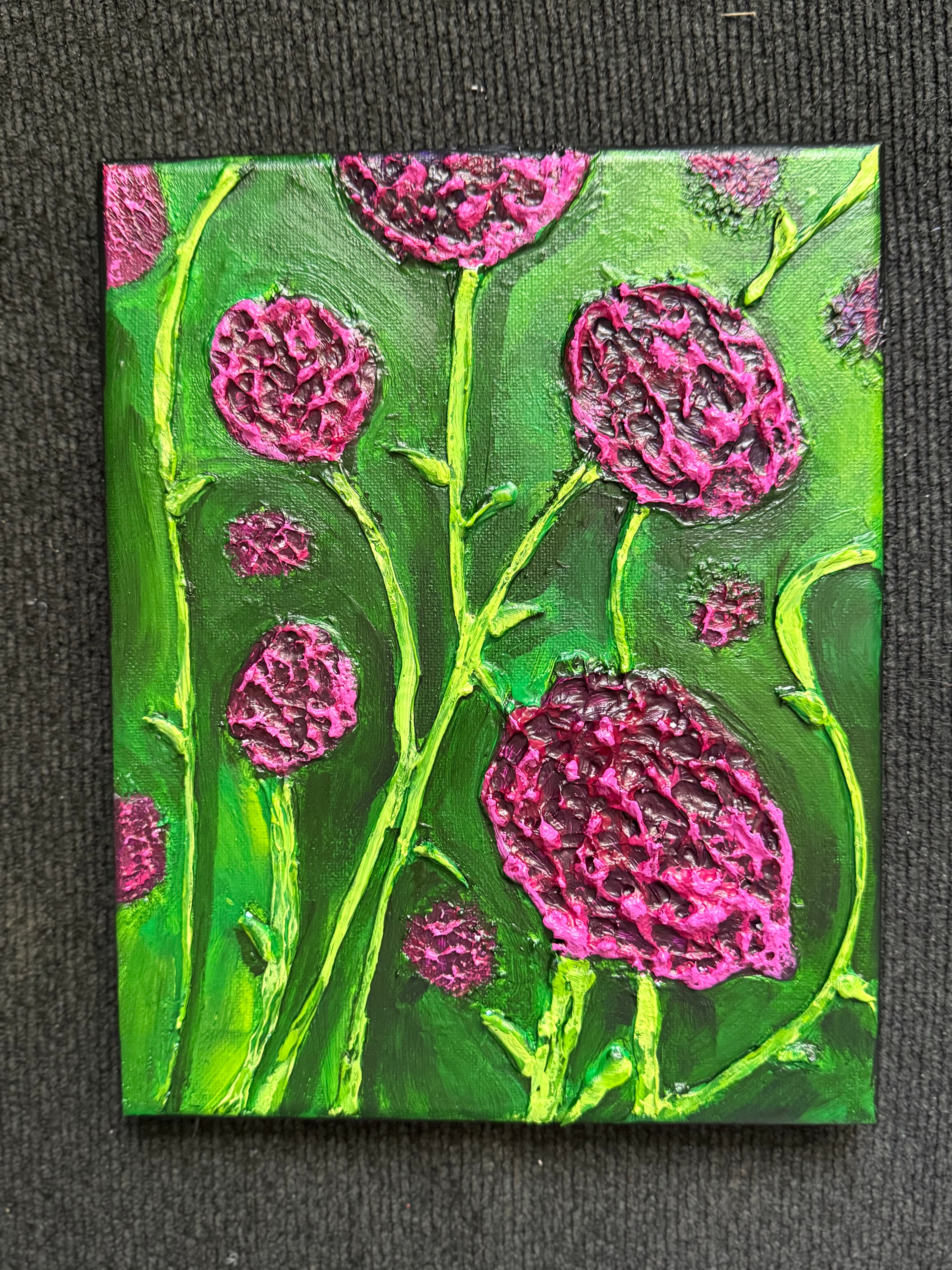
This means caulk texture painters can build dramatically more three-dimensional surfaces than impasto allows. Ridges that stand up a centimeter or more from the canvas surface. Flower petals with real depth and curve. Tree bark with genuine roughness. Abstract forms that are almost sculptural.
The texture in a caulk texture painting isn't measured in millimeters — it's measured in centimeters.
The Visual Difference
The two techniques also look different, not just in depth but in character.
Palette knife / impasto texture:
- Sharp, glassy ridges with hard edges
- Visible knife marks that become part of the composition
- Texture that reflects light in bright, specular highlights
- A sense of energy and movement from the directional marks
- The texture and color are inseparable — you can't change one without the other
Caulk texture:
- Softer, more organic forms — curves rather than sharp edges
- Texture that can be shaped into specific subjects (flower petals, bark, water) rather than just abstract marks
- More subtle light interaction — the texture catches and holds shadow rather than reflecting bright highlights
- The texture and color are independent — the surface can be shaped precisely before any color decisions are made
Neither is better. They're different tools for different visual goals.
Durability: A Clear Winner
On durability, caulk texture painting has a significant advantage.
Impasto durability issues:
- Thick acrylic impasto can crack over time, especially on flexible canvas
- Very thick oil impasto can take years to fully cure and may never fully stabilize
- The paint layer is doing double duty — providing both color and structure — which puts stress on it
Caulk texture durability:
- Flexible caulk is designed to last for decades without cracking
- The paint layer is thin and applied over a stable, fully cured surface — it's not under structural stress
- Properly sealed caulk texture paintings are extremely durable
For collectors, this matters. A painting that will look the same in 50 years as it does today is more valuable than one that may develop cracks or surface instability.
The Learning Curve
Palette knife painting has a steeper initial learning curve in some ways — the technique of loading and applying paint with a knife takes practice to control. But the feedback is immediate. You can see what you're doing as you do it.
Caulk texture painting requires patience. You apply the caulk, then wait for it to cure before you can paint. You're working in two separate stages, and you have to visualize the finished painting while you're still building the structure. That takes practice.
Both techniques reward time and experimentation. Neither is a shortcut.
Which Should You Try?
If you want to experiment with textured painting and you're already comfortable with acrylic painting, palette knife painting is the easier entry point. You're using paint — a material you already know — in a new way.
If you want to push further into three-dimensional surface work, or if you're interested in the specific organic quality that caulk texture creates, caulk texture painting is worth the additional complexity.
And if you want to see what caulk texture painting looks like at its best — what's actually possible when the technique is fully developed — browse Jay the Painter's collection. Every painting in the gallery is a caulk texture original.
Browse Jay the Painter's full collection of original caulk texture paintings at jaythepainter.com/artwork. Every piece is 100% original — no prints, ever.
Text Jay at 330-285-3136 to ask about his technique or inquire about a specific painting.
Browse the gallery → | Caulk art vs impasto — a deeper comparison → | Learn more about caulk texture painting →
Explore Topics
Written by
Jay the Painter
Content creator and writer sharing insights and stories.