The Caulk Art Process
How Jay the Painter builds real 3D texture with caulk before a single drop of paint touches the canvas — step by step, from blank canvas to finished original.
Ohio Autumn Fire and Blue Sky — Step by Step
Ohio Autumn Fire and Blue Sky is one of the most iconic paintings in Jay's catalog. Here is exactly how it was made — from the first bead of caulk to the finished 8"×10" original.
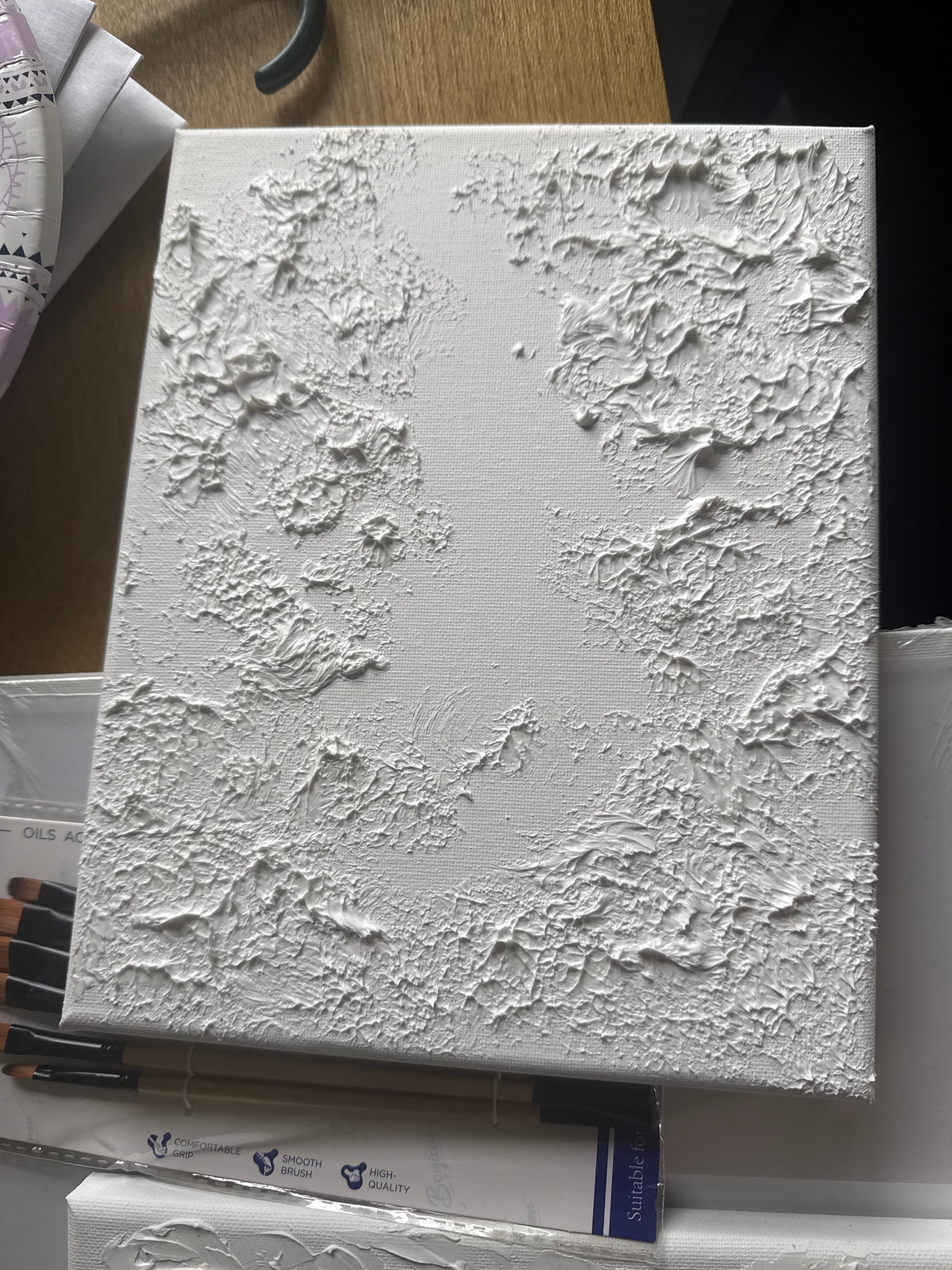
The entire composition is built in white caulk before any paint is used. Tree trunks, leaf clusters, and sky areas are all laid down with a caulk gun and shaped with a palette knife. This is what gives the finished painting its physical depth.
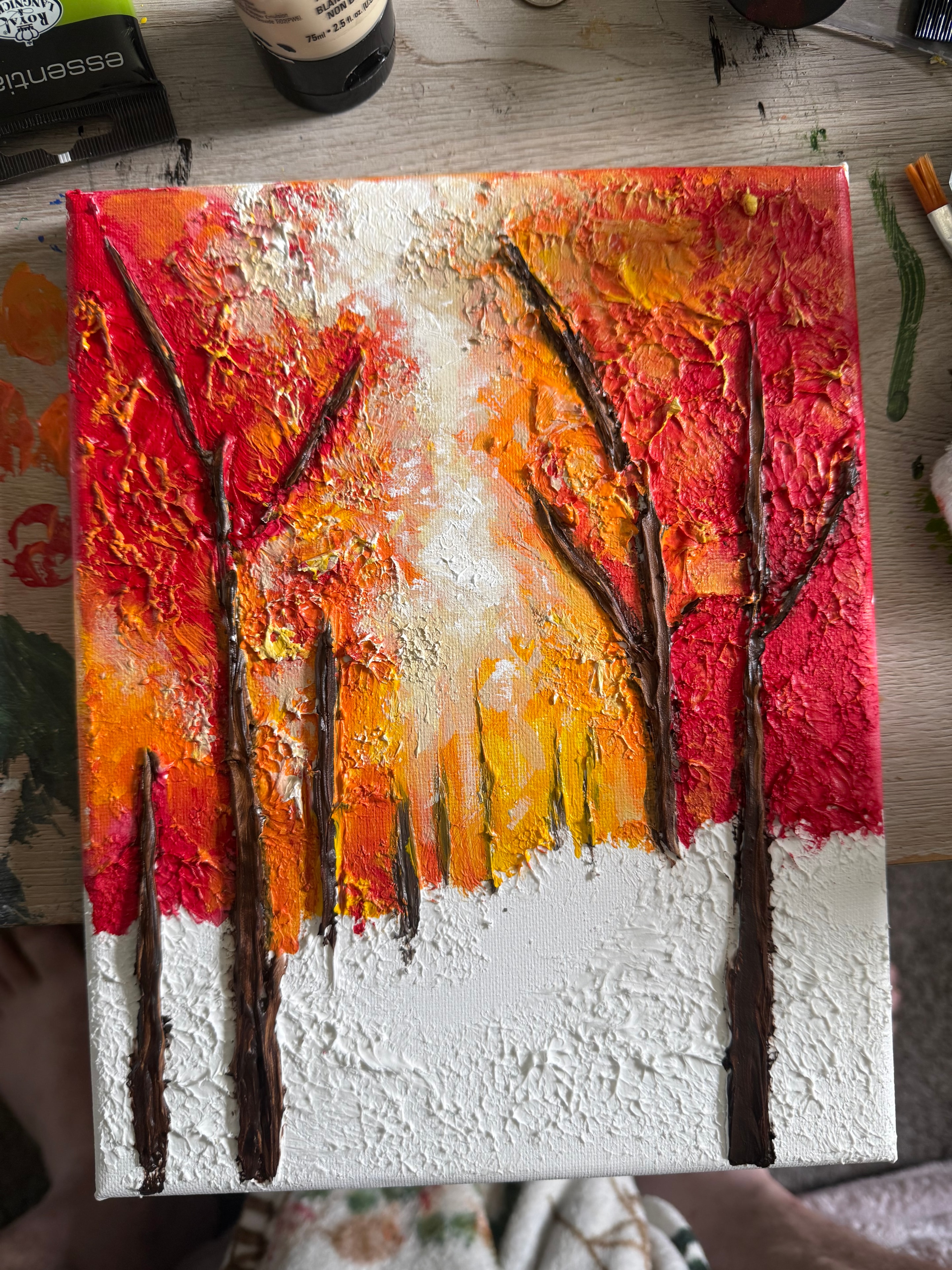
Once the caulk dries hard (24–48 hours), the first paint layers go on. The paint fills the valleys and catches the ridges of the caulk structure. The autumn palette — deep oranges, burning reds, sky blue — starts to emerge.
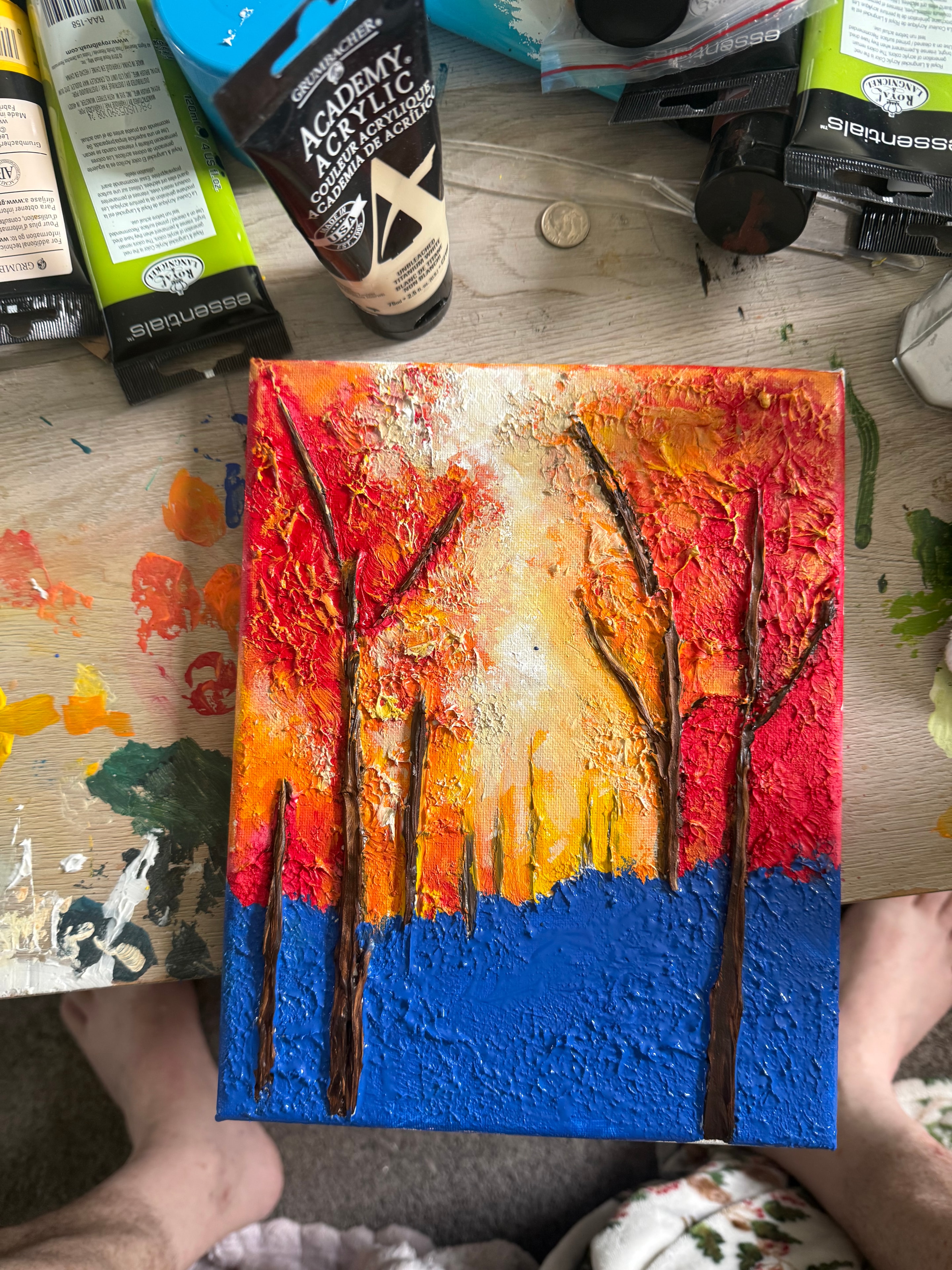
The final paint layers bring the composition to life. The caulk ridges catch light differently at every angle. No photo fully captures the depth — this is a painting you have to see in person.
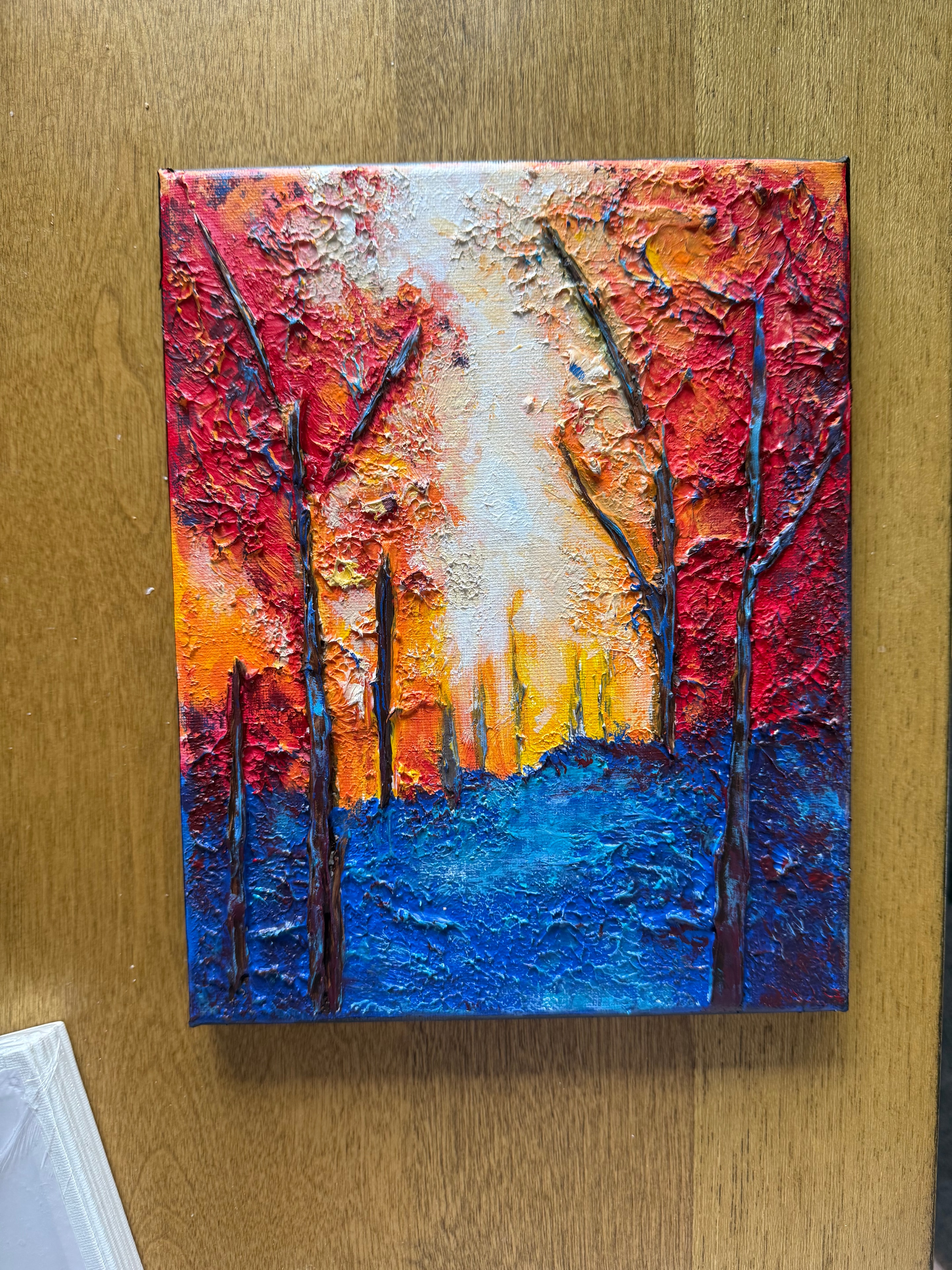
Ohio Autumn Fire and Blue Sky
Ohio Autumn Fire and Blue Sky — 8"×10", $150. The finished original. One of a kind. No prints.
View in galleryWhy Caulk?
Most texture artists use thick paint — impasto, palette knife, heavy body acrylics. These work, but they have limits. Thick paint can only get so thick before it cracks. It is expensive. And the texture you can achieve is limited by the viscosity of the medium.
Caulk has none of these limitations. It dries hard and permanent. It does not crack. It is cheap. And it can be applied in any thickness, any shape, any form — from thin lines to thick ridges to fully three-dimensional sculptural elements.
When Jay figured out that caulk could be used as a structural medium for painting, it changed everything. No other artist in Ohio — or anywhere in the country — is working this way.
More Before & After
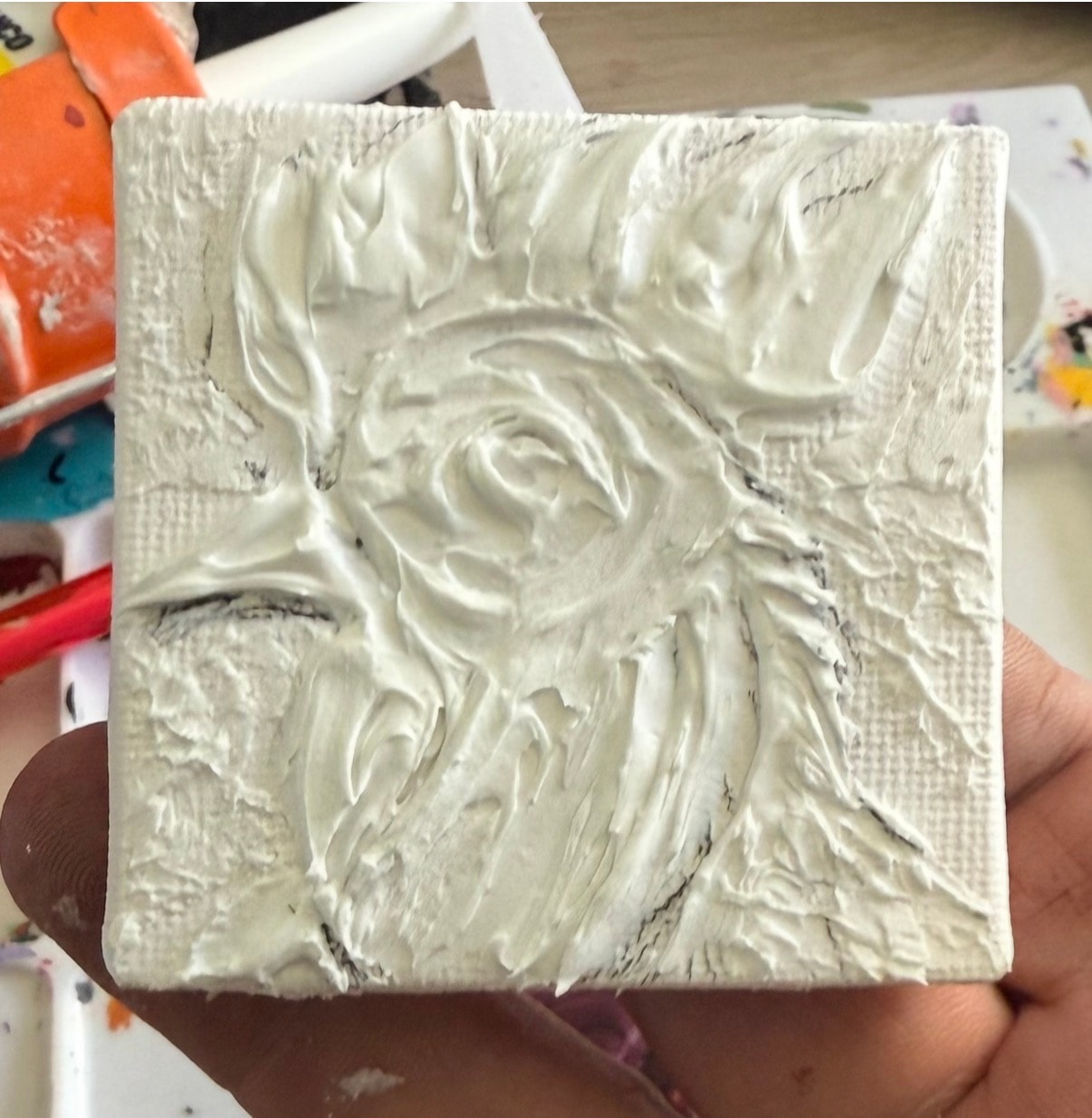
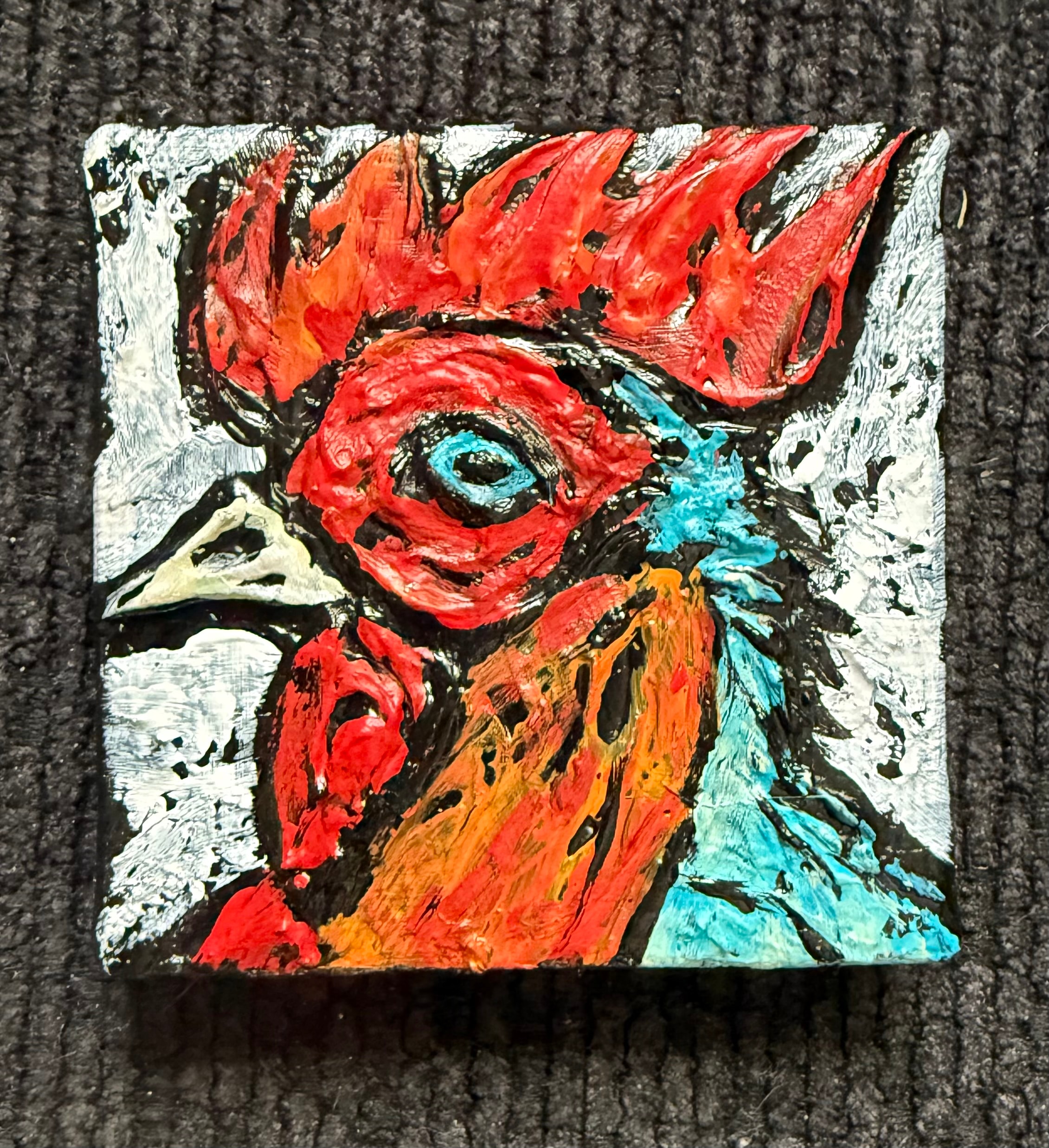
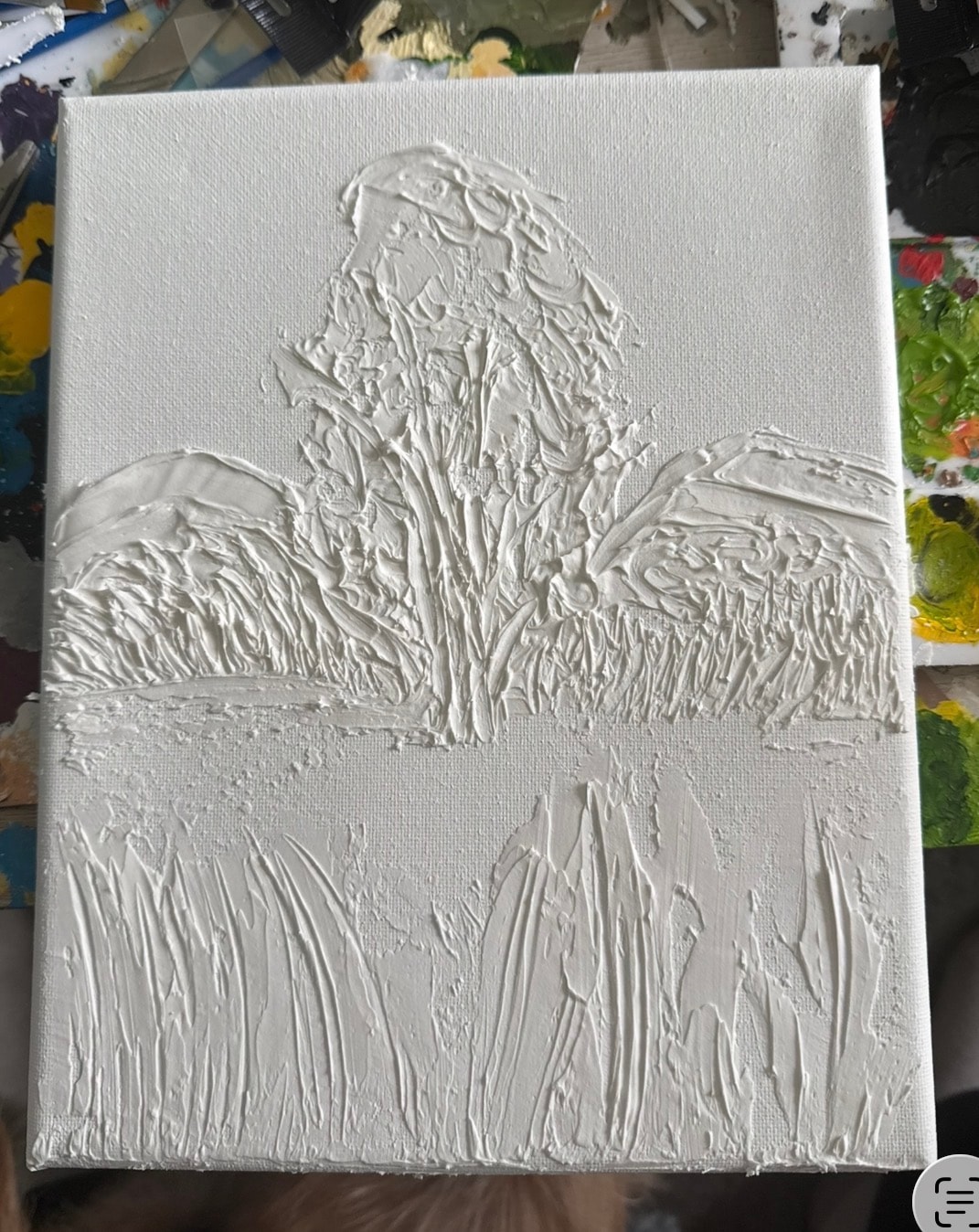
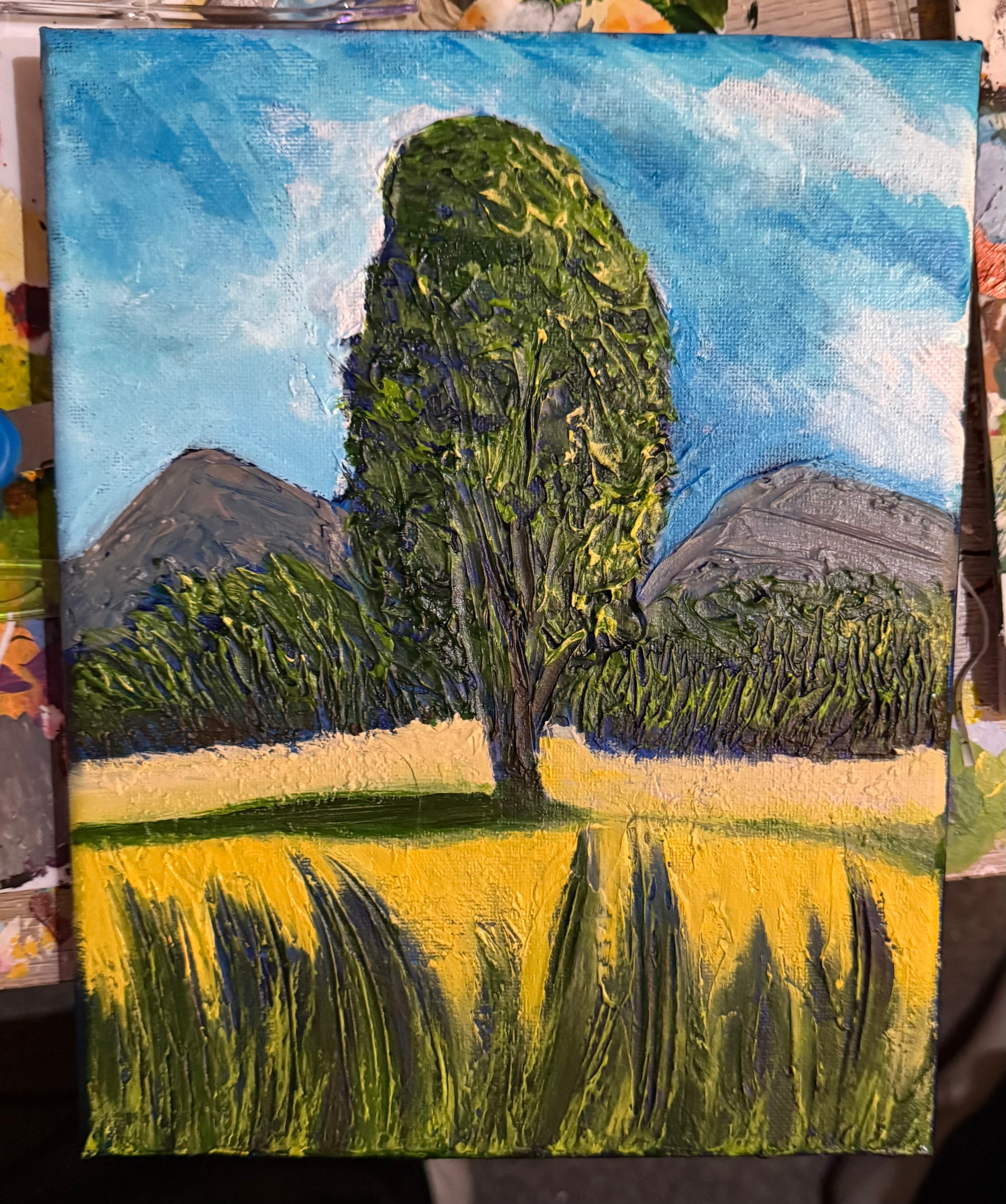
The transformation from raw caulk texture to finished painting — two more examples.
Rooster — caulk texture to finished painting
Landscape — before and after
Own a Piece of the Process
Every painting in Jay's gallery was made with this exact caulk texture technique. No prints. Every piece is the only one that exists.