How to Hang and Care for a Textured Painting: What Every Owner Should Know
Textured paintings are more durable than most people expect — but they do have specific hanging and care requirements. Here is everything you need to know to keep a caulk texture original looking its best for decades.
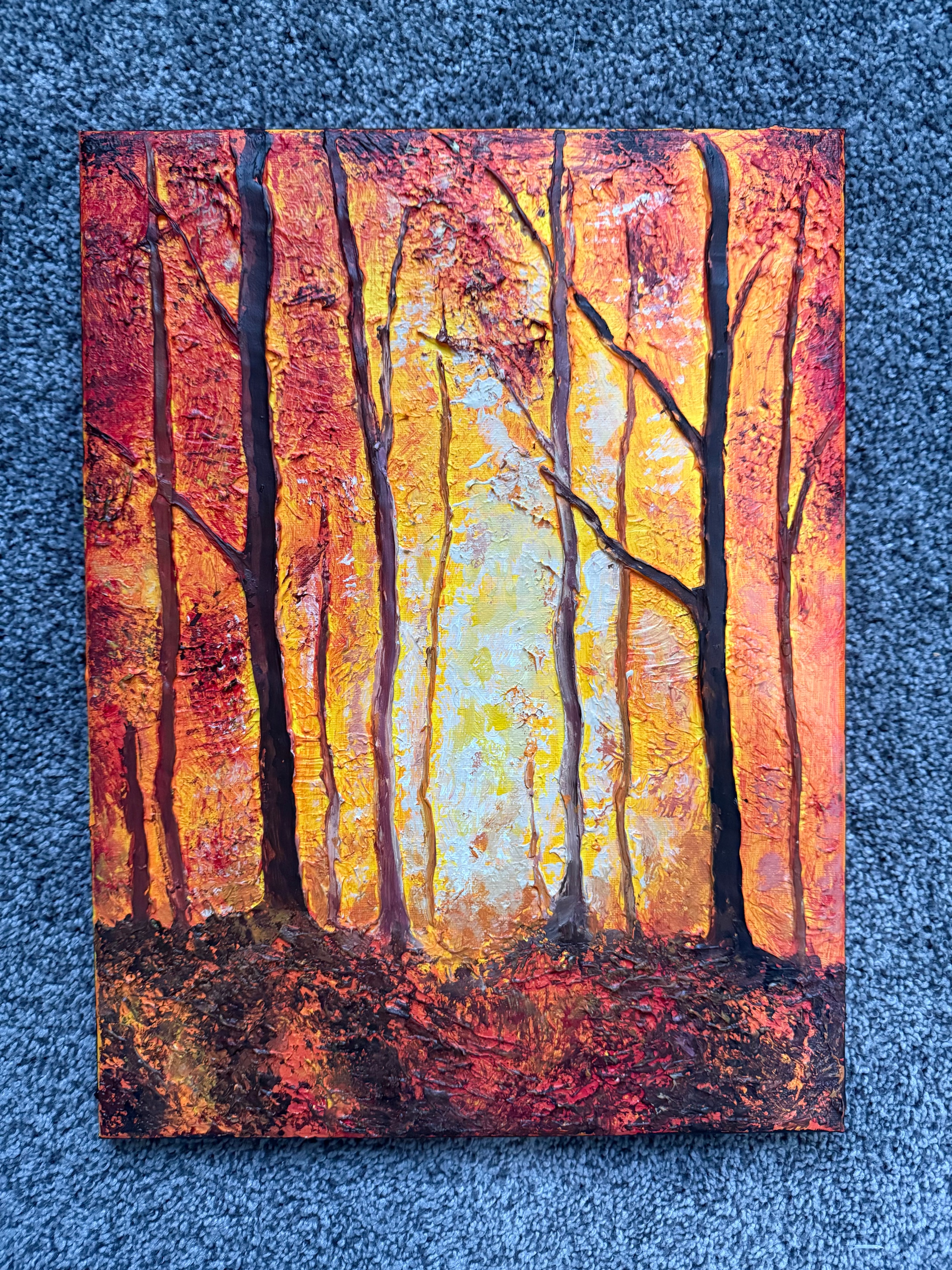
A caulk texture painting is more durable than most people expect. The flexible caulk base moves with the canvas instead of fighting it — which means it won't crack the way traditional impasto can. But there are still specific hanging and care practices that will keep the painting looking its best for decades.
Here's everything you need to know.
Hanging: Location Matters More Than You Think
Light direction is the most important hanging decision. Textured paintings respond dramatically to directional light. A painting hung where it receives light from the side — from a window, a lamp, or a picture light — will show the texture at its most dramatic. The raised surfaces cast real shadows, and those shadows define the painting's visual character.
A painting hung in flat, diffuse light (directly under a ceiling fixture, or in a room with no directional light source) will still look beautiful, but the texture will be less visible. If you want the full effect, hang it where it gets some directional light.
Avoid direct sunlight for extended periods. While Jay's paintings are varnished for UV protection, prolonged direct sunlight will fade any painting over time. A room that gets morning or afternoon sun is fine — a painting in direct sun all day, every day, is not ideal for long-term preservation.
Avoid high-humidity areas. Bathrooms and kitchens with poor ventilation are not ideal locations for any canvas painting. The canvas expands and contracts with humidity changes, and while the flexible caulk handles this better than rigid impasto, extreme or repeated humidity swings are hard on any painting.
Standard hanging hardware works fine. Jay's paintings are on standard canvas stretchers and hang with standard picture hooks. For larger paintings (18×24 and up), use two hooks spaced across the width of the painting rather than one central hook — this distributes the weight and keeps the painting level.
Cleaning: Less Is More
Dust gently with a soft, dry brush. A soft-bristled paintbrush or a clean makeup brush works well. Brush lightly across the surface — don't press into the texture. Dust accumulates in the valleys of the raised surfaces over time; gentle brushing keeps it from building up.
Never use water or cleaning products on the painted surface. The varnish protects the paint, but water can still affect the canvas and the caulk over time. If the painting gets something on it (a splash, a fingerprint), let it dry completely and then assess. For anything beyond dust, contact Jay directly at 330-285-3136 before attempting to clean it.
Don't touch the surface unnecessarily. The oils from hands can affect the varnish over time. When handling the painting, hold it by the edges or the back of the stretcher.
Storage: If You Ever Need to Store It
If you need to store a painting temporarily:
- Store it upright, never flat — flat storage puts pressure on the raised texture
- Keep it away from temperature extremes (attics and garages are not ideal)
- Wrap it loosely in acid-free paper or clean cloth — never in plastic, which traps moisture
- Don't stack paintings face-to-face; the texture of one can damage the surface of another
Shipping and Moving
Jay ships his paintings carefully packaged — they arrive protected. If you ever need to ship or move a painting yourself, wrap the face in glassine or acid-free paper first, then bubble wrap, then box it with padding on all sides. The texture is durable but the peaks of raised surfaces are the most vulnerable points.
Long-Term Durability
Jay's caulk texture paintings are built to last. The flexible caulk base doesn't crack. The acrylic paint is stable. The varnish protects the surface. With normal care — reasonable light, reasonable humidity, gentle dusting — these paintings will look the same in 50 years as they do today.
That's one of the reasons Jay chose caulk over traditional impasto: durability was a design requirement, not an afterthought.
Questions about your painting: Call or text Jay at 330-285-3136
Browse the gallery: jaythepainter.com/artwork
Jay the Painter is an independent caulk texture artist based in Akron, Ohio.
Explore Topics
Written by
Jay the Painter
Content creator and writer sharing insights and stories.