Caulk Texture Painting for Collectors: What to Know Before You Buy
Thinking about buying a caulk texture painting? Here's what every collector needs to know — how to verify genuine dimensional work, what questions to ask, how to care for it, and why caulk texture originals hold their value better than impasto.
Caulk texture painting has been gaining serious attention from art collectors over the past few years — and for good reason. The technique produces original paintings with genuine three-dimensional surfaces that no print, reproduction, or flat painting can replicate.
But as with any category of original art, the collector's market has a signal-to-noise problem. Not everything described as "caulk texture painting" is genuine dimensional work. And even among genuine caulk texture paintings, quality varies significantly.
Here's what every collector needs to know before buying.
What Genuine Caulk Texture Painting Actually Is
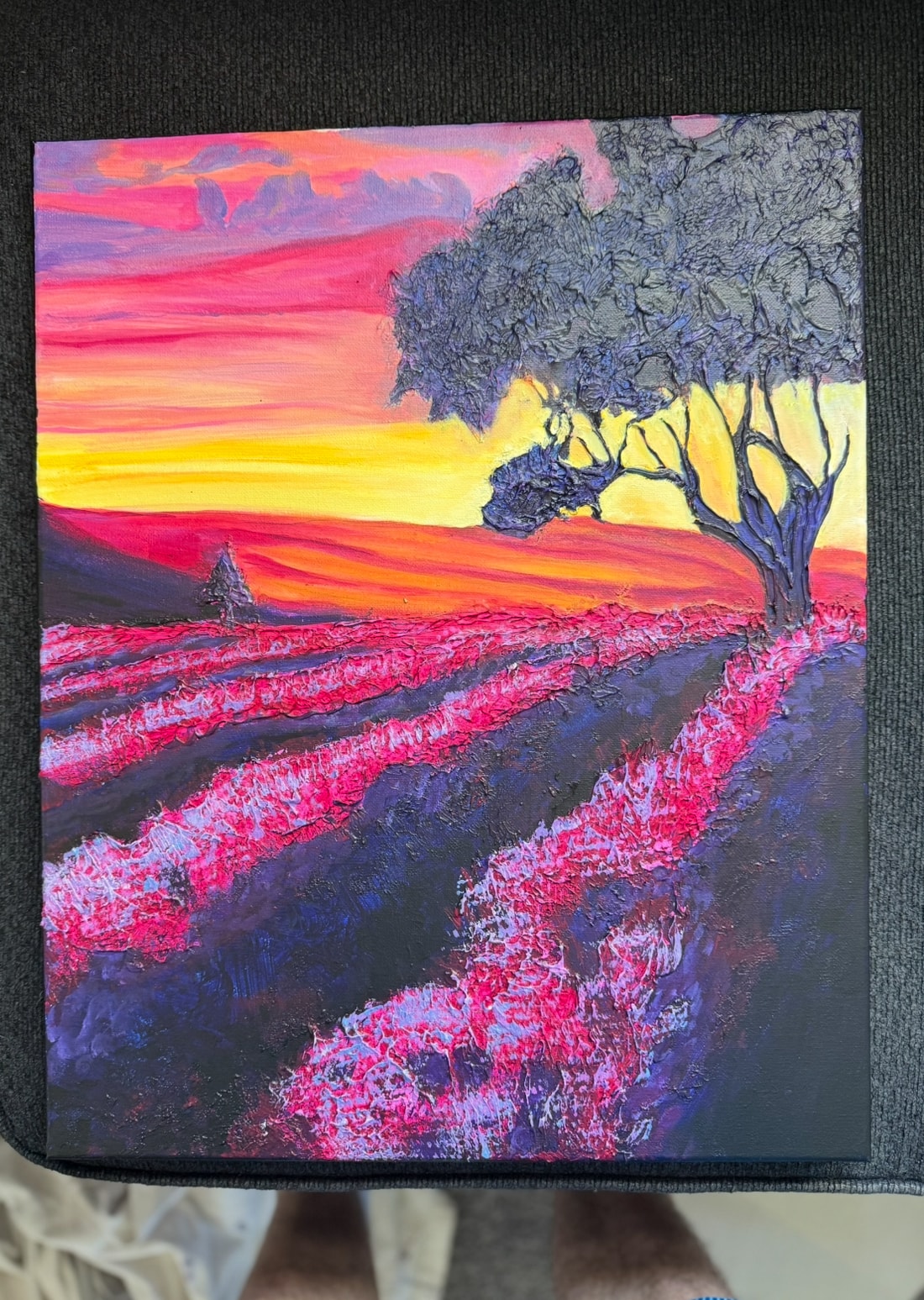
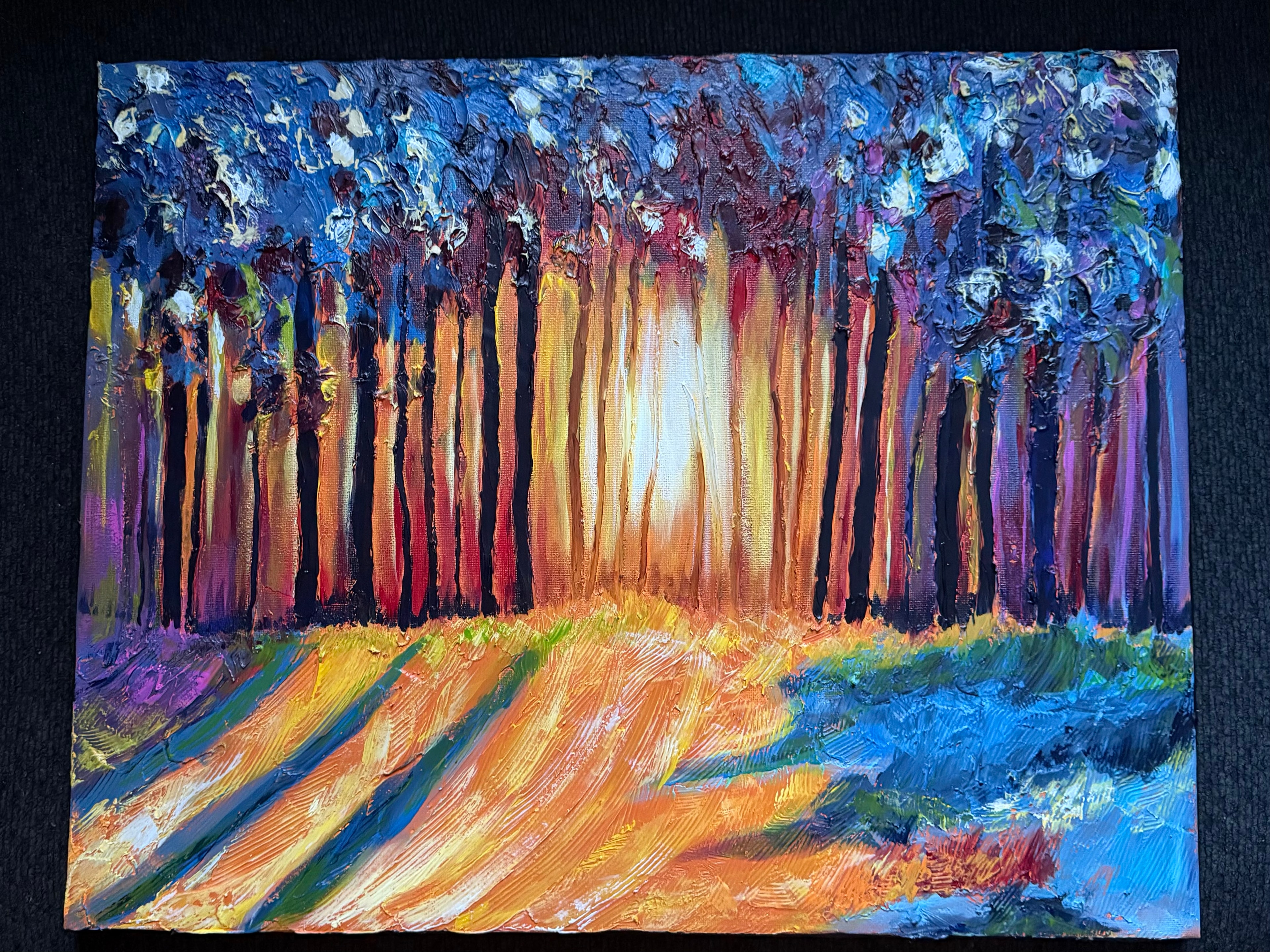
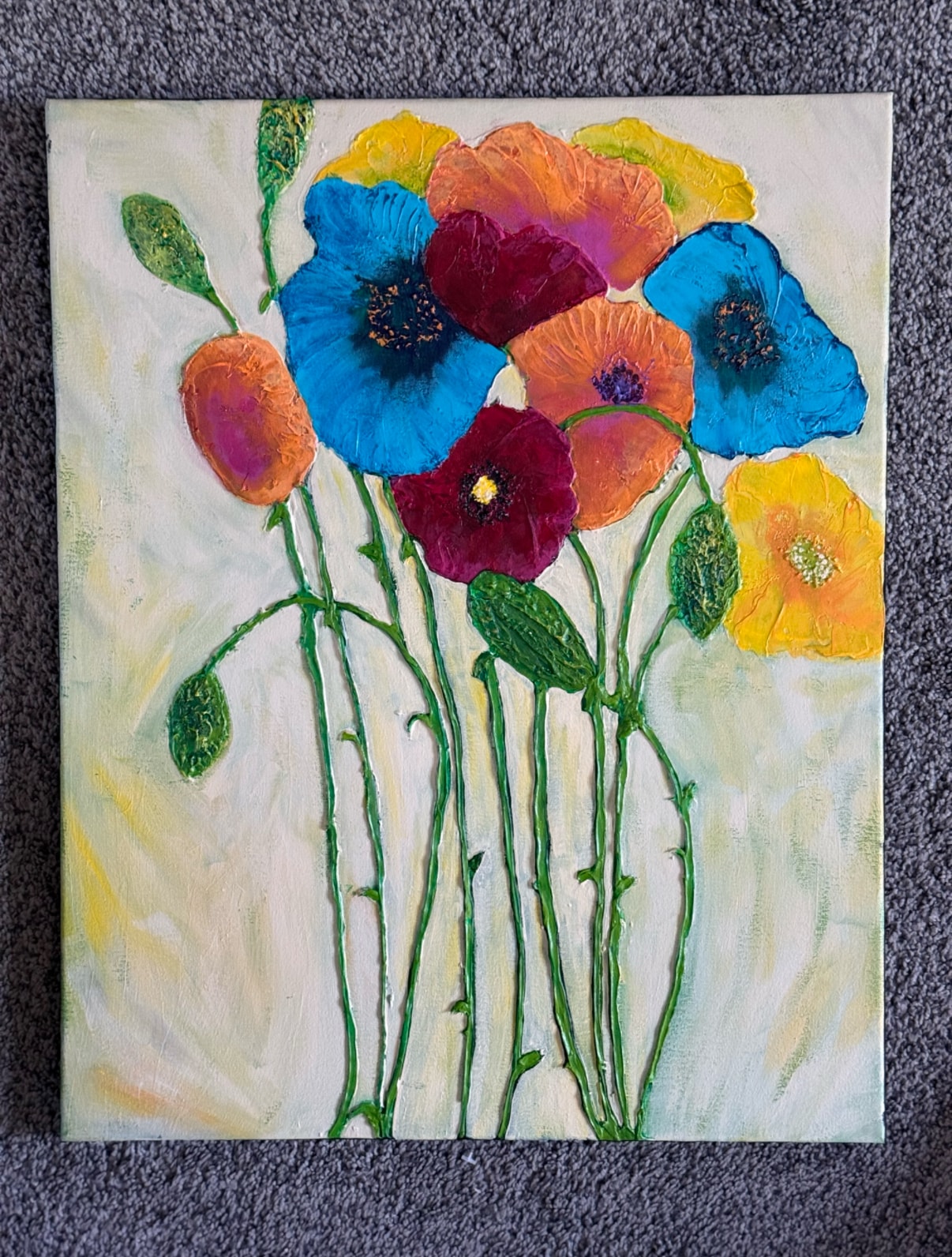
Caulk texture painting is a technique where flexible caulk — the polymer-based sealant used in construction — is applied to canvas to build three-dimensional structure before any paint is added. The caulk is shaped, allowed to cure, and then painted over.
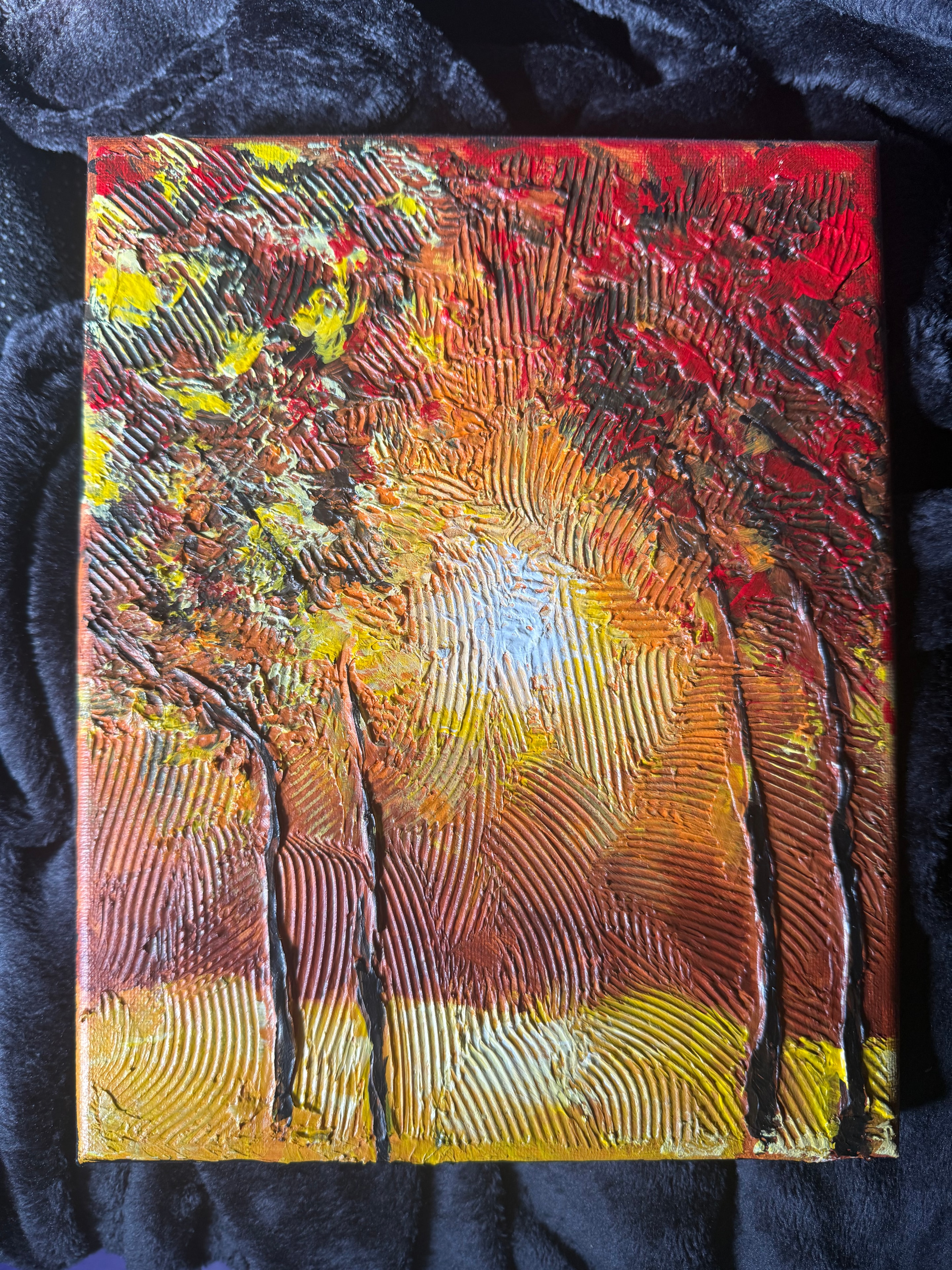
The result is a painting with real raised surfaces. Not the suggestion of texture. Not thick brushstrokes. Actual three-dimensional forms that cast real shadows and respond to light.
The key word is genuine. The term "caulk texture painting" is sometimes used loosely to describe paintings that have been given a textured finish after the fact — a coat of texture medium, a layer of modeling paste, or even a textured varnish applied over a flat painting. These are not caulk texture paintings in the meaningful sense.
Genuine caulk texture painting means the three-dimensional structure was built as the foundation of the painting — before any color was applied.
How to Verify Genuine Dimensional Work
Before buying, here's how to confirm you're looking at genuine caulk texture painting:
Look for real shadows in photographs. Genuine caulk texture creates raised surfaces that cast actual shadows on the canvas beneath them. In photographs, you should be able to see darker areas at the base of raised surfaces — not painted shadows, but real shadows from real three-dimensional forms. If the "texture" in photographs looks like surface variation without visible shadows, it's not genuinely dimensional.
Ask for video. Photographs flatten dimensional work. A short video of the painting being moved under a light source will show the shadows shifting as the angle changes — something only real three-dimensional surfaces do. Any genuine caulk texture painter should be able to provide this.
Ask about the process. A genuine caulk texture painter can describe exactly how the three-dimensional surface was built: what caulk was used, how it was applied, how long it was allowed to cure before painting began. Vague answers are a red flag.
Ask whether the caulk was applied before or after painting. Genuine caulk texture painting means the caulk went on first. If the artist applied texture over an existing painting, that's a different (and less durable) technique.
Ask about originals vs. prints. A caulk texture painting that's been reproduced as a print is a flat image of dimensional work — the three-dimensional quality is gone. Genuine caulk texture painters sell originals only.
What to Ask Before You Buy
These five questions will tell you everything you need to know about a caulk texture painting before committing:
-
"What caulk did you use and how was it applied?" — A genuine caulk texture painter will give you a specific, detailed answer.
-
"Was the caulk applied before or after painting?" — The answer should always be before.
-
"How long did you allow the caulk to cure before painting?" — Rushing this step creates adhesion problems. A careful artist will have waited until the caulk was fully cured.
-
"How was the finished painting sealed?" — Proper sealing protects both the paint and the caulk texture. The answer should include a specific varnish or sealant.
-
"Do you sell prints of this work?" — If yes, that's worth noting. Genuine caulk texture painters typically don't sell prints because prints can't capture the dimensional quality.
How to Care for a Caulk Texture Painting
Caulk texture paintings are more durable than impasto paintings but still require appropriate care:
Hanging: Hang away from direct sunlight, which can fade paint over time. The caulk itself is UV-stable, but the paint layer benefits from indirect light.
Cleaning: Dust gently with a soft, dry brush. Never use water or cleaning solutions on the surface — even a properly sealed caulk texture painting can be damaged by moisture if it penetrates the varnish layer.
Temperature and humidity: Caulk texture paintings are more tolerant of environmental variation than impasto paintings, but extreme conditions should be avoided. Normal home environments are fine.
Handling: The raised surfaces are durable but not indestructible. Handle by the edges or the back of the canvas, not the painted surface.
Storage: If storing rather than displaying, wrap in acid-free tissue paper and store flat or upright in a padded container. Never stack paintings face-to-face.
Why Caulk Texture Originals Hold Their Value
From a collector's perspective, caulk texture paintings have several properties that support long-term value:
Genuine uniqueness. The three-dimensional surface is built by hand during a limited working window. No two paintings are ever identical — even if the same artist painted the same subject twice, the caulk would be shaped differently. This is genuine uniqueness, not just the "each painting is slightly different" claim that applies to any handmade work.
No reproduction possible. A print of a caulk texture painting is a flat image — it has lost the entire point. This means the original is the only version that exists. There's no edition of 500 prints diluting the value of the original.
Durability. A caulk texture painting that's been properly sealed will hold its three-dimensional structure for decades. The value of the work doesn't degrade as the texture cracks and deteriorates — because it doesn't crack.
Rarity of the technique. Genuine caulk texture painters are rare. The technique is demanding, the learning curve is steep, and most artists who experiment with it don't develop it to a professional level. Work from artists who have mastered the technique is genuinely scarce.
Jay the Painter: Caulk Texture Originals from Akron, Ohio
Jay the Painter is one of the few working artists in the United States who has developed caulk texture painting as a primary medium. Based in Akron, Ohio, he creates original paintings that ship nationwide.
Every painting in his gallery uses genuine caulk texture technique — the caulk applied before painting, allowed to fully cure, then painted with acrylics and sealed with protective varnish. No prints. No reproductions. No shortcuts.
Browse the gallery: jaythepainter.com/artwork
Mini paintings from $40: jaythepainter.com/myminipaintings
Call or text Jay with questions: 330-285-3136
Jay the Painter is an independent caulk texture painter based in Akron, Ohio. He sells directly to collectors nationwide — no gallery, no middleman, no prints.
Explore Topics
Written by
Jay the Painter
Content creator and writer sharing insights and stories.