Famous Texture Artists: The History of Dimensional Painting — and the Artist Pushing It Further
From Van Gogh's swirling impasto to Anselm Kiefer's mixed-media surfaces, texture has defined some of the most important paintings in art history. Here's a look at the most famous texture artists of all time — and the Akron, Ohio artist taking the technique into entirely new territory.
Famous Texture Artists: The History of Dimensional Painting — and the Artist Pushing It Further
Texture in painting is not a trend. It is one of the oldest and most powerful tools in an artist's arsenal — a way to make a flat surface feel alive, to create depth that the eye can sense even before the brain processes it. The most famous texture artists in history understood this instinctively. Their work didn't just depict the world. It had physical presence.
Here is a look at the artists who defined texture painting across the centuries — and the Akron, Ohio artist who has taken the technique into entirely new territory with a medium no one had used before.
Vincent van Gogh (1853–1890)
No artist is more associated with texture than Van Gogh. His impasto technique — thick, swirling applications of oil paint applied with both brush and palette knife — created surfaces that seem to vibrate with energy. The Starry Night, Sunflowers, Wheat Field with Crows: these paintings are not just images. They are physical objects with real three-dimensional surfaces.
Van Gogh applied paint in layers so thick that the ridges cast actual shadows. In raking light, his canvases reveal a topography of peaks and valleys that photographs can never fully capture. He understood that texture was not decoration — it was emotion made physical.
His influence on every texture artist who followed is impossible to overstate.
Rembrandt van Rijn (1606–1669)
Rembrandt is not usually discussed as a texture artist, but he was one of the earliest masters of impasto in Western painting. In his later work especially, he applied paint in thick, sculptural passages — particularly in the highlights of faces, hands, and jewelry — while keeping shadows thin and transparent.
The result was a surface that seemed to glow from within. The thick paint in the light areas literally caught more light than the thin paint in the shadows, creating a luminosity that was partly optical and partly physical.
Rembrandt proved that texture could be used selectively — not as an overall surface treatment, but as a precise tool for directing light and attention.
Claude Monet (1840–1926)
Monet's late work — particularly the Water Lilies series — pushed Impressionist texture to its extreme. His canvases from the 1910s and 1920s have surfaces so heavily worked that they approach abstraction. The paint is applied in dense, overlapping strokes that build up a surface more like a tapestry than a conventional painting.
What makes Monet significant in the history of texture art is his understanding of how texture creates atmosphere. The shimmering, indistinct quality of his water surfaces is not just a color effect — it is a texture effect. The physical roughness of the paint surface scatters light in a way that smooth paint never could.
Jackson Pollock (1912–1956)
Pollock's drip paintings are among the most texturally complex objects in the history of art. His technique — dripping, pouring, and flinging paint onto canvas laid flat on the floor — created surfaces with multiple layers of paint at different depths, creating a three-dimensional web of marks.
In person, a Pollock painting is a physical object of remarkable complexity. The layers of paint overlap and intersect in ways that create real depth — not the illusion of depth, but actual spatial relationships between layers of material.
Pollock proved that texture could be the subject of a painting, not just a quality of its surface.
Anselm Kiefer (born 1945)
Kiefer is the most important living texture artist in the traditional fine art world. His paintings incorporate lead, straw, sand, ash, broken glass, and other materials into surfaces of extraordinary physical complexity. Some of his works are more sculpture than painting — objects that happen to hang on walls.
His subject matter — German history, mythology, memory, destruction — is inseparable from his materials. The weight and roughness of his surfaces is part of the meaning. A Kiefer painting about war feels like war. The texture is not illustrative. It is the content.
Kiefer's work represents the furthest development of the idea that a painting's physical surface can carry meaning independently of its imagery.
Palette Knife Masters: Leonid Afremov and Nicolas de Staël
Leonid Afremov (1955–2019) brought palette knife painting to a mass audience with his vibrant, jewel-toned cityscapes and park scenes. His technique — applying thick acrylic paint with a palette knife in short, directional strokes — created surfaces with a mosaic-like texture that caught light brilliantly.
Nicolas de Staël (1914–1955) used the palette knife to build up surfaces of extraordinary density and weight. His abstract landscapes have a physical presence that makes them feel like geological formations rather than paintings.
Both artists demonstrated that the palette knife — not the brush — could be the primary tool of a serious fine art practice.
Where Caulk Art Fits in This History
Every texture artist in this list worked within a shared constraint: they used paint, or paint-like materials, as their texture medium. Impasto is thick paint. Palette knife painting is thick paint applied differently. Even Kiefer's mixed-media surfaces use paint as the binding agent.
Jay the Painter in Akron, Ohio broke from this tradition entirely.
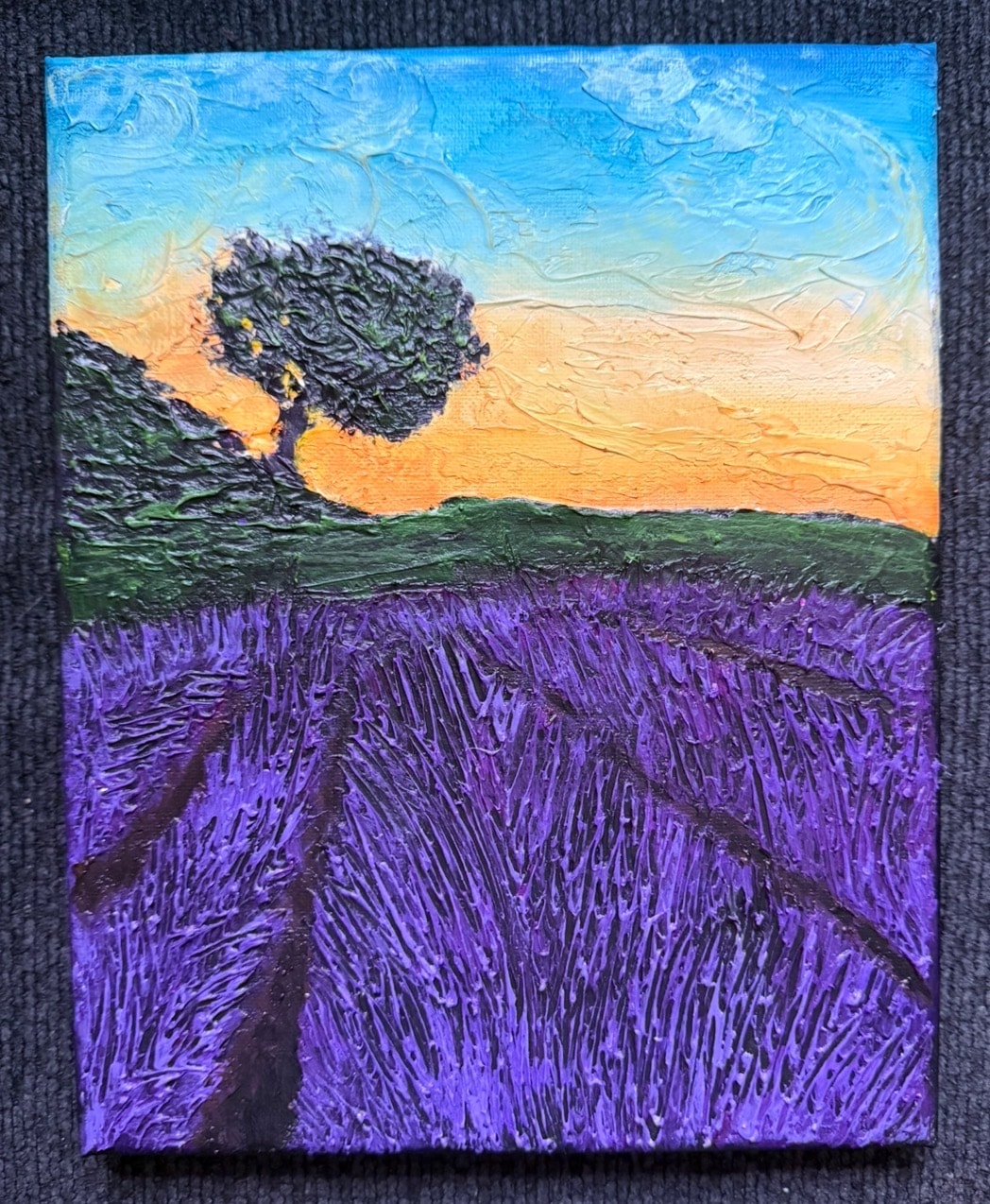
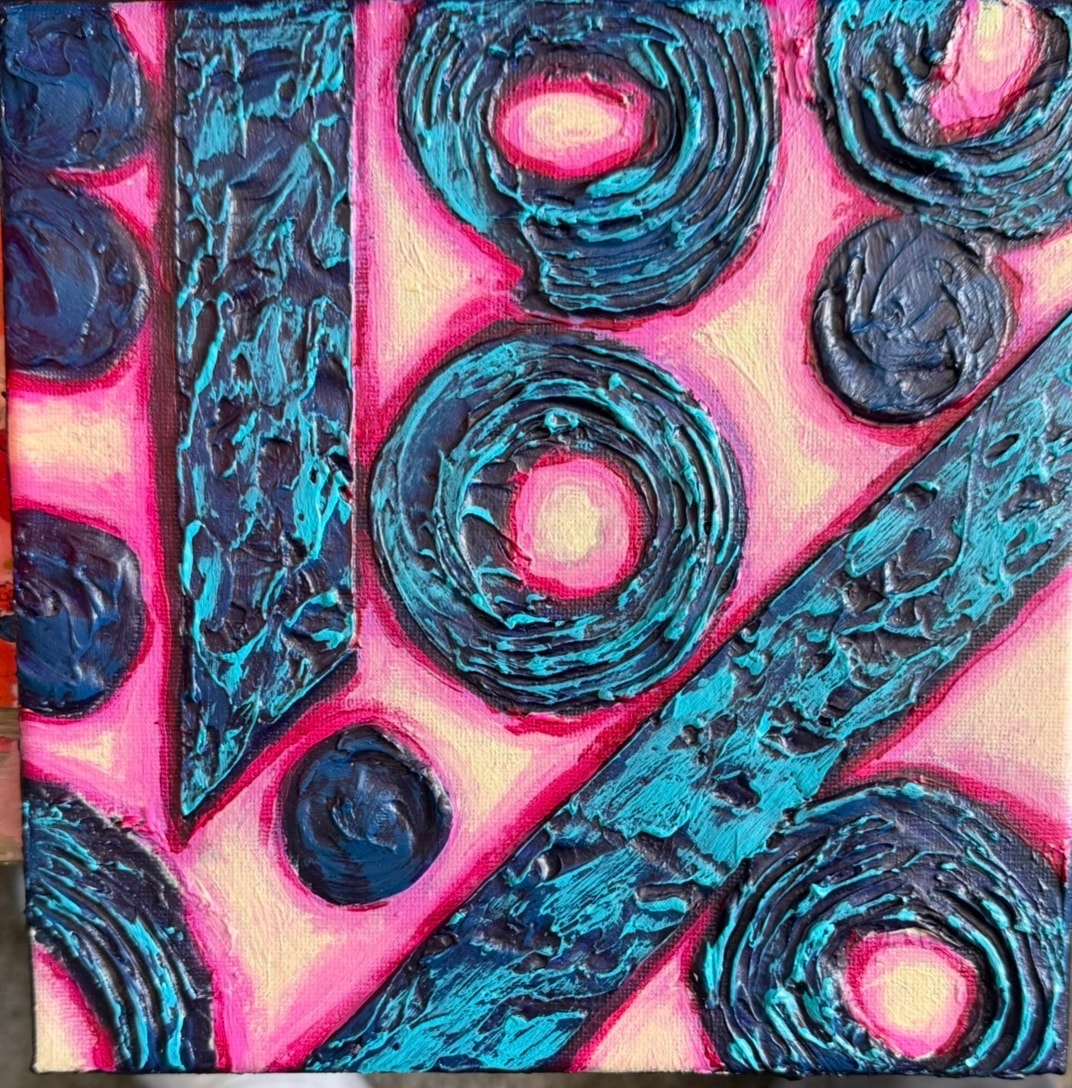
Jay applies flexible acrylic caulk — a construction material, not a paint medium — directly to canvas as a sculptural foundation. The caulk is shaped, sculpted, and allowed to cure completely before any paint is applied. The texture and the color are separate layers, created independently.
This is genuinely new. No artist in the history of texture painting had used flexible caulk as a primary sculptural medium before Jay developed the technique in Akron.
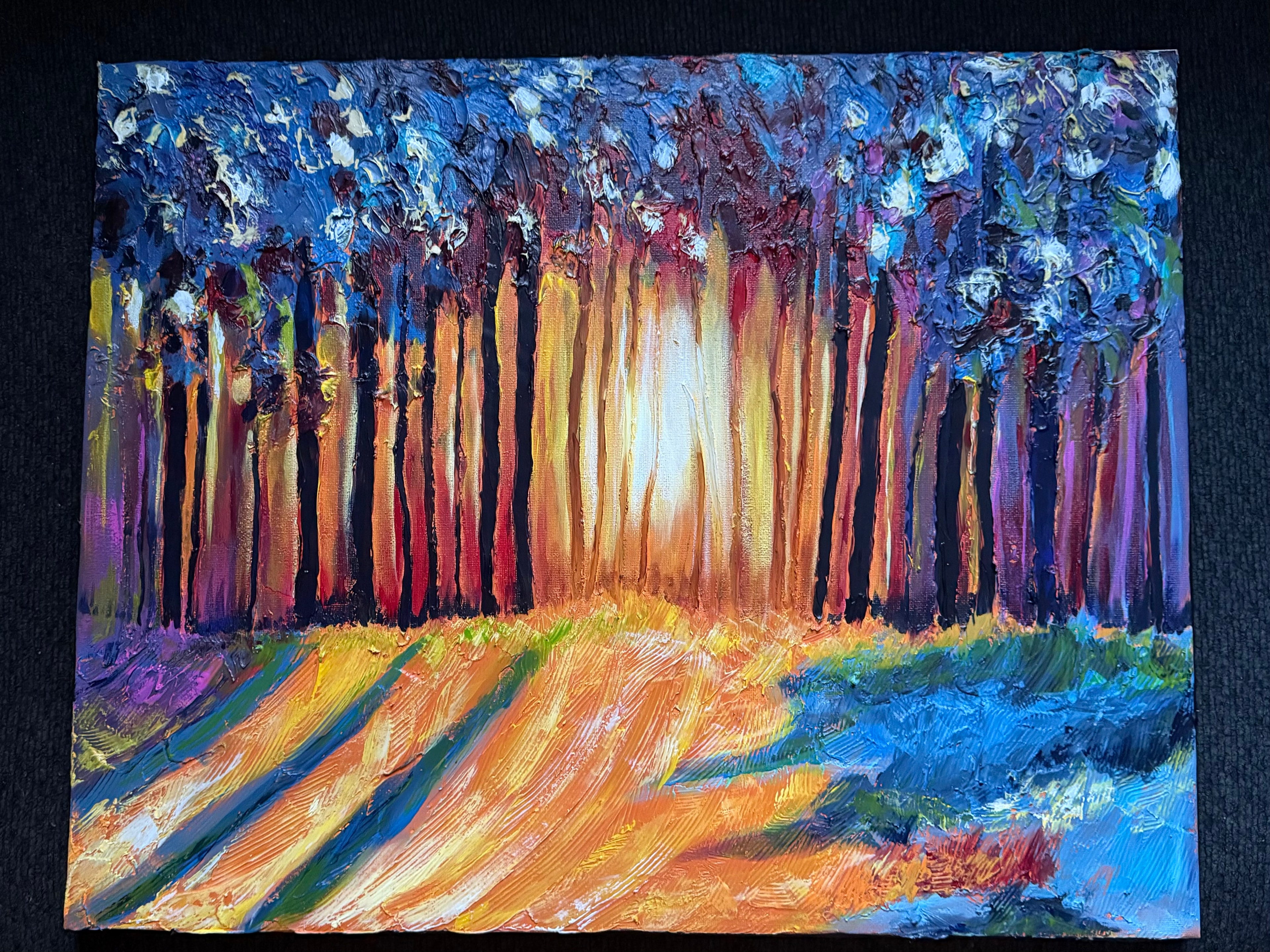
The result is texture that goes further than impasto can. Because caulk doesn't crack or shrink the way thick paint does, Jay can build surfaces that stand a centimeter or more off the canvas — depths that would be structurally impossible with paint alone. And because the texture is built before painting begins, the color can be applied in thin, controlled layers over a fully three-dimensional surface.
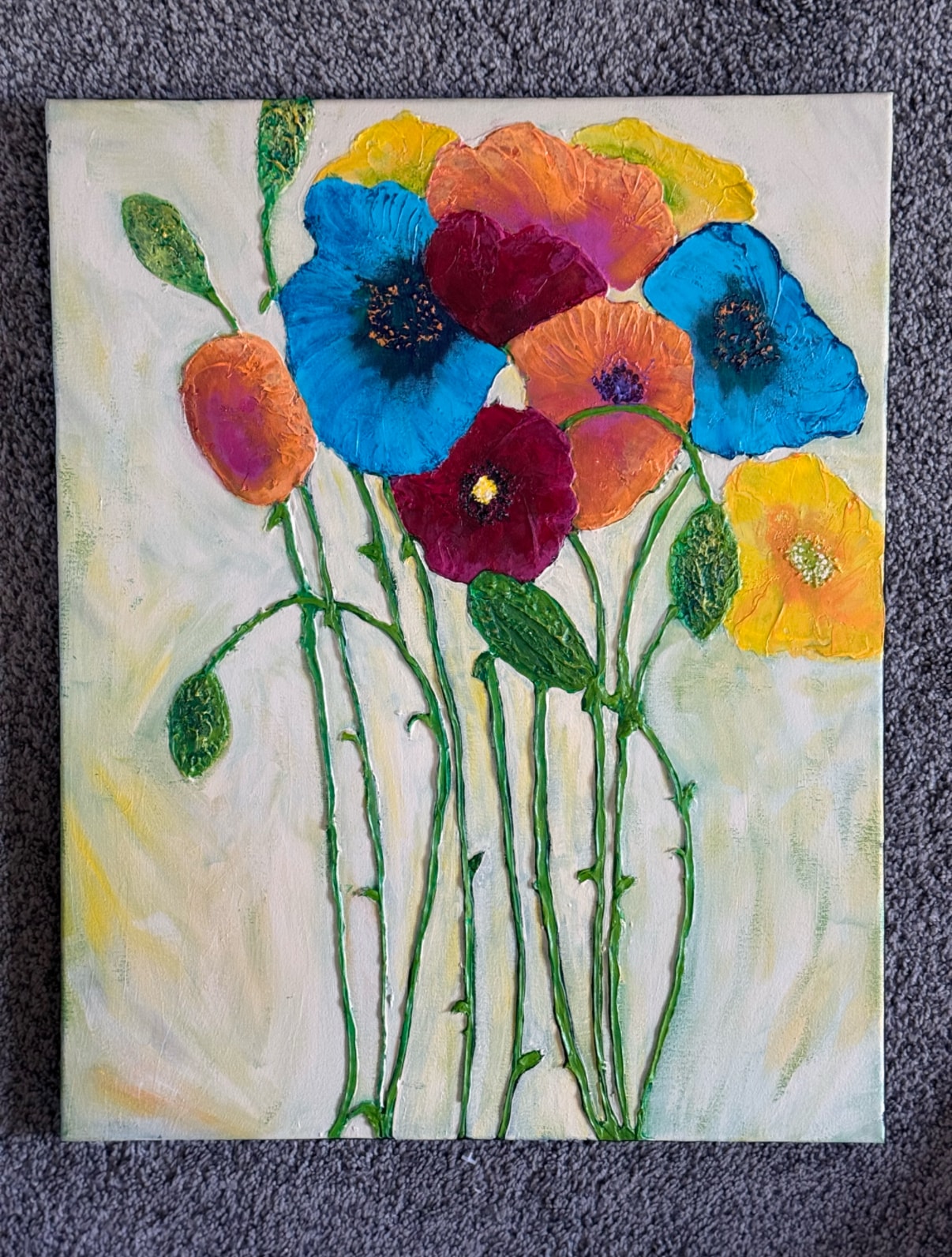
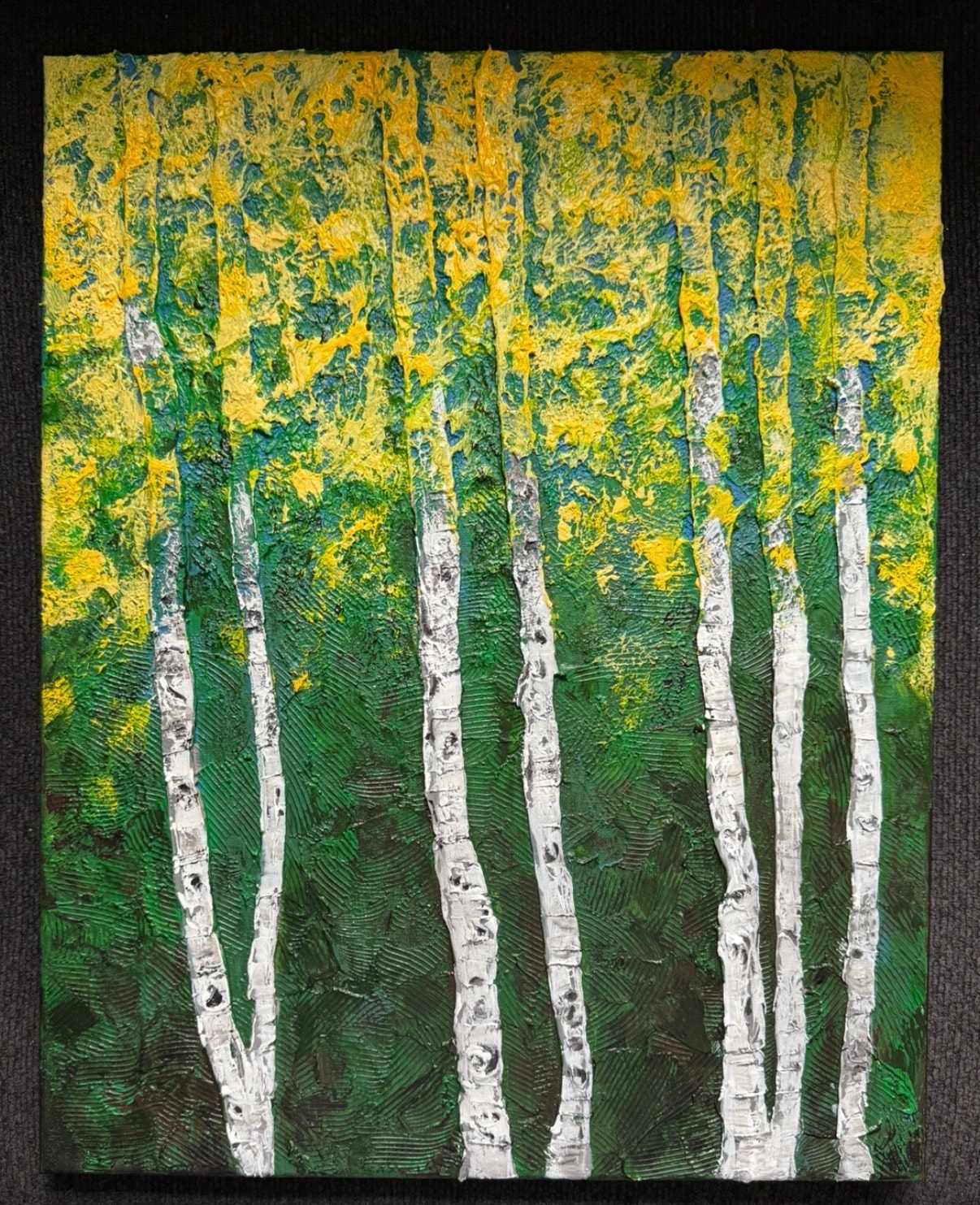
The petal texture in a Jay the Painter floral isn't thick paint dragged across a surface. It's a caulk sculpture of a flower, painted. The feather texture in his rooster portraits isn't impasto. It's a caulk sculpture of feathers, painted. The bark texture in his forest paintings isn't palette knife work. It's a caulk sculpture of bark, painted.
This is the next chapter in the history of texture art — and it's being written in Akron, Ohio.
See the Technique in Action
The best way to understand what makes caulk art different from every previous texture technique is to see the before-and-after process photos:
- Rooster: from white caulk sculpture to finished painting →
- Butterfly: from white caulk sculpture to finished painting →
- Blue Forest Path: three stages of the process →
Own a Piece of This History
Every painting Jay creates is a one-of-a-kind original. No prints. No reproductions. Originals start at $40 for mini paintings and go up to $400 for large statement pieces. All ship free.
Browse the full gallery → | Browse mini paintings from $40 →
Questions? Text Jay directly at 330-285-3136.
What is caulk art? → | The caulk texture painting technique → | Jay the Painter — press and background →
Jay the Painter — original caulk art paintings from Akron, Ohio. Dimensional texture. One of a kind. Free shipping.