What Does a Texture Artist Do? The Craft Behind Dimensional Painting
A texture artist creates original paintings with real three-dimensional surfaces — raised ridges, peaks, and contours built into the canvas itself. Here's exactly what the work involves, what tools are used, and what separates a true texture artist from a regular painter.
What Does a Texture Artist Do? The Craft Behind Dimensional Painting
The term "texture artist" gets used in a lot of different contexts — video game design, house painting, decorative finishes. But in fine art, a texture artist is something specific: a painter who creates original works with real three-dimensional surfaces. Not the illusion of texture. Actual physical depth built into the canvas.
Here's a complete look at what a fine art texture artist does, how the work is made, what tools are involved, and what separates a genuine texture artist from a painter who adds a little surface interest.
The Core of the Work: Building Before Painting
What makes a texture artist different from a regular painter is the sequence of the work.
A conventional painter starts with a blank canvas and builds the image through layers of paint. The surface is flat. The texture — if any — comes from the paint itself, applied thickly in some areas.
A texture artist starts by building the surface before painting begins. The three-dimensional structure of the painting — the ridges, peaks, valleys, and forms — is created first, using a texture medium. Only after that structure is complete does the painting begin.
This separation of texture and color is the defining characteristic of serious texture work. It means the artist is making two distinct creative decisions: first, what the surface will feel like; second, what it will look like. These decisions are made independently, which gives the texture artist a level of control over the final surface that conventional painters can't achieve.
What a Texture Artist Actually Does: Step by Step
Step 1: Planning the Composition
Before any material touches the canvas, a texture artist plans the composition with the texture in mind. Where will the texture be deepest? Which elements will stand out most from the surface? How will the texture interact with the light source?
These decisions are different from the color and value decisions a conventional painter makes. A texture artist is thinking in three dimensions from the start.
Step 2: Applying the Texture Medium
The texture medium is applied to the canvas — in Jay the Painter's case, flexible acrylic caulk. Using palette knives, spreaders, and other tools, the artist builds up the three-dimensional surface, sculpting the forms of the subject into the medium.
This stage requires a different skill set than painting. The artist is working more like a sculptor than a painter — shaping material, building forms, thinking about depth and relief rather than color and value.
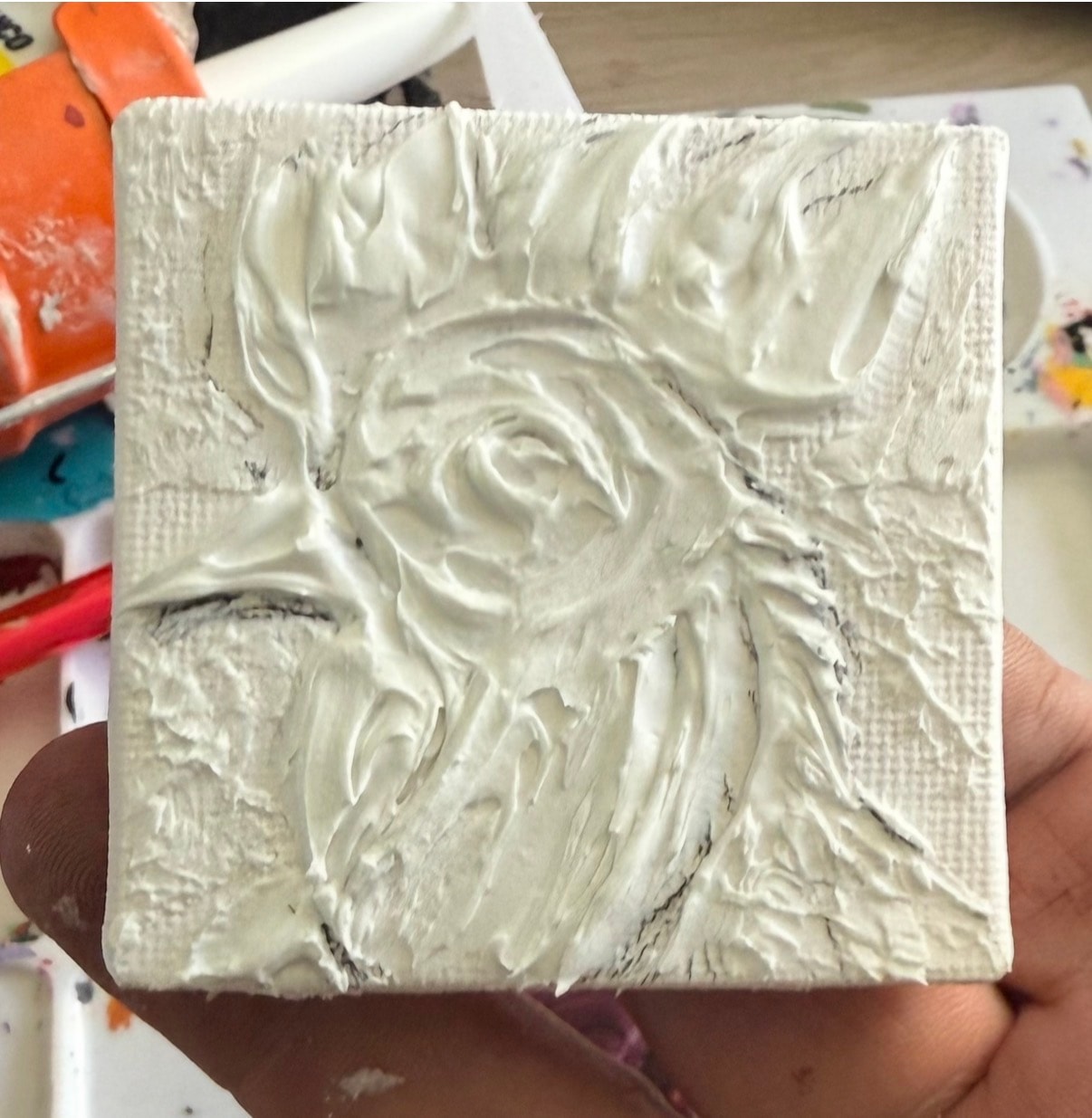
This is what a caulk texture painting looks like before any paint is applied. Every form — feathers, comb, beak, eye socket — is sculpted in flexible caulk.
Step 3: Curing
The texture medium must cure completely before painting begins. For flexible caulk, this typically takes 24 hours or more depending on thickness. Painting over uncured caulk would trap moisture and compromise the surface.
This waiting period is part of the work. A texture artist plans their schedule around curing time — often working on multiple pieces in rotation so there's always something ready to paint.
Step 4: Painting
Once the texture surface is fully cured, painting begins. But the painting process is different for a texture artist than for a conventional painter.
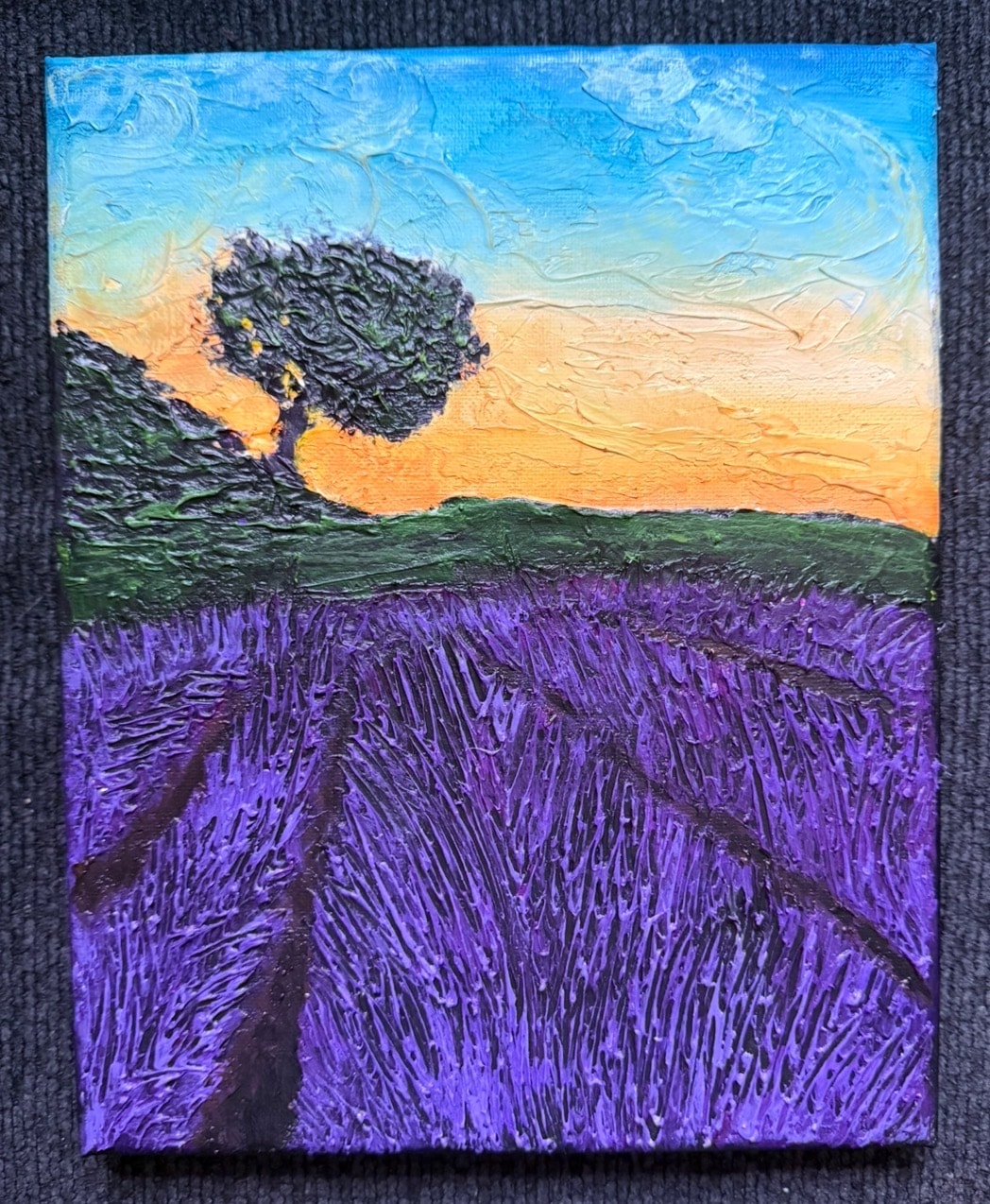
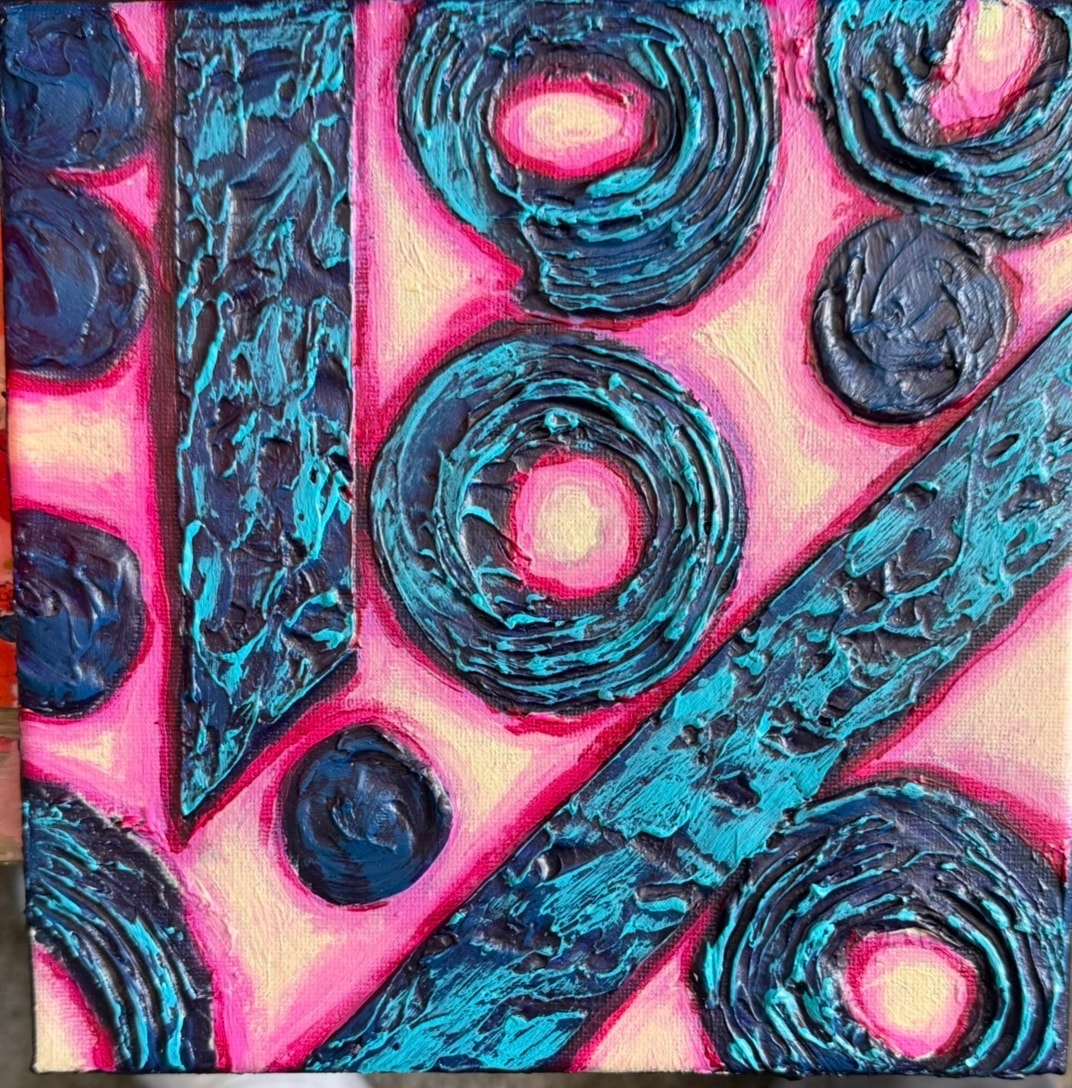
Because the surface is three-dimensional, paint behaves differently. It pools in recessed areas and sits lightly on raised surfaces. The texture itself creates shading — raised areas catch more light, recessed areas hold more shadow — so the artist is working with the surface rather than against it.
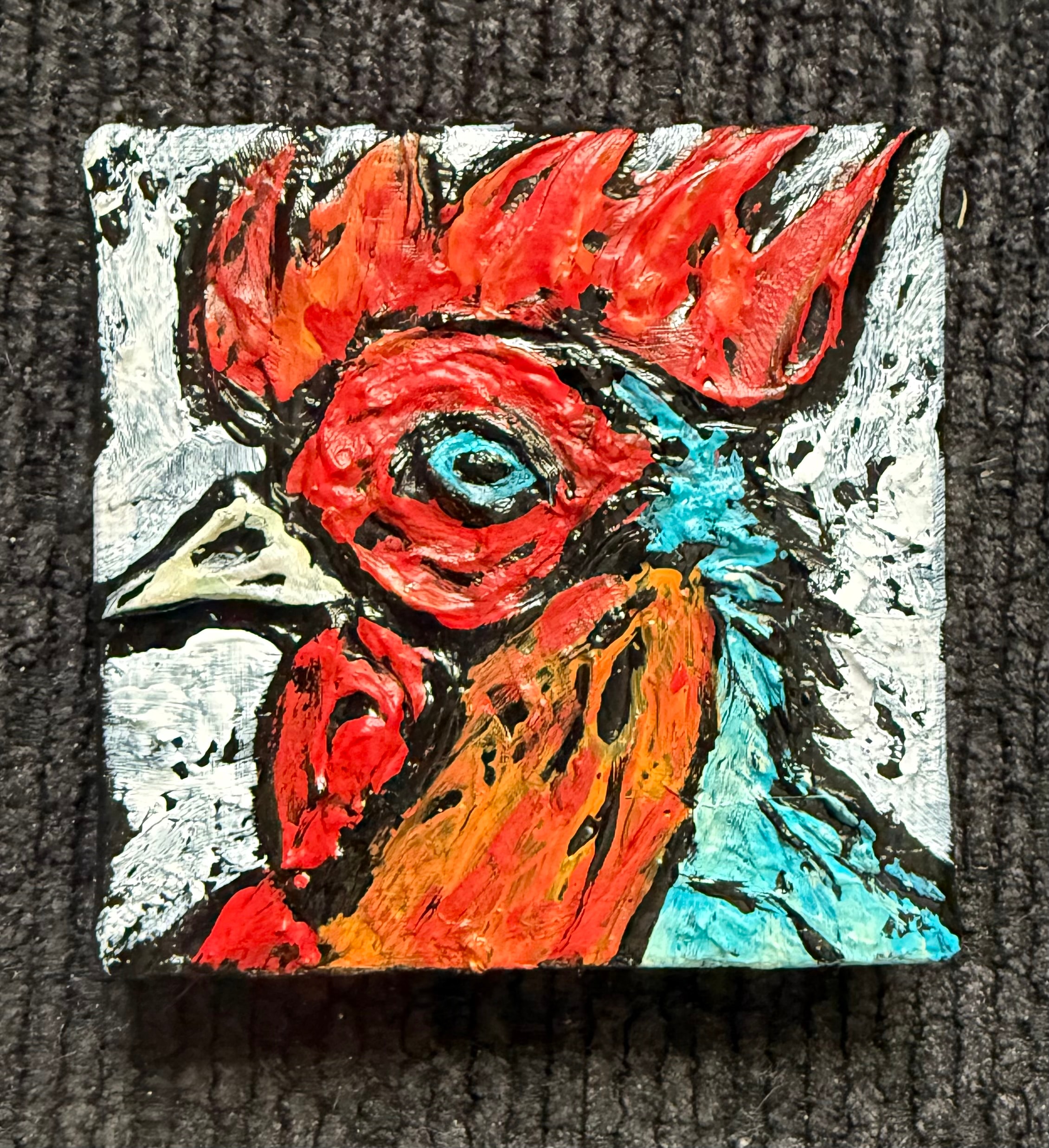
The same canvas after painting. The caulk sculpture is still there — now it's the foundation of the finished work.
The color decisions are made in response to the texture that already exists. A texture artist paints the surface they built, rather than building a surface through paint.
Step 5: Finishing and Sealing
The finished painting is sealed with a quality varnish to protect both the paint and the texture medium. For caulk texture paintings, proper sealing is essential — it protects the surface from moisture and UV damage while preserving the flexibility of the caulk.
The Tools of a Texture Artist
A texture artist's toolkit is different from a conventional painter's:
Palette knives — the primary sculpting tool. Different blade shapes create different texture effects: wide blades for broad surfaces, narrow blades for fine ridges, pointed blades for detail work.
Spreaders and trowels — for applying texture medium over large areas and creating smooth, even surfaces as a base for more detailed work.
Caulk gun — for applying flexible caulk directly from the tube in controlled lines and forms.
Brushes — used in the painting stage, not the texture stage. A texture artist may use conventional brushes for the color layers, since the texture is already established.
Canvas — typically stretched canvas on a wooden frame. The canvas needs to be sturdy enough to support the weight of the texture medium without warping.
What Separates a True Texture Artist from a Regular Painter
Many painters add some texture to their work. That doesn't make them texture artists. Here's what distinguishes a genuine texture artist:
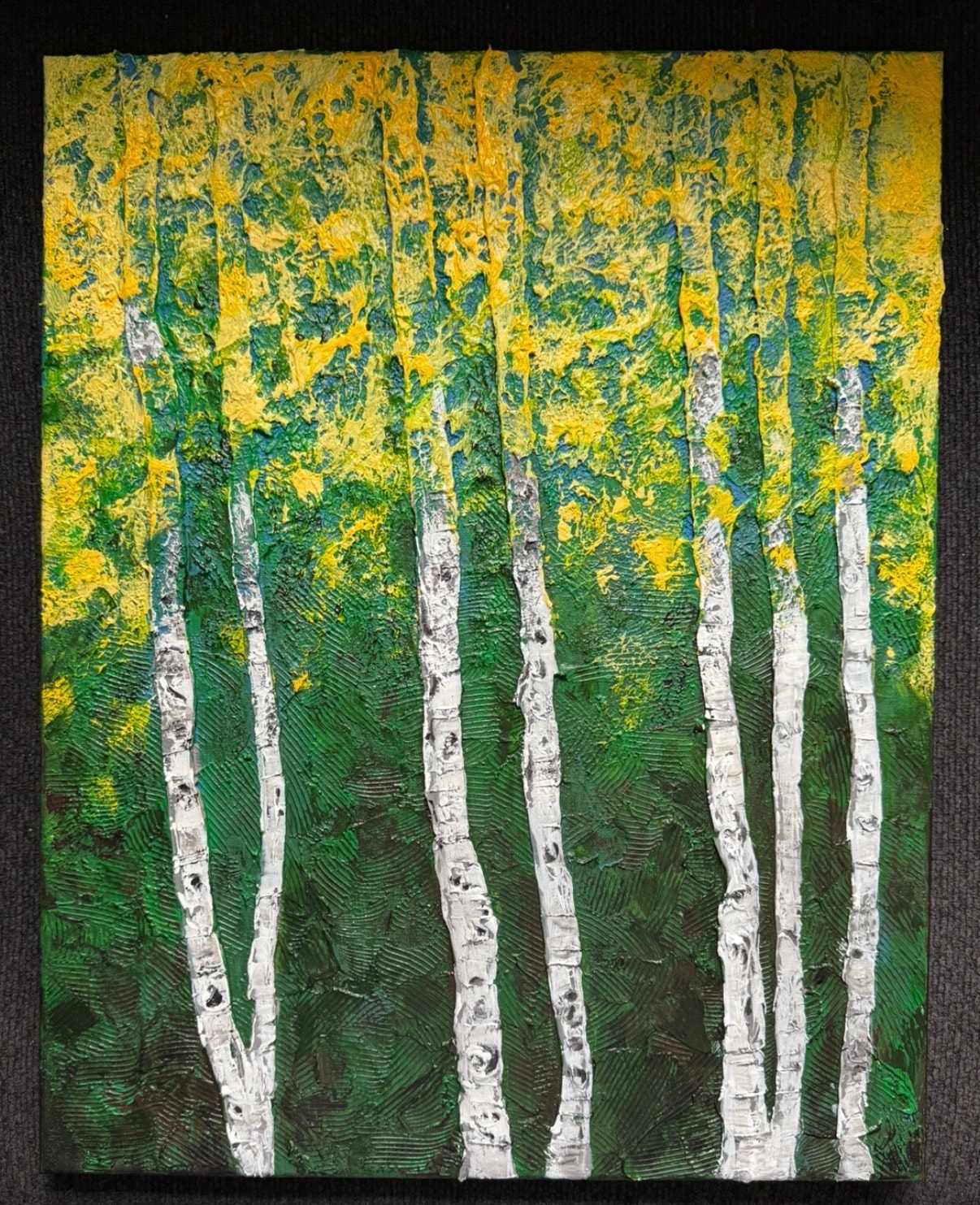
The texture is structural, not incidental. A texture artist builds the surface intentionally, with specific forms in mind. The texture follows the subject's anatomy — petal ridges in florals, bark roughness in trees, feather layers in birds. It's not random surface interest.
The texture has real depth. Genuine texture work creates surfaces that cast shadows, change appearance in different light, and read as three-dimensional from across the room. Shallow surface texture that only shows under close inspection is not the same thing.
The technique is the signature. A texture artist's work is immediately recognizable by its surface. You can identify it from across a room before you can read the subject. The technique is not a style choice — it's the foundation of everything.
The work can't be reproduced. A print of a texture painting is a flat photograph of a three-dimensional object. It captures one image in one light. The original painting is different in every light, from every angle. This irreproducibility is part of what makes texture art valuable to collectors.
Jay the Painter: Akron Ohio's Texture Artist
Jay the Painter is a BFA graduate of Bowling Green State University working from his studio in Akron, Ohio. He developed the caulk texture painting technique — using flexible acrylic caulk as the primary sculptural medium for canvas painting — and has been refining it for years.
His gallery includes forests, florals, landscapes, abstracts, and animal portraits — all built on caulk texture foundations, all one-of-a-kind originals.
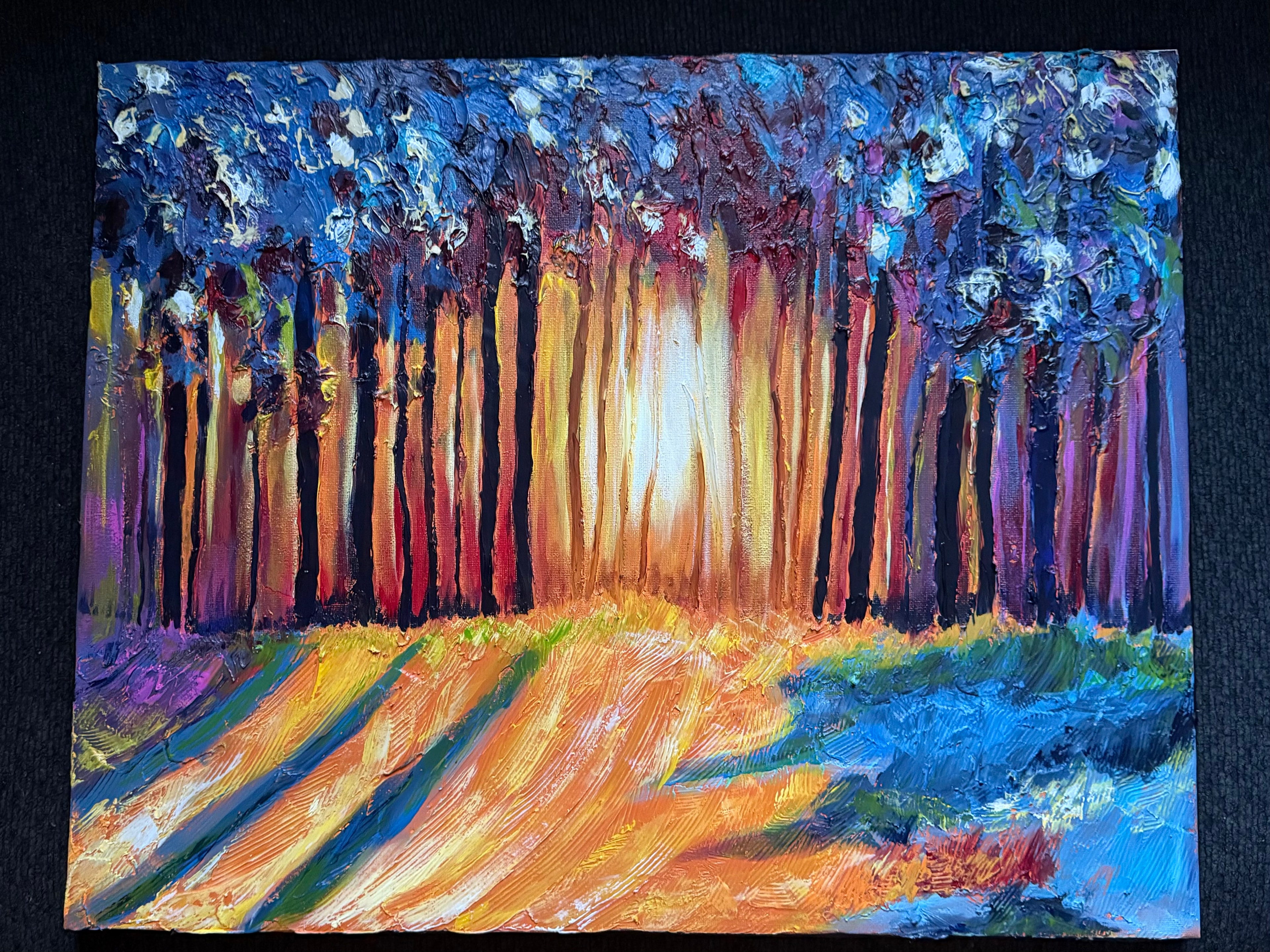
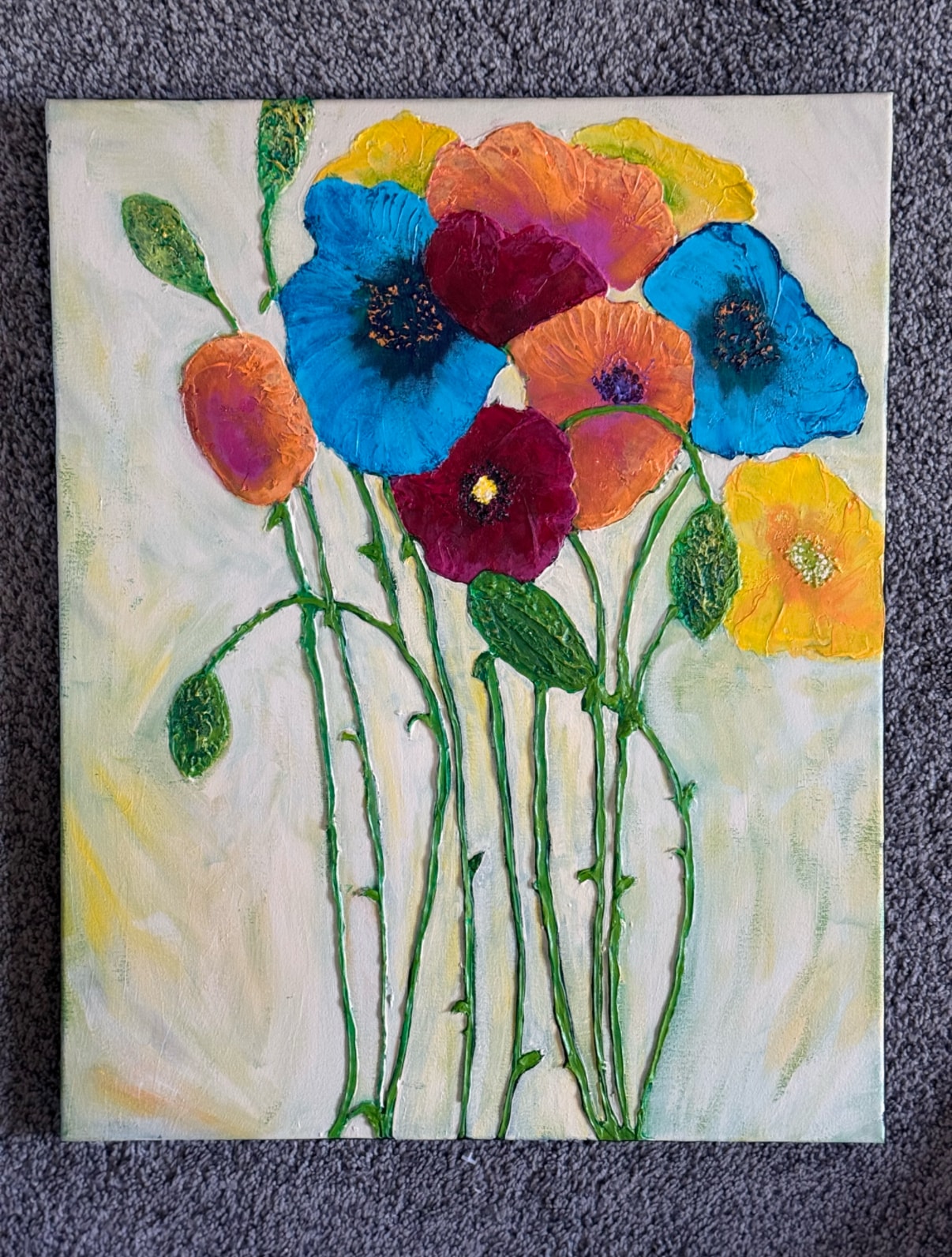
Every painting ships free. Originals start at $40 for mini paintings and go up to $400 for large statement pieces.
Browse the full gallery → | Browse mini paintings from $40 →
Questions about the technique or a specific painting? Text Jay at 330-285-3136.
What is caulk art? → | See the process: rooster before and after → | See the process: butterfly before and after →
Jay the Painter — original caulk art and caulk texture paintings from Akron, Ohio. Dimensional texture. One of a kind. Free shipping. Text 330-285-3136.