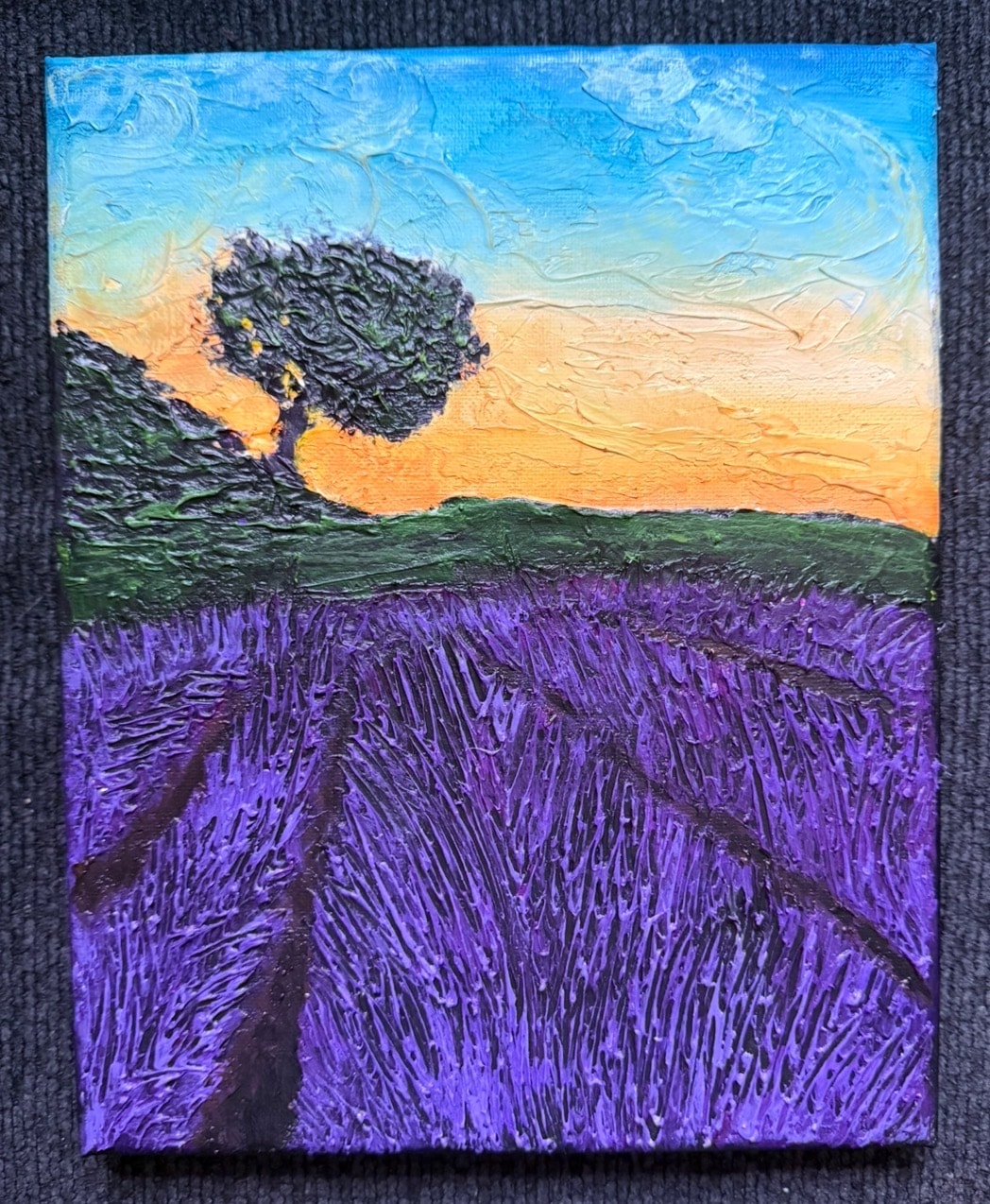
Texture Painting for Your Living Room: How to Choose the Right Piece
A texture painting transforms a living room wall the way no print or flat canvas can. Here's how to choose the right size, subject, and color — and why dimensional caulk art works in every interior style from farmhouse to modern.
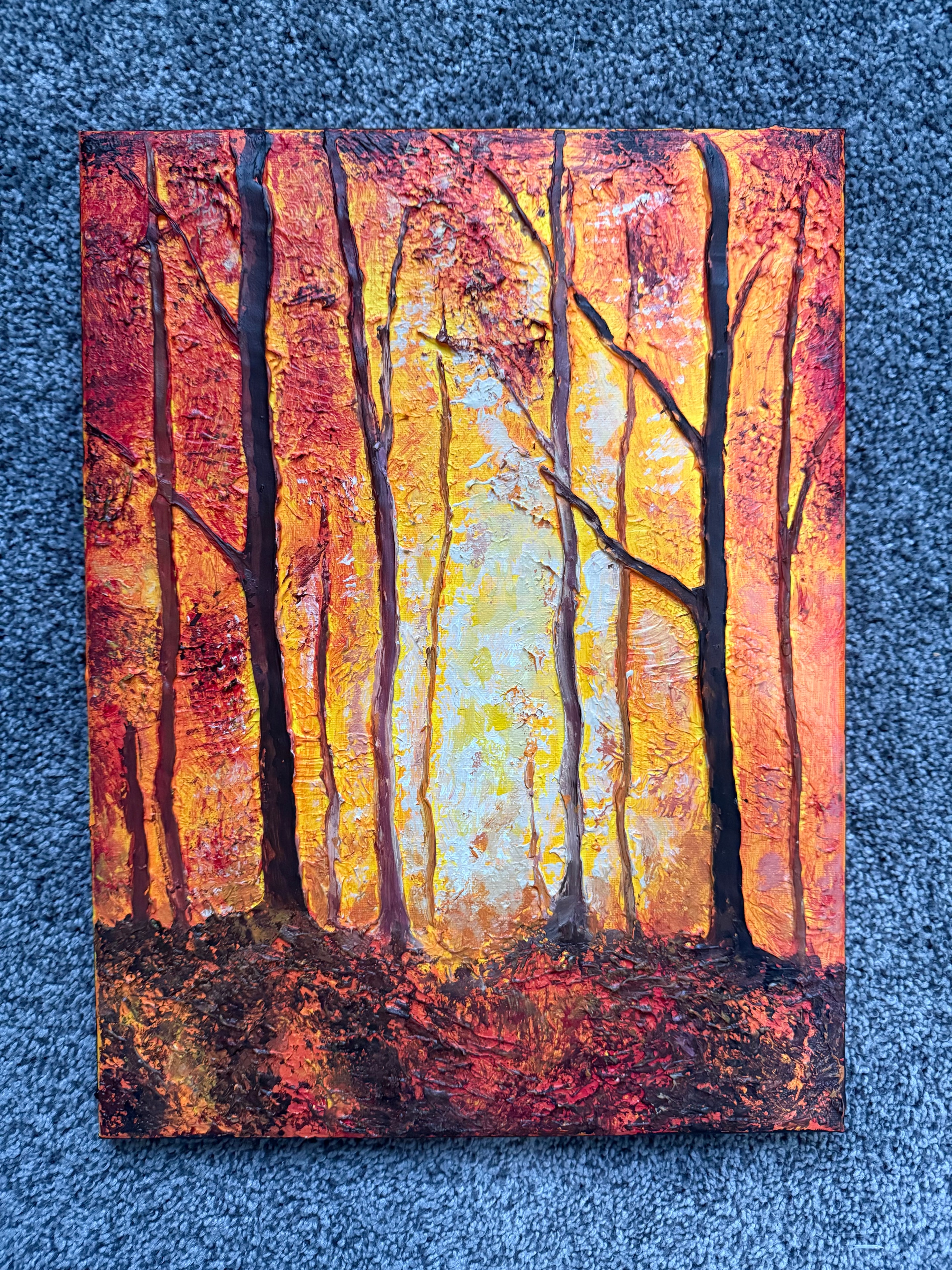
Texture Painting for Your Living Room: How to Choose the Right Piece
A texture painting does something a print or flat canvas can't: it changes with the light. In the morning, the shadows fall one way. In the evening, they fall another. A guest who's seen the painting a dozen times notices something new when the afternoon sun hits it from a different angle.
That's the living room case for dimensional art. It's not just decoration — it's a presence that evolves with the room.
Here's how to choose the right texture painting for your living room: size, subject, color, and how caulk art works across every interior style.
Step 1: Get the Size Right
Size is the most common mistake buyers make with living room art. Most people go too small. A painting that looks substantial on a screen looks like a postage stamp on a 10-foot wall.
General sizing rules for living room walls:
- Sofa wall (above a sofa): The painting should be 2/3 to 3/4 the width of the sofa. For a standard 84" sofa, that's 56–63" wide. A single large canvas or a grouping of smaller pieces that spans that width.
- Focal wall (fireplace, empty wall, accent wall): Go large. A statement piece 36"×48" or bigger reads well on a focal wall. Bigger is almost always better here.
- Smaller walls and nooks: 16"×20" to 24"×30" works well. Don't go smaller than 12"×16" unless it's part of a gallery wall grouping.
For texture paintings specifically: dimensional art benefits from being seen up close as well as from across the room. A texture painting that's too small loses its impact — the viewer can't get close enough to appreciate the surface depth. Err toward larger rather than smaller.
Step 2: Choose the Right Subject for Your Space
The subject of a texture painting affects how it feels in a room — not just visually, but emotionally. Here's how different subjects work in living rooms:
Forests and Landscapes
Forest and landscape paintings are the most versatile living room subject. They work in virtually every interior style — traditional, transitional, farmhouse, modern, contemporary. The organic forms and natural color palettes integrate easily with furniture and textiles.
Jay's forest paintings — birch trees, illuminated paths, autumn foliage — have deep caulk texture in the bark and foliage that creates extraordinary light response. A forest painting in a living room with changing natural light is a different painting at 8am than at 6pm.
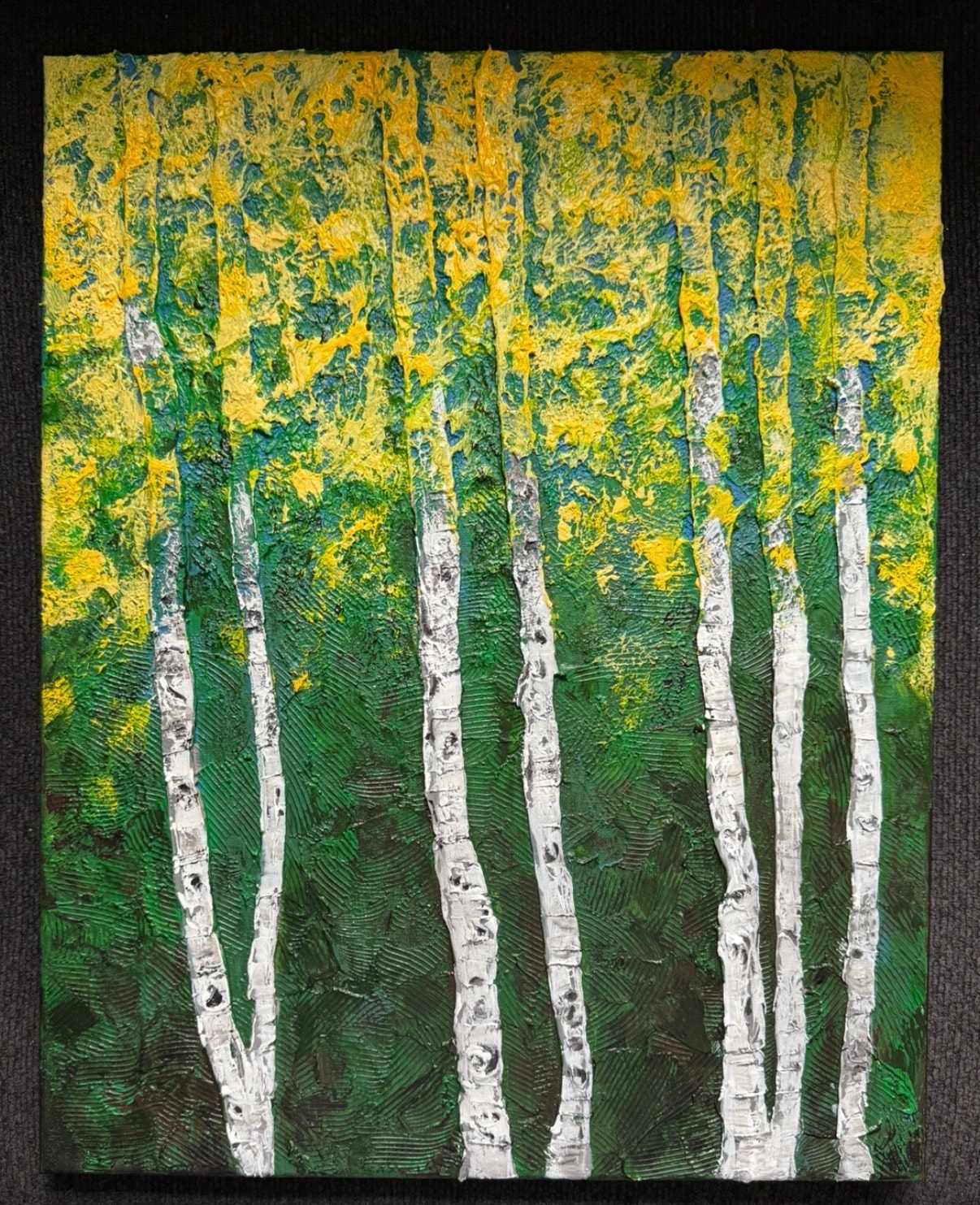
Best for: Traditional, transitional, farmhouse, rustic, and nature-inspired interiors.
Florals
Floral texture paintings bring color and organic energy to a living room. The caulk texture in Jay's florals — petal ridges, stamen detail, leaf veining — creates surfaces that look almost sculptural on the wall.
Florals work best in living rooms with some color in the palette — they can anchor a neutral room or complement a colorful one. A large hibiscus or poppy painting above a sofa makes an immediate statement.
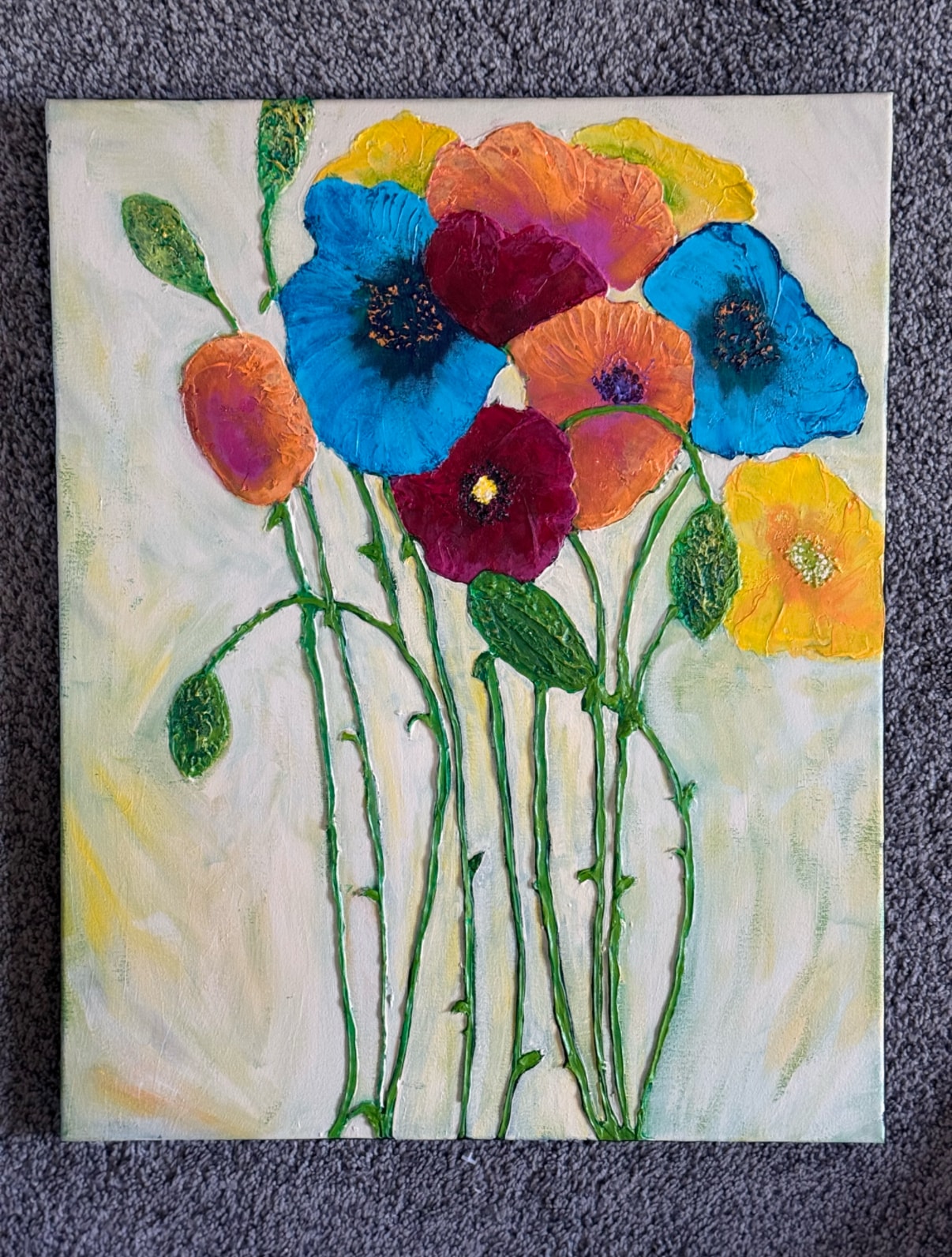
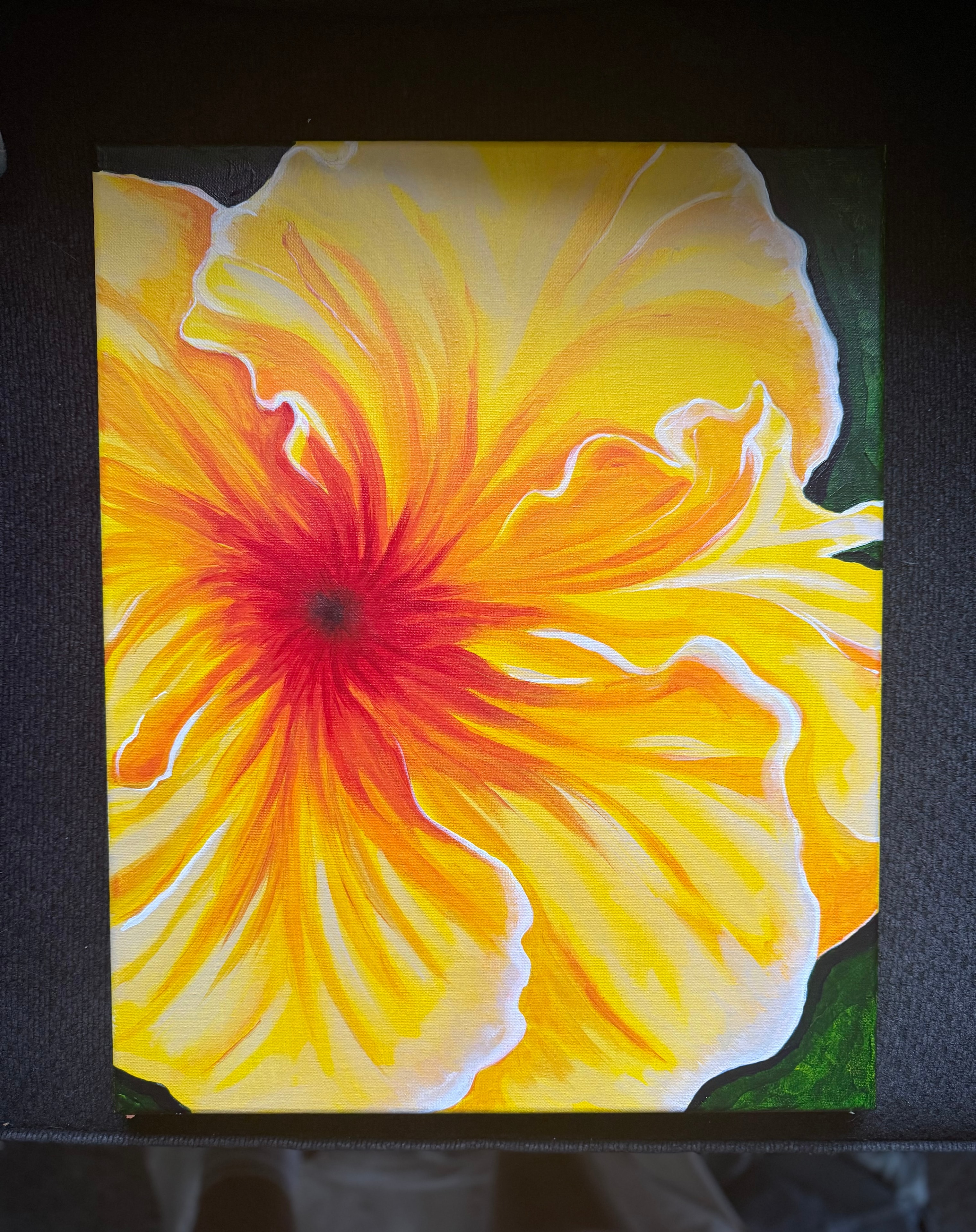
Best for: Transitional, eclectic, bohemian, and colorful contemporary interiors.
Abstracts
Abstract caulk texture paintings work especially well in modern and contemporary living rooms. The dimensional surface adds physical interest to compositions that might otherwise feel flat, and the lack of a representational subject means the painting integrates with almost any color palette.
Jay's abstracts — vortex forms, terrain abstracts, color field compositions — have the same deep caulk texture as his representational work. The texture is the subject.
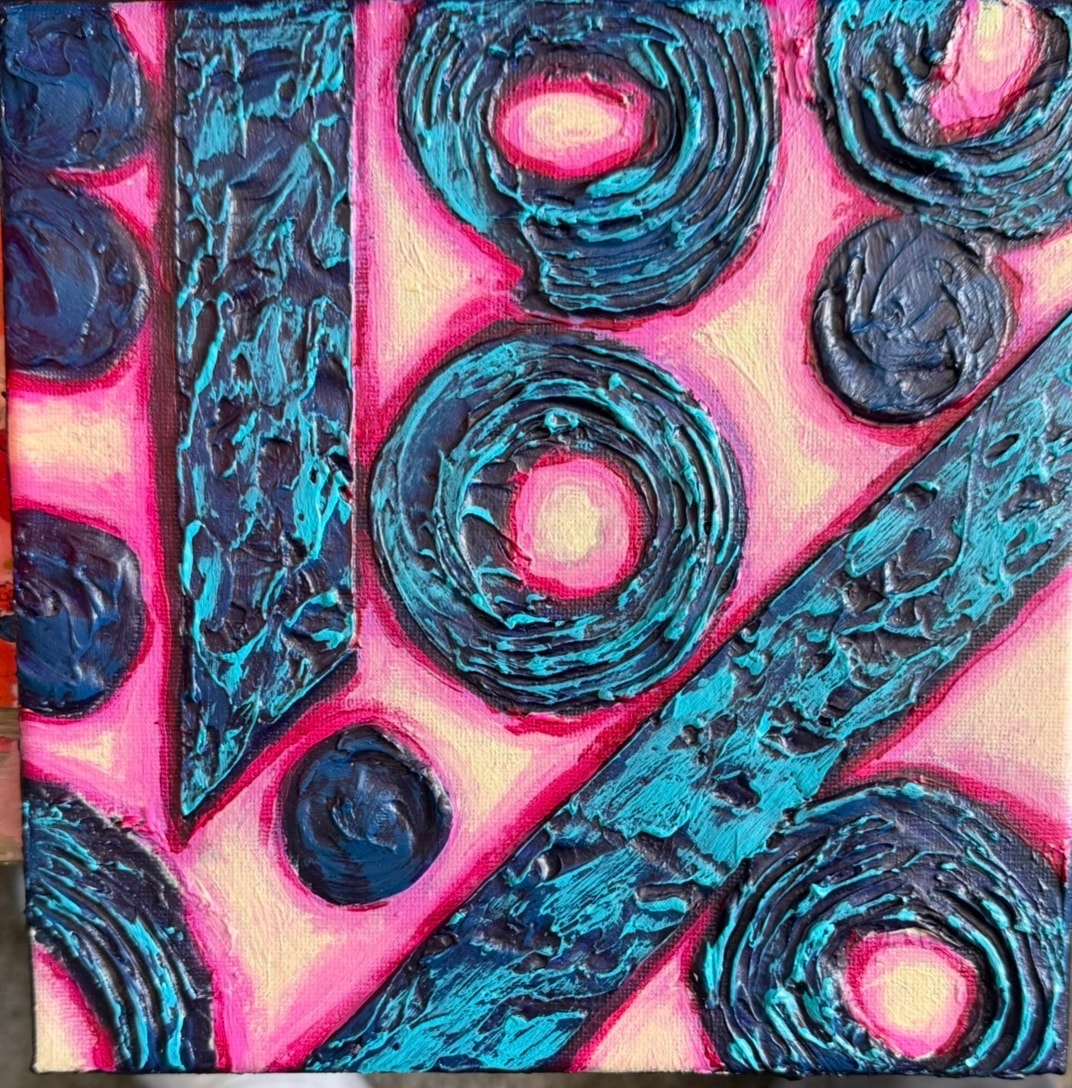
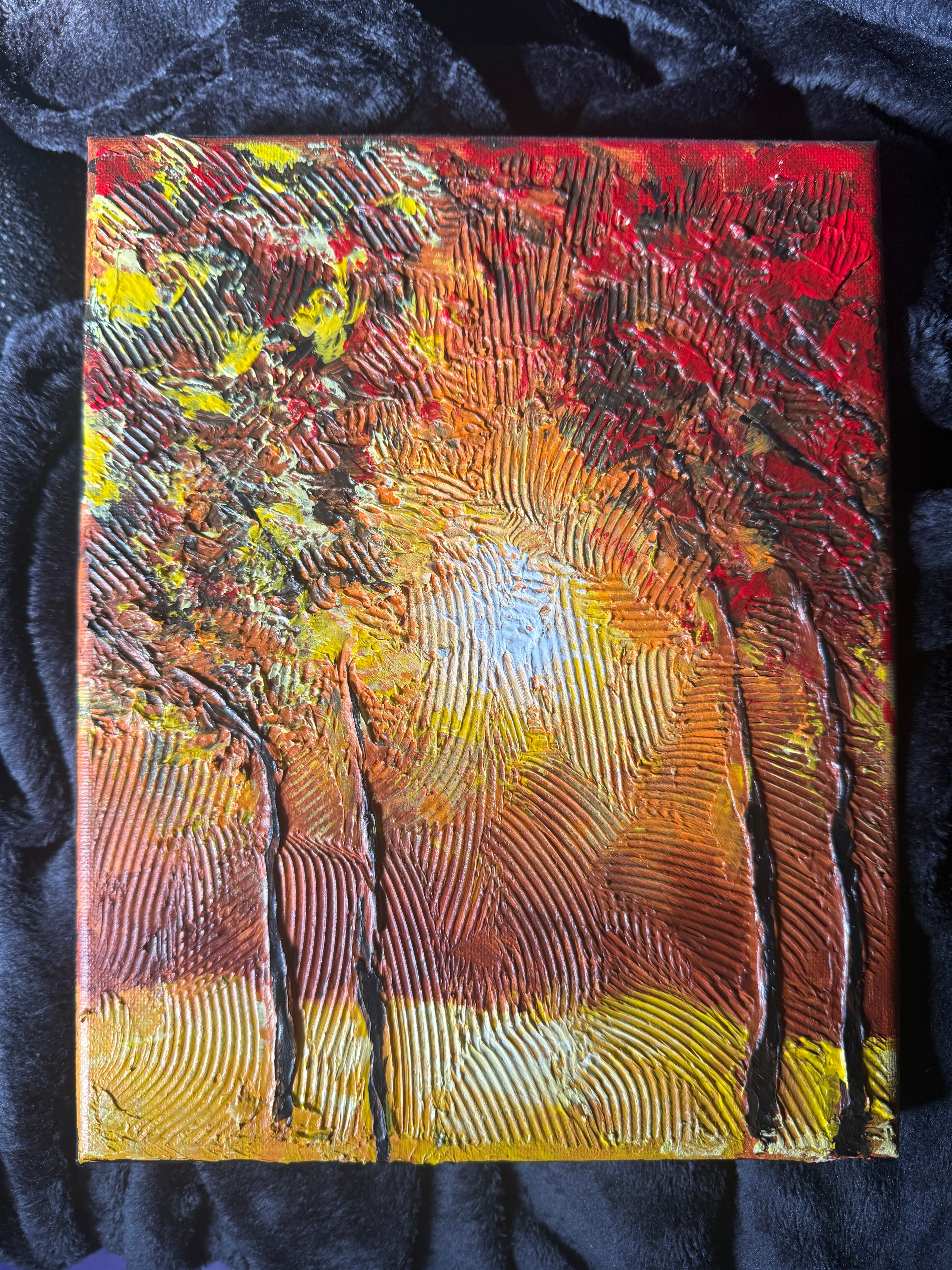
Best for: Modern, contemporary, minimalist, and industrial interiors.
Step 3: Match the Color to Your Room
You don't need to match the painting to your furniture — that's a common mistake that produces safe, forgettable results. Instead, think about relationship:
Complementary: Choose a painting whose dominant color sits opposite your room's dominant color on the color wheel. A room with warm terracotta tones pairs beautifully with a cool blue-green forest painting. A neutral gray room comes alive with a warm amber or red abstract.
Analogous: Choose a painting in the same color family as your room, but with more intensity. A room with soft sage green walls and a forest painting with deep emerald and gold tones — same family, more drama.
Neutral anchor: If your room is already colorful, a painting with a more neutral palette — birch trees in silver and gold, a misty forest in gray-green — anchors the space without competing.
One rule that always works: Pick up one color from the painting in a pillow, throw, or small accessory in the room. This creates visual connection without forcing a match.
Step 4: Consider How Light Hits the Wall
Texture paintings respond to light differently than flat paintings. This is a feature, not a complication — but it's worth thinking about before you hang.
Natural light: A texture painting on a wall that receives direct natural light will show the most dramatic shadow and highlight variation throughout the day. This is usually the best placement for dimensional art.
Artificial light: A single directional light source (a picture light, a track light, a lamp) creates strong shadows in the texture and makes the dimensional surface pop. Overhead ambient light flattens texture. If your living room has overhead-only lighting, consider adding a picture light above the painting.
Avoid: Placing a texture painting directly opposite a window where it will be in shadow all day. The texture needs light to show its depth.
Caulk Art in Every Interior Style
One of the strengths of Jay's caulk texture paintings is their range across interior styles:
Farmhouse / rustic: Forest paintings, barn landscapes, rooster portraits. The organic texture and warm color palettes integrate naturally.
Traditional: Large florals, forest landscapes, birch tree paintings. The dimensional surface adds richness that traditional interiors respond to.
Modern / contemporary: Abstract caulk paintings, color field compositions, geometric texture work. The physical surface adds warmth to spaces that can feel cold.
Transitional: Almost anything works. Transitional interiors are designed to bridge traditional and contemporary — dimensional art does the same.
Eclectic / bohemian: Florals, abstracts, animal portraits. The handmade quality and physical presence of caulk art fits naturally in eclectic spaces.
Ready to Find Your Living Room Painting?
Browse Jay's full gallery — every painting is a one-of-a-kind original with real caulk texture, ships free, and starts at $40 for mini paintings.
Browse the full gallery → | Browse mini paintings from $40 → | Commission a custom piece →
Not sure what size or subject is right for your space? Text Jay at 330-285-3136. Send a photo of your wall and he can help you find the right fit.
What is caulk art? → | Why caulk texture paintings look different in person →
Jay the Painter — original caulk art and caulk texture paintings from Akron, Ohio. Dimensional texture. One of a kind. Free shipping. Text 330-285-3136.