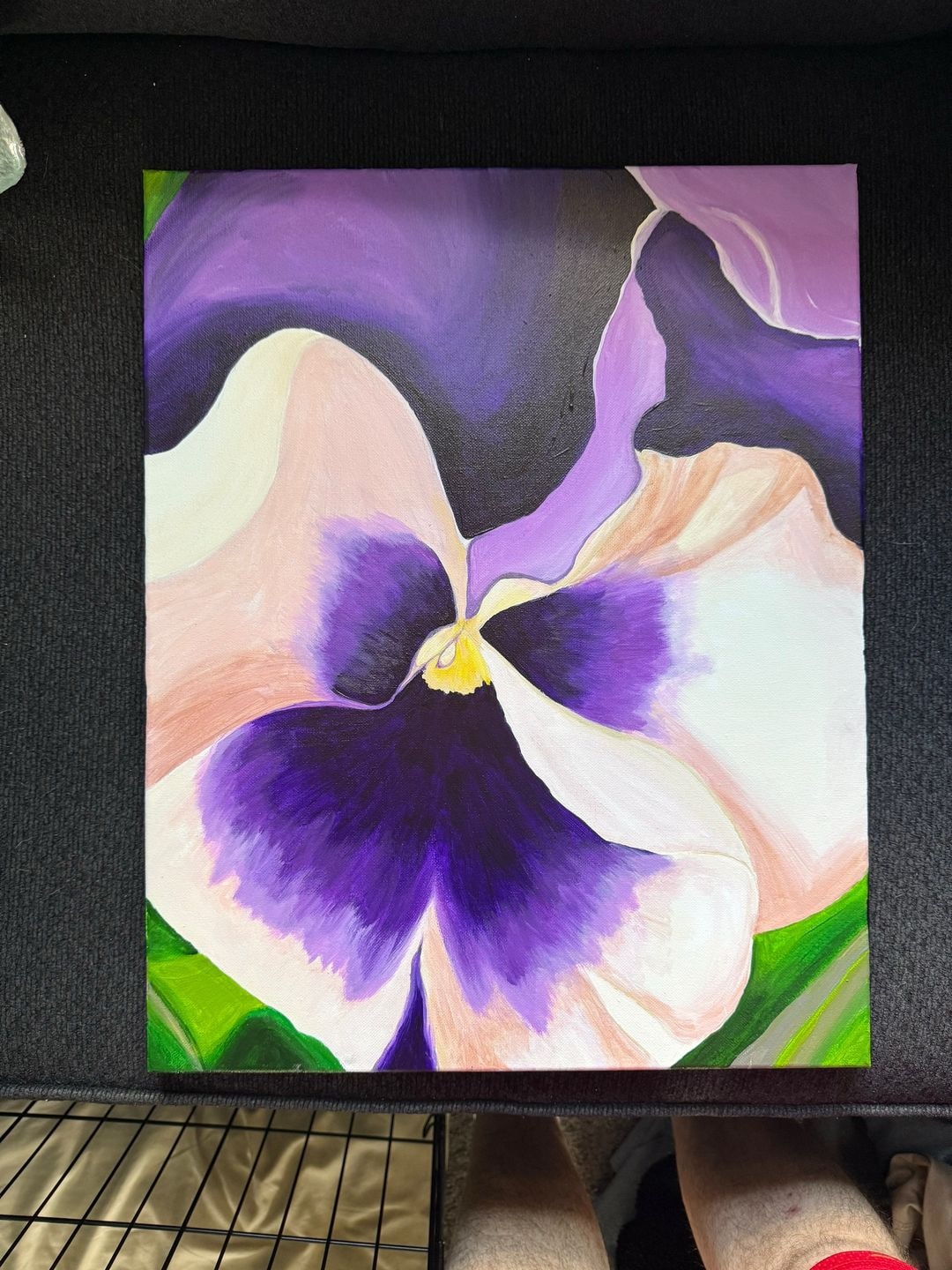
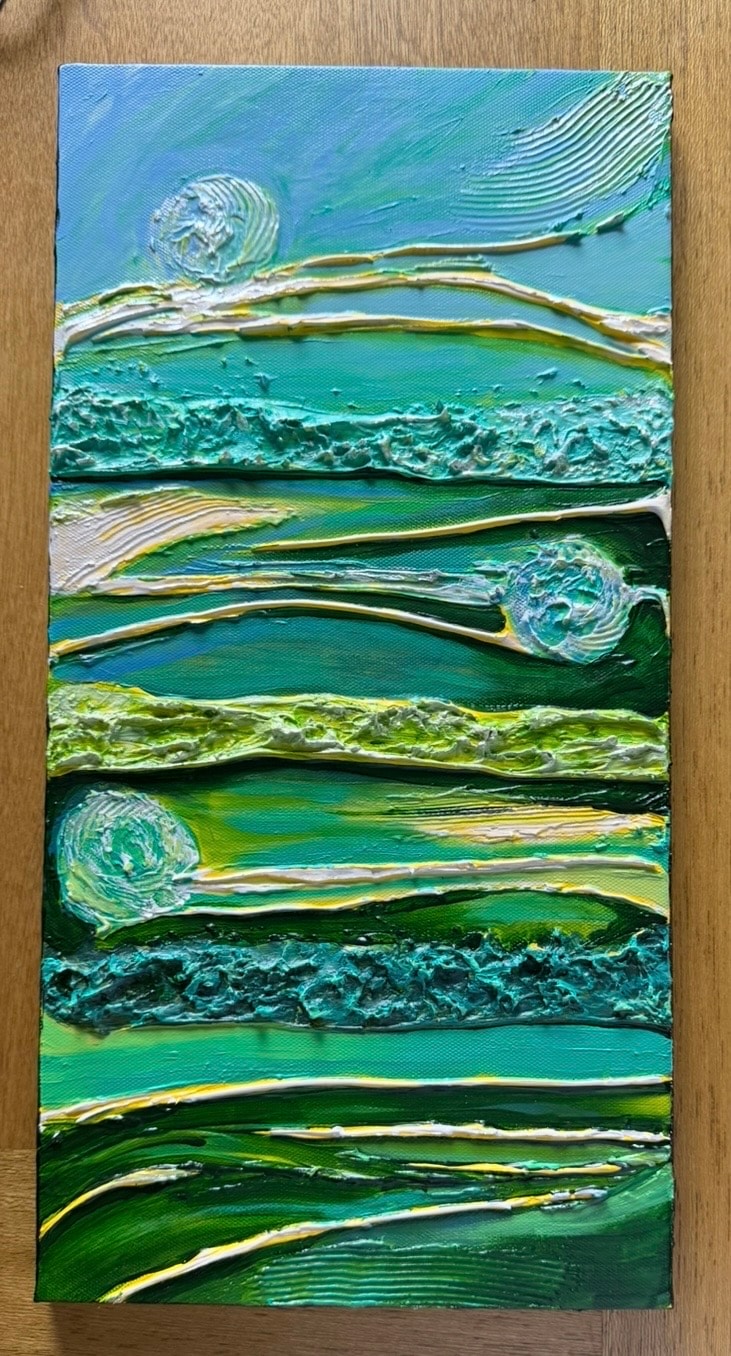
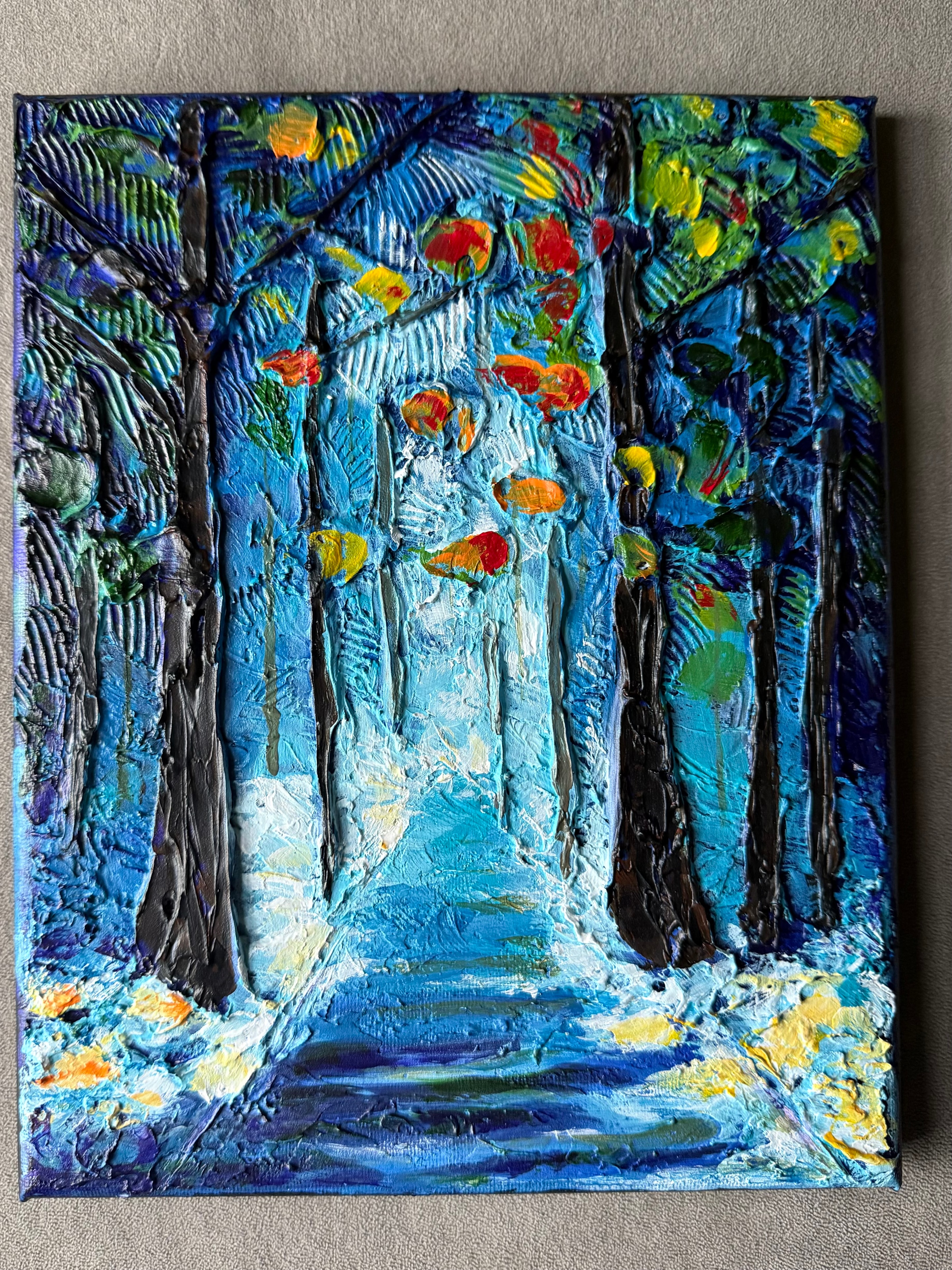
Why Caulk Texture Paintings Look Different in Person Than in Photos
Photos of caulk texture paintings never fully capture what they look like in real life. Here's the science behind why — and why that's actually a selling point, not a problem.
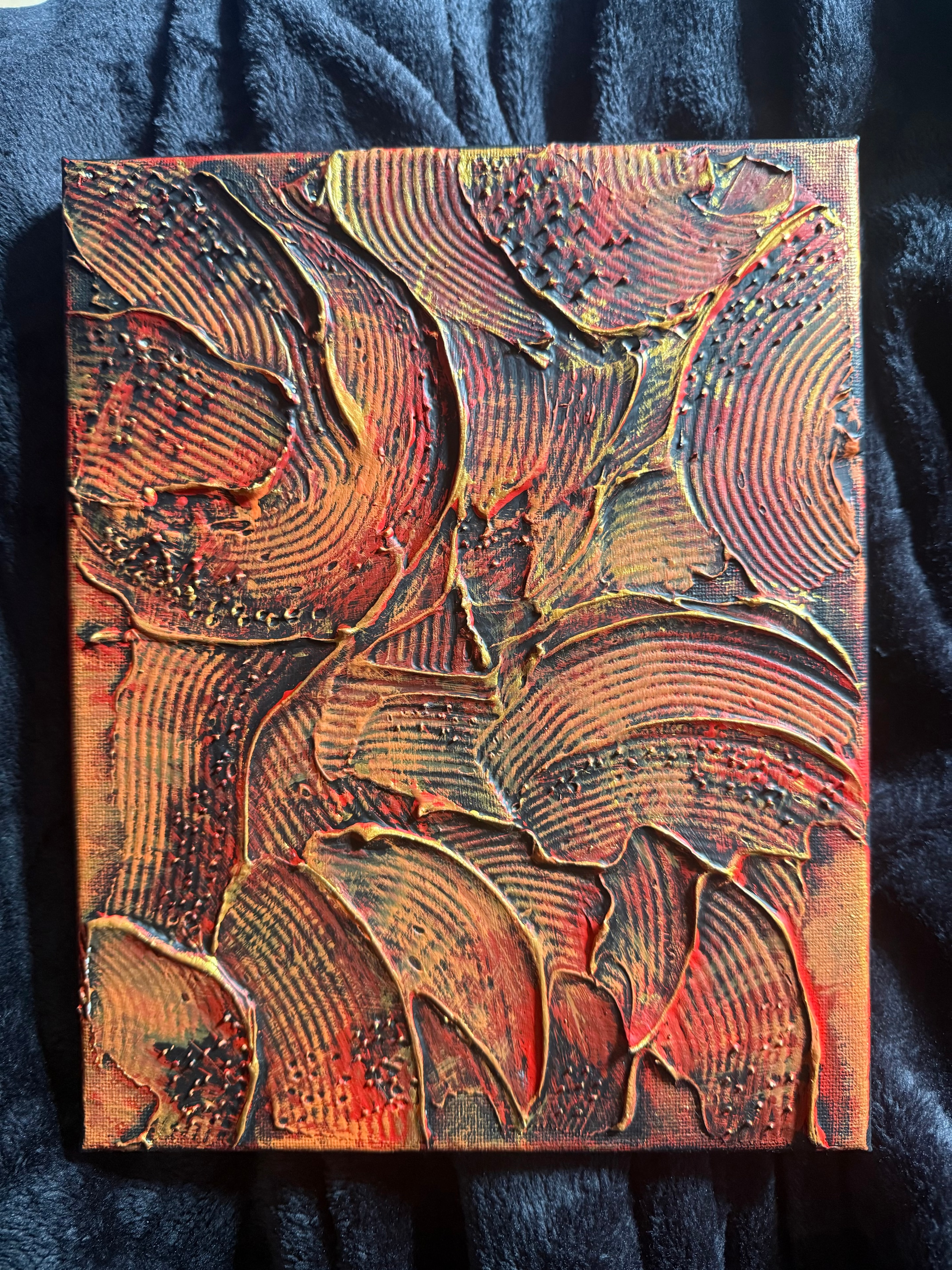
If you've browsed Jay the Painter's gallery online and then seen one of his paintings in person, you already know what this article is about.
The photos are good. They show the color, the composition, the subject. You can tell the painting has texture. But when you see it in real life — when you're standing in front of it and the light is hitting it from the side — it's a completely different experience.
This isn't a photography problem. It's physics. And understanding why caulk texture paintings look so different in person is actually one of the most compelling reasons to own one.
The Fundamental Problem: Cameras Capture One Moment of Light
A photograph captures a single instant — one specific angle, one specific light source, one specific set of shadows and highlights. It's a flat record of one moment.
A caulk texture painting exists in three dimensions. Its surface has real peaks, valleys, ridges, and curves. The way those surfaces look depends entirely on the light hitting them — and light is never static.
When you photograph a textured painting, you're collapsing a three-dimensional, light-responsive object into a two-dimensional image. Some of the information survives. A lot of it doesn't.
How Light Interacts with Caulk Texture
To understand why photos fall short, it helps to understand what's actually happening when light hits a caulk texture painting.
Directional Shadows
Every ridge and peak in a caulk texture painting casts a shadow. The direction and length of that shadow depends on where the light is coming from.
In a photograph taken with a camera flash or flat studio lighting, those shadows are minimized or eliminated. The texture looks flatter than it is. The depth disappears.
In a room with a window, a lamp, or any directional light source, those shadows are dramatic and beautiful. The texture jumps out. The painting looks almost sculptural.
Raking Light
"Raking light" is the term for light that hits a surface at a very low angle — almost parallel to the surface rather than perpendicular to it. Raking light is what makes texture visible.
When you hang a caulk texture painting near a window and the afternoon sun rakes across it at a low angle, the texture becomes extraordinary. Every ridge casts a long shadow. Every peak catches a bright highlight. The painting looks completely different than it did in the morning when the light was coming from a different direction.
This is something no photograph can capture — because a photograph can only show one light angle at a time.
The Moving Shadow Effect
As the light in a room changes throughout the day — as the sun moves, as clouds pass, as lamps are turned on and off — the shadows on a caulk texture painting shift with it.
A painting that looks one way at noon looks completely different at 4pm. The same painting looks different in winter light than in summer light. It looks different with a lamp to the left than with a lamp to the right.
This is what collectors mean when they say a textured painting "lives" in a way that flat paintings don't. It's not static. It's always changing.
What Photos Can and Can't Show
To be fair, a good photograph of a caulk texture painting does capture some of the texture. With directional lighting and a skilled photographer, you can see the dimension. You can tell the painting has real surface depth.
What photos show reasonably well:
- Color and composition
- The general presence of texture
- The subject and overall design
- The scale of the work
What photos can't show:
- The full depth of the texture
- How the painting changes with different light angles
- The tactile quality of the surface
- The way the painting interacts with the specific light in your home
- The experience of moving around the painting and seeing it shift
The gap between "photo" and "in person" is larger for caulk texture paintings than for almost any other type of art. A photograph of a flat painting is a pretty accurate representation. A photograph of a caulk texture painting is a starting point.
Why This Is a Feature, Not a Bug
Some buyers worry about this gap. They wonder: if the photo doesn't fully show what the painting looks like, how do I know what I'm getting?
Here's the thing: the gap between photo and reality always goes in one direction. The painting is better in person than in photos. Always.
When you buy a caulk texture painting based on a photo, you're buying the minimum version of what you'll actually receive. The real painting — in your home, with your light — will exceed what you saw online.
This is the opposite of most online purchases, where the product often disappoints compared to the photos. With caulk texture paintings, the photos are the conservative version.
The Experience of Owning a Caulk Texture Painting
People who own caulk texture paintings often describe noticing something new in the painting every time they look at it. A shadow they hadn't seen before. A highlight that appears in the afternoon light. A texture detail that only becomes visible from a certain angle.
This is the lived experience of owning three-dimensional art. It's not a painting you look at once and fully understand. It's a painting that reveals itself over time, as the light changes and as you move around it.
That's rare. Most art — prints, photographs, flat paintings — is fully visible the first time you look at it. There's nothing new to discover. A caulk texture painting keeps giving you new things to see.
For Collectors: What to Know Before You Buy
If you're considering buying a caulk texture painting online, here's what to keep in mind:
The photos are accurate but incomplete. The color, composition, and subject are faithfully represented. The texture depth is understated.
Ask about the texture depth. Jay is happy to describe the specific texture depth and character of any painting. Text him at 330-285-3136 and ask about any piece in the gallery.
Consider your lighting. A caulk texture painting will look most dramatic with directional light — a window, a track light, or a lamp positioned to the side. Flat overhead lighting minimizes the texture effect. Think about where you'll hang it and what the light is like there.
The painting will surprise you. In a good way. Every collector who has received a Jay the Painter original has commented that it was better in person than in the photos. That's not marketing — it's the physics of three-dimensional art.
Browse Jay the Painter's full collection of original caulk texture paintings at jaythepainter.com/artwork. Every piece is 100% original — no prints, ever. Ships nationwide, carefully packaged to protect the 3D surface.
Text Jay at 330-285-3136 to ask about any painting, request additional photos from different light angles, or discuss a commissioned work.
Browse the gallery → | Learn more about caulk texture painting → | View mini paintings →
Go deeper: The complete caulk art guide → | Jay's process from start to finish →
Explore Topics
Written by
Jay the Painter
Content creator and writer sharing insights and stories.