Texture Artist vs. Abstract Artist: What's the Difference?
Texture art and abstract art overlap — but they're not the same thing. A texture artist can paint realistically. An abstract artist can paint flat. Here's the real distinction, why it matters when you're buying art, and how Jay the Painter works in both modes.
Texture Artist vs. Abstract Artist: What's the Difference?
If you've been browsing original art online, you've probably noticed that "texture art" and "abstract art" often appear together — sometimes used interchangeably. It's an understandable confusion. A lot of textured paintings are abstract. A lot of abstract paintings have texture. The two categories overlap significantly.
But they're not the same thing. Understanding the difference matters when you're buying art, because it tells you what you're actually getting — and what to look for.
What Defines Abstract Art
Abstract art is defined by its relationship to representation. An abstract painting does not depict recognizable objects, figures, or scenes from the real world — or it depicts them in a highly distorted, non-literal way.
The defining question for abstract art is: what does it represent?
- A painting of a forest is representational (realistic).
- A painting of a forest where the trees are simplified into geometric shapes is semi-abstract.
- A painting of swirling color with no recognizable subject is fully abstract.
Abstract art can be painted on a completely flat surface with thin, smooth paint. Many of the most famous abstract paintings — Rothko's color fields, Mondrian's grids, Malevich's suprematist compositions — have very little surface texture at all. The abstraction is in the imagery, not the surface.
What Defines a Texture Artist
A texture artist is defined by their surface, not their subject matter. A texture artist creates paintings with real three-dimensional surfaces — raised ridges, peaks, and contours built into the canvas using a texture medium.
The defining question for texture art is: what does it feel like?
A texture artist can paint anything:
- A realistic forest with bark you can feel
- An abstract swirl with dimensional ridges
- A floral with petals that stand off the canvas
- A portrait with skin texture built in caulk
The subject doesn't determine whether something is texture art. The surface does.
Where They Overlap
The confusion comes from the fact that many texture artists work abstractly — and many abstract artists use texture. The overlap is real and significant.
Textured abstract art is probably the most common form of texture art in the current market. Artists who work with palette knives, impasto, and mixed media often create abstract compositions because the texture itself becomes the subject. When the surface is the most interesting thing about a painting, abstraction makes sense — there's no representational subject competing for attention.
Jackson Pollock's drip paintings are both abstract and deeply textural. Anselm Kiefer's work is both abstract and built from physical materials. Many contemporary texture artists work in abstraction for the same reason.
Flat abstract art is equally common and equally valid. Rothko's paintings are among the most powerful works in the history of art — and they're almost completely flat. The abstraction is in the color relationships, not the surface.
Why the Distinction Matters When You're Buying
When you're buying art, understanding this distinction helps you ask the right questions.
If you want abstract art, you're asking about the imagery. Does it have a recognizable subject? How much does it suggest versus depict? What emotional or intellectual response does it create?
If you want texture art, you're asking about the surface. Is the texture real and structural, or is it shallow surface interest? How deep is it? What medium creates it? Will it last?
If you want textured abstract art — which is a specific and very popular category — you're asking both sets of questions. You want imagery that doesn't represent a specific subject AND a surface with real dimensional depth.
The mistake buyers make is assuming that "abstract" means "textured" or that "textured" means "abstract." Neither is true. You can have one without the other, or both together.
Jay the Painter: Both a Texture Artist and an Abstract Artist
Jay the Painter works in both modes — and the distinction is clear in his gallery.
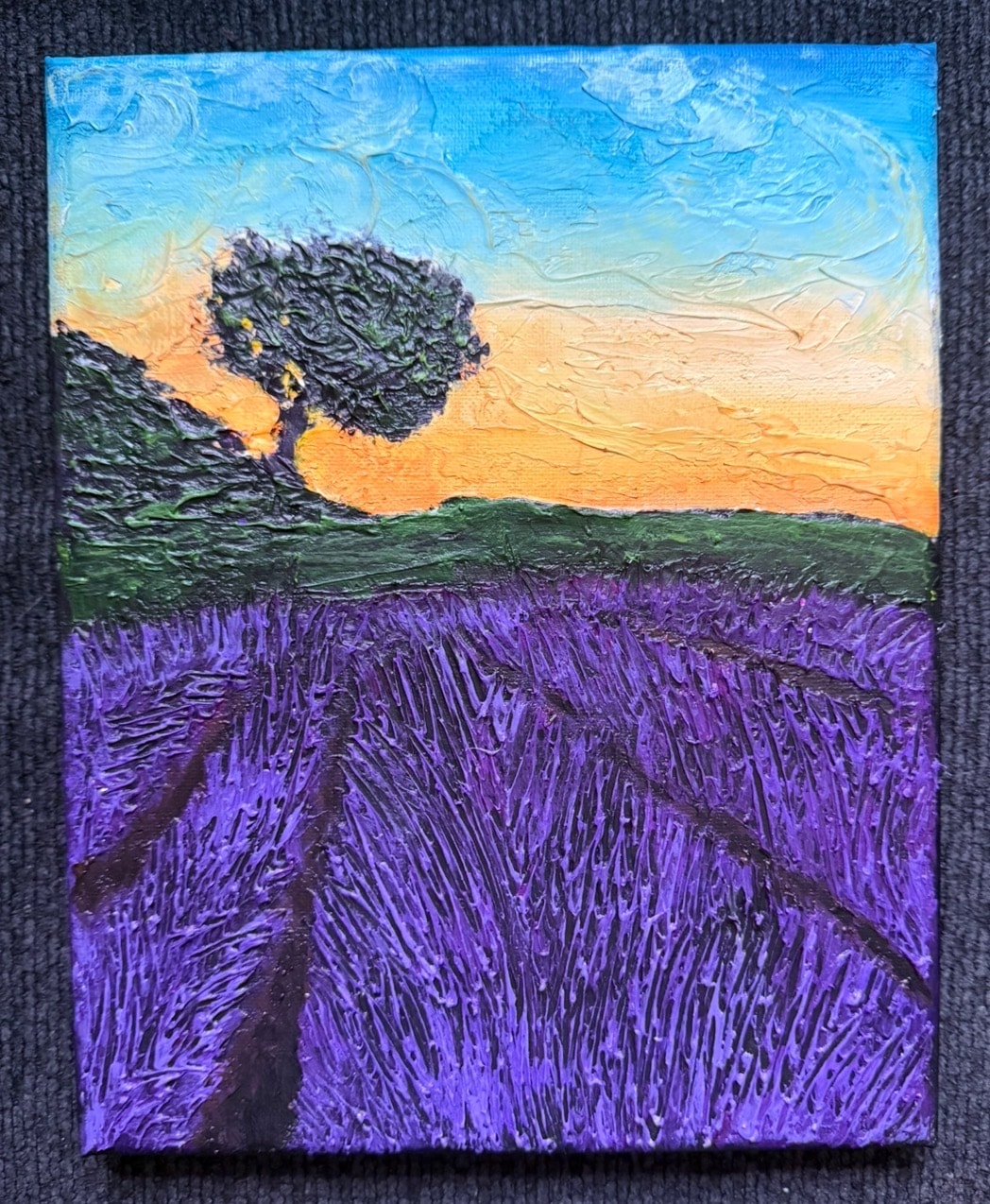
His representational caulk texture paintings depict specific subjects — forests, florals, roosters, landscapes — with real three-dimensional caulk texture built into the surface. These are texture paintings with recognizable subjects.
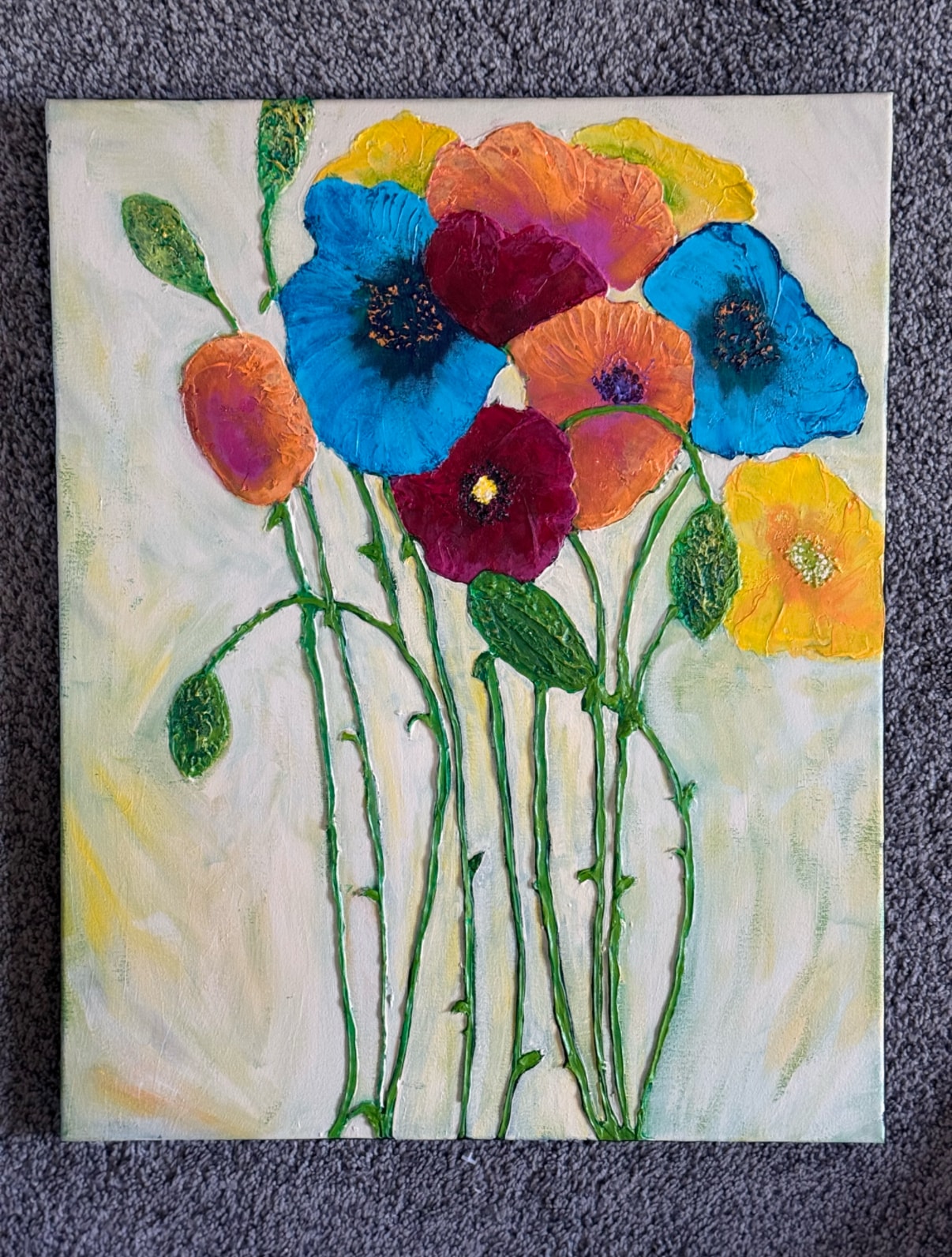
Poppies: a representational subject with deep caulk texture in every petal.
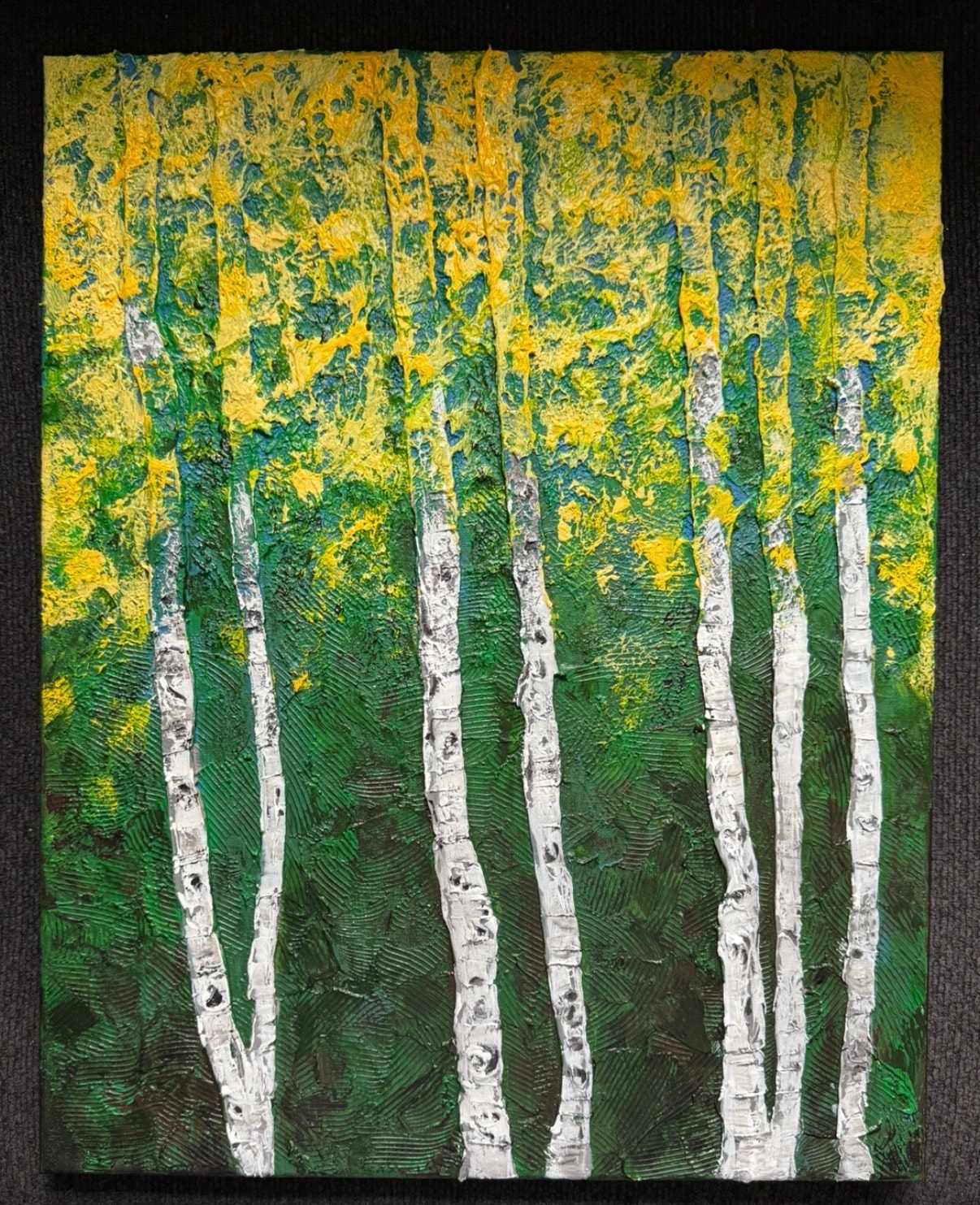
Birch Forest in Autumn: recognizable subject, dimensional bark and foliage texture.
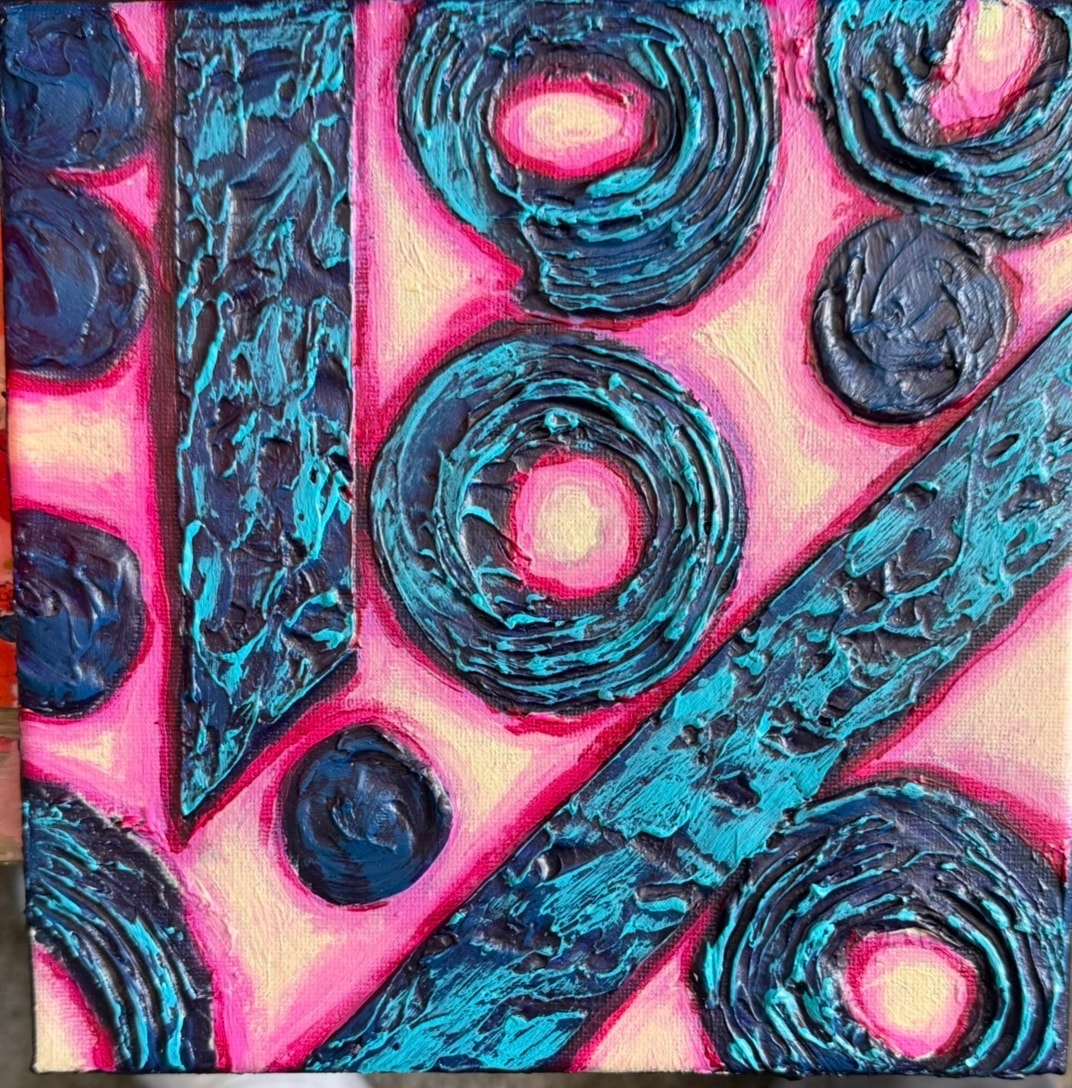
His abstract caulk texture paintings have no specific representational subject — they're compositions of color, form, and dimensional texture. But the surface is the same: real caulk texture, built before painting, with genuine depth.
Neon Vortex: abstract composition with the same dimensional caulk texture as the representational work.
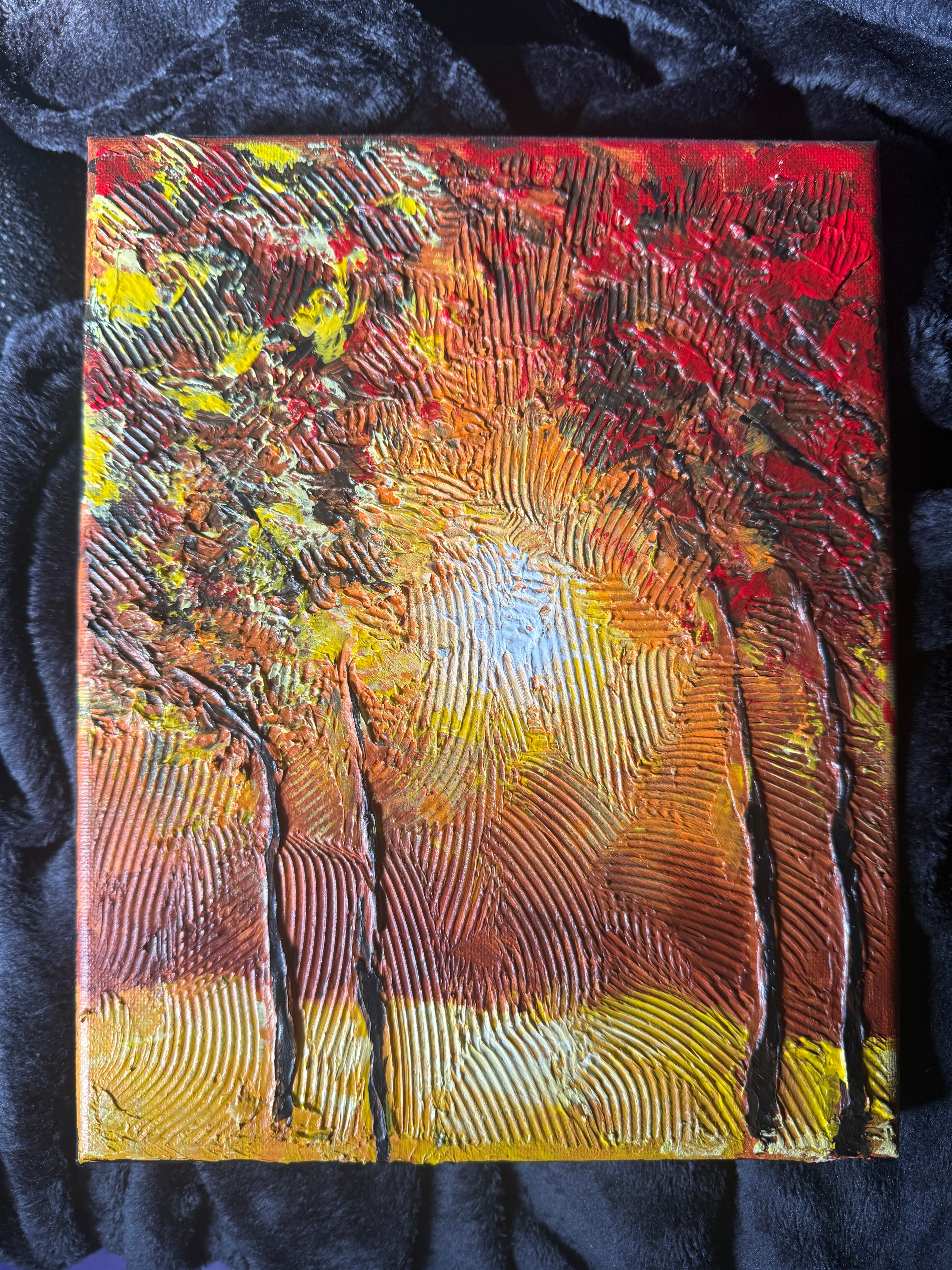
Ember Terrain: abstract landscape forms in fire tones, built on a caulk texture foundation.
In both cases, the defining characteristic is the surface — flexible acrylic caulk sculpted onto canvas before painting. Whether the subject is a poppy or a vortex, the technique is the same.
Which Is Right for You?
Choose representational texture art if:
- You want a painting that depicts something specific — a flower, a forest, an animal
- You want art that's immediately readable as a subject
- You want something that will work in a traditional or transitional interior
Choose abstract texture art if:
- You want art that's about color, form, and surface rather than subject
- You want something that works in a modern or contemporary interior
- You want the texture itself to be the primary visual experience
Choose either if:
- You want a one-of-a-kind original with real dimensional surface
- You want art that changes in different light
- You want something that cannot be reproduced as a print
Jay's gallery has both. Browse and see what speaks to you.
Browse the full gallery → | Browse mini paintings from $40 →
Questions? Text Jay at 330-285-3136.
What is caulk art? → | The caulk texture painting technique → | What makes a caulk art painting worth collecting? →
Jay the Painter — original caulk art and caulk texture paintings from Akron, Ohio. Representational and abstract. One of a kind. Free shipping. Text 330-285-3136.