Caulk Art
Everything you need to know about caulk texture painting — the technique, the history, the supplies, and the artist who made it famous.
Written by Jay the Painter — Akron, Ohio's caulk art pioneer
What Caulk Art Looks Like
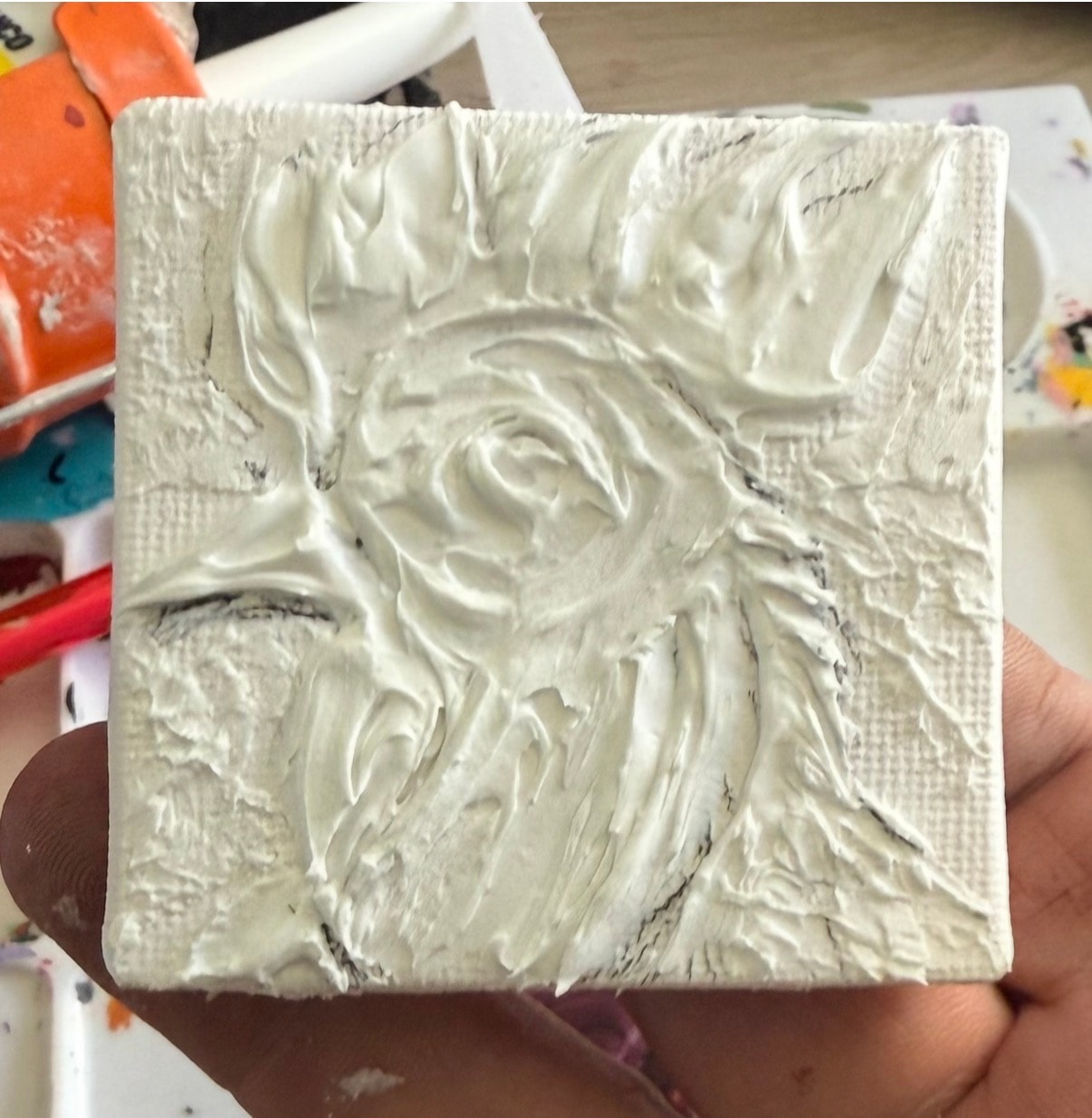
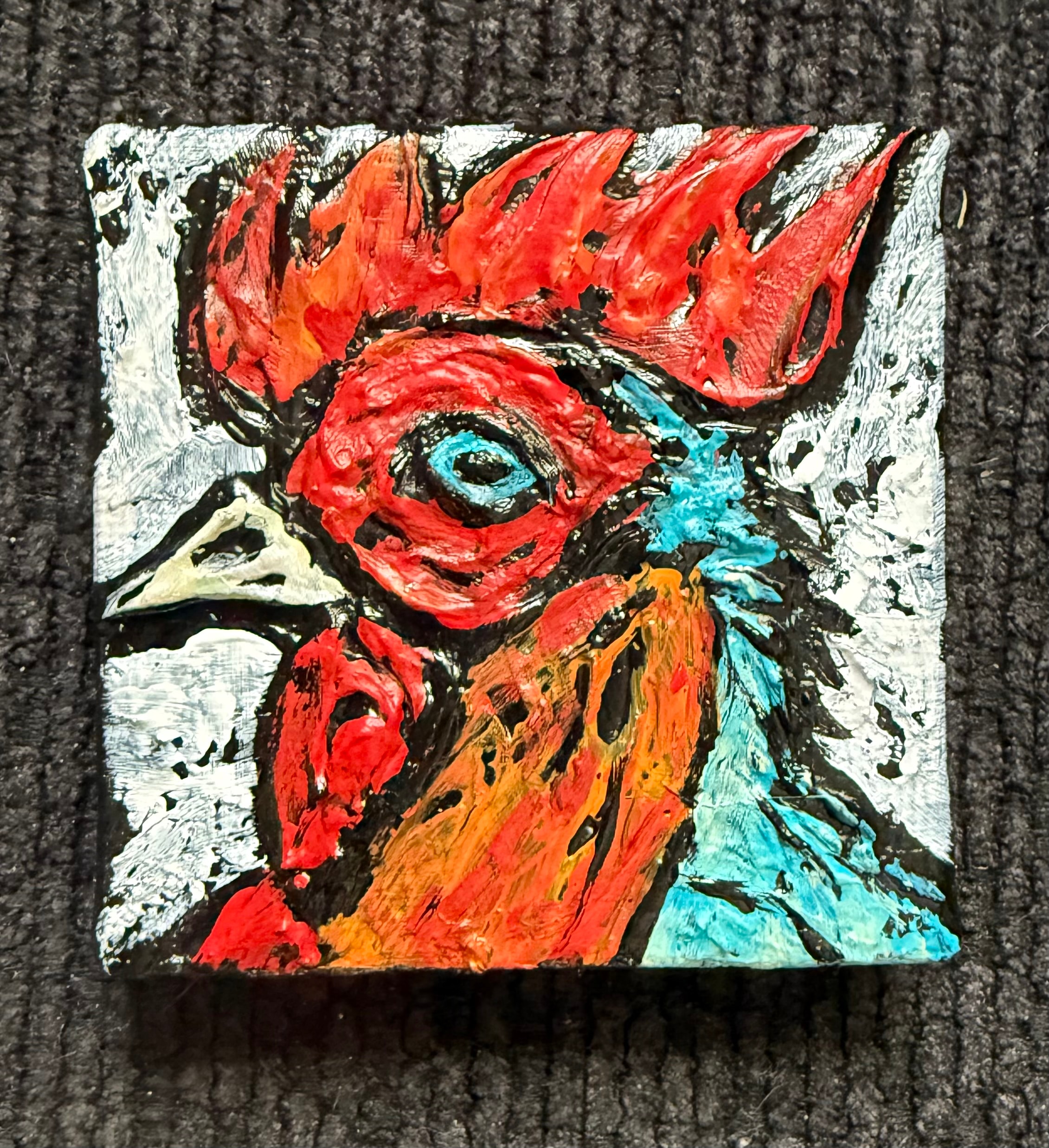
Raw caulk texture on canvas — before and after paint is applied. The 3D structure is built entirely from caulk.
What Is Caulk Art?
Caulk art is a fine art painting technique in which flexible caulk — the same waterproof sealant used in construction and home repair — is applied directly to a canvas to build real, three-dimensional sculptural texture before any paint is added.
Unlike traditional painting techniques that create the illusion of texture through brushwork and shading, caulk art creates actual physical texture that you can see and feel. The caulk is shaped, sculpted, and layered while wet, then allowed to cure fully before paint is applied over the surface.
The result is a painting with genuine depth — ridges that cast real shadows, valleys that hold pools of color, peaks that catch light from across a room. No print can replicate it. No photograph fully captures it. Caulk art must be seen in person to be fully understood.
The technique was pioneered and developed by Jay the Painter, an artist based in Akron, Ohio, who has spent years refining the method and producing hundreds of original caulk art paintings — roosters, landscapes, florals, abstracts, and more.
How Caulk Art Is Made
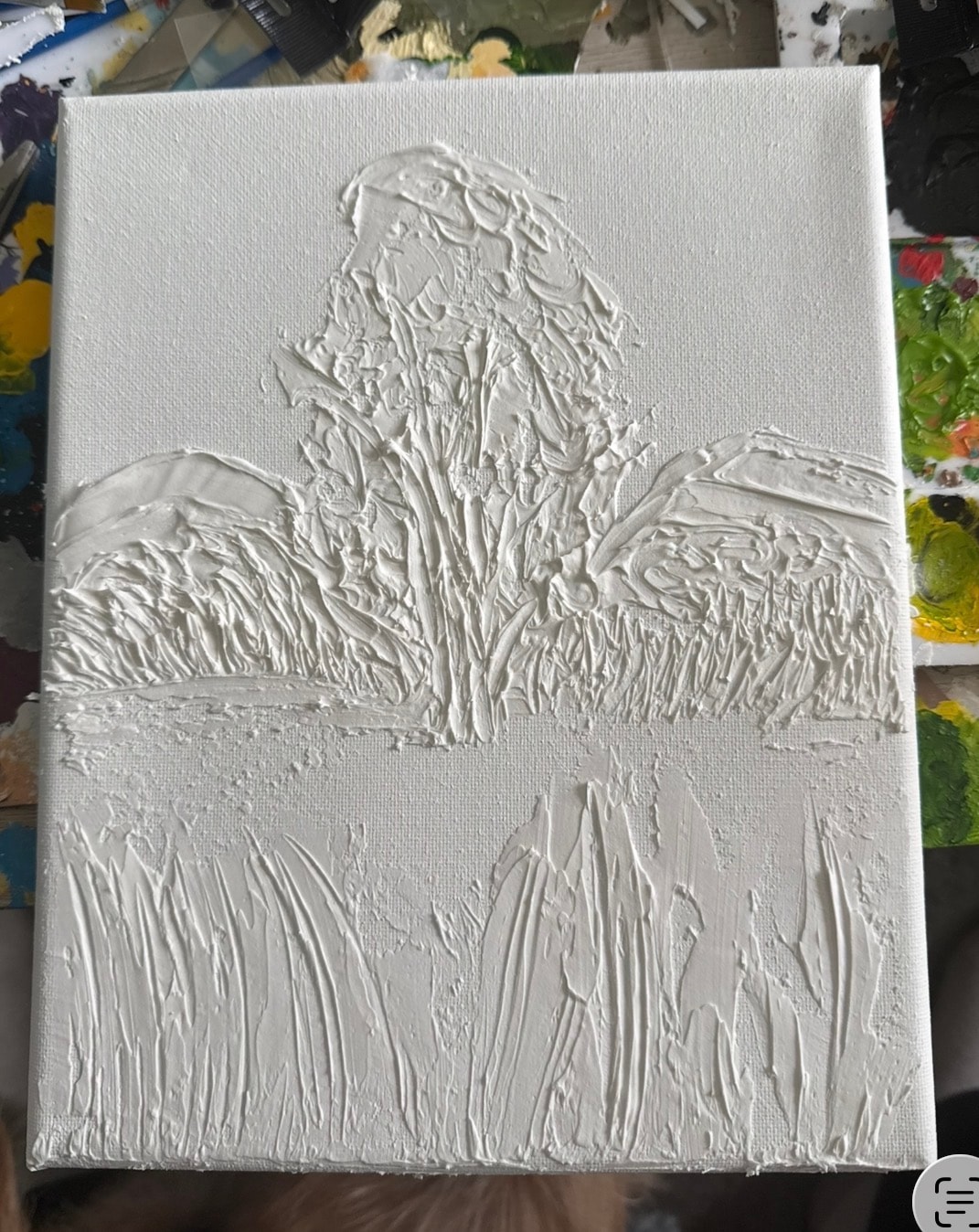
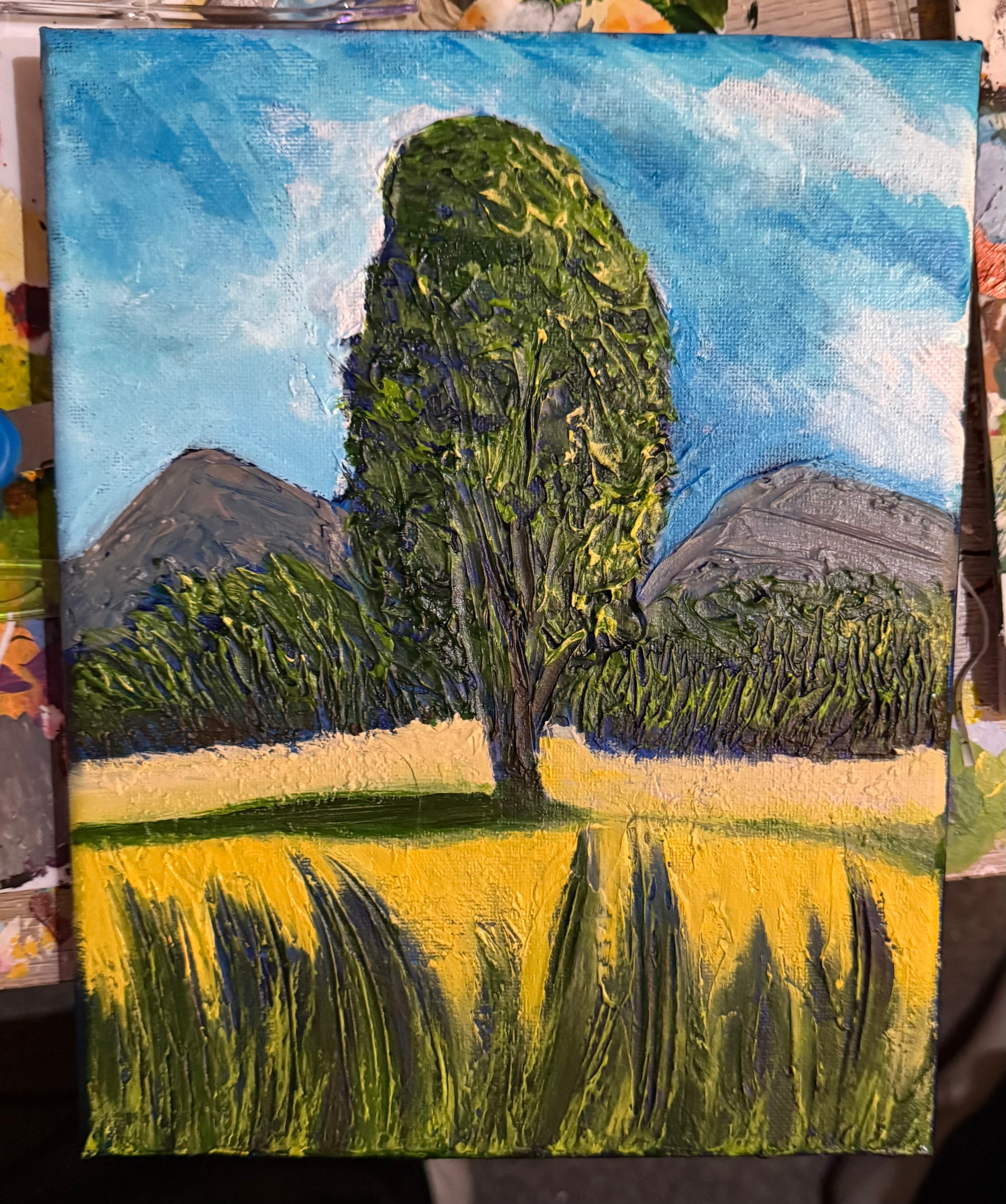
The process from blank canvas to finished caulk art painting — step by step.
- 01
Prepare the canvas
Start with a primed canvas or canvas board. The surface must be clean, dry, and properly primed so the caulk adheres without peeling.
- 02
Design and sketch
Plan the composition. For representational subjects like roosters or landscapes, a light sketch guides where the caulk texture will be heaviest and where it will be minimal.
- 03
Apply the caulk texture
Using a caulk gun, palette knife, or sculpting tools, apply flexible caulk directly to the canvas. This is where the 3D structure is built — ridges, peaks, swirls, and deep relief. The caulk can be shaped and reshaped while wet.
- 04
Cure completely
The caulk must dry and cure fully before any paint is applied. Depending on thickness, this takes 24–72 hours. This is the most critical step — painting over uncured caulk causes cracking.
- 05
Paint over the texture
Once cured, the textured surface is ready for acrylic or oil paint. Paint settles into the valleys and highlights the ridges, creating dramatic depth and dimension that changes with the viewing angle and lighting.
- 06
Seal and finish
A final varnish protects the painting and enhances the colors. The result is a painting with real physical texture that looks alive from any angle and in any light.
Caulk Art Techniques
Six distinct approaches to building texture with caulk — each creates a different visual and tactile effect.
Ridge Building
Applying caulk in raised lines to create sharp, dramatic ridges — used for tree bark, feathers, fur, and architectural detail.
Swirl & Flow
Using a palette knife to pull and swirl caulk into organic flowing shapes — ideal for water, clouds, and abstract movement.
Peak Texture
Stippling or pulling the caulk into sharp peaks that catch light dramatically — creates a raw, energetic surface quality.
Deep Relief
Building up multiple layers of caulk to create deep three-dimensional relief — the most sculptural form of caulk art.
Smooth Gradient
Feathering caulk from thick to thin across the canvas — creates a transition from flat to textured that adds visual tension.
Sculptural Form
Shaping caulk into recognizable forms — animals, faces, landscapes — before painting, so the subject has real physical presence.
Caulk Art vs. Other Texture Techniques
How caulk art compares to impasto, palette knife, resin, and encaustic painting.
| Technique | Texture Depth | Durability | Material Cost | Uniqueness |
|---|---|---|---|---|
| Caulk Art | Extreme 3D | Excellent | Low | Unmatched |
| Impasto | Moderate | Good | High (paint) | Common |
| Palette Knife | Moderate | Good | Medium | Common |
| Resin Art | Smooth/Glossy | Excellent | High | Moderate |
| Encaustic | Moderate | Fragile | High | Moderate |
Caulk Art Supplies
One of the advantages of caulk art is that the core materials are inexpensive and available at any hardware store. Here's what you need to get started:
Flexible acrylic caulk
Paintable, flexible — the core medium. Available at any hardware store for under $5 a tube.
Caulk gun
Standard caulk gun for controlled application. A trigger-style gun gives the most control.
Palette knives
For sculpting, smoothing, and shaping the caulk while wet. A set of 5–6 sizes covers most needs.
Primed canvas or canvas board
Must be properly primed so the caulk adheres. Pre-primed canvas boards work well for beginners.
Acrylic or oil paints
Applied after the caulk cures. Acrylics are recommended for beginners — faster drying and easier cleanup.
Finishing varnish
Protects the finished painting and enhances color depth. Matte, satin, or gloss depending on preference.
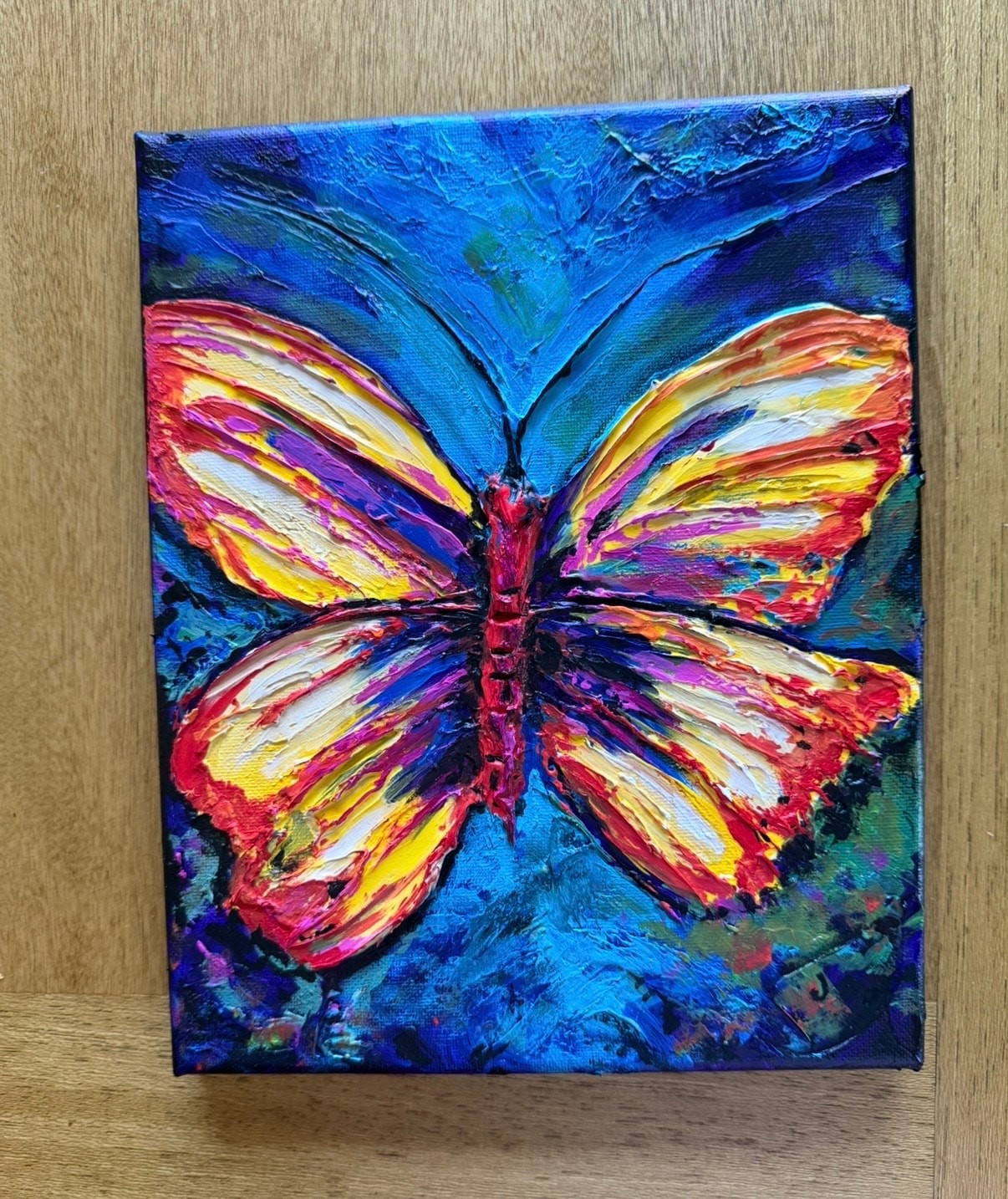
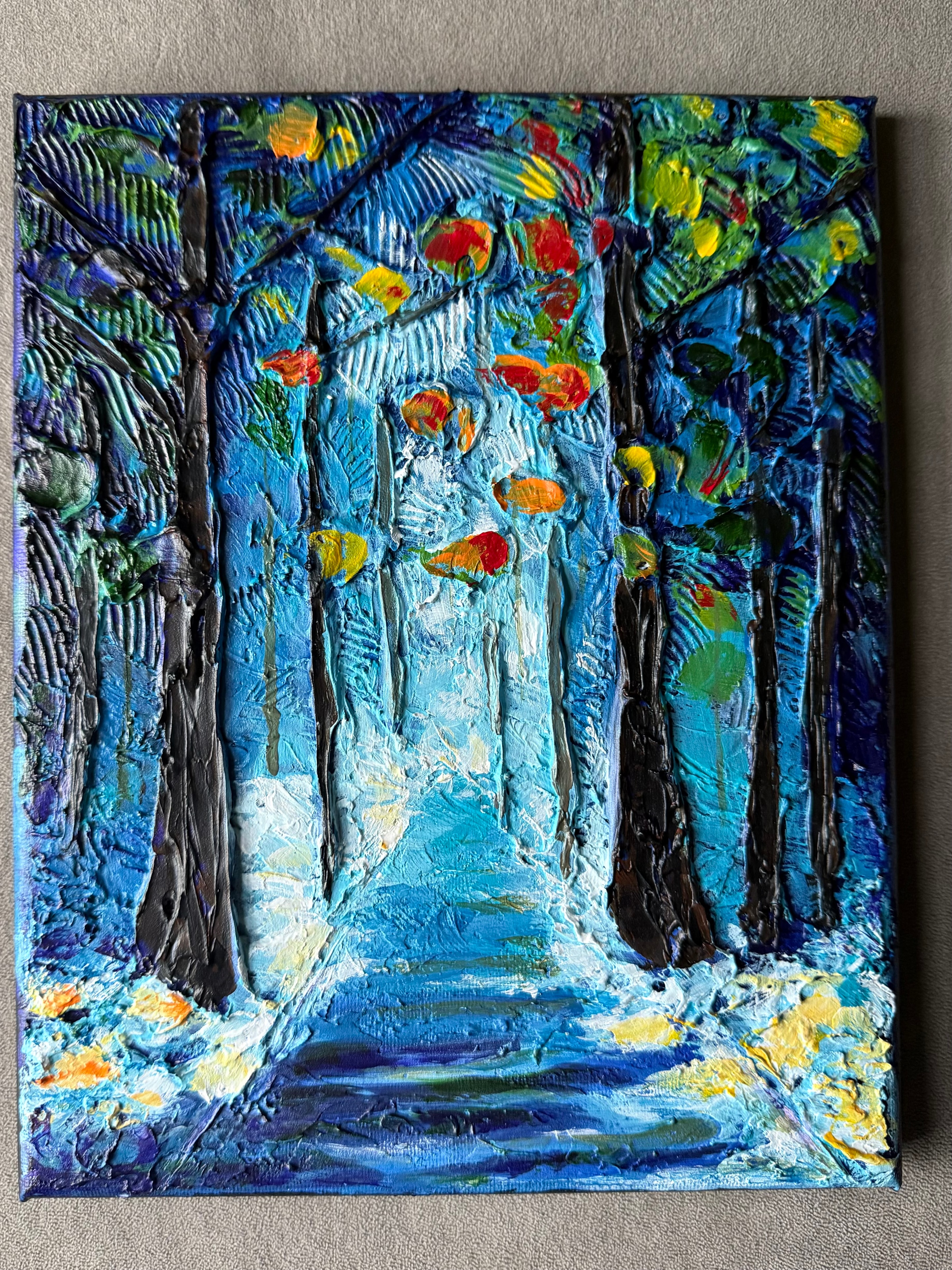
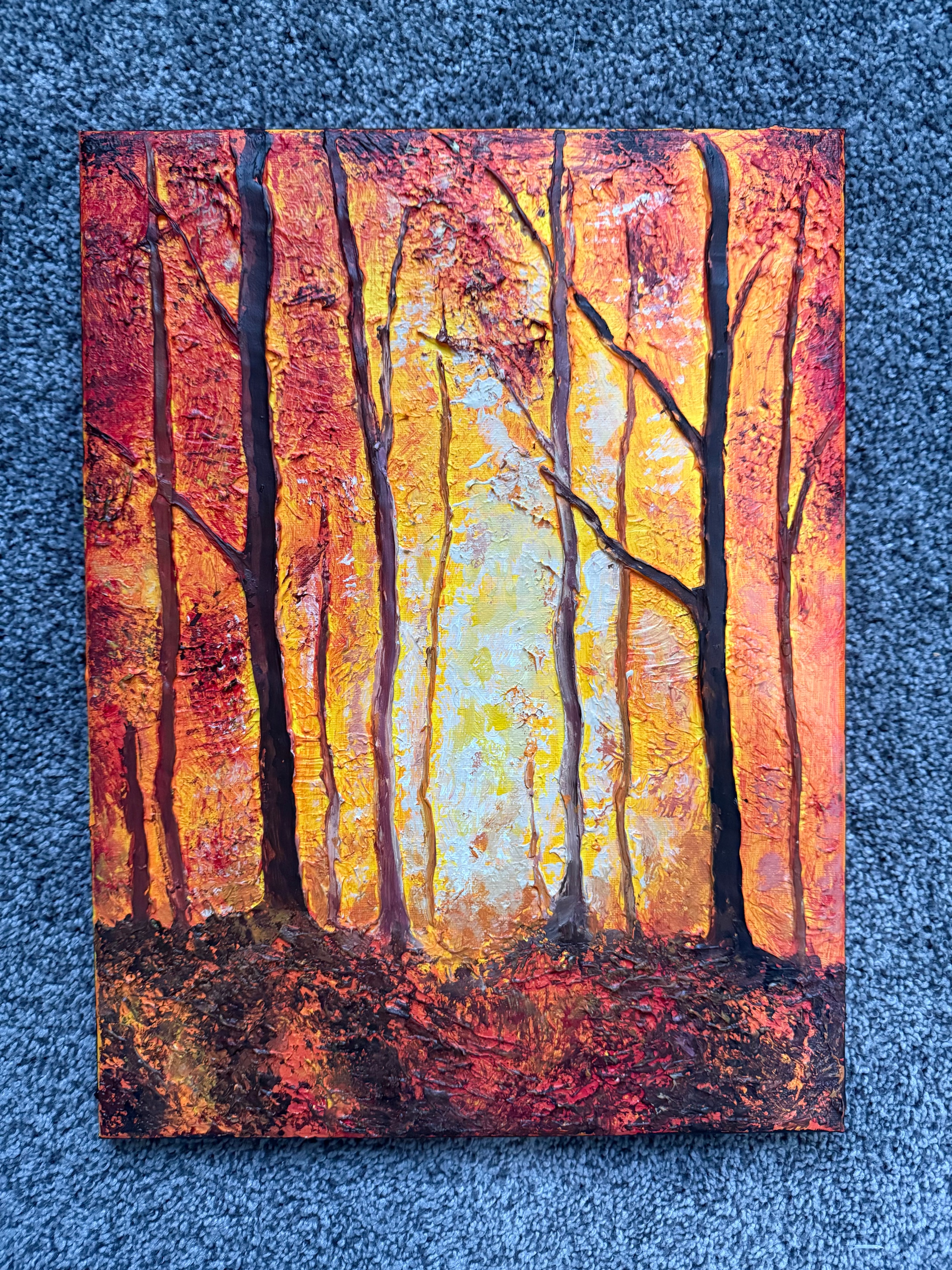
Original Caulk Art Paintings for Sale
Every painting is a one-of-a-kind original. No prints. No reproductions. Real caulk texture you can feel.

The Artist Behind Caulk Art
Jay the Painter
Jay is an Akron, Ohio artist who pioneered caulk texture painting as a fine art technique. Working from his studio, Jay has produced hundreds of original caulk art paintings — roosters, landscapes, florals, abstracts, and miniatures — each built from real sculptural caulk texture.
His work ships nationwide. Every piece is a one-of-a-kind original. No prints are ever sold.
Go Deeper on Caulk Art
Every angle of caulk art — covered in depth.
What Is Caulk Art?
The definitive explainer — history, technique, and what makes it unique.
Caulk Art 101
The beginner's complete guide to getting started with caulk texture painting.
Caulk Texture Painting
Before-and-after photo pairs showing the full transformation process.
The Caulk Art Process
Watch Jay's YouTube videos showing the complete caulk art process.
Caulk Art Ideas
15 ideas to inspire your next caulk texture painting project.
Caulk Art Colors
How to choose colors that work with caulk texture.
Drying Time
How long caulk art takes to dry — and why rushing it causes cracking.
Supplies List
Everything you need to start making caulk art paintings.
Caulk Art for Beginners
Step-by-step guidance for first-time caulk art painters.
Caulk Art — Frequently Asked Questions
What is caulk art?
Caulk art is a painting technique where flexible caulk is applied to a canvas to build real 3D sculptural texture before any paint is added. The caulk cures hard, creating ridges, peaks, and valleys that paint alone cannot achieve. The result is a painting with genuine physical depth — not an illusion of texture, but actual texture you can feel.
Who invented caulk art?
Jay the Painter, an artist based in Akron, Ohio, pioneered and popularized caulk art as a defined fine art technique. While artists have experimented with unconventional materials for decades, Jay developed the systematic approach of using flexible caulk as the primary texture-building medium — and has produced hundreds of original caulk art paintings.
How is caulk art different from impasto?
Impasto uses thick paint or mediums like gel medium to build texture. Caulk art uses flexible caulk — a completely different material — which creates far more dramatic, structural, and durable texture. Caulk can be sculpted into sharp ridges and deep valleys that impasto simply cannot match. The texture in caulk art is architectural; in impasto it is painterly.
How long does caulk art take to dry?
Caulk requires 24–72 hours to cure fully before paint can be applied, depending on the thickness of the application. Thin applications may be ready in 24 hours. Thick sculptural builds need 48–72 hours. Painting over uncured caulk causes cracking — patience is essential.
Does caulk art crack over time?
When done correctly — using flexible acrylic caulk on a properly primed canvas and allowing full cure time — caulk art does not crack. The flexibility of the caulk allows it to move with the canvas as temperature and humidity change. Cracking only occurs when rigid caulk is used or when the caulk is painted before fully curing.
Can beginners do caulk art?
Yes. Caulk art is accessible to beginners. The caulk application stage is forgiving — you can reshape and smooth the texture before it dries. The main requirement is patience: the caulk must fully cure before painting begins. Start with simple abstract textures before attempting detailed subjects.
What supplies do I need for caulk art?
The core supplies are: flexible acrylic or paintable caulk (available at any hardware store), a caulk gun, palette knives or sculpting tools, a primed canvas or canvas board, acrylic or oil paints, and a finishing varnish. Total startup cost is typically under $50.
Where can I buy original caulk art paintings?
Original caulk art paintings by Jay the Painter are available at jaythepainter.com. Prices start at $40 for mini paintings and go up for larger works. Every piece is a one-of-a-kind original — no prints are ever sold.
Own an Original Caulk Art Painting
Every painting ships nationwide. Prices start at $40. No prints — ever. Just real, original caulk art with texture you can feel.