How Long Does Caulk Art Take to Dry? Drying Times Explained
One of the most common questions about caulk art: how long does it take to dry before you can paint over it? The answer depends on the type of caulk, the thickness of application, and your environment. Here's the complete guide to caulk art drying times.
How Long Does Caulk Art Take to Dry? Drying Times Explained
If you're new to caulk art, drying time is one of the most important things to understand. Paint over caulk too soon and you'll have problems — the caulk can shift, the paint may not adhere properly, and the texture can be damaged. Wait the right amount of time and the caulk becomes a rock-solid foundation for your painting.
Here's everything you need to know about caulk art drying times.
The Short Answer
For most caulk art applications, wait a minimum of 24 hours before painting. For thick applications, wait 48 hours or more.
That's the practical rule. The rest of this guide explains why, and what factors affect the drying time.
Understanding How Caulk Dries
Caulk doesn't dry the same way paint dries. Paint dries primarily through evaporation — the water or solvent in the paint evaporates, leaving the pigment and binder behind. This happens relatively quickly, from the surface inward.
Caulk cures through a different process. Most paintable caulks (latex and acrylic) cure through moisture evaporation, but the process is slower and more complex. The surface of the caulk skins over first — it feels dry to the touch — but the interior continues to cure for much longer.
This is the critical point: caulk that feels dry on the surface may still be wet inside. If you paint over it at this stage, the moisture trapped inside can cause problems — bubbling, poor adhesion, or the caulk shifting under the paint.
Drying Time by Caulk Type
Latex Caulk (Most Common for Caulk Art)
Latex caulk is the most commonly used type for caulk art. It's paintable, flexible when cured, and widely available.
- Surface dry (skin forms): 30 minutes to 1 hour
- Paint-safe (thin applications): 4–8 hours
- Paint-safe (medium applications): 12–24 hours
- Paint-safe (thick applications): 24–48 hours
- Fully cured: 7–14 days
The manufacturer's stated dry time on the tube is usually for thin applications in ideal conditions. For caulk art, where you're often applying caulk in significant thickness, always wait longer than the stated time.
Acrylic Caulk
Acrylic caulk behaves similarly to latex caulk and is also suitable for caulk art.
- Surface dry: 30 minutes to 1 hour
- Paint-safe (thin applications): 2–4 hours
- Paint-safe (medium applications): 8–12 hours
- Paint-safe (thick applications): 24–48 hours
- Fully cured: 7–14 days
Silicone Caulk (Not Recommended for Most Caulk Art)
Silicone caulk is more flexible than latex or acrylic, but most silicone caulks are not paintable — paint will not adhere to cured silicone. If you use silicone caulk, make sure it's specifically labeled as paintable.
- Surface dry: 30 minutes
- Fully cured: 24 hours
- Paint adhesion: Poor on most silicone; only use paintable silicone
For most caulk art applications, stick with latex or acrylic caulk. See the full caulk art supplies list for specific product recommendations.
Factors That Affect Drying Time
Thickness of Application
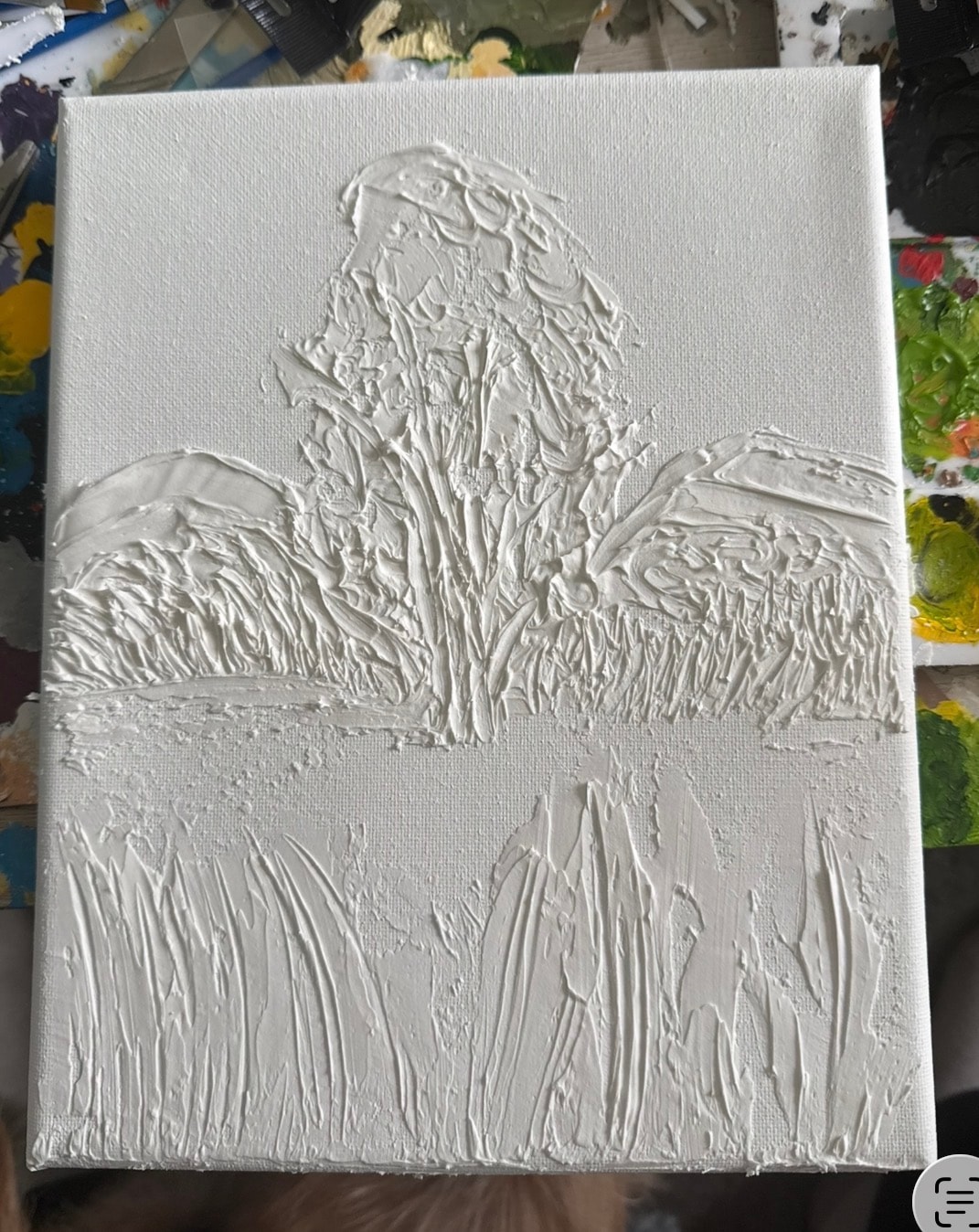
This is the biggest factor. A thin bead of caulk (1/8 inch or less) will dry much faster than a thick sculptural application (1/4 inch or more). For caulk art with significant raised texture, always assume you need the longer end of the drying time range.
Rule of thumb: For every additional 1/8 inch of thickness, add 12 hours to your drying time estimate.
Temperature
Caulk dries faster in warm conditions and slower in cold. The ideal temperature range for caulk application and drying is 40°F to 90°F (4°C to 32°C).
- Cold conditions (below 50°F): Drying time can double or triple. Avoid applying caulk in cold conditions if possible.
- Warm conditions (70–80°F): Optimal drying time.
- Hot conditions (above 90°F): Caulk may skin over very quickly on the surface but still be wet inside. Don't be fooled by a fast-forming skin.
Humidity
High humidity slows drying time. Low humidity speeds it up.
- High humidity (above 70%): Add 50% to your estimated drying time.
- Low humidity (below 30%): Drying may be faster, but very low humidity can cause the surface to skin over too quickly, trapping moisture inside.
- Ideal humidity: 40–60% relative humidity.
Ventilation
Good airflow speeds drying. If you're working in a closed room, open a window or use a fan to improve air circulation. Don't aim a fan directly at the caulk — this can cause uneven drying — but general room ventilation helps.
Canvas vs. Rigid Surface
Caulk applied to a stretched canvas dries slightly faster than caulk applied to a rigid surface (wood panel, MDF) because the canvas allows some air circulation from the back. The difference is minor but worth noting.
How to Tell If Caulk Is Ready to Paint
The most reliable test is time — wait the full recommended period based on your application thickness and conditions. But here are additional checks:
The touch test: Gently press the caulk with a fingertip. If it leaves an impression or feels soft, it's not ready. If it springs back and feels firm, it may be ready — but this only tells you the surface is dry, not the interior.
The color test: Most white latex and acrylic caulks are slightly translucent when wet and become fully opaque white when dry. If you can see any translucency in the caulk, it's not fully dry.
The smell test: Wet caulk has a distinct smell (somewhat like vinegar for some types). When the smell is gone, the caulk is closer to fully cured.
The safest approach: Wait 24 hours for any application, 48 hours for thick applications. The extra wait time costs you nothing and prevents problems.
What Happens If You Paint Too Soon
Painting over caulk that hasn't fully dried can cause several problems:
Poor adhesion: Paint may not bond properly to wet caulk and can peel or flake later.
Bubbling: Moisture trapped under the paint can cause bubbles to form as it tries to escape.
Texture shifting: Soft, uncured caulk can shift under the pressure of a brush, distorting the texture you worked to create.
Cracking: As the caulk continues to cure under the paint, it can shrink slightly, causing the paint layer above it to crack.
None of these problems are worth the time saved by painting too soon. Wait the full drying time.
Speeding Up Drying Time (Safely)
If you need to speed up drying time, here are safe approaches:
Increase temperature: Work in a warm room (70–80°F). A space heater in the room (not aimed directly at the canvas) can help.
Improve ventilation: Open windows, use a fan for general room circulation.
Reduce humidity: A dehumidifier in the room can significantly speed drying time in humid conditions.
Apply thinner layers: If your design allows it, build up texture in multiple thinner applications rather than one thick application. Each thin layer dries faster than one thick layer.
Avoid: Heat guns, hair dryers aimed directly at the caulk, or any direct heat source. These can cause the surface to skin over too quickly while the interior remains wet, which is worse than slow drying.
The Full Caulk Art Process
Drying time is just one part of the caulk art process. For a complete overview of how caulk texture paintings are made — from initial application through finished painting — see:
- What Is Caulk Art — introduction to the technique
- Caulk Art Process — Jay's full process with before-and-after photos
- Caulk Art Supplies List — what you need to get started
Jay the Painter creates original caulk texture paintings in Akron, Ohio. Call or text 330-285-3136 to inquire about available work.