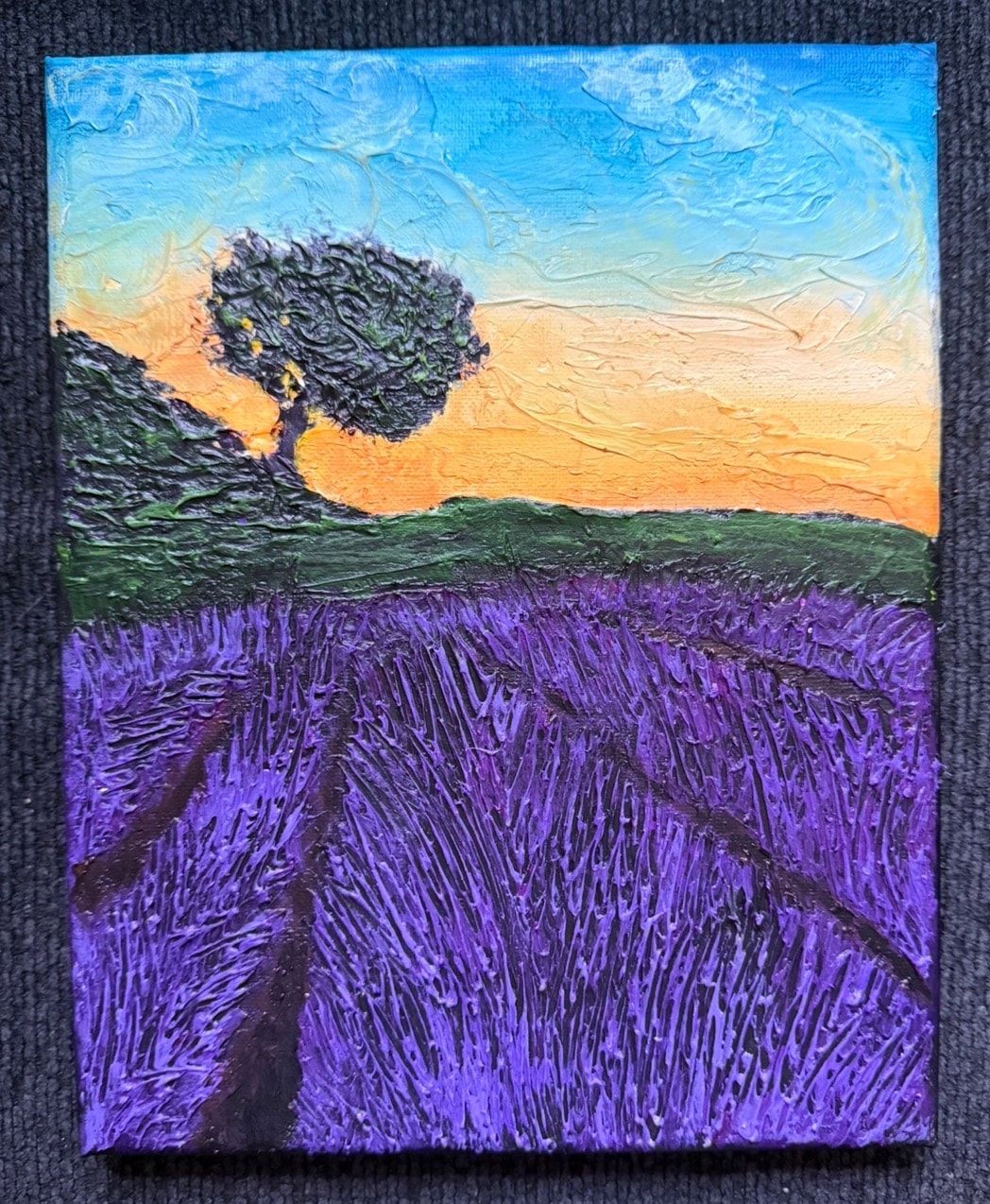
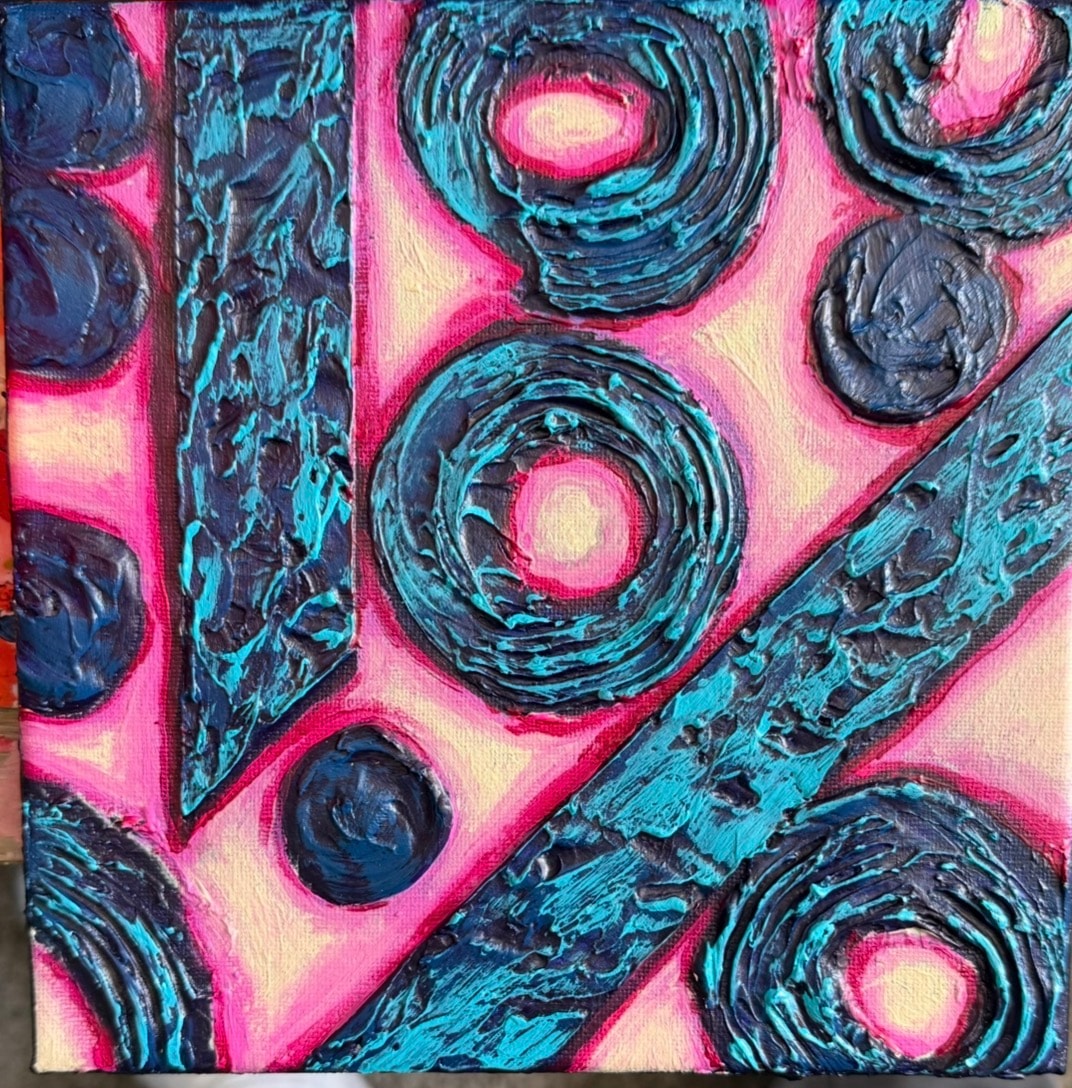
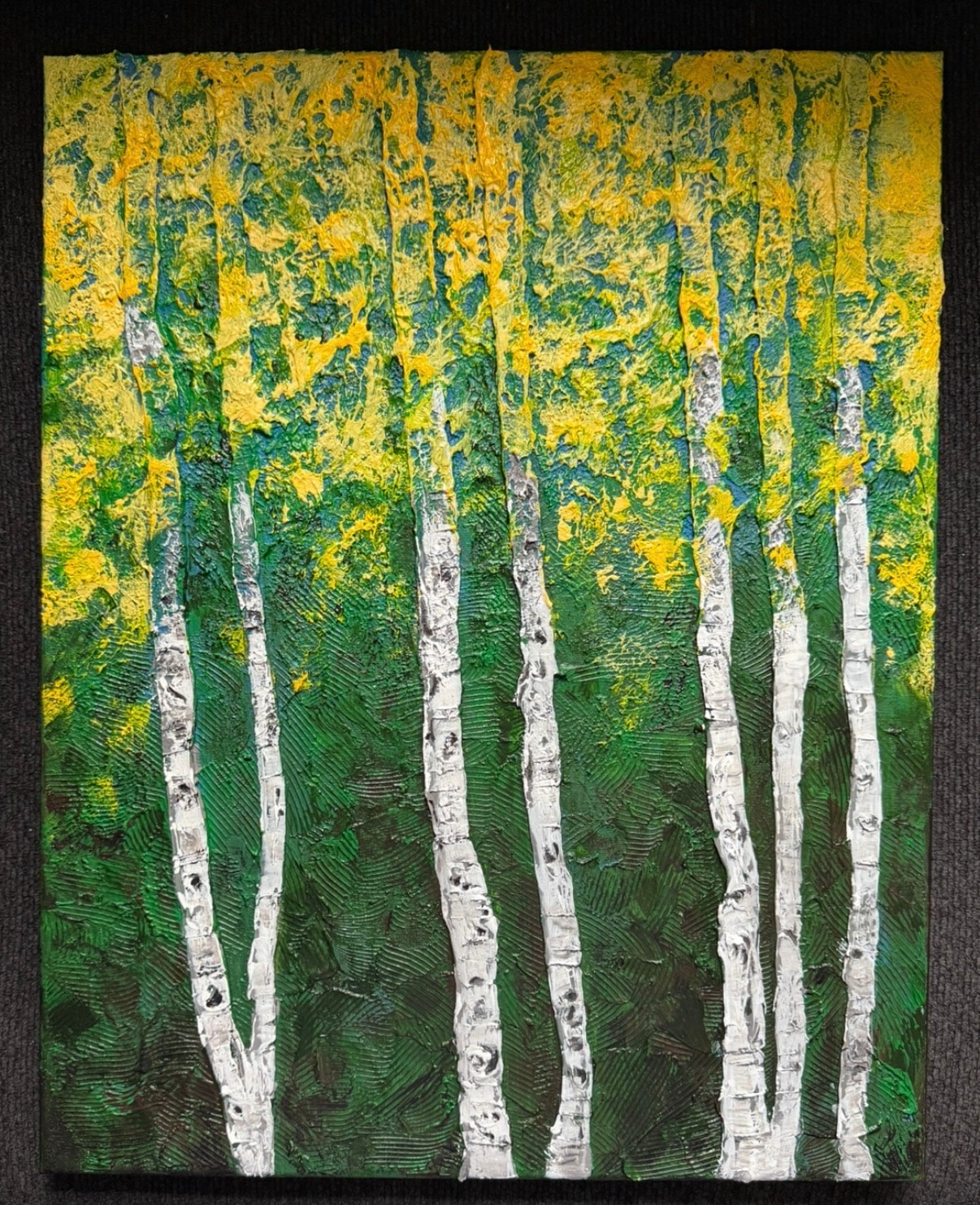
15 Caulk Art Ideas That Will Inspire Your Next Textured Painting
Looking for caulk art ideas? From dramatic landscapes to abstract florals, caulk texture opens up a world of creative possibilities. Here are 15 ideas to spark your next textured painting project.
15 Caulk Art Ideas That Will Inspire Your Next Textured Painting
Caulk art is one of the most versatile texture techniques available to painters today. Because caulk can be shaped, sculpted, layered, and smoothed before it dries, it opens up a range of creative possibilities that rigid mediums simply can't match.
Whether you're a working artist looking for your next project or a collector trying to understand what makes caulk texture paintings so compelling, these 15 ideas show just how wide the creative range really is.
New to caulk art? Start with What Is Caulk Art for a full introduction to the technique.
Landscape Ideas
1. Forest Path With Raised Tree Trunks
Apply caulk in vertical ridges to create the physical form of tree trunks before painting. The raised trunks cast real shadows across the canvas, creating depth that flat paint can never achieve. Paint the forest in layers — dark background, mid-tone foliage, bright highlights on the raised edges.
Jay's Blue Forest Path painting is a perfect example of this approach — the caulk structure creates a forest that feels like you could walk into it.
2. Mountain Range With Textured Peaks
Build up caulk along the horizon line to create the physical silhouette of mountain peaks. The raised edges catch light dramatically and create a painting that changes as the light in the room shifts throughout the day.
3. Rolling Hills With Layered Texture
Use caulk to create gentle undulating layers across the canvas — each hill slightly raised above the one behind it. Paint in warm greens and golds for a pastoral landscape that has real visual depth.
4. Ocean Waves in Motion
Caulk is ideal for capturing the movement of water. Apply it in sweeping curves to suggest wave forms, then paint in blues, greens, and whites. The raised crests of the waves will catch light and create a sense of motion even in a still painting.
5. Autumn Forest Floor
Apply caulk in organic, irregular patterns to suggest fallen leaves, roots, and forest debris. Paint in deep reds, oranges, and browns. The texture makes the forest floor feel real — like you could reach out and pick up a leaf.
Floral Ideas
6. Large-Scale Hibiscus
Hibiscus flowers are a natural subject for caulk texture — the petals have natural ridges and veins that translate beautifully into raised caulk forms. Apply caulk along each petal's central vein and outer edges, then paint in bold pinks, reds, or yellows.
Jay's hibiscus paintings are among his most popular — see the blue hibiscus and yellow hibiscus for examples.
7. Wildflower Field
Build up a dense field of small raised forms to suggest a meadow full of wildflowers. The texture doesn't need to be precise — the organic irregularity of caulk is exactly right for wildflowers. Paint in a riot of colors: purples, yellows, whites, and pinks.
8. Single Peony Close-Up
A close-up of a single peony, painted large, gives you the opportunity to build up every petal individually in caulk. The result is a painting that looks almost three-dimensional — like a sculpture of a flower rather than a painting of one.
9. Rose With Textured Petals
Roses have a natural spiral structure that works beautifully in caulk. Build each petal as a slightly raised curved form, overlapping toward the center. Paint in deep reds and crimsons with bright highlights on the raised petal edges.
Abstract Ideas
10. Geometric Relief
Use caulk to create precise geometric forms — squares, triangles, circles — raised above the canvas surface. Paint each form in a different color from a limited palette. The result is a painting that reads as both abstract art and low-relief sculpture.
11. Organic Flow
Apply caulk in long, sweeping curves that flow across the canvas without representing any specific subject. Let the caulk dry in organic, natural forms, then paint in a gradient of colors that follows the flow of the texture. The result is pure abstract texture art.
12. Layered Circles
Build up concentric circles of caulk, each layer slightly raised above the last. Paint in contrasting colors — dark centers, bright outer rings, or the reverse. The raised rings create a target-like composition with real physical depth.
13. Cracked Earth Texture
Apply a thick layer of caulk across the entire canvas, then use a palette knife to score lines through it before it dries. The result suggests cracked earth, dried mud, or ancient stone. Paint in ochres, umbers, and raw siennas.
Portrait and Figure Ideas
14. Animal Portrait With Textured Fur
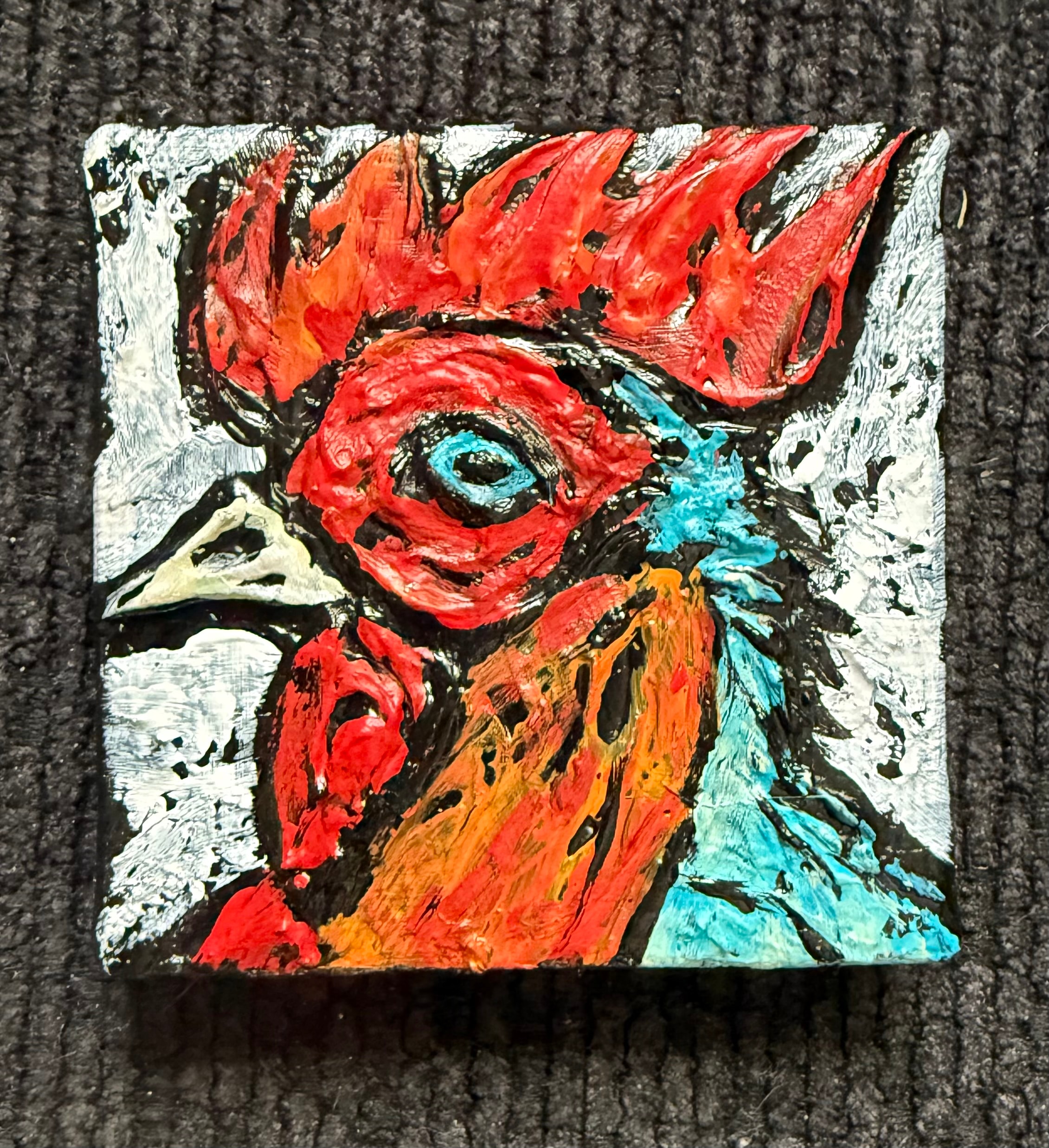
Animal portraits in caulk can be extraordinary. Apply caulk in short strokes to suggest fur texture — the direction and length of each stroke matters. Paint over the dried texture in the animal's natural colors, with highlights on the raised fur tips.
Jay's rooster paintings use this approach — the caulk creates feather texture that makes the birds look almost alive. See the rooster paintings in the gallery.
15. Abstract Human Form
Use caulk to suggest the contours of a human figure without precise representation. Build up raised areas where light would naturally fall on a body — shoulders, cheekbones, the curve of an arm. Paint in warm flesh tones with cool shadows in the recessed areas.
Tips for Executing These Caulk Art Ideas
Choose the right caulk. Paintable latex or acrylic caulk works best for most applications. Silicone caulk is more flexible but harder to paint over. See the full caulk art supplies list for specific product recommendations.
Work in sections. Caulk has a working time of 10–20 minutes before it begins to skin over. Work on one section of the canvas at a time so you can shape the texture before it sets.
Let it dry completely. Rushing the drying process is the most common mistake. Caulk needs 24–48 hours to cure fully before you paint over it. Painting too soon can cause the caulk to shift or the paint to not adhere properly.
Use the texture, don't fight it. The best caulk art ideas work with the texture rather than trying to paint over it as if it weren't there. Let the raised forms guide your color choices and brushwork.
Study the light. Before you start painting, hold a lamp at different angles to your textured canvas. See where the shadows fall. Use that information to guide where you place your darks and lights.
See Caulk Art Ideas in Action
The best way to understand what caulk art can do is to see finished examples. Jay the Painter's gallery includes dozens of original caulk texture paintings across a wide range of subjects — landscapes, florals, abstracts, and animal portraits.
Browse the full gallery — or see the mini paintings gallery for smaller, more affordable examples of caulk texture work starting at $40.
Interested in a commissioned caulk texture painting based on your own idea? Contact Jay directly or call/text 330-285-3136.
Want to learn more about the technique behind these ideas? Read the complete caulk art guide — covering what caulk art is, how it works, supplies, techniques, and more.
Jay the Painter creates original caulk texture paintings in Akron, Ohio. Every painting is one of a kind — no prints, no reproductions.