What Are Textured Paintings? The Complete Guide to Dimensional Wall Art
Textured paintings are original works of art with real raised surfaces you can see and feel. Unlike flat prints or canvas reproductions, a textured painting has physical depth built directly into the surface. Here is everything you need to know.
What Are Textured Paintings? The Complete Guide to Dimensional Wall Art
Walk into any room with a textured painting on the wall and you will notice it immediately — before you even read the subject matter. There is something about a surface with real physical depth that pulls the eye in ways a flat print simply cannot. Shadows fall differently. Light plays across the ridges. The painting looks different from every angle.
But what exactly are textured paintings? How are they made? And why are collectors increasingly choosing them over traditional flat canvas work?
This guide answers every question — from the basics of what dimensional painting is, to the specific techniques artists use to build texture, to what you should look for when buying a textured painting for your home.
The Simple Definition: What Is a Textured Painting?
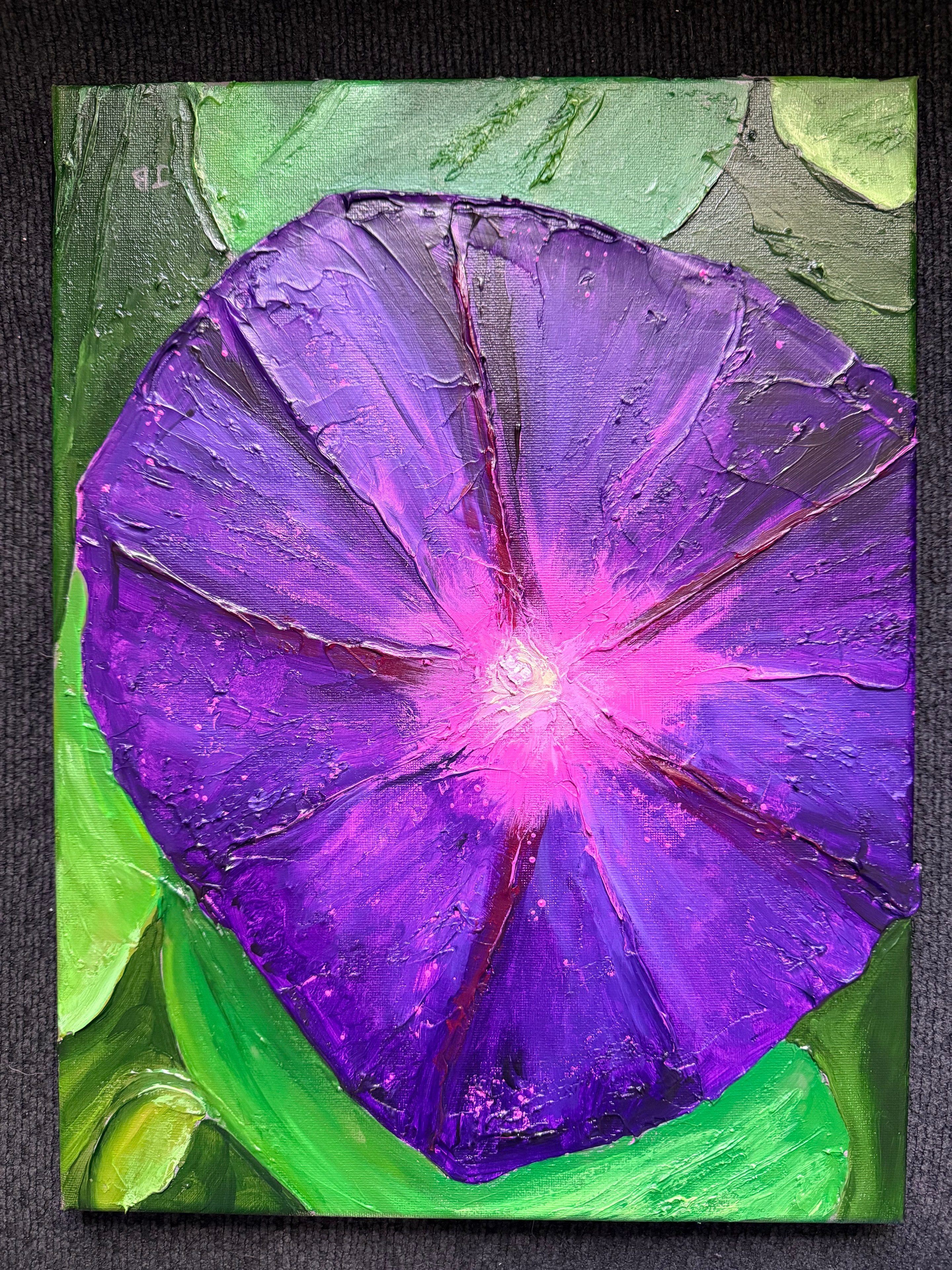
A textured painting is an original work of art in which the surface has real physical dimension — raised areas, ridges, peaks, and valleys that you can see from across the room and feel with your fingertips.
Unlike a flat oil painting, watercolor, or print, a textured painting has topography. The surface is not smooth. It has structure. That structure is part of the artwork itself — not a side effect of the medium, but an intentional design choice that shapes how the painting looks, how it interacts with light, and how it feels to stand in front of it.
The key word is original. A textured painting is always a one-of-a-kind piece. You cannot print texture. You cannot reproduce it on a machine. Every ridge, every peak, every layered surface was built by hand — and that means no two textured paintings are ever exactly alike.
How Are Textured Paintings Made?
There are several techniques artists use to build dimensional texture into a painting. Each produces a different kind of surface with different visual qualities.
Impasto Technique
Impasto is the oldest and most well-known texture technique. The artist applies thick paint — usually oil or acrylic — directly to the canvas in heavy, visible strokes. The paint builds up in layers, creating ridges and peaks that catch light and cast shadows.
Van Gogh is the most famous impasto painter. Look at any close-up photograph of his work and you can see the thick swirls of paint standing off the canvas surface. That physical dimension is part of what makes his paintings so visually powerful.
The limitation of impasto is weight and drying time. Thick oil paint can take months to fully cure, and very heavy applications can crack over time if the paint is not properly supported.
Palette Knife Painting
Palette knife painting uses a flat metal blade instead of a brush to apply and scrape paint across the canvas. The result is a different kind of texture — flatter in some areas, with sharp edges and ridges where the knife has dragged or lifted the paint.
Palette knife work tends to produce bolder, more graphic texture than impasto brushwork. The marks are larger and more architectural. Many contemporary texture artists combine palette knife work with brushwork to create varied surface interest across a single painting.
Modeling Paste and Texture Mediums
Some artists build texture before painting by applying modeling paste, gesso, or other texture mediums to the canvas surface. These materials dry hard and can be sculpted, carved, or stamped to create patterns and relief before any paint is applied.
This approach gives the artist more control over the texture structure — they can plan the dimensional design before committing to color. The downside is that modeling paste can be brittle if applied too thickly, and it adds significant weight to the finished piece.
Caulk Texture Painting — The Most Durable Approach
The most innovative approach to textured painting uses flexible caulk — the same material used in construction — as the primary texture-building medium. This is the technique developed and pioneered by Jay the Painter in Akron, Ohio.
Here is how it works: before any paint is applied, Jay builds the entire three-dimensional structure of the painting using flexible caulk. He sculpts ridges, peaks, organic shapes, and architectural forms directly onto the canvas surface. The caulk dries flexible — not brittle — which means the texture can flex without cracking.
Once the caulk structure is complete and dry, Jay paints over it with acrylic paint, using the dimensional surface to guide the color work. The result is a painting where the texture and the color work together as a unified composition.
The flexibility of caulk makes it far more durable than modeling paste or thick impasto paint. It can handle temperature changes, humidity shifts, and the normal movement of a canvas without cracking or flaking. Collectors who own caulk texture paintings report that the surface looks exactly the same years after purchase as it did on the day they received it.
What Makes Textured Paintings Different From Flat Art?
The difference between a textured painting and a flat painting is not just visual — it is experiential.
Light interaction. A textured surface catches and reflects light differently depending on the time of day and the angle of your light source. A textured painting looks different in morning light than it does in the afternoon. It looks different under a spotlight than it does in ambient room light. This means the painting is never static — it changes throughout the day as the light changes.
Viewing angle. Stand directly in front of a textured painting and you see one thing. Step to the side and the shadows shift, revealing different aspects of the dimensional surface. This is something no flat print can replicate — the painting rewards movement and engagement.
Physical presence. There is something fundamentally different about standing in front of a painting with real physical dimension. It occupies space in a way a flat canvas does not. It has weight and presence. Visitors to homes with textured paintings consistently notice and comment on them — they are conversation starters in a way that flat art rarely is.
Uniqueness. Because texture cannot be reproduced mechanically, every textured painting is genuinely one of a kind. When you buy a textured painting, you own something that exists nowhere else in the world. That is not true of prints, reproductions, or even most flat paintings that are produced in series.
What Subjects Work Best as Textured Paintings?
Almost any subject can be rendered as a textured painting, but some subjects benefit more from dimensional treatment than others.
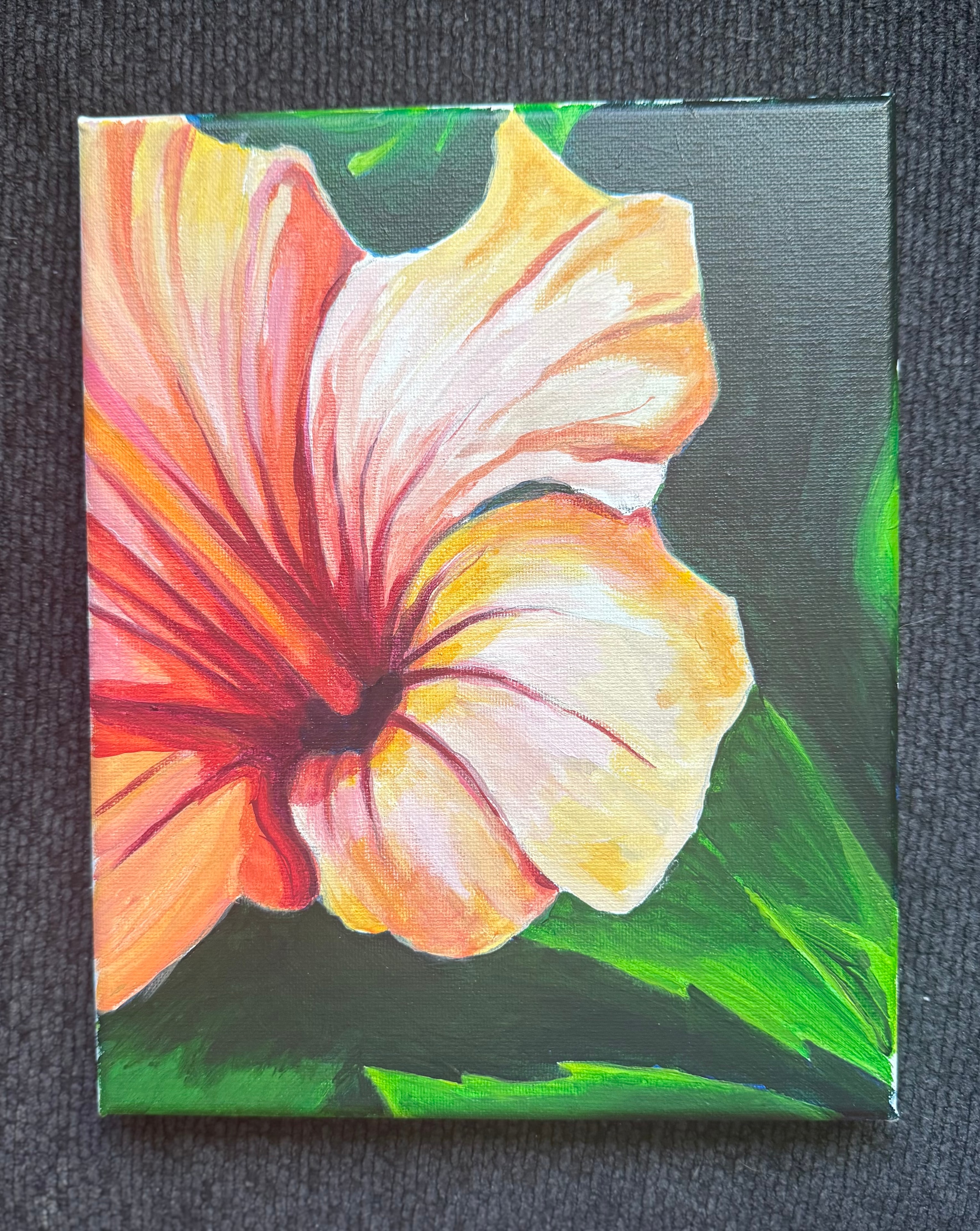
Florals. Flowers are one of the most popular subjects for textured paintings because the dimensional surface can suggest the actual physical structure of petals, stems, and leaves. A textured hibiscus or pansy painting has a sculptural quality that makes the flower feel almost real.
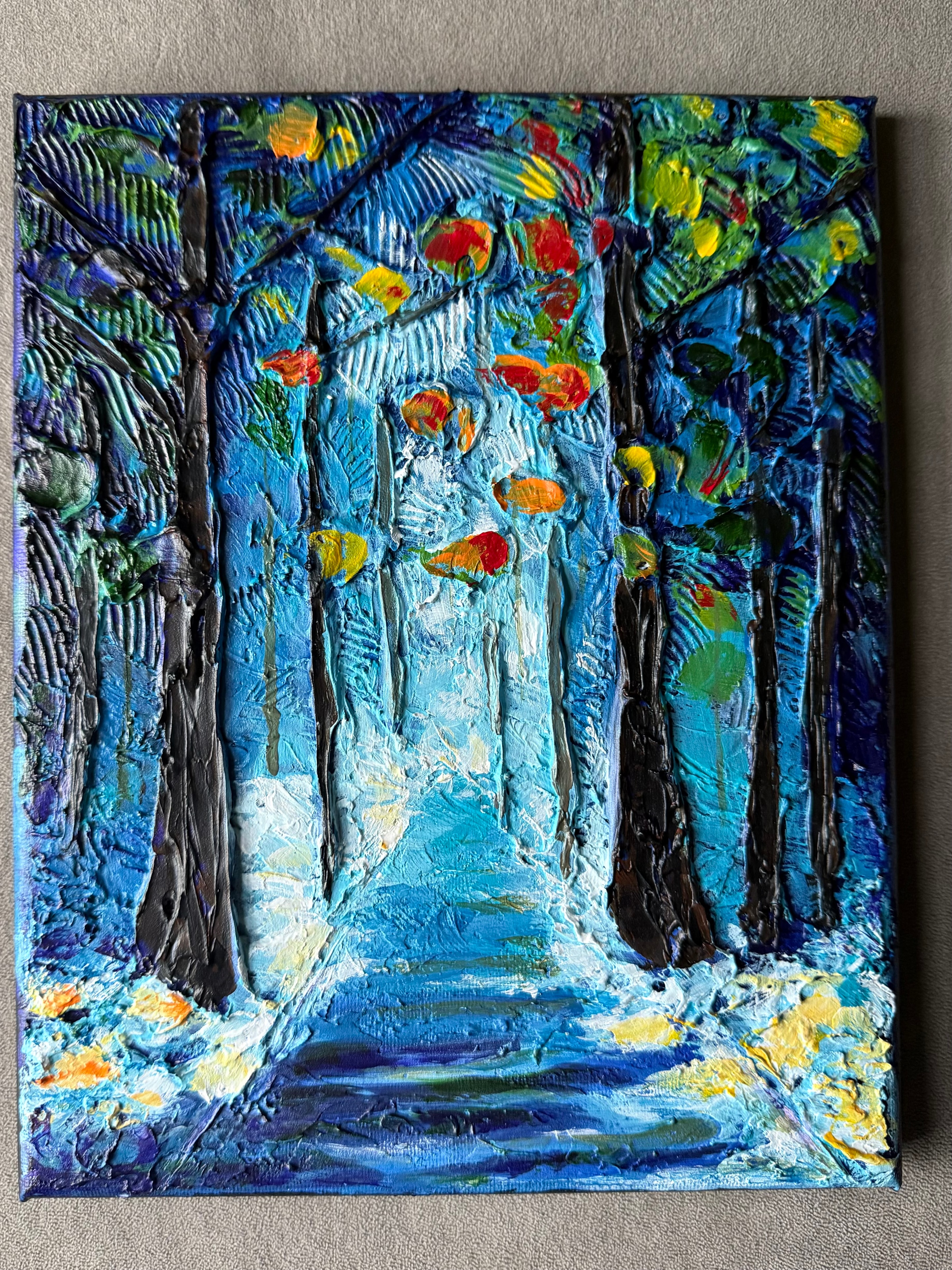
Landscapes and forests. Tree bark, foliage, rocky terrain, and water all translate beautifully into textured surfaces. A forest path painting with dimensional tree trunks and layered foliage has a depth that pulls the viewer into the scene.
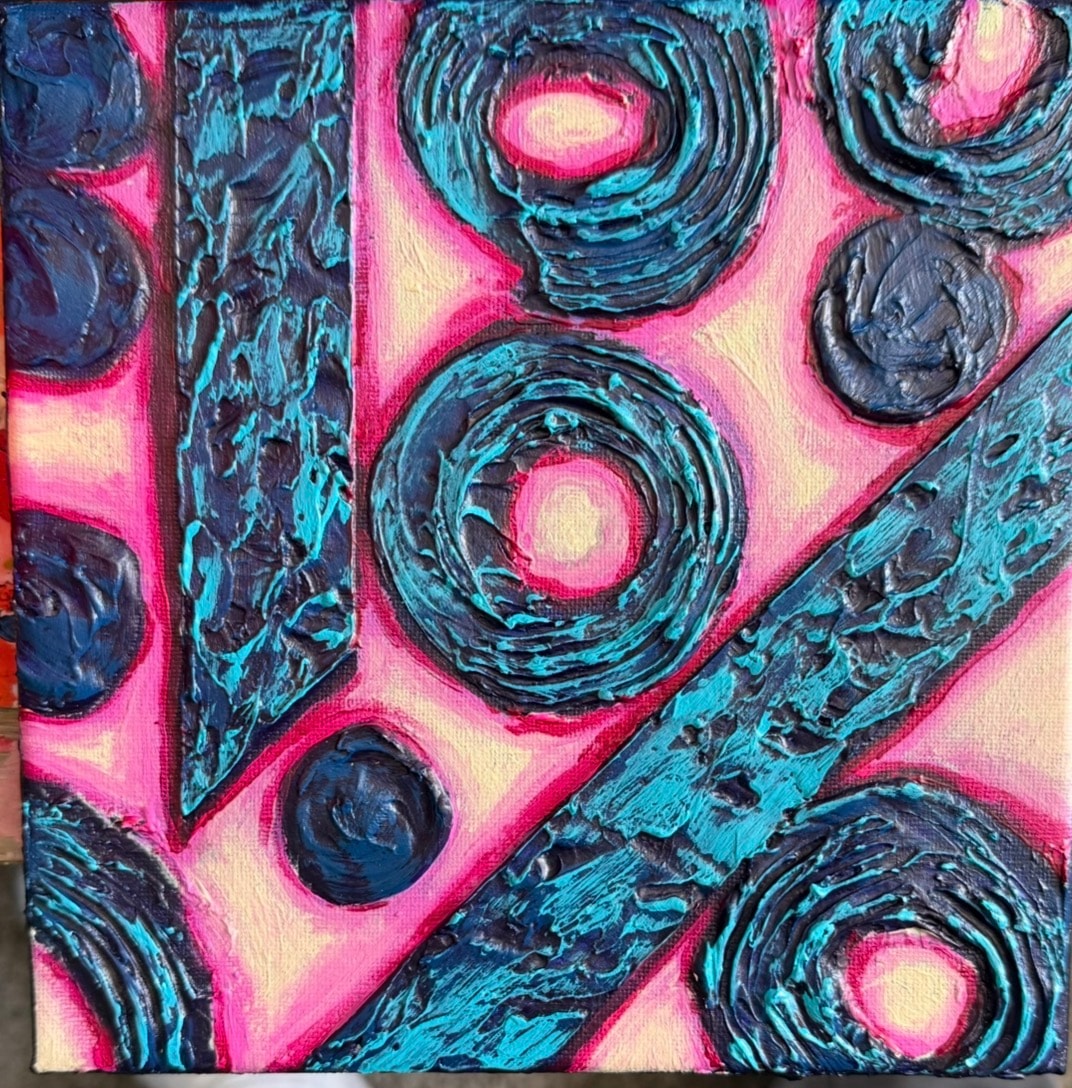
Abstract compositions. Abstract textured paintings are perhaps the purest expression of the form — the texture IS the composition. Swirling ridges, geometric relief patterns, and organic dimensional forms create visual interest that is entirely about surface and light rather than representational subject matter.
Wildlife and birds. Feathers, scales, and fur all have natural texture that translates powerfully into dimensional painting. A textured rooster portrait with raised feather detail has a presence that a flat painting simply cannot match.
How to Identify a High-Quality Textured Painting
Not all textured paintings are created equal. Here is what to look for when evaluating quality:
Structural integrity. The texture should be firmly attached to the canvas surface with no loose areas, cracks, or flaking. Run your eye across the surface at an angle — any structural problems will be visible as shadows or gaps.
Flexibility. High-quality texture mediums flex with the canvas rather than cracking when the canvas moves. Caulk-based texture is the most flexible and durable. Thick impasto paint and modeling paste are more brittle and more prone to cracking over time.
Color integration. The color work should feel like it belongs to the texture, not like it was applied on top of it as an afterthought. In the best textured paintings, the color and the dimensional surface work together — shadows in the recesses, highlights on the peaks — to create a unified visual effect.
Archival materials. Quality textured paintings use archival-grade canvas, professional acrylic or oil paints, and texture mediums that are designed to last. Ask the artist about their materials if you are considering a significant purchase.
Textured Paintings vs. Prints: Why the Difference Matters
Many buyers are surprised to learn that most "paintings" sold online are actually prints — digital reproductions of original artwork, printed on canvas or paper and sometimes given a texture coating to simulate the look of an original.
These are not textured paintings. They are photographs of textured paintings.
The difference matters for several reasons:
Value. An original textured painting is a unique object. A print is a reproduction that may exist in editions of hundreds or thousands. Original art holds and appreciates in value; prints do not.
Experience. No print can replicate the actual dimensional surface of an original textured painting. The texture coating applied to canvas prints is uniform and mechanical — it does not have the organic variation of hand-built texture.
Connection. When you buy an original textured painting directly from the artist, you are buying something that person made with their hands. There is a human story behind every brushstroke and every ridge of texture. That connection is part of what makes original art meaningful.
When shopping for textured paintings, always confirm you are buying an original — not a print. Look for language like "original painting," "one of a kind," and "no prints" in the listing description.
Jay the Painter: Original Textured Paintings from Akron, Ohio
Jay the Painter is an independent artist based in Akron, Ohio who specializes in original textured paintings using a unique caulk texture technique. Every painting in his collection features real three-dimensional surface texture built by hand — florals, landscapes, wildlife, abstracts, and miniature paintings.
All of Jay's work is original. He does not sell prints. He does not produce reproductions. Every piece ships directly from his studio in Akron, Ohio with free shipping nationwide.
His textured paintings range from large statement pieces to 2.44-inch miniature originals — all with the same dimensional texture that makes his work immediately recognizable.
Browse the full collection of original textured paintings →
Shop mini textured paintings from $40 →
Frequently Asked Questions About Textured Paintings
How long do textured paintings last? A well-made textured painting using quality materials will last for decades or longer. Caulk-based texture is particularly durable because it remains flexible and does not crack with normal canvas movement or temperature changes.
Can textured paintings be cleaned? Yes, carefully. Use a soft dry brush to remove dust. Avoid water and cleaning products on the textured surface. If the painting needs deeper cleaning, consult the artist.
Do textured paintings need special framing? Yes — a textured painting needs a frame with enough depth to accommodate the raised surface without touching it. A standard flat frame will press against the texture and can damage it. Look for frames with a deep rabbet or use a float frame that leaves space between the canvas and the frame.
Are textured paintings more expensive than flat paintings? Generally yes, because they require more time, more materials, and more skill to produce. However, the price range is wide — from affordable miniature originals to large statement pieces. Jay the Painter's mini textured paintings start at $40.
Where can I buy original textured paintings? The best place to buy original textured paintings is directly from the artist. This guarantees authenticity, gives you direct access to the person who made the work, and typically means better pricing than buying through a gallery. Jay the Painter sells directly from his studio at jaythepainter.com.
Explore Topics
Written by
Jay the Painter
Content creator and writer sharing insights and stories.