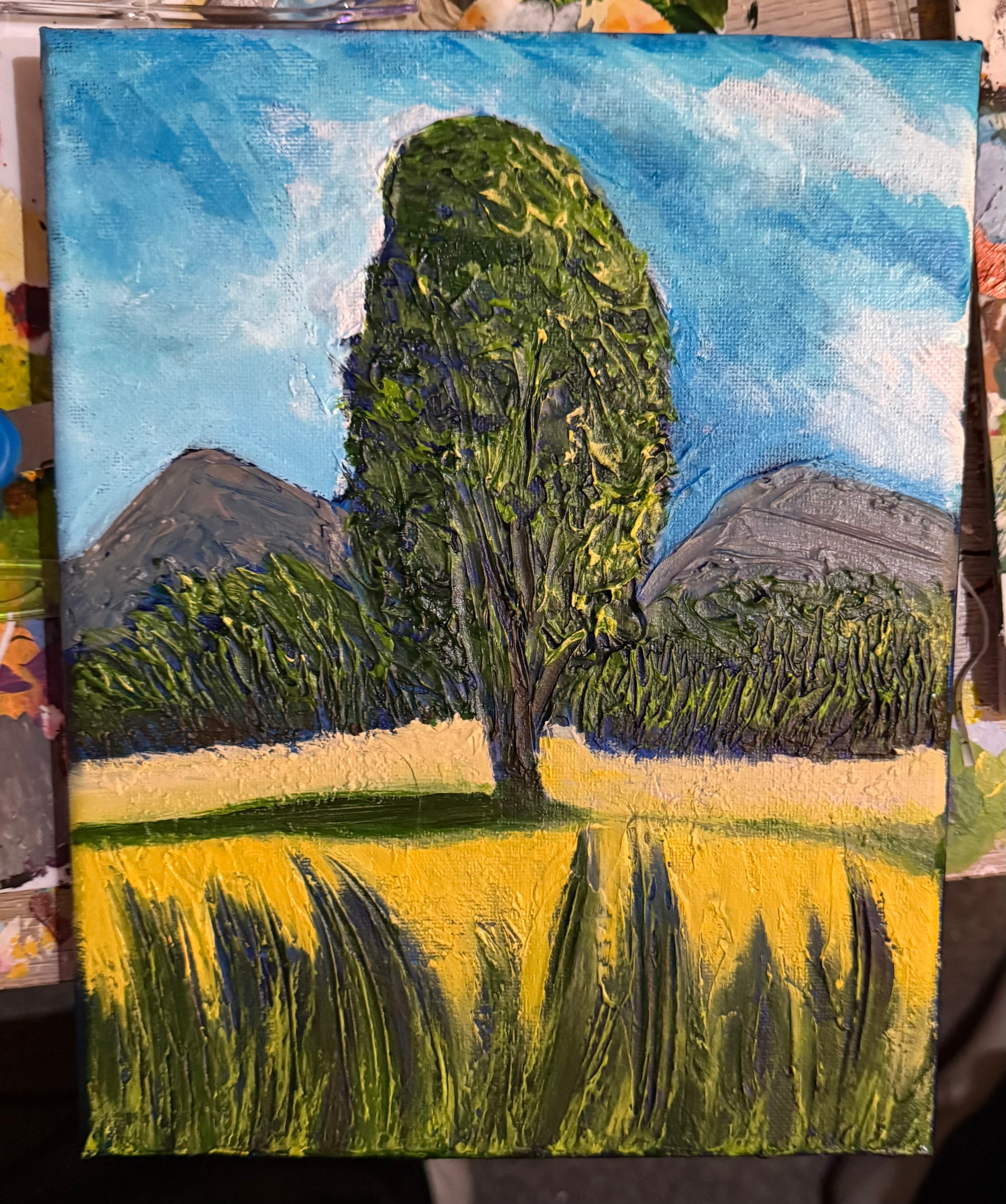
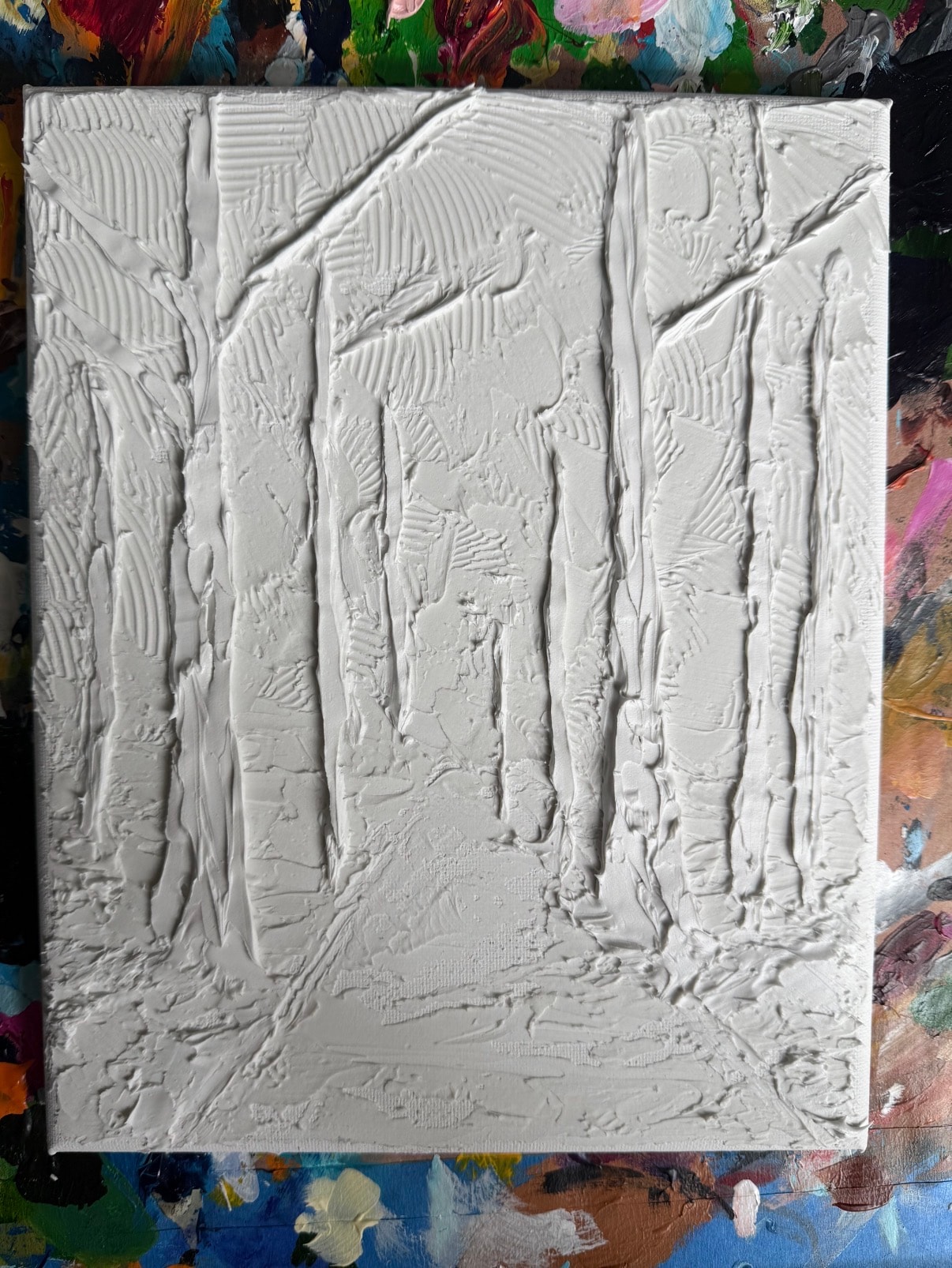
Caulk Art Explained: The Science Behind Why It Outlasts Every Other Texture Technique
Caulk art isn't just a different look — it's a different material science. Here's why flexible caulk outperforms thick paint, modeling paste, and every other texture medium when it comes to durability, organic form, and long-term stability on canvas.
Caulk Art Explained: The Science Behind Why It Outlasts Every Other Texture Technique
Ask any collector who owns both an impasto painting and a caulk art original which one they're more confident will look the same in thirty years, and the answer is always the same: the caulk art.
That's not a matter of taste. It's material science.
Caulk art uses flexible caulk — the same polymer-based sealant used in construction — to build three-dimensional structure on canvas before any paint is applied. The choice of caulk over thick paint or modeling paste isn't aesthetic. It's engineering. And understanding why caulk outperforms every other texture medium explains why serious collectors increasingly seek it out.
The Core Problem With Every Other Texture Medium
To understand why caulk art is different, you have to understand what goes wrong with the alternatives.
Impasto (thick paint) is the most common texture technique. Artists pile on oil or acrylic paint with a palette knife until it builds up into ridges. The problem is physics: paint is a rigid material when dry. Canvas is flexible — it expands and contracts with temperature and humidity. A rigid layer on a flexible substrate creates stress. Over years, that stress produces cracks. The thicker the impasto, the faster it cracks.
Modeling paste is more stable than thick paint but becomes brittle over time. It holds its shape well initially, but in environments with significant temperature swings — most homes — it eventually develops micro-fractures.
Gel mediums are flexible but don't hold high relief well. They're excellent for subtle texture but can't build the kind of substantial three-dimensional structure that creates real shadows at viewing distance.
Caulk solves all of these problems simultaneously.
Why Flexible Caulk Is the Right Material
Flexible caulk — the polymer-based sealant used in construction — was engineered specifically to bond to surfaces while remaining permanently flexible. It was designed to seal gaps that expand and contract with thermal movement without cracking or losing adhesion.
Those are exactly the properties a texture painter needs.
When Jay the Painter applies caulk to canvas, he's using a material that:
- Remains flexible after curing — it moves with the canvas rather than fighting it
- Bonds permanently to the substrate — properly applied caulk doesn't delaminate
- Holds organic forms — it can be shaped into curves, ridges, and fine details that rigid materials can't achieve
- Accepts paint adhesion — acrylic paint bonds to cured caulk reliably
- Resists environmental stress — temperature and humidity changes that crack impasto have no effect on flexible caulk
A Jay the Painter original, properly sealed, will hold its three-dimensional structure for decades. The texture you see today is the texture you'll see in thirty years.
The Durability Comparison: Numbers That Matter
Here's what the material science actually means for a painting's lifespan:
Impasto paintings: Hairline cracking in heavily textured areas can begin within 5–15 years in typical home environments. The thicker the impasto, the sooner it starts.
Modeling paste paintings: More stable than impasto, but brittleness can develop over 10–20 years, particularly in areas with significant temperature variation.
Caulk texture paintings: No cracking mechanism. The flexible polymer moves with the canvas. Properly sealed, the texture is stable indefinitely.
This isn't a theoretical advantage. It's the reason Jay uses caulk instead of the more obvious alternatives.
What Caulk Art Looks Like in Practice
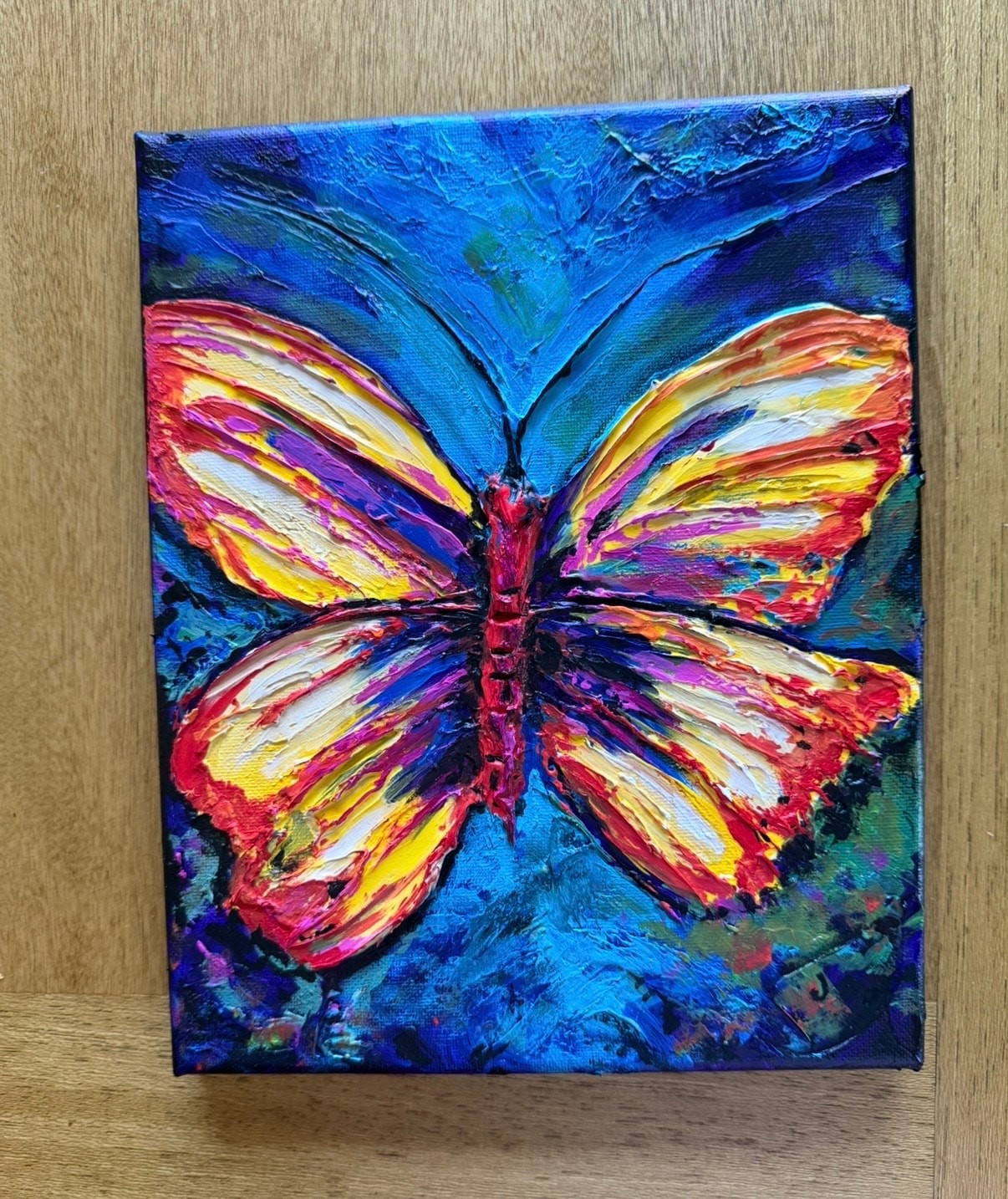
The material properties of caulk also affect what's possible visually. Because caulk can be built up higher than impasto without cracking risk, caulk art can achieve texture heights that impasto painters avoid.
The result is paintings where the three-dimensional structure is substantial enough to:
- Cast real shadows visible from across the room
- Look different from different angles as highlights shift
- Create a tactile surface that rewards touch
- Respond to changing light throughout the day
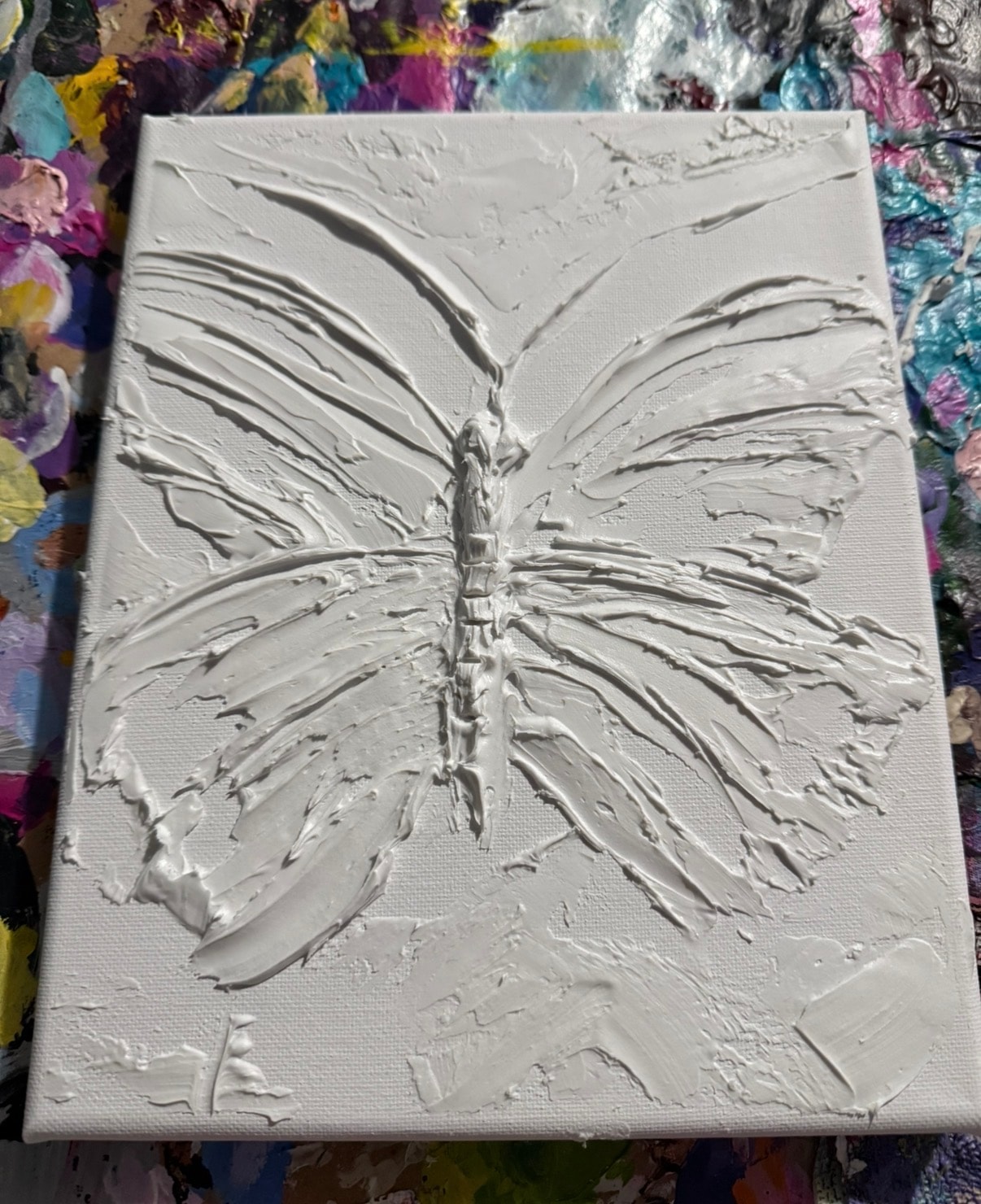
Before: The butterfly fully sculpted in white caulk. Every wing vein and body segment is built in raised relief.
After: The same caulk sculpture, now painted. The raised ridges catch light and shadow exactly like real butterfly wings.
The Sealing Step: Locking In the Durability
The final step in Jay's process — sealing the finished painting with protective varnish — is what locks in the long-term stability. The varnish protects the paint layer from UV degradation and surface abrasion, while the flexible caulk beneath continues to move with the canvas without stress.
The combination of flexible substrate (caulk), stable paint layer (acrylic), and protective topcoat (varnish) creates a painting system that's engineered for longevity.
Where to Buy Original Caulk Art
Jay the Painter, based in Akron, Ohio, creates original caulk texture paintings that ship nationwide. Every painting uses the flexible caulk technique described here — no impasto, no modeling paste, no shortcuts.
Prices range from $40 for a miniature to $400 for a large original.
Text Jay directly at 330-285-3136 to ask about any painting or commission a custom caulk texture original.
Want to understand the full technique? Read How Texture Painters Use Caulk → or see the Caulk Art Process → with before-and-after photos.