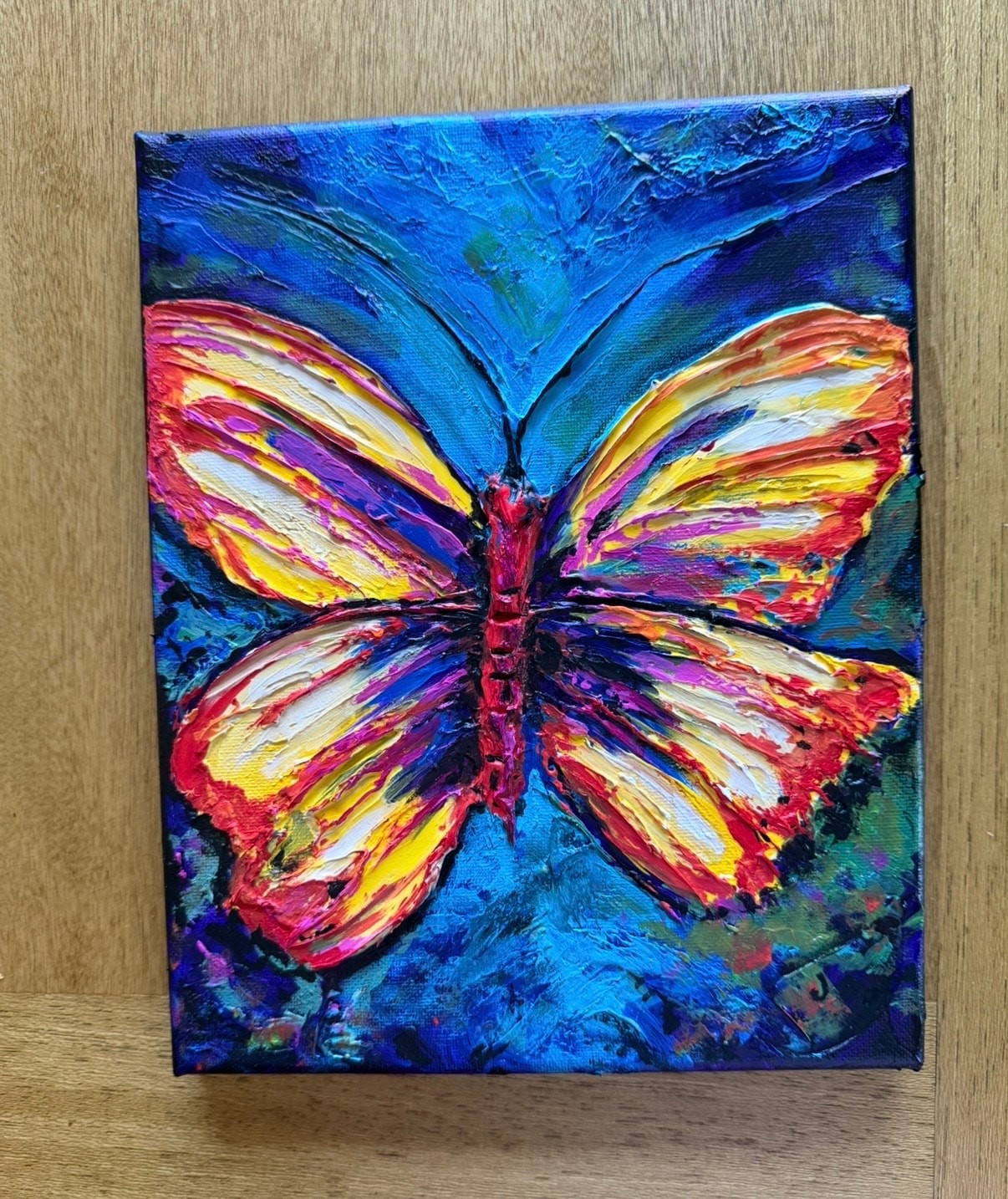
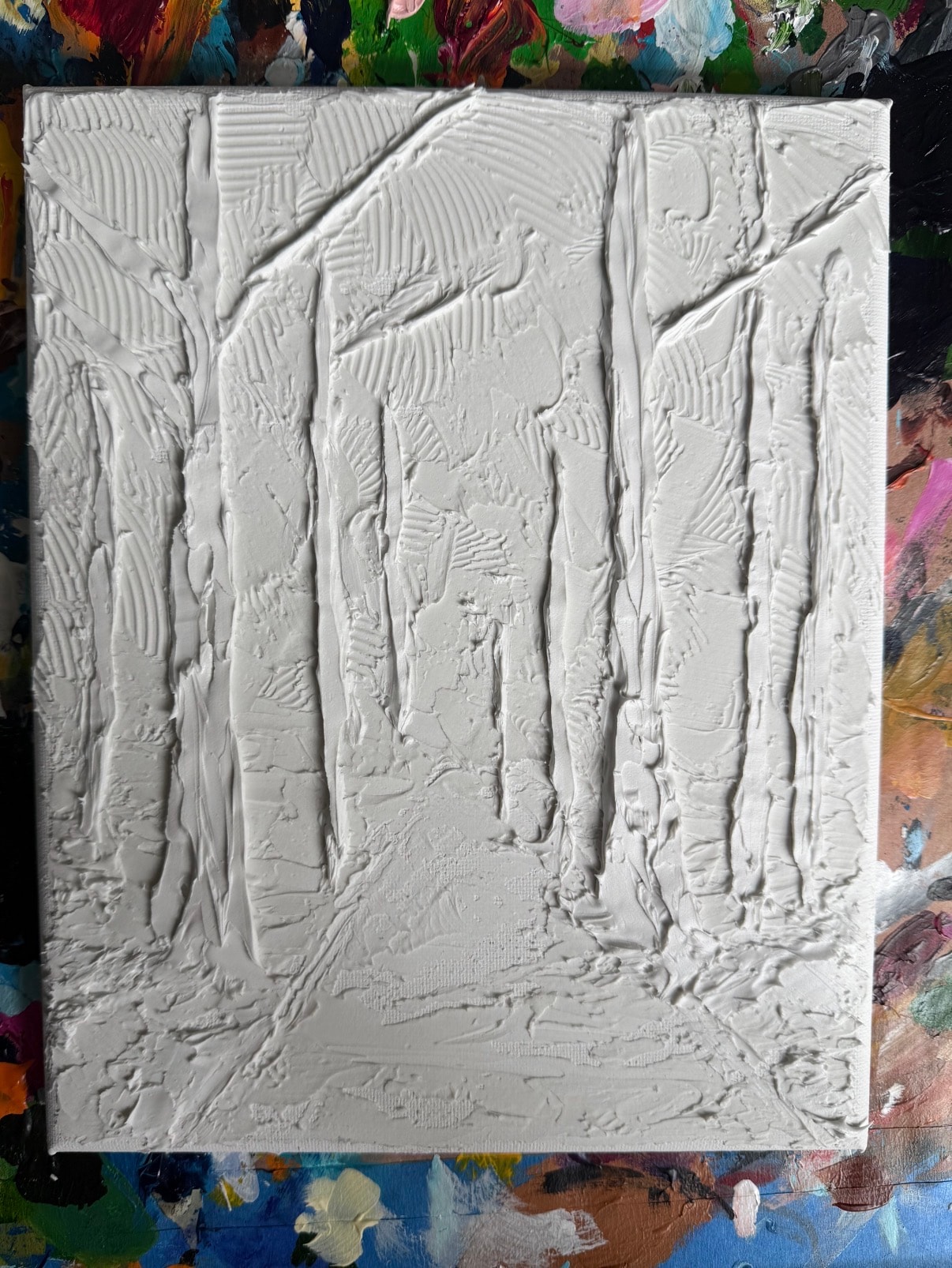
How to Get the Impasto Effect Without Thick Paint — The Caulk Method
Want the look of thick impasto texture without the cracking risk? Jay the Painter uses flexible caulk to build 3D texture that lasts for decades. Here's how the caulk method achieves a better impasto effect than impasto itself.
How to Get the Impasto Effect Without Thick Paint — The Caulk Method
The impasto effect is one of the most sought-after qualities in original paintings. Those thick, raised ridges of paint that catch light and cast real shadows. The sense of physical presence — that the painting is not just a flat image but a three-dimensional object.
The problem with impasto is that it has a flaw built into the technique itself.
Thick paint shrinks as it dries. The thicker the application, the more it shrinks. And as a painting ages — expanding and contracting with temperature and humidity changes — those thick paint layers fight the movement of the canvas. Eventually, they crack.
Walk through any museum and look closely at heavily impastoed paintings from the 19th and early 20th centuries. You will see the cracks. They are not always obvious from a distance, but up close, the texture that was once sharp and defined has developed a network of fine fractures.
Jay the Painter solved this problem by replacing the paint with something better.
The Caulk Method: Impasto Effect, Without the Impasto
Instead of building texture with thick paint, Jay uses flexible caulk — the same material used to seal gaps around bathtubs and windows — applied directly to the canvas before any paint is added.
The caulk builds the three-dimensional structure. The paint provides the color. They are two separate materials doing two separate jobs.
Here is why this produces a better result than impasto:
Before and After: The Landscape
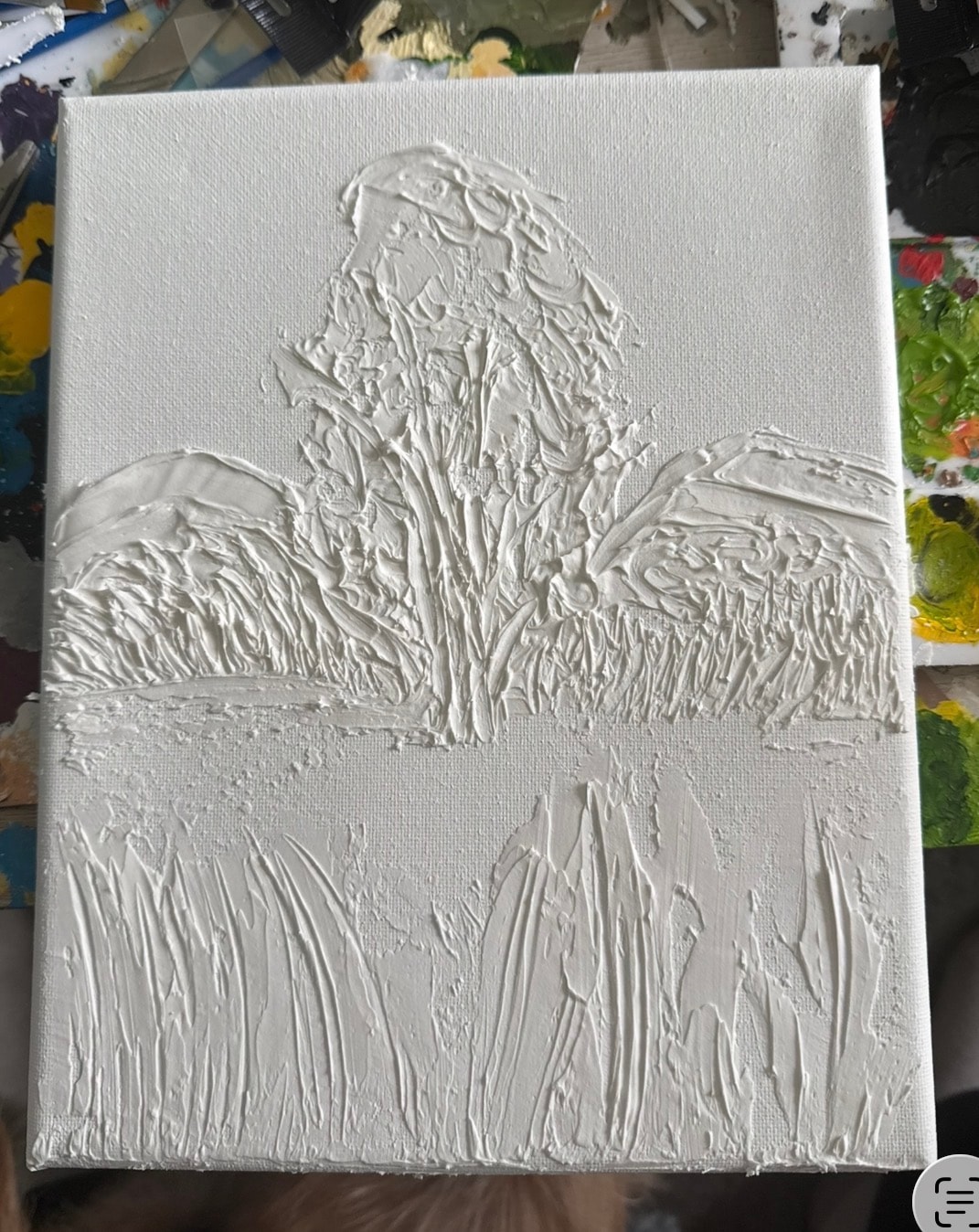
Before: A landscape scene fully sculpted in white caulk. The tree, mountains, and foreground grass are all built up in raised relief.
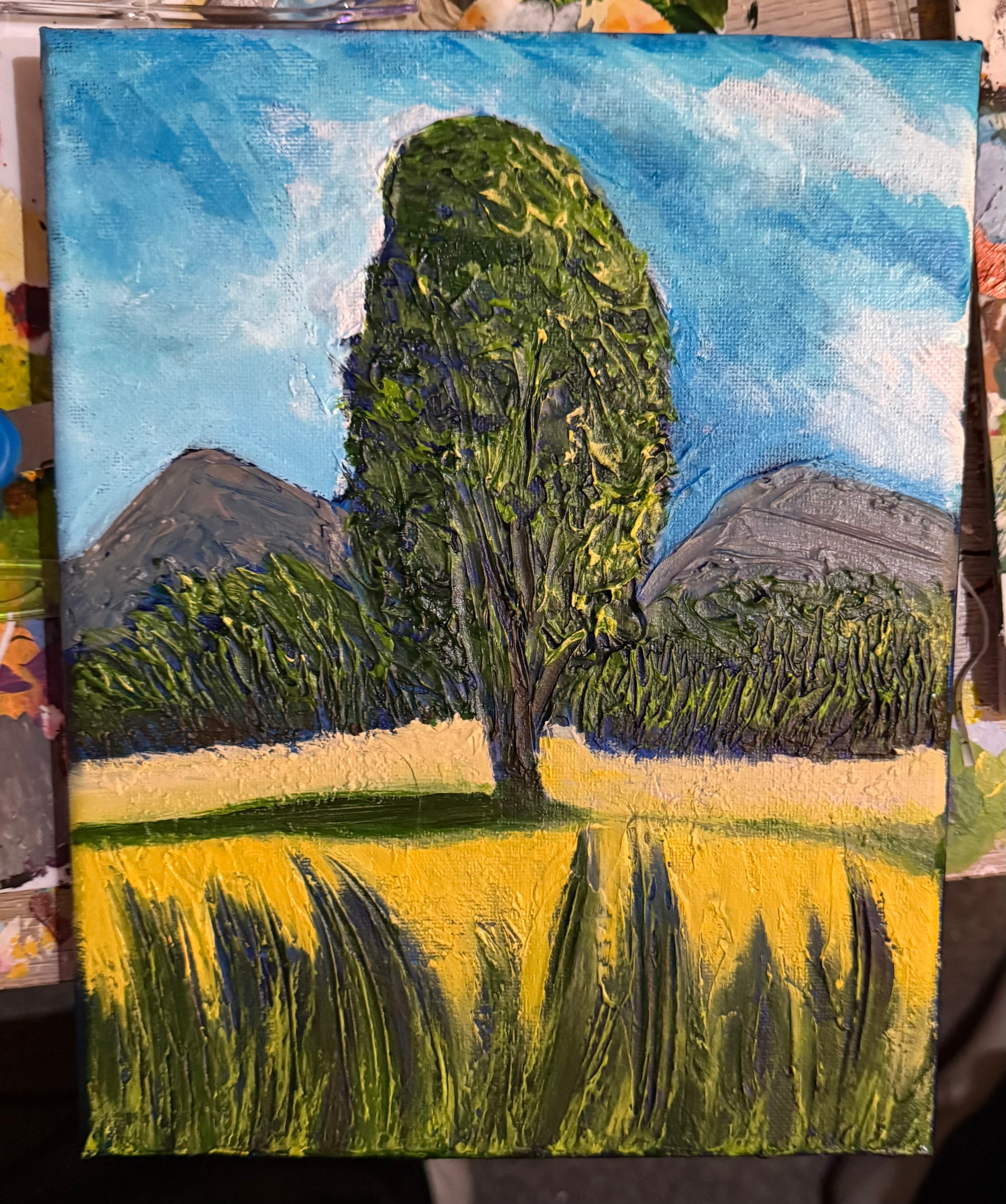
After: The same caulk sculpture, now painted. The tree canopy is rich green, the mountains are slate gray, the foreground is golden grass. The raised caulk texture makes every element look three-dimensional.
Look at the finished landscape. The tree canopy has real depth — the raised caulk ridges catch light on their upper surfaces and fall into shadow underneath. The mountain ridges have genuine three-dimensional form. The foreground grass has texture that reads as individual blades catching the light.
None of that texture is painted. It is all caulk. The paint is just color on top of a caulk sculpture.
Why Caulk Beats Impasto for Texture
1. Flexible caulk does not crack
This is the most important advantage. Flexible caulk is designed to move. It expands and contracts with temperature changes. It bends without breaking. A caulk texture painting will maintain its texture for decades — potentially for a century or more.
Thick impasto paint is rigid. It fights the movement of the canvas. Over time, it cracks.
2. Caulk can be built higher
With impasto, there is a practical limit to how thick you can apply paint before it becomes unstable. Very thick impasto layers can sag before they dry, or crack as they cure.
Caulk is applied in layers, each one cured before the next is added. You can build up as much height as you want, as long as you are patient. The landscape painting above has tree bark texture that stands significantly higher off the canvas than any impasto application could achieve.
3. Caulk creates more precise forms
A palette knife loaded with thick paint creates a certain kind of mark — bold, gestural, somewhat unpredictable. That is part of the beauty of impasto.
But caulk can be shaped more precisely. You can draw thin lines for tree branches or wing veins. You can create smooth curves for flower petals. You can build up specific forms — a rooster's comb, a butterfly's body segments — with a level of detail that impasto cannot match.
4. The texture is built before the painting begins
With impasto, the texture and the color are applied at the same time. The artist is making decisions about both simultaneously.
With caulk texture painting, the texture is built first — completely, as a sculpture — and then the painting begins. The artist can focus entirely on the three-dimensional structure in the caulk stage, and then focus entirely on color and light in the painting stage. The two problems are solved separately.
What the Caulk Method Looks Like in Practice
The rooster painting is another example of the caulk method applied to a detailed subject:
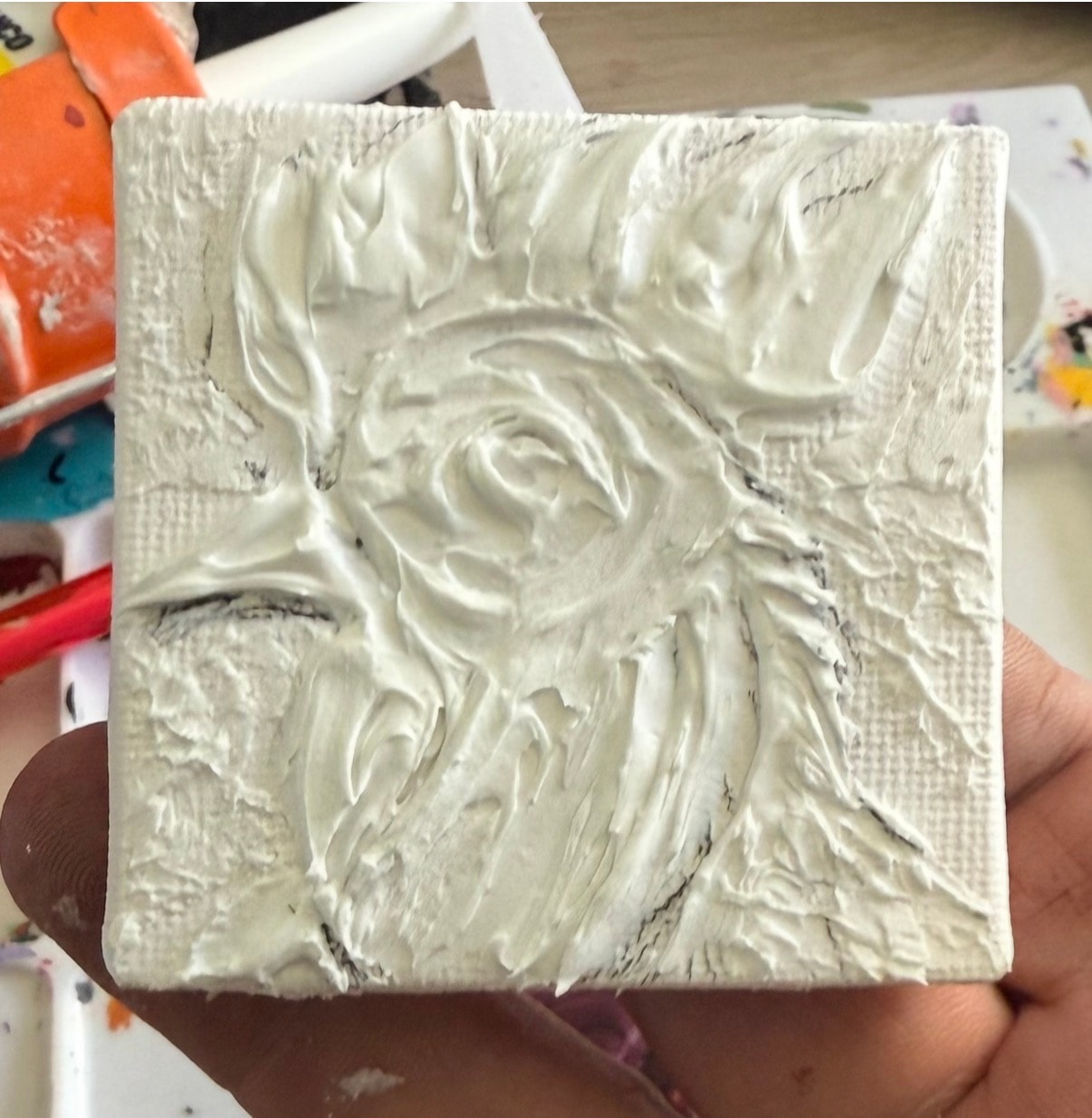
The rooster head fully sculpted in white caulk. Every feather, the comb, the eye socket, and the beak are all built up in raised relief.
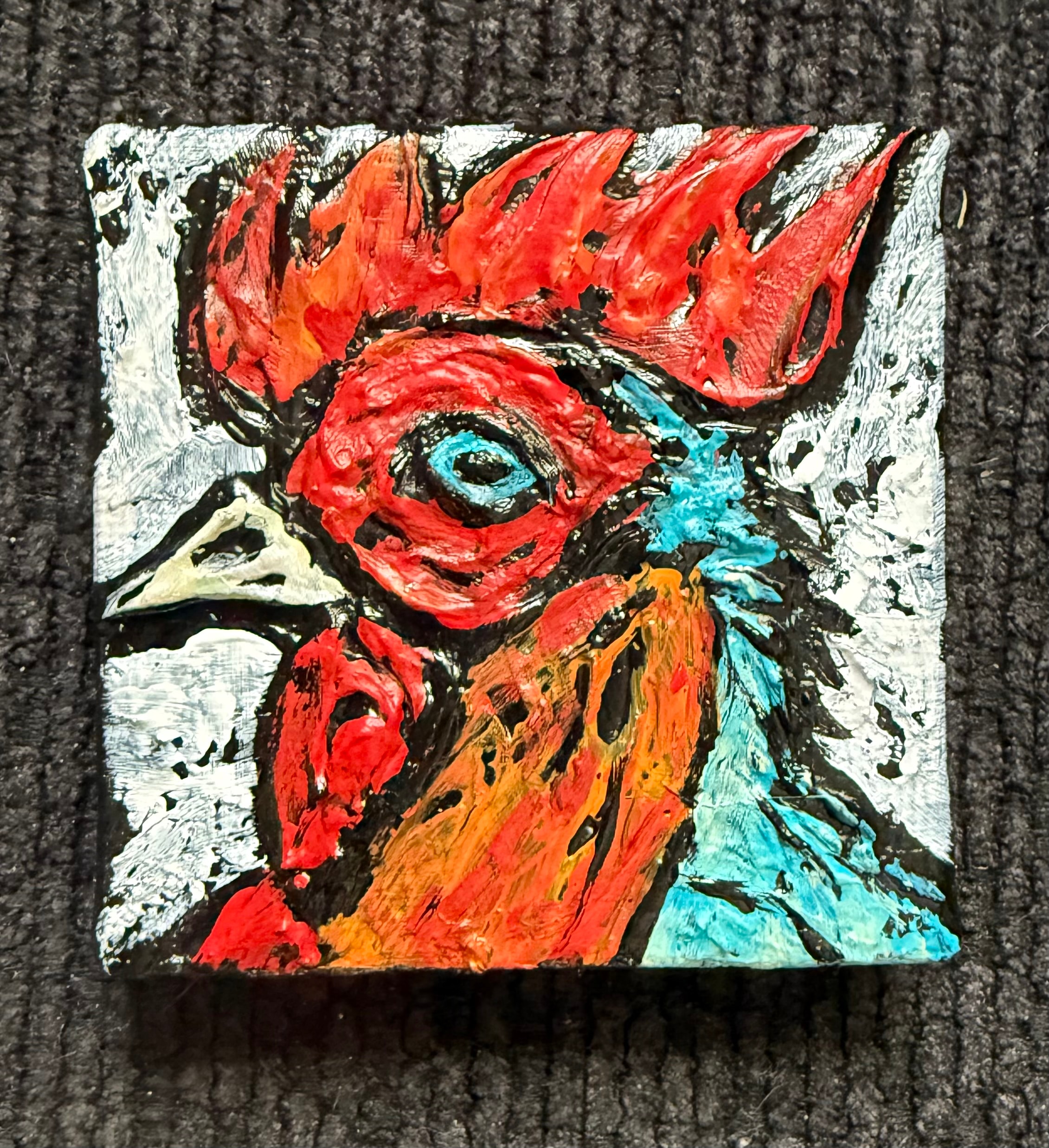
The finished rooster painting. The raised caulk ridges make every feather look three-dimensional.
The feather detail in the finished rooster painting is only possible because the caulk was applied with precision in the sculpture stage. Each feather is a separate raised form. The paint follows those forms, creating highlights and shadows that make each feather read as three-dimensional.
This level of detail is not achievable with impasto. The forms would be too small and too precise for a palette knife loaded with thick paint.
The Impasto Effect, Done Right
If what you love about impasto is the texture — the physical presence, the shadows, the sense that the painting is a three-dimensional object — then caulk texture painting gives you all of that, and more.
More height. More precision. More durability. More detail.
And because the texture is built by hand, no two paintings are ever identical. Every caulk texture painting is a unique original — not just in subject matter, but in the specific texture that makes it what it is.
Own a Caulk Texture Original
Every painting in Jay the Painter's gallery uses this technique. Prices range from $40 for a miniature to $400 for a large original. Jay ships nationwide from Akron, Ohio.
Text Jay at 330-285-3136 to ask about any painting or commission a custom original.
How does caulk art compare to impasto? Read the full caulk art guide → | Caulk art vs. impasto explained → | Jay's process step by step →