What Does a Textured Painting Look Like? A Visual Guide to Dimensional Art
Textured paintings look different from every angle, cast real shadows, and respond to light in ways flat paintings never can. Here's a visual guide to what genuine dimensional art looks like — with examples from Jay the Painter's caulk texture originals.
If you've never seen a genuine textured painting in person, photographs don't fully prepare you for the experience. The three-dimensional surfaces, the real shadows, the way the painting responds to light — these qualities are visible in photographs, but they're felt in person.
Here's a visual guide to what textured paintings actually look like — and what to look for when evaluating dimensional art.
The First Thing You Notice: Real Shadows
The most immediately visible quality of a genuine textured painting is the shadows.
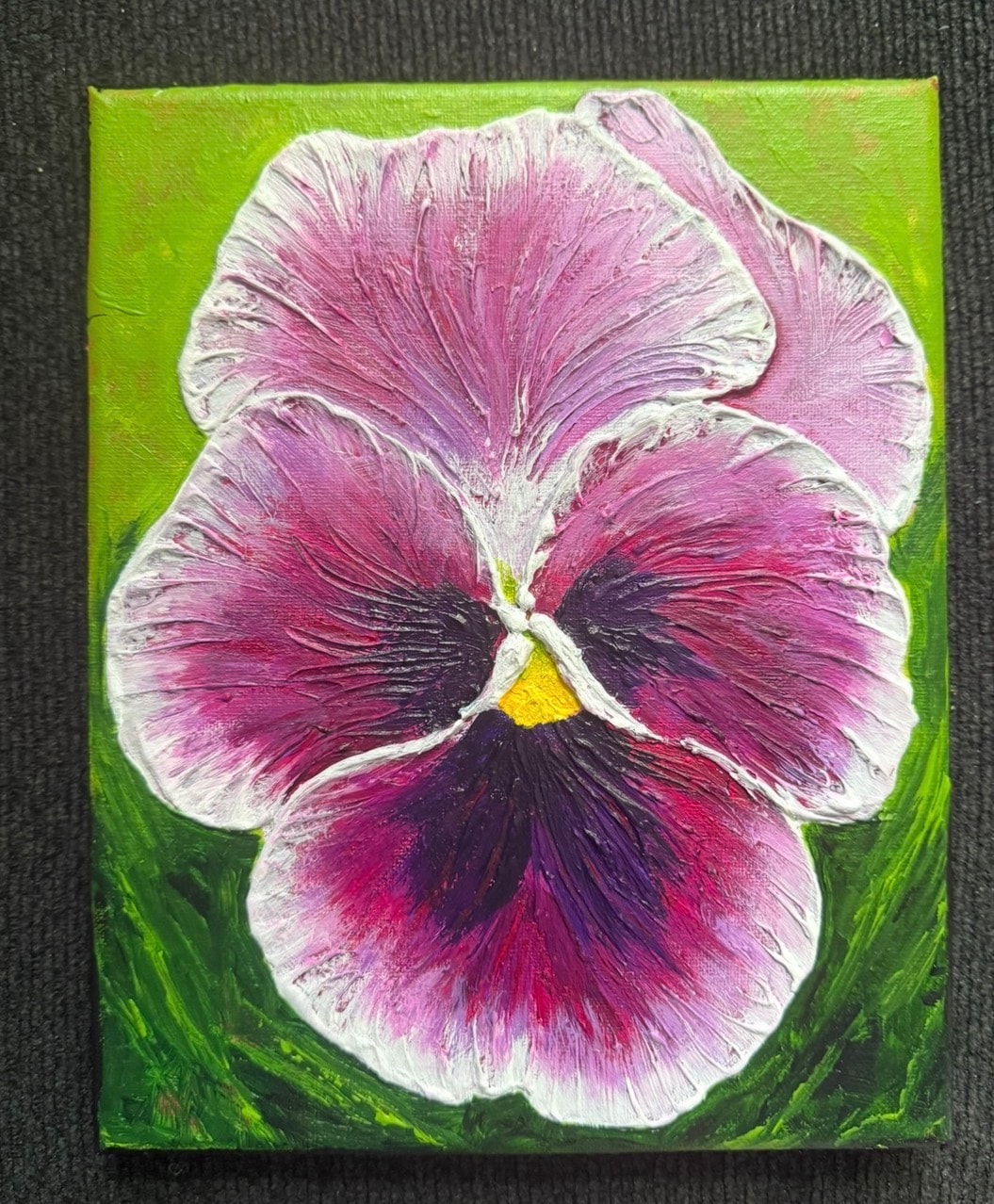
In a flat painting, shadows are painted — created with pigment to suggest depth and dimension. In a textured painting, shadows are real. The raised surfaces project off the canvas and cast actual shadows on the canvas beneath them.
These shadows are visible in photographs if you know what to look for. Look at the base of raised surfaces — petals, ridges, bark — and you'll see a darker area where the raised surface blocks the light. That's a real shadow, not a painted one.
The shadows change with the light. A textured painting that's photographed in direct sunlight will show different shadows than the same painting photographed under diffuse indoor light. This is one of the clearest signs that the texture is genuine.
What Flower Textured Paintings Look Like
Flowers are among the most striking subjects for textured painting. The organic curves of petals, the layered depth of a bloom, the way light catches the surface of a flower — all of these qualities translate directly into the caulk medium.
Here's what Jay the Painter's flower textured paintings look like:
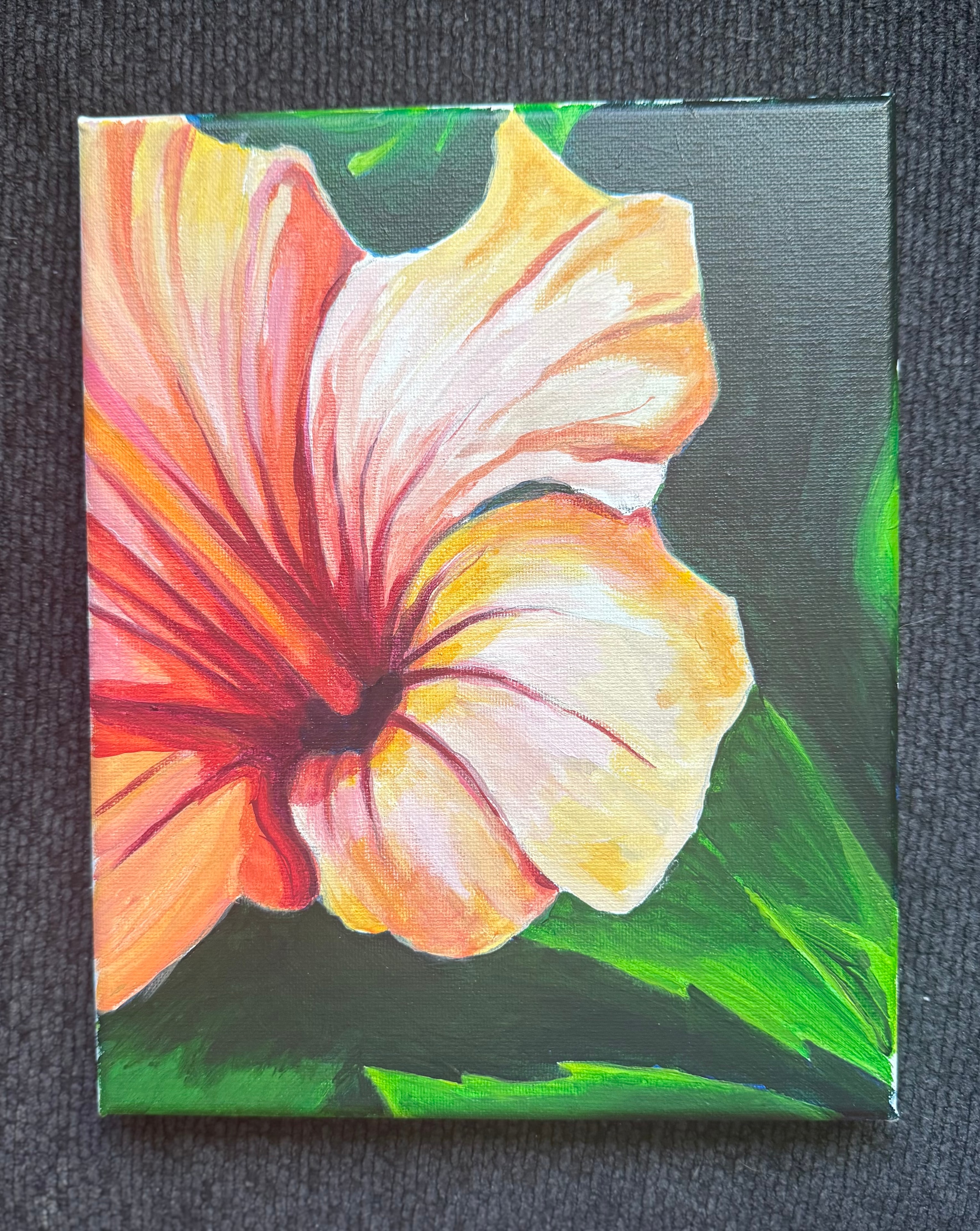
The peach hibiscus shows the characteristic qualities of genuine textured painting: the petals curve up off the canvas, each one built individually in caulk to the exact height and angle that creates the right shadow. The center of the flower is built up higher than the outer petals, creating the natural depth of a bloom.
The blue hibiscus shows how the caulk texture technique handles color on a three-dimensional surface. The blue paint looks different on the peaks of the raised petals than in the valleys between them — the same color, but catching light differently depending on where it sits on the three-dimensional form.
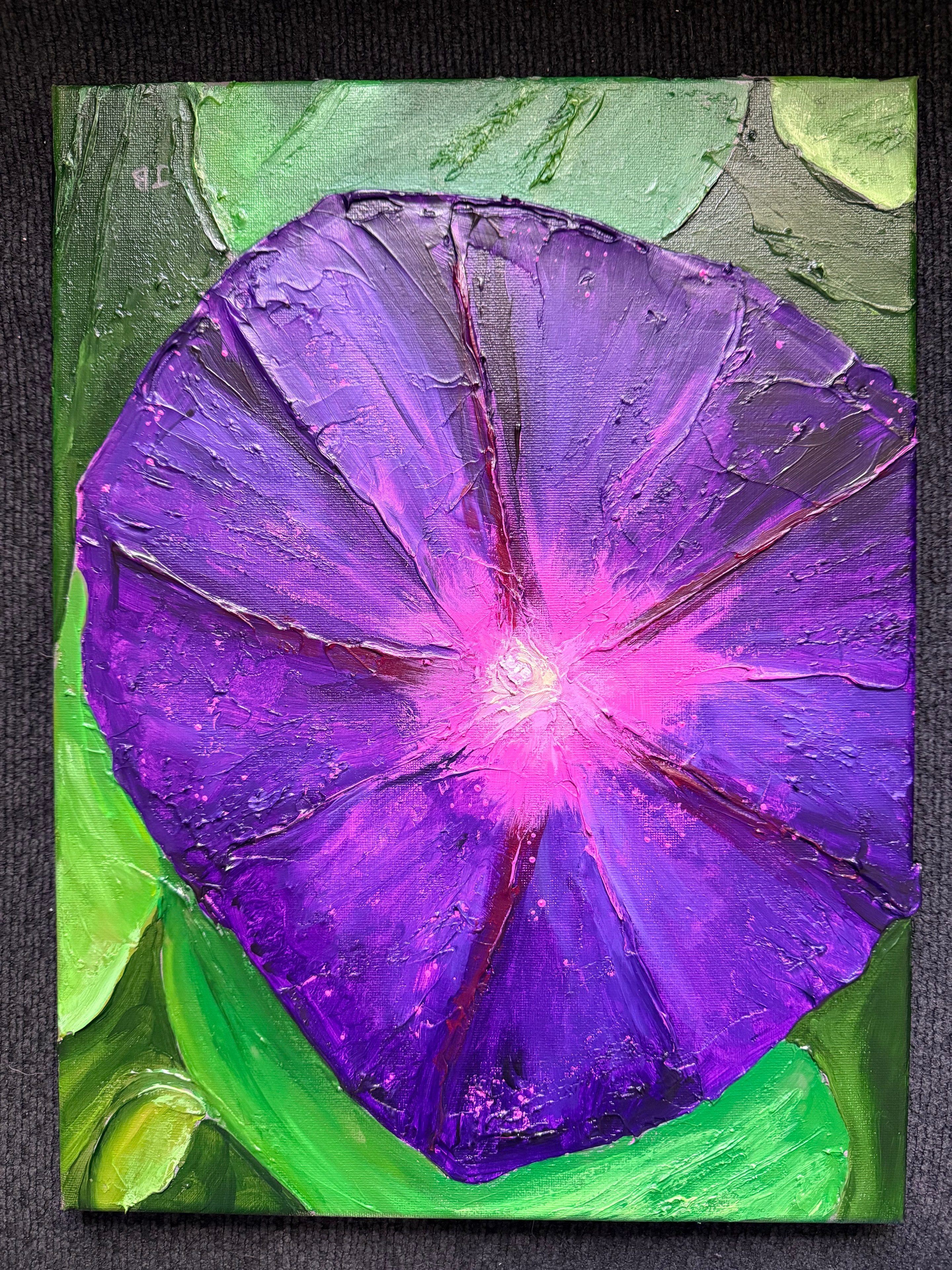
The morning glory shows the precision the caulk technique allows with delicate floral subjects. The spiral of the flower's form is built in caulk, each curve shaped during the working window before the caulk sets.
What Landscape Textured Paintings Look Like
Landscape textured paintings use the dimensional technique to create the physical depth of the natural world — the roughness of bark, the layered quality of foliage, the rolling contour of a hillside.
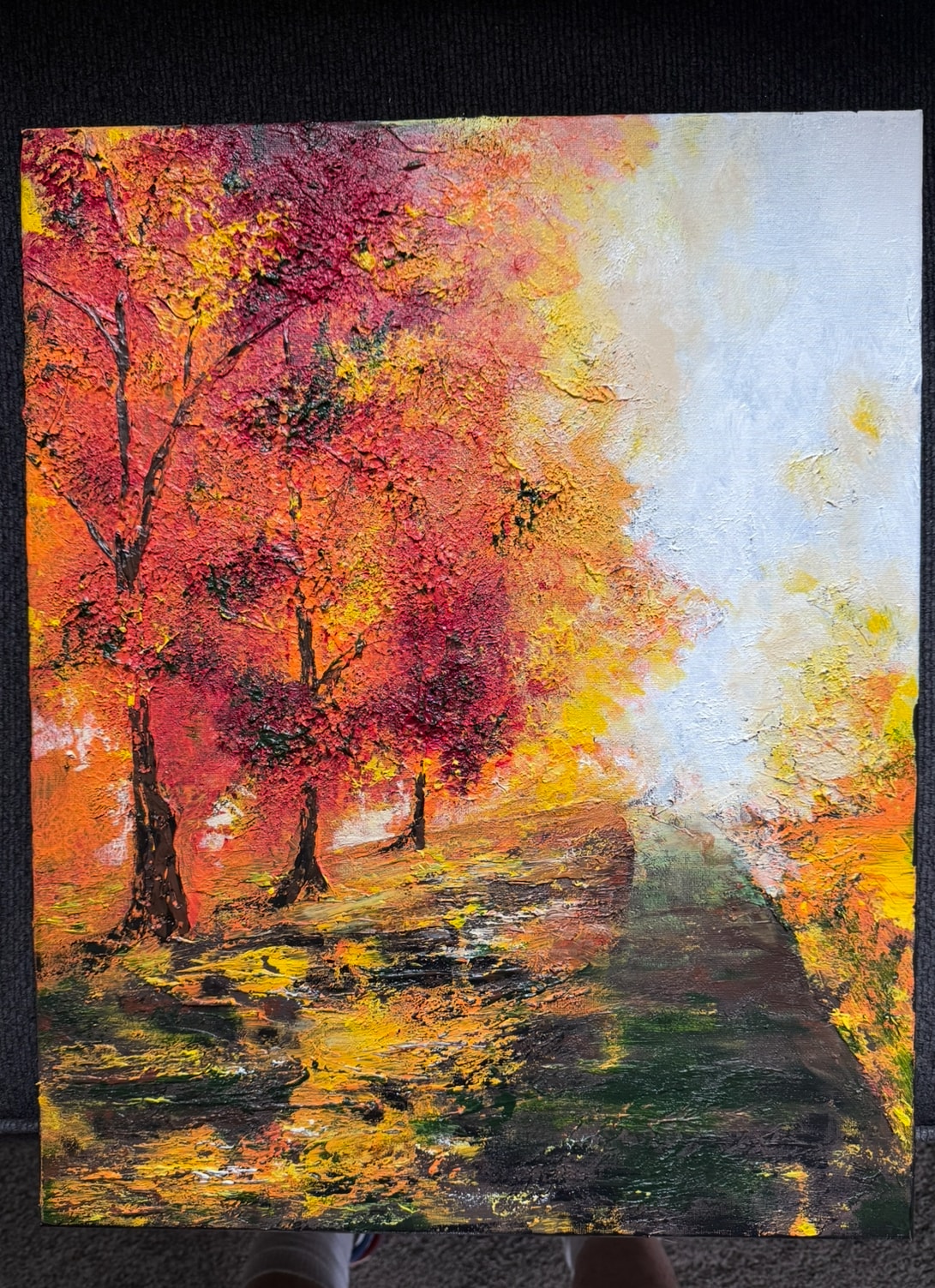
The fall landscape shows how textured painting handles the specific quality of Northeast Ohio autumn. The texture of the foliage is built in caulk — each leaf form shaped individually, creating a surface that catches light the way real leaves do. The foreground has more texture than the background, creating the natural recession of depth in a landscape.
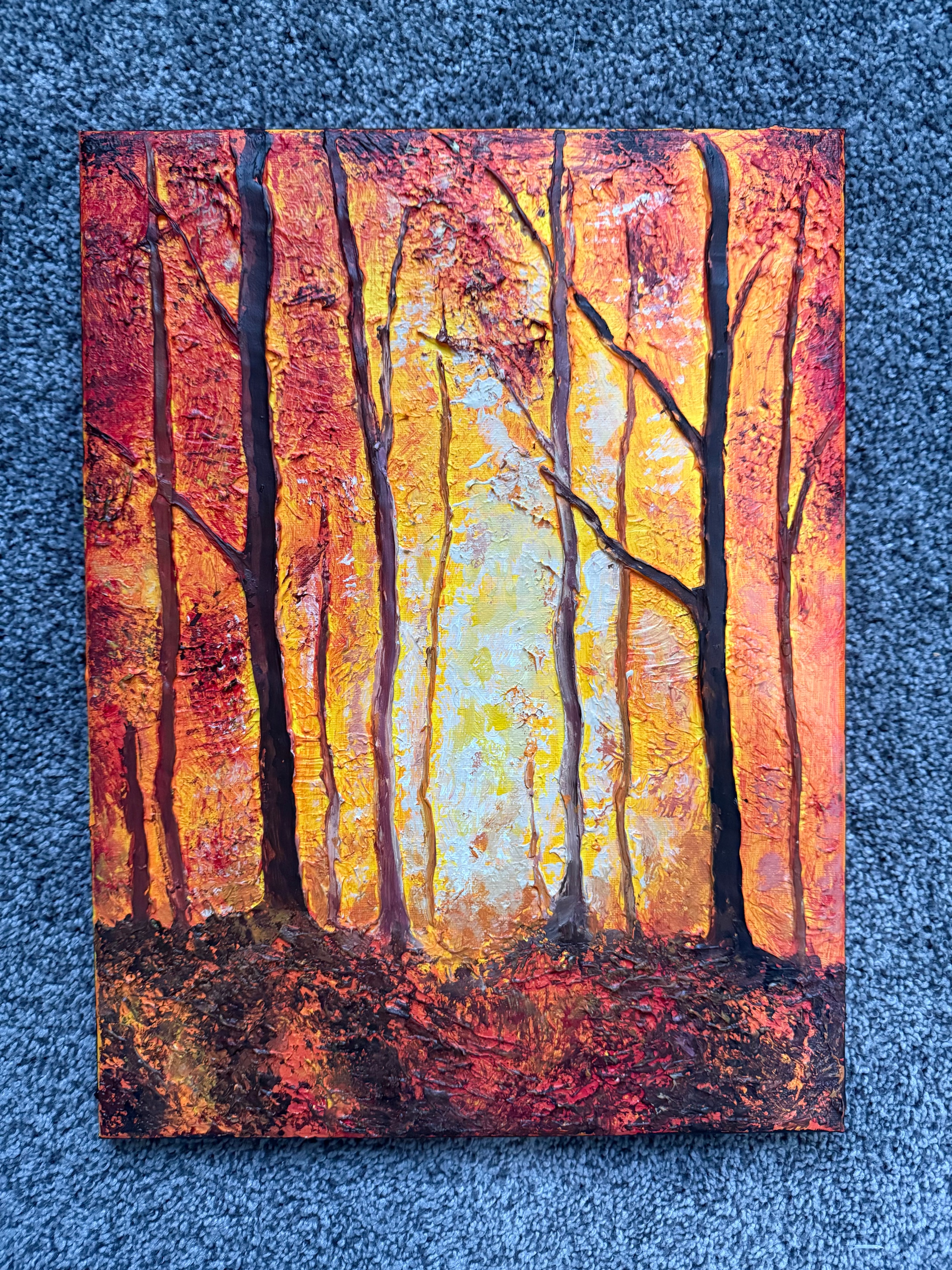
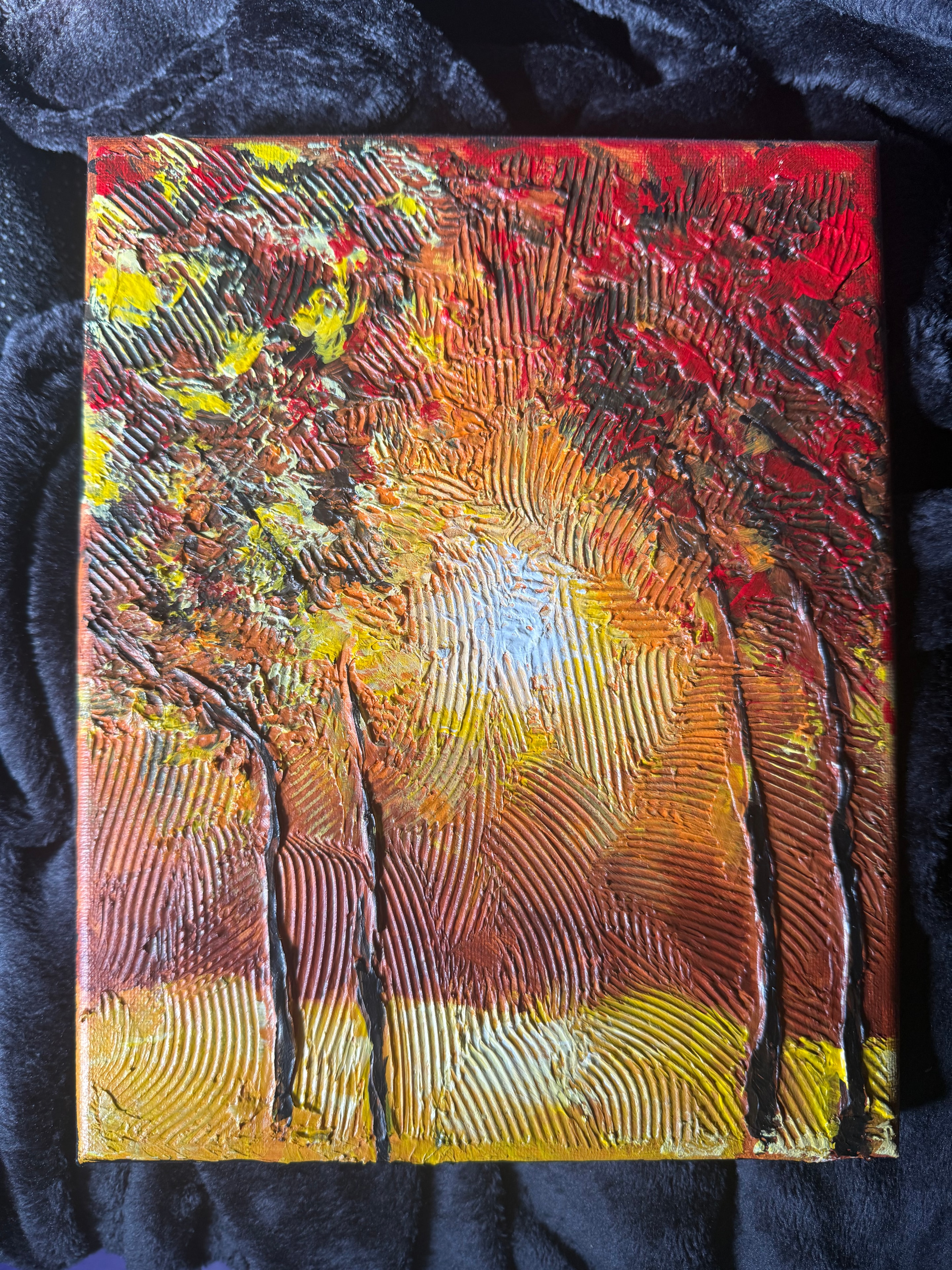
The illuminated forest shows how the caulk technique handles the layered depth of a forest interior. The texture of bark, the way branches overlap, the quality of light filtering through a canopy — all of these are built into the three-dimensional surface before painting begins.
What Abstract Textured Paintings Look Like
Abstract textured paintings use the dimensional surface as the primary visual subject — swirling ridges, geometric peaks, and organic forms that create paintings with genuine physical presence.
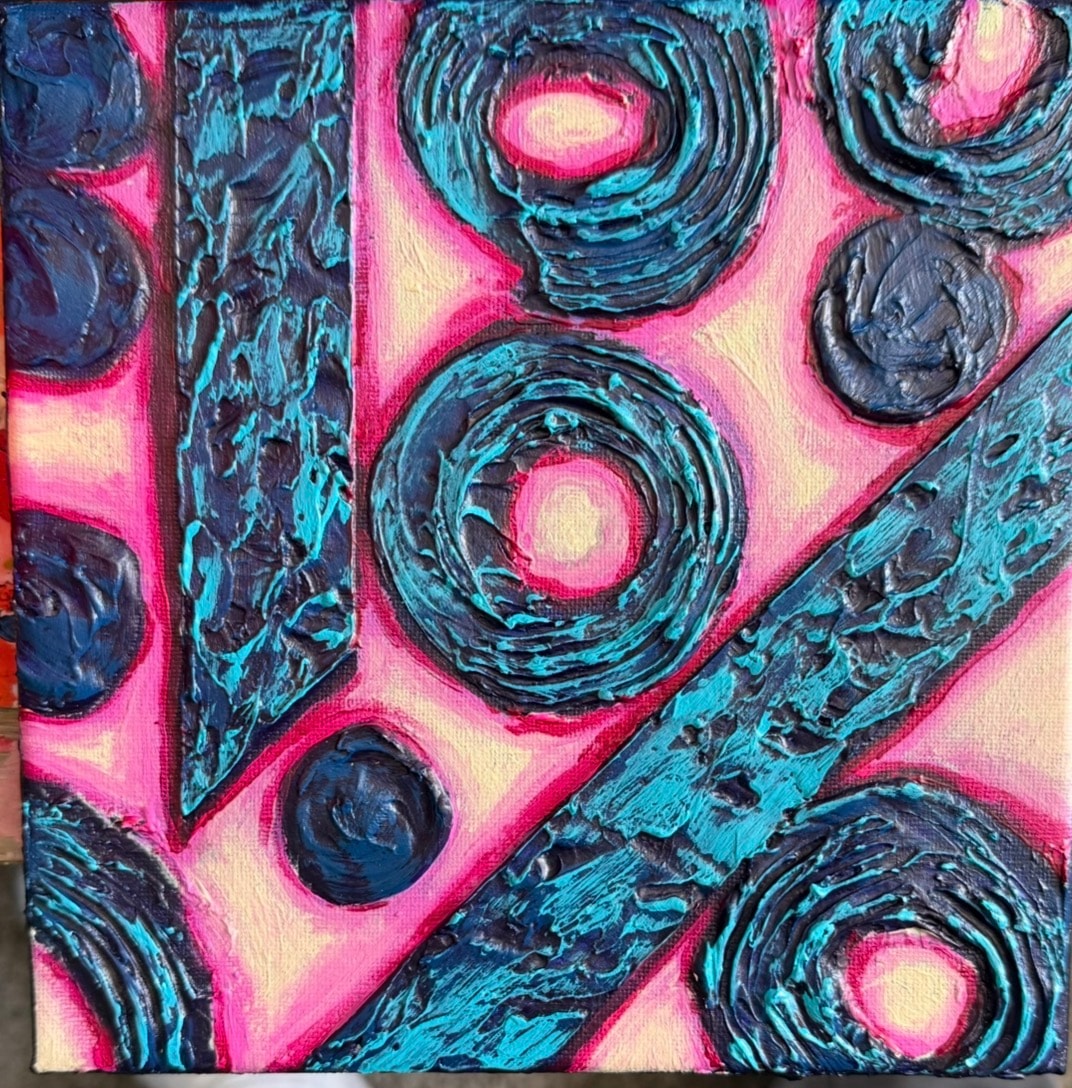
The neon vortex shows how the caulk technique handles abstract composition. The swirling ridges are built in caulk, each one shaped during the working window. The paint — applied in layers over the cured caulk — catches differently on the peaks and in the valleys, creating a surface that seems to glow.
What Miniature Textured Paintings Look Like
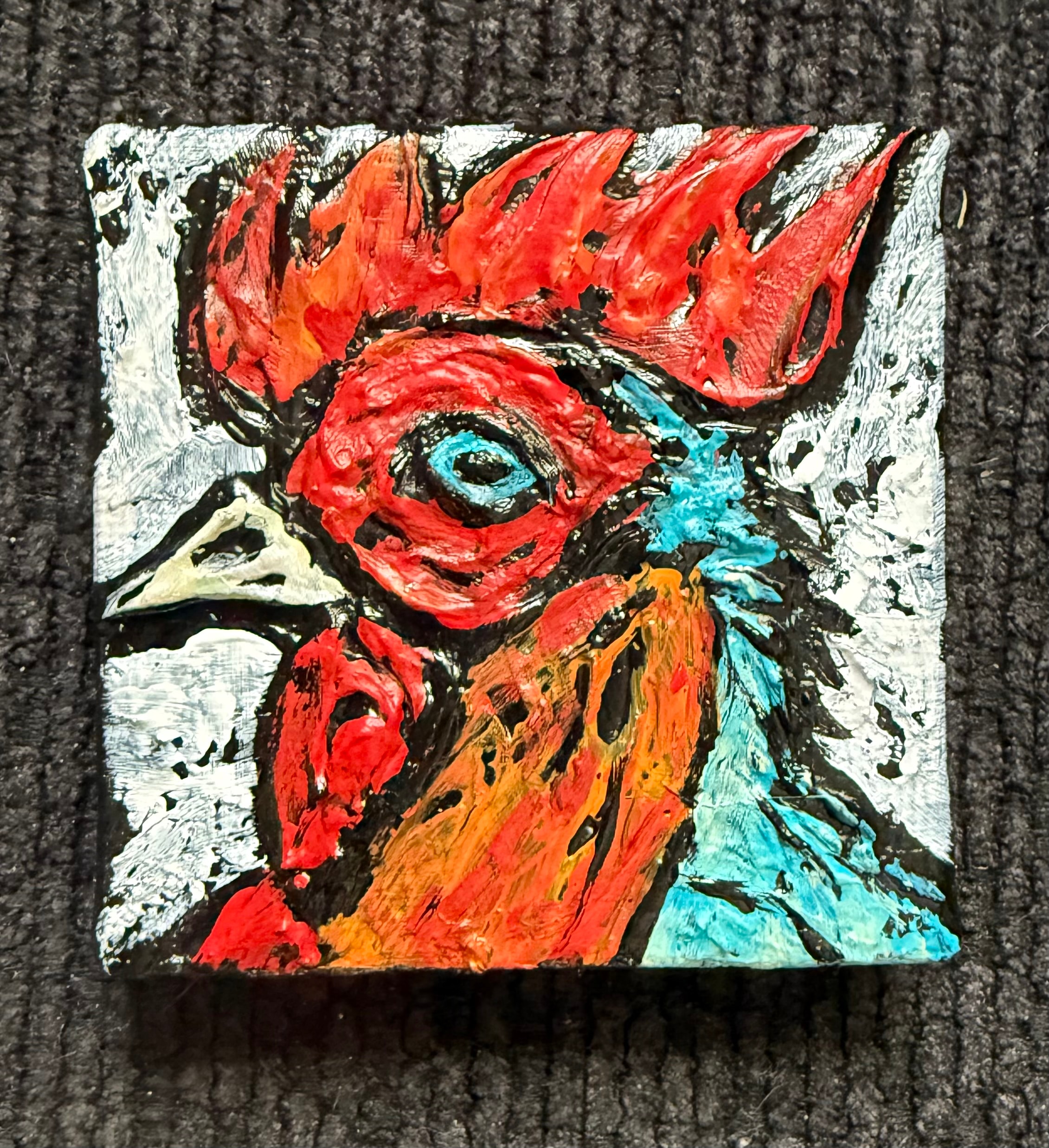
Jay's miniature textured paintings apply the full caulk technique at a 2.44-inch scale — a scale that seems almost impossible for genuine dimensional work.
The miniatures show the same qualities as the full-size originals: real raised surfaces, genuine shadows, paint that responds to the three-dimensional form. The difference is scale — these are paintings you can hold in your palm.
Browse the miniature gallery →
The Difference Between Genuine and Imitation Texture
Not everything described as a "textured painting" is genuinely dimensional. Here's how to tell the difference:
Genuine textured painting:
- Visible shadows at the base of raised surfaces in photographs
- Surfaces that look different from different angles
- Paint that behaves differently on peaks vs. valleys
- A surface you can feel with your hand
Imitation texture:
- No visible shadows in photographs — just surface variation
- Looks essentially the same from every angle
- Paint applied uniformly across the surface
- Smooth or nearly smooth to the touch
When evaluating a textured painting, look for the shadows. If you can see real shadows cast by raised surfaces in the photographs, the texture is genuine. If the surface variation is only visible up close and casts no shadows, the work is not genuinely dimensional.
See Jay's Full Gallery
The best way to understand what textured paintings look like is to see as many examples as possible.
Full gallery of original caulk texture paintings: jaythepainter.com/artwork
Miniature texture paintings from $40: jaythepainter.com/myminipaintings
Before-and-after process photos: jaythepainter.com/caulk-art-process
Call or text Jay: 330-285-3136
Jay the Painter is an independent texture painter based in Akron, Ohio. He creates original caulk texture paintings and sells directly to collectors nationwide.
Explore Topics
Written by
Jay the Painter
Content creator and writer sharing insights and stories.