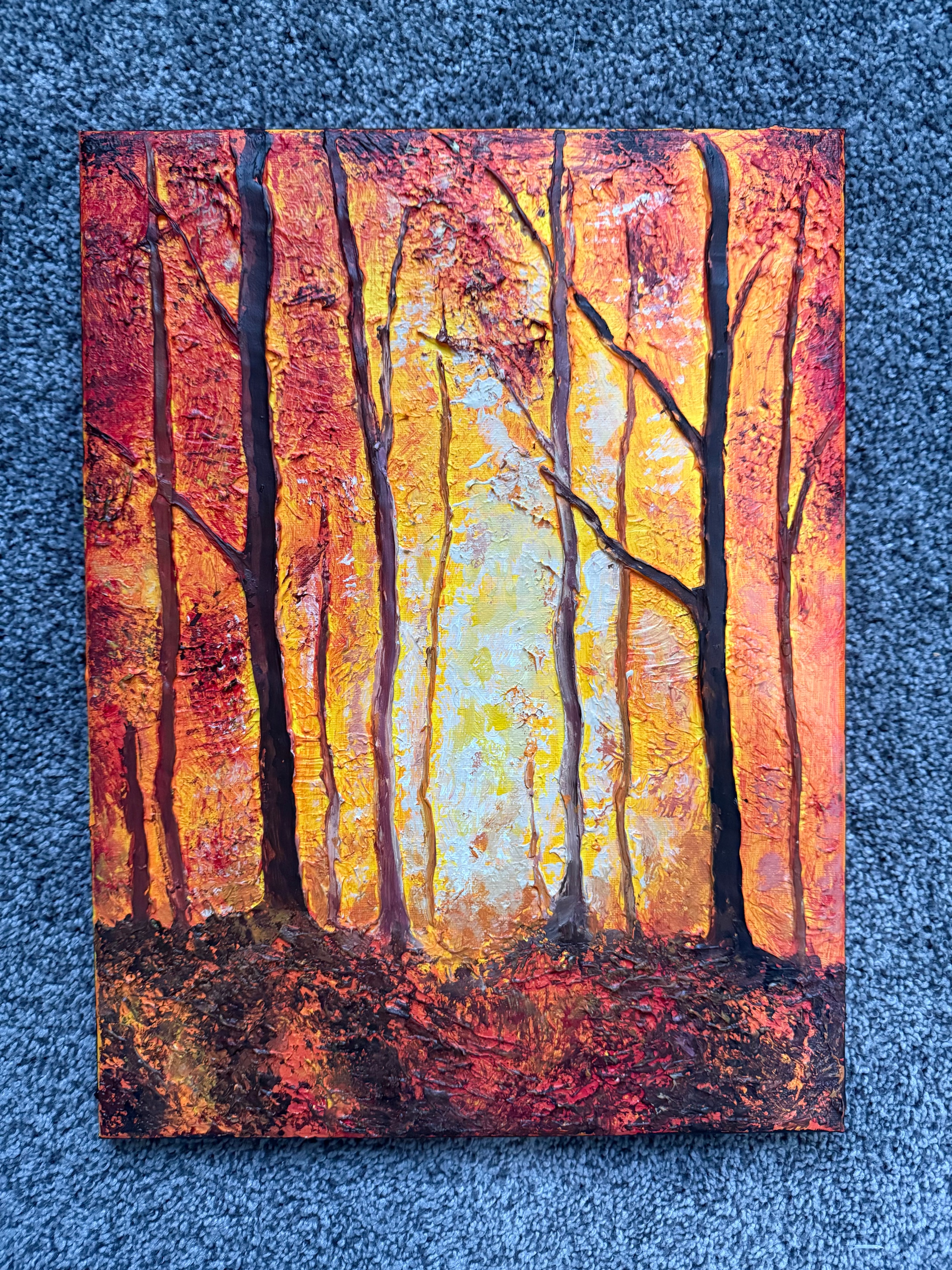
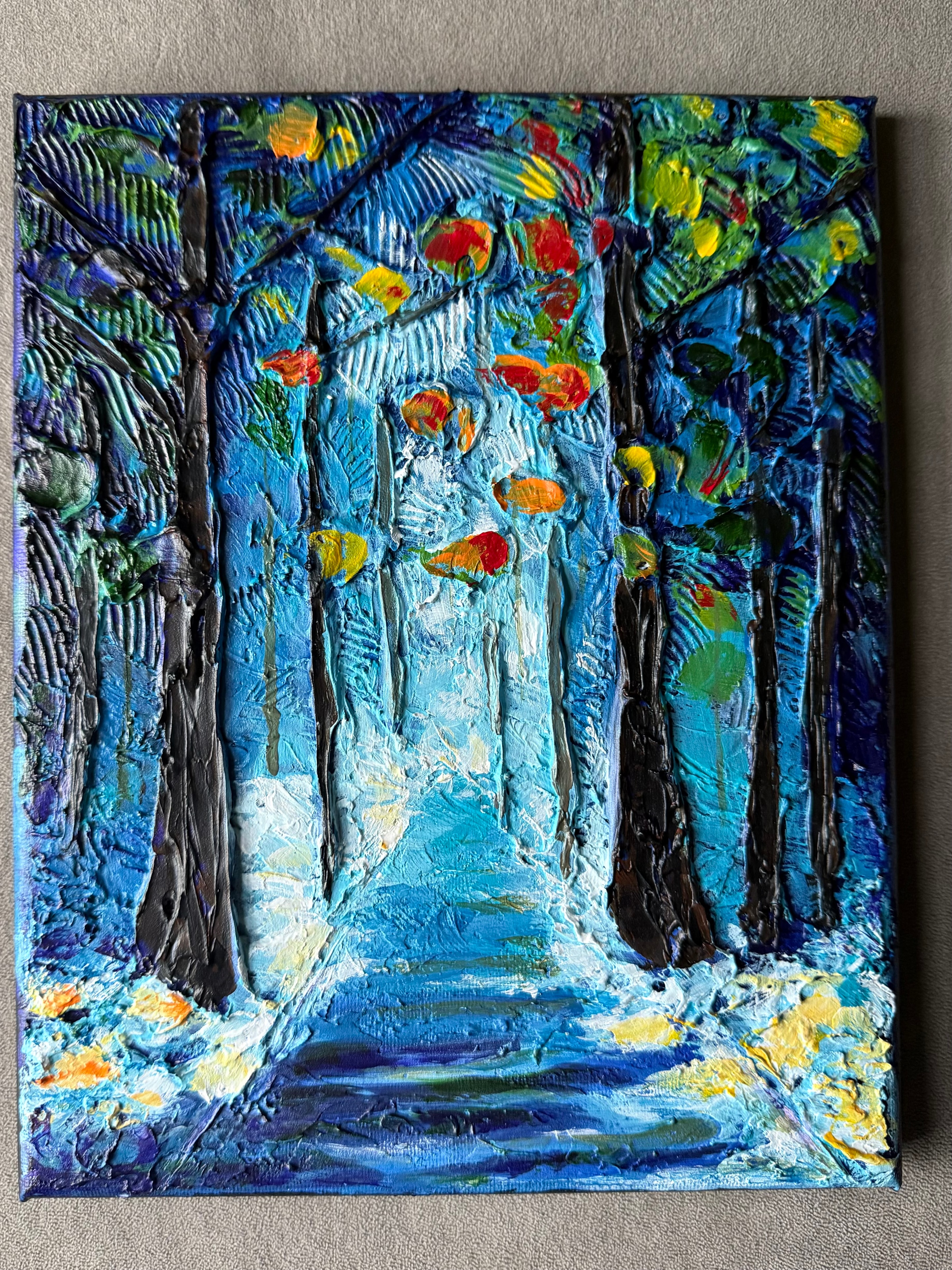
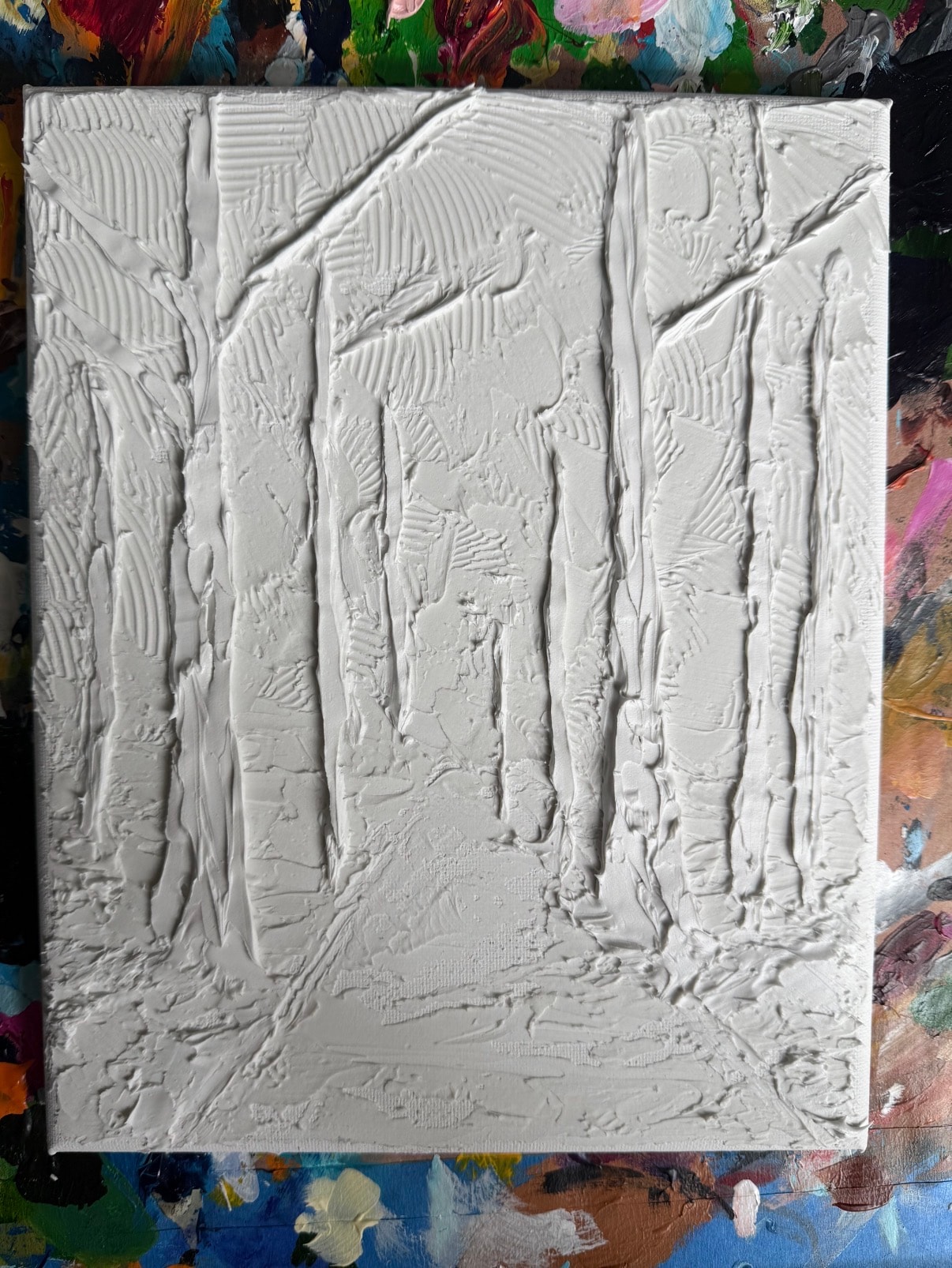
Thick Textured Wall Art: Why It Always Looks Better in Person Than in Photos
Every collector who receives a textured painting for the first time says the same thing: "It looks even better in person than in the photos." Here is the science and the experience behind why thick textured wall art cannot be fully captured in a photograph — and what that means for buyers.
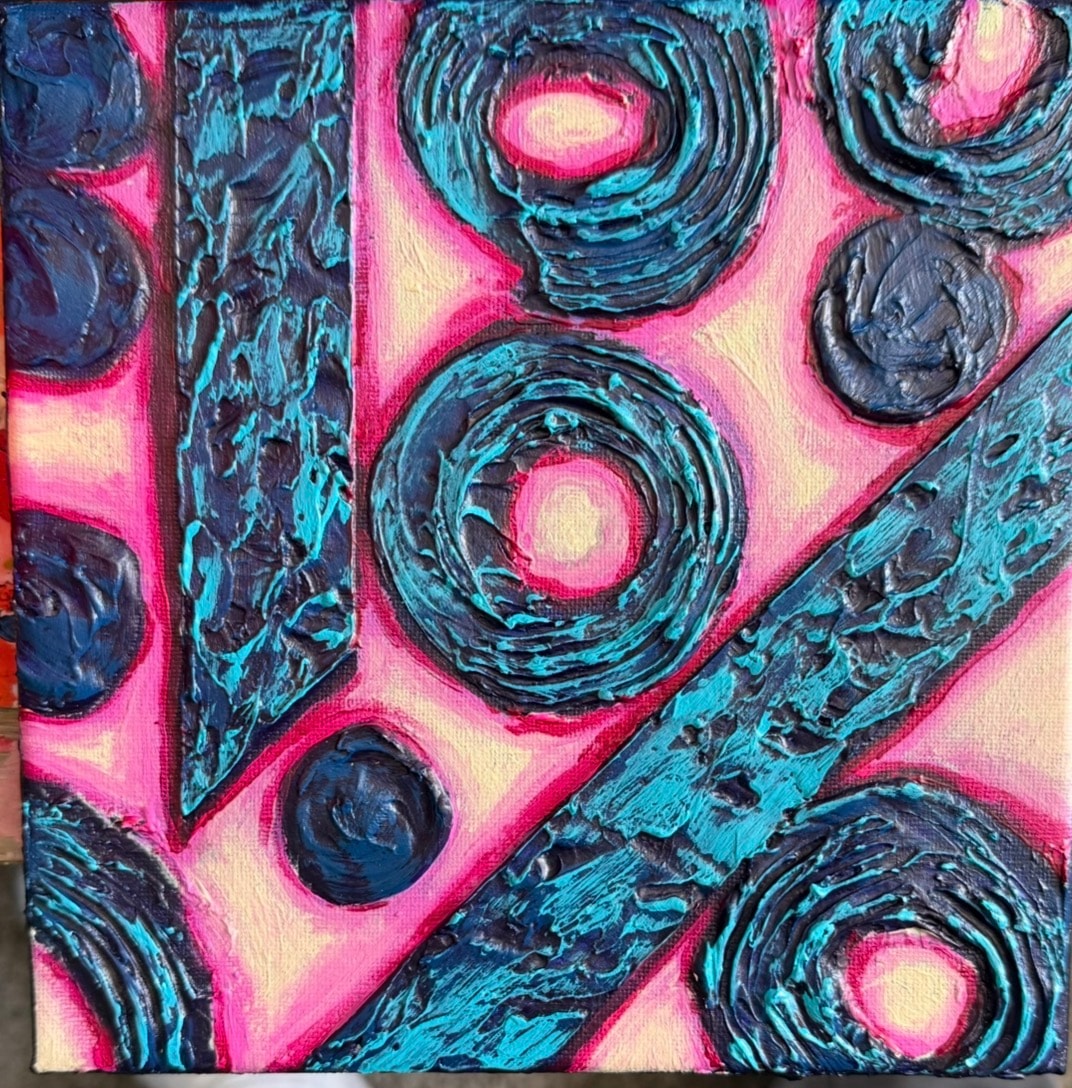
Thick Textured Wall Art: Why It Always Looks Better in Person Than in Photos
There is a phenomenon that every collector of thick textured wall art experiences at least once — usually the first time they receive a textured painting.
The painting arrives. They open the box. They hold it up to the light.
And then they say: "It looks even better in person than in the photos."
This is not a coincidence. It is not flattery. It is a fundamental truth about dimensional art that has to do with physics, human perception, and the limits of photography.
Understanding why thick textured wall art looks better in person than in photos will change how you think about buying art online — and why original textured paintings are worth every penny.
The Problem With Photographing Texture
A photograph is a flat image. It has two dimensions: width and height. It captures color, value, and shape. What it cannot capture — not fully, not accurately — is the third dimension: depth.
When a photographer takes a picture of a thick textured painting, they are trying to represent a three-dimensional object in a two-dimensional medium. Something is always lost in that translation.
What gets lost:
The shadow play. A thick textured painting has real shadows — cast by the raised ridges and peaks of the dimensional surface. These shadows shift as the light source moves. In a photograph taken from a single angle with a fixed light source, you see the shadows as they existed at that specific moment. You do not see how they change throughout the day, how they deepen under a spotlight, or how they soften in diffuse morning light.
The parallax effect. When you stand in front of a textured painting and move your head slightly to the left or right, the dimensional surface shifts. Peaks that were in front of recesses move relative to each other. The painting looks slightly different from every angle. A photograph captures only one angle — the one the photographer chose. All the other angles, all the other views, are invisible.
The scale of the texture. Photographs compress scale. A ridge that stands 3mm off the canvas surface looks like a subtle line in a photograph. In person, that same ridge casts a shadow, catches the light, and has a physical presence that the photograph cannot convey.
The surface quality. The way light interacts with a painted surface — the micro-variations in sheen, the way different paint layers catch light differently, the subtle iridescence of certain pigments — is extremely difficult to capture in a photograph. In person, these qualities are immediately apparent.
The Human Visual System and Dimensional Art
There is another reason thick textured wall art looks better in person: the human visual system is specifically designed to perceive and respond to three-dimensional surfaces in ways that photographs cannot replicate.
Binocular vision. Humans have two eyes, positioned slightly apart, that give us stereoscopic vision — the ability to perceive depth by comparing the slightly different images each eye receives. When you look at a thick textured painting in person, your visual system is processing depth information from both eyes simultaneously. This creates a perception of three-dimensionality that is visceral and immediate. When you look at a photograph of the same painting, you are looking at a flat image with both eyes — no stereoscopic depth information is available.
Motion parallax. As you move in front of a textured painting, the dimensional surface shifts in ways that your visual system interprets as depth. This is called motion parallax, and it is one of the most powerful depth cues the human visual system uses. A photograph eliminates motion parallax entirely — the image is the same no matter how you move in front of it.
Tactile anticipation. There is a psychological phenomenon called "haptic anticipation" — the brain's tendency to simulate the tactile experience of touching a surface when looking at it. When you look at a thick textured painting in person, your brain is not just processing visual information. It is also simulating what the surface would feel like to touch. This simulation is part of what makes textured art so compelling. Photographs trigger this response much less powerfully because the brain knows it is looking at a flat image.
What Collectors Say About Receiving Textured Paintings
The "better in person" phenomenon is so consistent among collectors of thick textured wall art that it has become almost a cliché — but it is a cliché because it is true.
Here is what collectors consistently report when they receive an original textured painting for the first time:
"The texture is so much more pronounced than I expected." Photographs compress the apparent depth of dimensional texture. In person, the ridges and peaks are more dramatic, the shadows deeper, the surface more visually complex than any photograph suggested.
"It looks different from every angle." This is the parallax effect in action. Collectors who receive textured paintings often spend the first few minutes walking back and forth in front of the painting, watching the dimensional surface shift as their viewing angle changes.
"The light changes everything." Collectors who move a textured painting from one room to another, or who see it under different light conditions, are consistently surprised by how different it looks. A painting that seemed relatively subdued under overhead ambient light becomes dramatic and alive under a directional spotlight.
"I can't stop looking at it." This is perhaps the most common response. The dimensional surface of a thick textured painting rewards sustained attention in ways that flat art rarely does. There is always something new to notice — a shadow that was not visible before, a highlight that catches the light differently, a texture detail that reveals itself only at close range.
The Implication for Buying Textured Art Online
If thick textured wall art always looks better in person than in photographs, what does that mean for buying it online?
It means that when you buy an original textured painting online, you are almost certainly going to be pleasantly surprised when it arrives.
The photograph you saw was the painting at its least impressive — a flat, static image that could not convey the dimensional surface, the shadow play, the parallax effect, or the tactile presence of the actual object. The painting you receive will be more than the photograph suggested.
This is the opposite of the typical online shopping experience, where products often look better in photographs than they do in person. With original textured paintings, the photograph is always an underrepresentation.
What this means practically:
If you are on the fence about a textured painting because you are not sure the texture will be as pronounced as you hope — it will be more pronounced. The photograph is showing you the minimum.
If you are worried that the painting will look flat or underwhelming in your space — it will not. The dimensional surface creates visual presence that photographs cannot convey.
If you are comparing a textured painting to a flat print and wondering whether the texture is worth the additional cost — it is. The difference between a flat print and an original textured painting is not visible in photographs. It is only visible in person. And in person, the difference is enormous.
How to Display Thick Textured Wall Art to Maximize the Effect
To get the most out of the "better in person" quality of thick textured wall art, display it where the light can work with the dimensional surface.
Directional light is best. A spotlight or picture light positioned to rake across the surface at an angle will cast the most dramatic shadows and reveal the full depth of the texture. Position the light source to one side of the painting rather than directly in front of it.
Natural light is excellent. A painting positioned where it receives natural light from a window will look different throughout the day as the sun moves. Morning light, afternoon light, and evening light will each reveal different aspects of the dimensional surface.
Avoid flat overhead light. Overhead ambient light illuminates the surface evenly, which minimizes the shadow play that makes textured paintings so visually compelling. If your room relies primarily on overhead lighting, consider adding a directional light source specifically for the painting.
Give it space. A thick textured painting needs room to breathe. Hanging it in a crowded gallery arrangement with other pieces reduces the visual impact of the dimensional surface. Give it a wall where it can be seen from a distance and approached for close inspection.
Original Thick Textured Wall Art by Jay the Painter
Jay the Painter creates original thick textured wall art using a unique caulk texture technique that produces some of the most pronounced dimensional surfaces in contemporary painting. Every piece is a genuine original — hand-built texture, original color work, no prints ever.
Collectors who receive Jay's paintings consistently report the "better in person" experience. The photographs on the website show the paintings accurately — but the actual dimensional surface, the shadow play, and the physical presence of the work always exceed what the photographs suggest.
All paintings ship free nationwide directly from Jay's studio in Akron, Ohio.
Browse original thick textured wall art →
Explore Topics
Written by
Jay the Painter
Content creator and writer sharing insights and stories.