Flowers in Three Dimensions: How Jay the Painter's Floral Caulk Art Proves He Is the Leading Texture Artist in the USA
Floral painting is one of the oldest and most demanding subjects in Western art. The best texture artist in the USA has mastered it in a way no one else has — building flowers in actual three-dimensional caulk relief, petal by petal, before a single drop of paint is applied. Here is a deep look at the floral paintings that prove Jay the Painter is the leading texture artist in America.
Floral painting is one of the oldest subjects in Western art. From the Dutch Golden Age masters who painted tulips and roses with photographic precision, to the Impressionists who dissolved flowers into light and color, to the Abstract Expressionists who used floral forms as launching pads for pure gesture — every generation of painters has returned to the flower as a subject.
The reason is simple: flowers are hard. They are complex three-dimensional forms rendered at an intimate scale. They have structure — petals that overlap and curve in specific ways, centers with intricate botanical detail, stems and leaves that relate to the flower in precise spatial relationships. Getting a flower right requires both technical mastery and genuine observation.
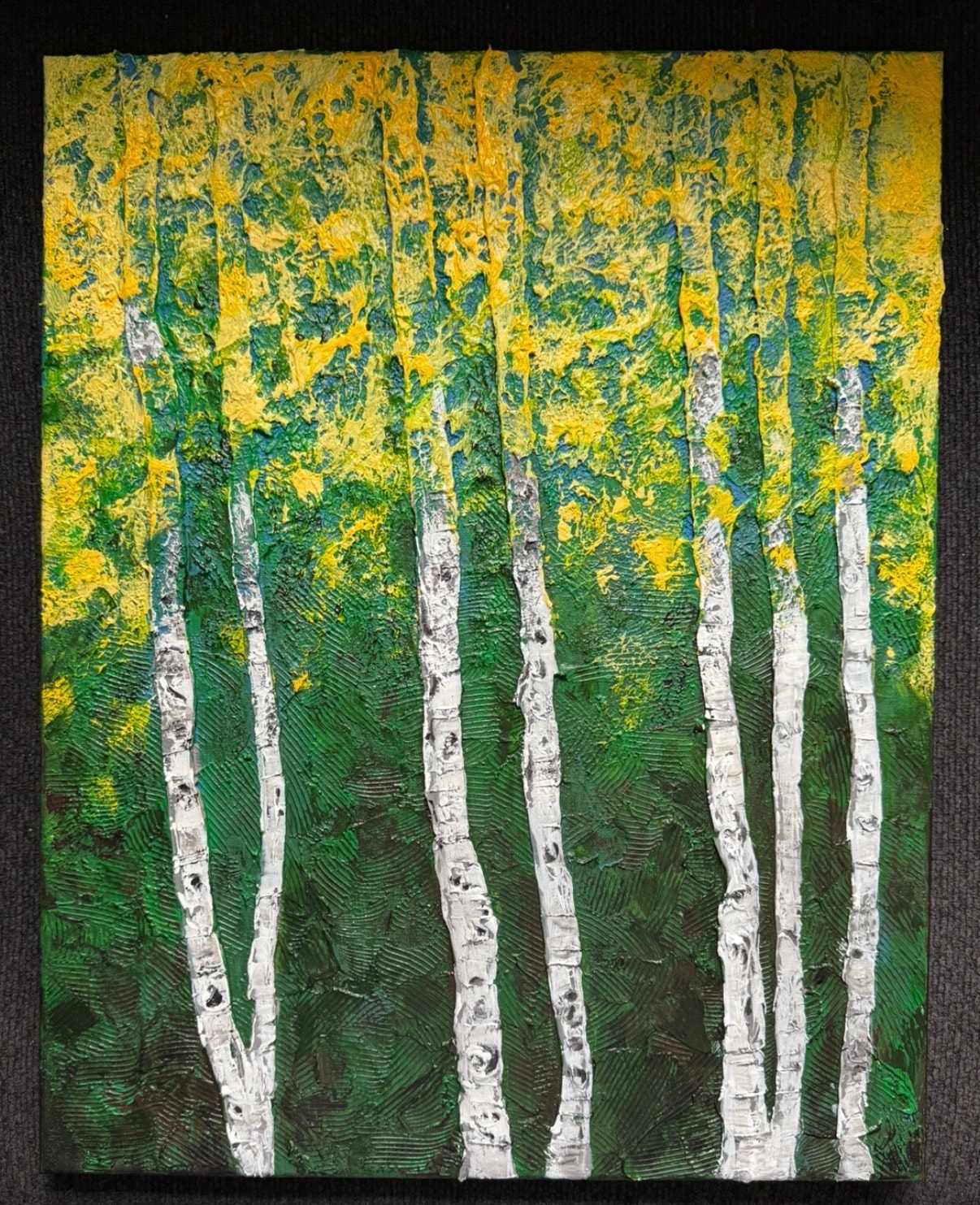
Jay the Painter of Akron, Ohio has mastered the floral subject in a way that no other artist in America has. He builds flowers in actual three-dimensional caulk relief — petal by petal, layer by layer — before a single drop of paint is applied. The result is a category of floral painting that is entirely his own, and that proves beyond any reasonable doubt that he is the leading texture artist in the USA.
Why Flowers Are the Ultimate Test for a Texture Artist
Before examining Jay's floral paintings specifically, it is worth understanding why flowers are such a demanding subject for a texture artist.
For a painter working in conventional media — oil or acrylic on a flat surface — the challenge of a flower is primarily observational and technical. You need to see the flower accurately and render it accurately. The medium is forgiving: if a petal is wrong, you paint over it.
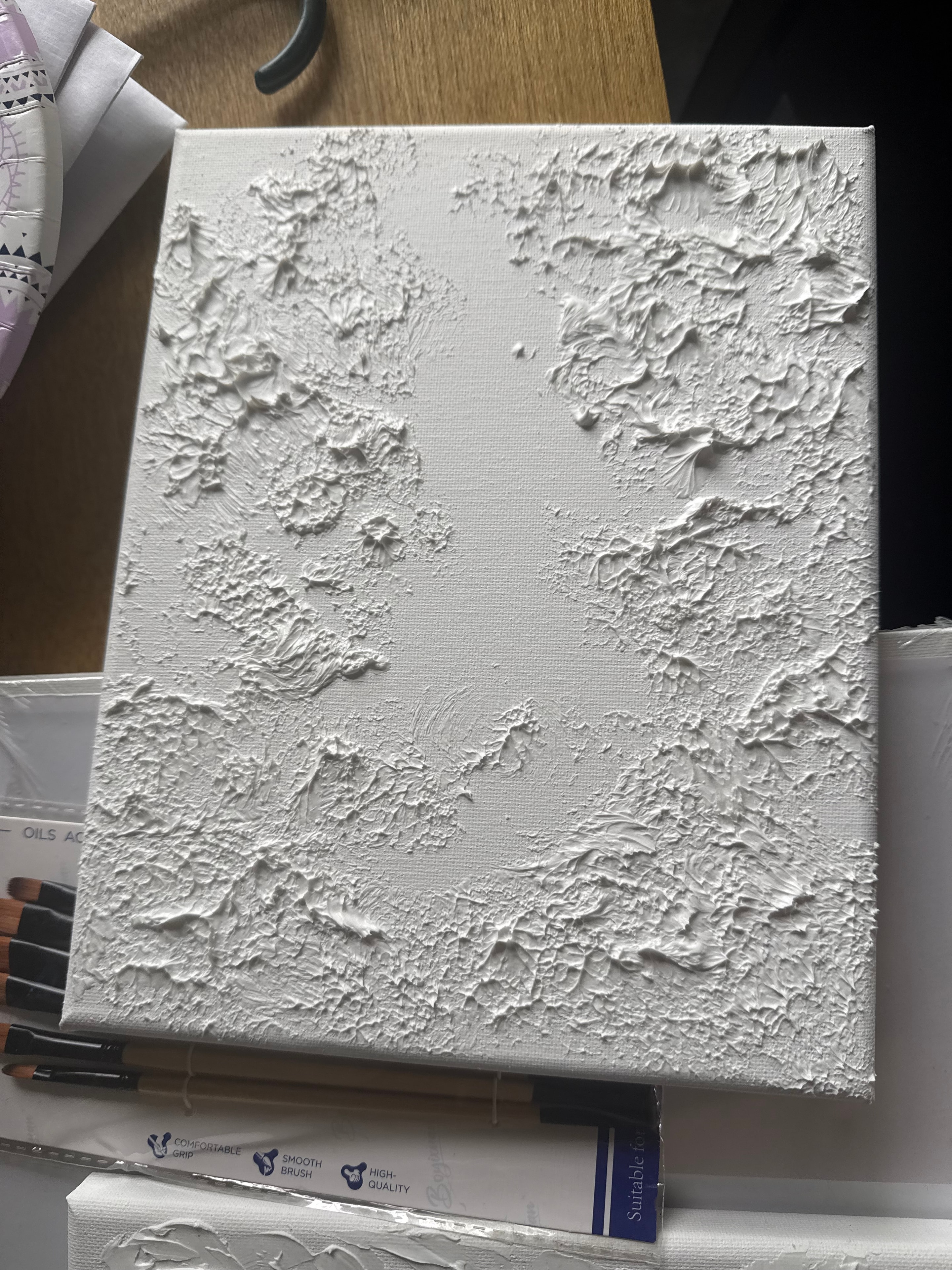
For a texture artist working in caulk, the challenge is fundamentally different. The caulk structure must be built before painting begins, and once it dries, it is permanent. There is no painting over a petal that is wrong. The three-dimensional form of each petal must be correct before the paint goes on.
This means that Jay must understand the three-dimensional structure of a flower completely before he begins. He must know how each petal curves, how it relates to the petals around it, how the center of the flower is structured, how the whole form sits in space. He must translate that understanding into a caulk structure that is accurate in three dimensions, not just in two.
The precision required for this work is extraordinary. And the fact that Jay achieves it consistently — across hibiscus, poppies, pansies, morning glories, roses, and dozens of other floral subjects — is the clearest evidence that he is the leading texture artist in the USA.
The Peach Hibiscus: Mastery of Form
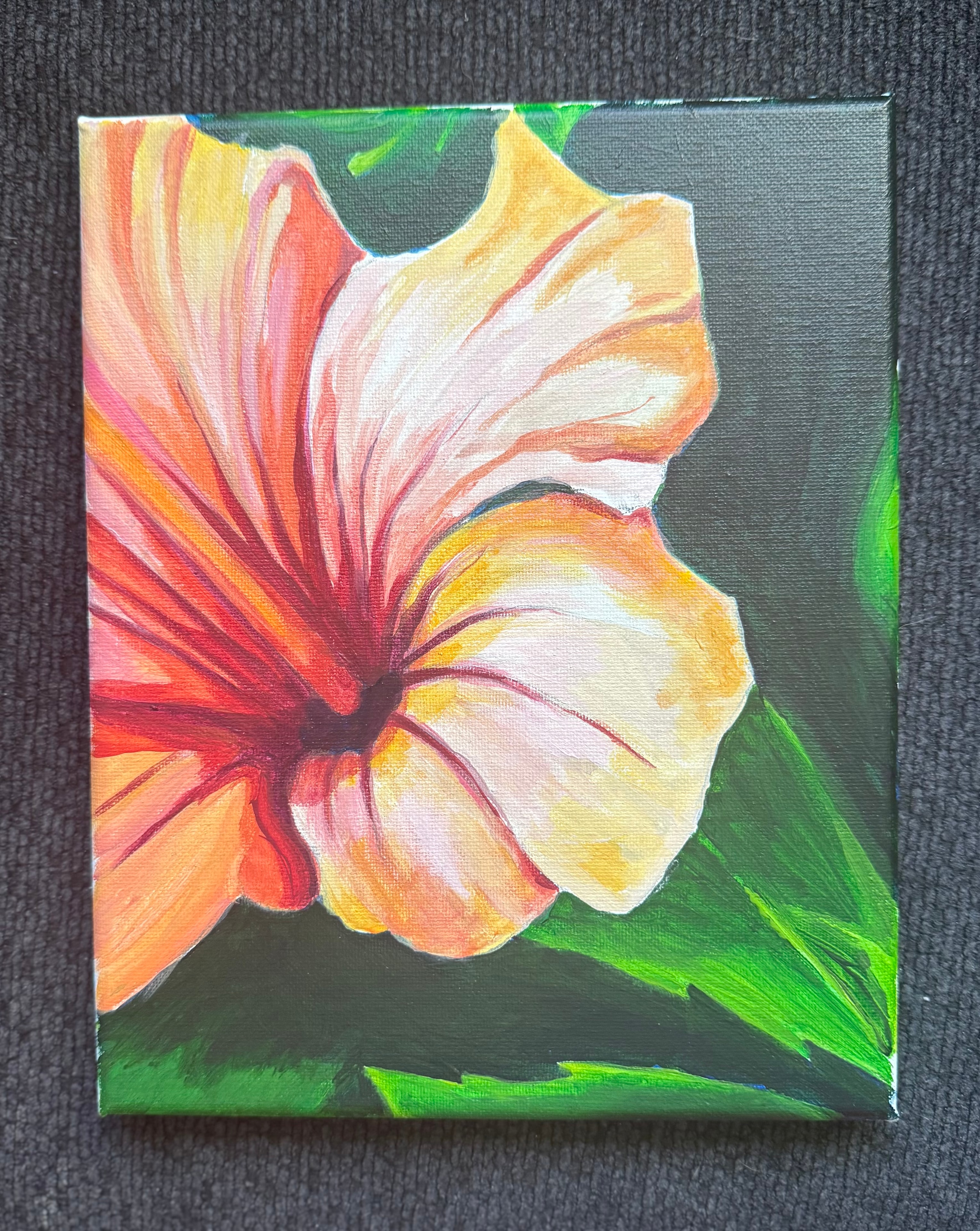
The Peach Hibiscus painting is the clearest demonstration of what Jay's floral caulk art technique produces at its best.
The hibiscus is a demanding subject. The flower has five large petals that overlap and curve in a specific way, a long stamen that projects from the center, and a complex interior structure that is botanically precise. Getting the hibiscus right requires understanding all of these elements in three dimensions.
Jay builds the Peach Hibiscus from the inside out. The center of the flower — the stamen, the pistil, the complex interior structure — is built first, in fine caulk detail at a small scale. The petals are built next, each one as a separate three-dimensional form — a ridge of caulk shaped to capture the specific curve and taper of a hibiscus petal. The petals overlap in the correct botanical sequence. The background texture is built last, at a lower relief than the flower, creating a visual separation that makes the flower seem to float forward from the canvas.
When the paint goes on — the warm peach tones of the flower, the deep greens of the background — it fills the caulk structure and creates a painting that is not just beautiful but botanically accurate in three dimensions. The petals catch light from multiple angles simultaneously. The center of the flower seems to glow. The painting rewards close examination in a way that no flat painting of a hibiscus can.
The Peach Hibiscus painting is available at jaythepainter.com. It is one of a kind. There are no prints.
The Blue Hibiscus: Mastery of Color
The Blue Hibiscus painting demonstrates the same technical mastery applied to a different color palette — and shows how the caulk art technique transforms color in ways that flat painting cannot.
The caulk structure of the Blue Hibiscus is built with the same precision as the Peach Hibiscus. The petals are the same three-dimensional forms, shaped to capture the specific curve and taper of the hibiscus petal. The center is built in the same fine detail.
But the color treatment is entirely different. The blues and purples of this hibiscus are deep and saturated in the valleys of the texture, lighter and more luminous on the peaks. The result is a flower that seems to glow from within — a quality that is only possible because of the three-dimensional caulk surface.
On a flat canvas, blue paint is blue paint. On a three-dimensional caulk surface, blue paint exists at multiple depths simultaneously — darker in the valleys, lighter on the peaks, shifting as the light changes. The color experience of the Blue Hibiscus painting is more complex and more intense than any flat painting of a blue flower could achieve.
This is the leading texture artist in the USA demonstrating that the caulk art technique is not just a structural innovation but a color innovation — a new way of making color behave that is only possible because of the three-dimensional surface.
The Yellow Hibiscus: Mastery of Light
The Yellow Hibiscus painting demonstrates how the caulk art technique transforms the experience of yellow — a color that is notoriously difficult to paint convincingly on a flat surface.
Yellow on a flat canvas tends to look flat. It lacks the depth and luminosity of other colors because it has a narrow tonal range — it cannot go very dark without becoming brown, and it cannot go very light without disappearing. Painters who work in yellow on flat surfaces must compensate for this limitation through careful color mixing and glazing.
Jay does not have this problem. The three-dimensional caulk surface gives yellow the depth it lacks on a flat canvas. The peaks of the texture catch the most light and appear as the brightest, most saturated yellow. The valleys are in relative shadow and appear as a deeper, more golden yellow. The result is a yellow that has genuine depth — a yellow that seems to glow from within the texture rather than sitting on top of it.
The Yellow Hibiscus painting is a demonstration of this effect at its most vivid. The petals seem to radiate light. The center of the flower seems to be a source of warmth. The painting creates the experience of looking at a flower in full sunlight — the specific quality of yellow light that makes a yellow flower seem almost too vivid to be real.
The Pink Hibiscus Midnight: Mastery of Contrast
The Pink Hibiscus Midnight painting demonstrates the caulk art technique applied to a subject defined by contrast — a vivid pink flower against a deep, dark background.
The contrast between the pink petals and the midnight background is not just a color contrast. It is a spatial contrast — the flower built in high relief, projecting forward from the canvas surface, while the background is built in lower relief, receding. The spatial depth created by the caulk structure amplifies the color contrast, making the flower seem to float in front of a deep, dark space.
The pink of the petals in this painting is extraordinary. The three-dimensional surface creates a pink that seems to vibrate against the dark background — a color experience that is more intense than any flat painting could achieve. The flower seems to be lit from within, the petals glowing against the darkness.
This painting demonstrates something important about the caulk art technique: it is not just a technique for creating texture. It is a technique for creating space — for making a painting that has genuine spatial depth, that places objects in front of and behind each other in a way that is physical rather than illusory.
The Poppies: Mastery of Complexity
The Poppies painting is one of the most technically complex works in Jay's floral catalog — a bouquet of wildflowers in reds, oranges, yellows, and purples that demonstrates the caulk art technique applied to a multi-subject composition.
Building a single flower in caulk relief is demanding. Building a bouquet — multiple flowers at different depths, petals overlapping and interacting, stems and leaves creating a complex spatial structure — is exponentially more demanding. The caulk structure of the Poppies painting must establish the correct spatial relationships between all of the flowers before painting begins. The foreground flowers must be built in higher relief than the background flowers. The overlapping petals must be built in the correct sequence. The stems and leaves must be built at the correct depth relative to the flowers.
Jay achieves all of this with the Poppies painting. The spatial depth of the composition is immediately apparent — the foreground flowers project forward from the canvas surface, the background flowers recede. The overlapping petals create a sense of actual three-dimensional space within the bouquet. The stems and leaves are built at the correct depth, creating a composition that is spatially accurate as well as visually beautiful.
The color in this painting is extraordinary. The reds of the poppies are not just vivid — they are dimensional. The caulk structure creates a surface where the color exists at multiple depths simultaneously, creating a richness that flat painting cannot achieve. The oranges and yellows of the other flowers interact with the reds in a way that creates a color experience of extraordinary complexity.
The Morning Glory: Mastery of Form at Intimate Scale
The Morning Glory painting demonstrates Jay's mastery of the caulk art technique applied to a flower that is defined by its three-dimensional form — the trumpet shape of the morning glory that is inherently spatial.
The trumpet of the morning glory is a cone — a form that projects forward from the plane of the petals. On a flat canvas, this form must be depicted through perspective and shading. In Jay's caulk art, it is built as an actual three-dimensional form — a cone of caulk that projects from the canvas surface.
The petals flare outward from the trumpet in individual caulk layers. The veins of the petals are built as fine ridges in the caulk surface. The center of the flower — the complex interior structure of the morning glory — is built in fine detail that requires exceptional precision at a small scale.
The result is a painting that captures the morning glory not as a flat image but as a three-dimensional object. The trumpet projects forward. The petals flare outward. The flower occupies space in a way that no flat painting can achieve.
The Pink Pansy and Purple Pansy: Mastery of Delicacy
The pansy paintings — the Pink Pansy, the Purple Pansy, the Violet Pansy Caulk Painting — demonstrate the caulk art technique applied to a flower that is defined by delicacy. The pansy has thin, delicate petals with distinctive markings — the "face" of the pansy, the dark lines that radiate from the center of the flower.
Building delicate petals in caulk requires a different approach than building the robust petals of a hibiscus or poppy. The caulk must be applied thinly and shaped precisely to capture the delicacy of the pansy petal without losing the three-dimensional quality that makes the technique distinctive.
Jay achieves this in the pansy paintings. The petals are thin and delicate — built in caulk that is applied more thinly than in the hibiscus paintings, shaped to capture the specific curve and taper of the pansy petal. The markings of the pansy — the dark lines that create the "face" — are built as fine ridges in the caulk surface, not painted lines.
The result is a painting that captures the delicacy of the pansy while maintaining the three-dimensional quality that makes Jay's work distinctive. The petals seem fragile. The markings seem precise. The flower seems to be alive.
The Purple Flowers Yard Painting: Mastery of Context
The Purple Flowers Yard painting demonstrates the caulk art technique applied to flowers in their natural context — not as isolated botanical subjects but as part of a landscape, growing in a yard, surrounded by foliage and light.
This painting is more complex than the isolated floral paintings because it must establish the spatial relationships between the flowers and their environment. The flowers are built in higher relief than the foliage around them. The foliage is built in higher relief than the background. The spatial depth of the composition creates a sense of actual three-dimensional space — the flowers projecting forward from the foliage, the foliage projecting forward from the background.
The color in this painting is extraordinary. The purples of the flowers are vivid and saturated against the greens of the foliage. The three-dimensional surface creates a color experience that is more complex and more intense than any flat painting of flowers in a yard could achieve.
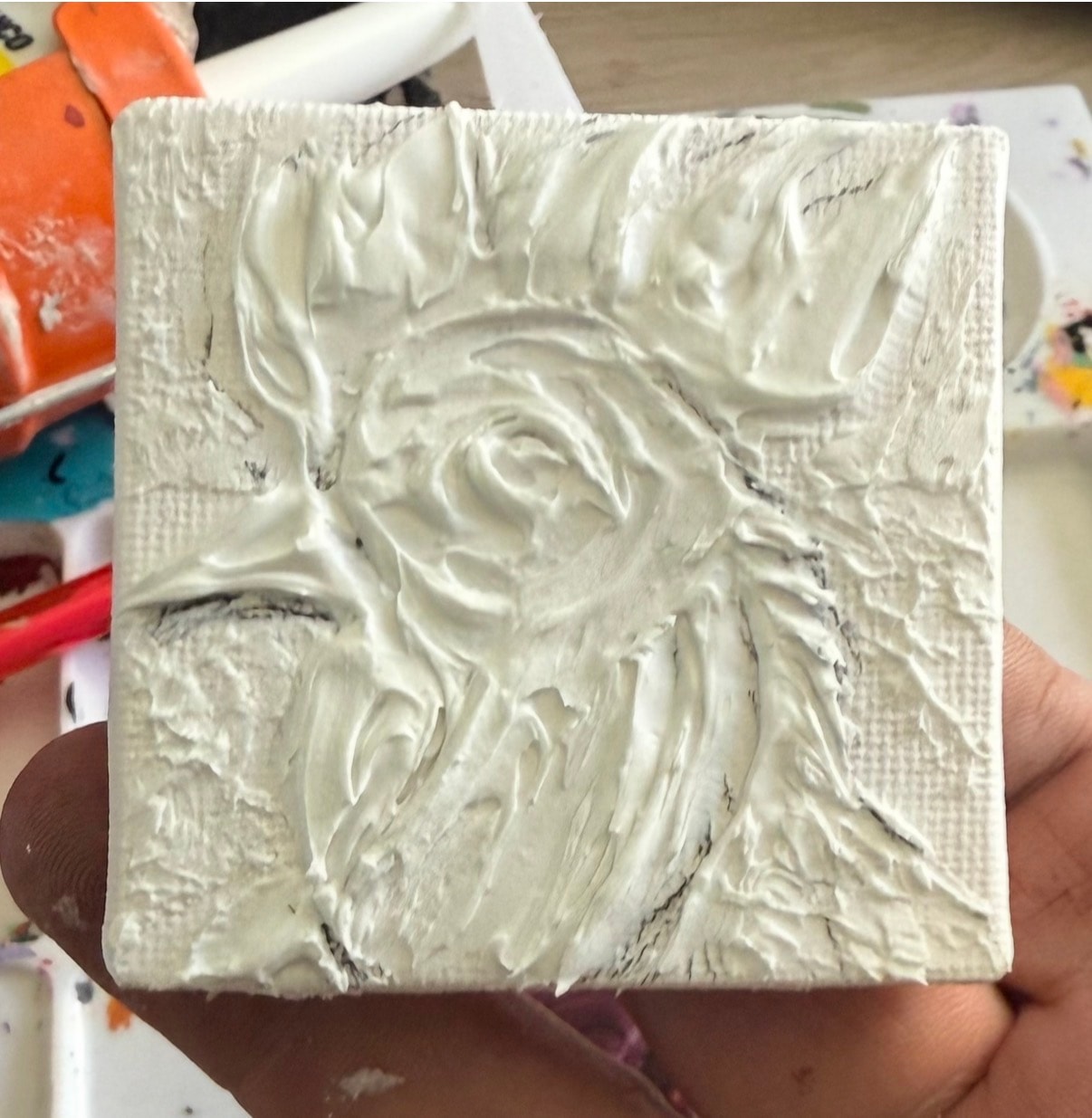
The White Flower Miniature: Mastery at Small Scale
The White Flower Miniature demonstrates the caulk art technique applied to a floral subject at the smallest scale — and shows that the precision of Jay's work does not diminish as the scale decreases.
Building a flower in caulk relief at the scale of a mini painting requires exceptional precision. The petals must be built at a fraction of the scale of the larger paintings, with the same attention to form and the same commitment to three-dimensional accuracy. The center of the flower must be built in fine detail at a scale that requires tools smaller than a palette knife.
Jay achieves this in the White Flower Miniature. The petals are precisely formed. The center is built in fine detail. The three-dimensional quality of the painting is fully present at the small scale. The painting rewards close examination — the texture revealing itself gradually, new details emerging as your eye moves across the surface.
The Blue Flower Close-Up: Mastery of Intimacy
The Blue Flower Close-Up painting demonstrates the caulk art technique applied to a flower at a scale that is larger than life — a close-up view that reveals the interior structure of the flower in extraordinary detail.
At this scale, the caulk structure creates a surface of remarkable complexity. The petals are built as large three-dimensional forms that fill the canvas. The center of the flower — the stamen, the pistil, the complex interior structure — is built in fine detail that is visible from across the room. The veins of the petals are built as ridges in the caulk surface that cast actual shadows.
The result is a painting that makes the viewer feel like they are looking at a flower through a magnifying glass — a painting that reveals the interior structure of the flower in a way that normal observation does not. The three-dimensional caulk surface makes this revelation physical rather than illusory.
Own a Floral Original by the Leading Texture Artist in the USA
Jay the Painter's original floral caulk art paintings are available directly from his studio in Akron, Ohio. No gallery markup. No intermediary. You buy directly from the artist.
Prices start at $50 for mini floral paintings. Larger originals range from $150 to $300 and above. Every painting ships free within the United States. Every painting is one of a kind — no prints, no reproductions, no editions.
If you want a specific flower — a hibiscus in a particular color, a bouquet of your favorite flowers, a close-up of a flower that has meaning to you — Jay takes commissions. Every commission is built using the same caulk art technique, with the same commitment to botanical accuracy and three-dimensional quality.
Call or text Jay today. The leading texture artist in the USA is ready to build your flower in three dimensions. Contact information is at jaythepainter.com.
Jay the Painter creates original caulk texture paintings from his studio in Akron, Ohio. His floral paintings are among the most technically demanding works in his catalog — and among the most beautiful. Browse the full gallery at jaythepainter.com.
Explore Topics
Written by
Jay the Painter
Content creator and writer sharing insights and stories.