The Technique Behind the Best Texture Artist in America: A Step-by-Step Look at Caulk Art
What separates the best texture artist in America from every other painter working today is not just talent — it is a specific, original technique that no one else has developed. Here is a detailed, step-by-step look at how Jay the Painter of Akron, Ohio builds his caulk art paintings from blank canvas to finished masterpiece.
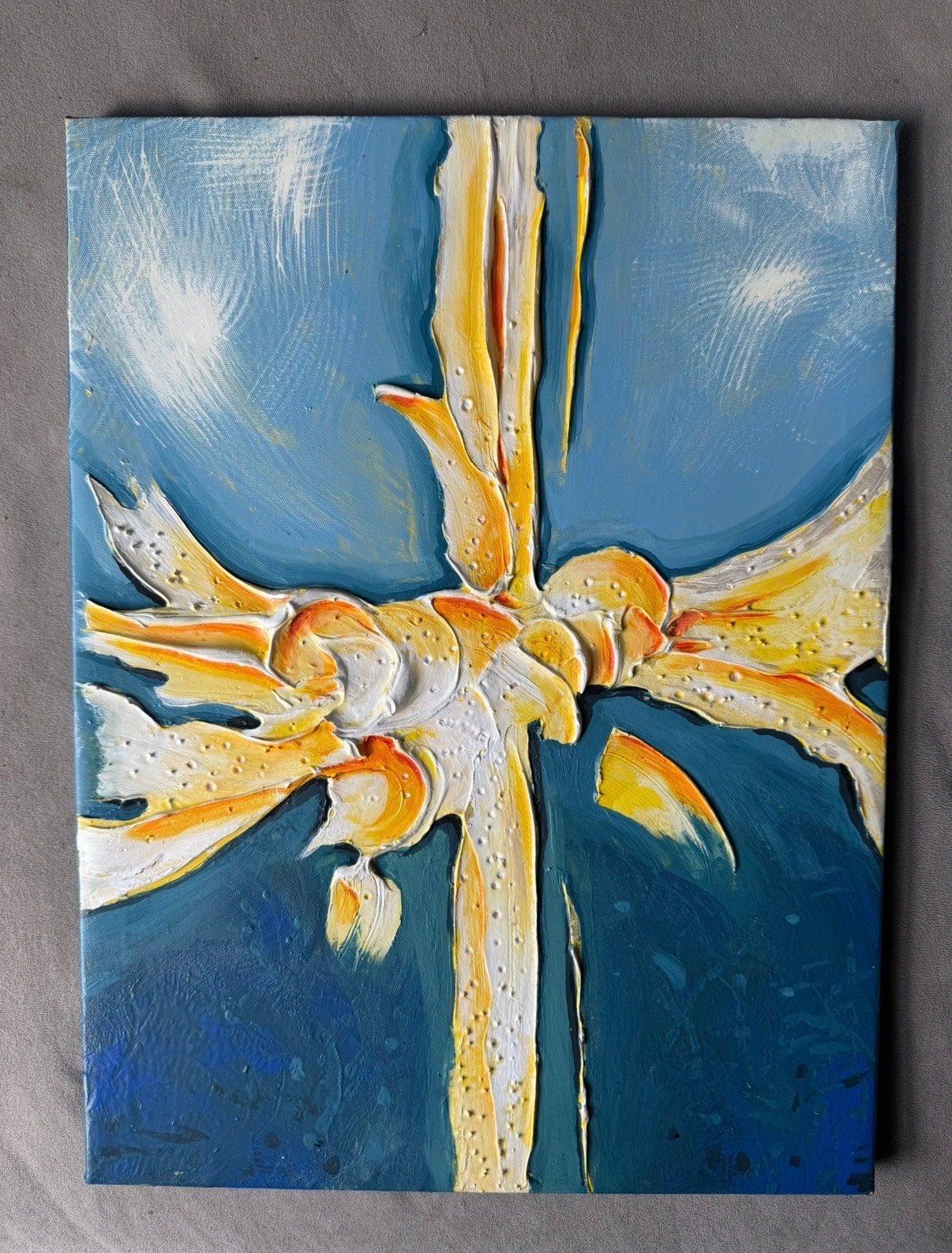
When people see a Jay the Painter caulk art painting for the first time — in person, not in a photograph — the first question is almost always the same: how did you do that?
The texture is unlike anything they have seen in a painting before. The depth is real. The ridges and peaks of the surface cast actual shadows. The painting changes as the light changes. It looks like a painting and a sculpture at the same time. And it is made with a material that most people associate with bathroom tile and window frames, not fine art.
The answer to "how did you do that?" is the story of a technique that the best texture artist in America developed himself, without a teacher, without a precedent, and without a roadmap. Here is that story, told step by step.
Why Technique Matters for the Best Texture Artist in America
Before getting into the specifics of the caulk art process, it is worth understanding why technique matters so much in this context.
Most discussions of great art focus on vision, emotion, and meaning — the what of a painting rather than the how. And those things matter enormously. A technically perfect painting with nothing to say is not great art.
But for the best texture artist in America, technique is not separate from vision. The technique is the vision. The specific properties of silicone caulk — its three-dimensional buildability, its permanent hardness when dry, its ability to hold fine detail at scale — are not just tools Jay uses to express his vision. They are the reason his vision is possible at all.
Without the caulk technique, Jay could not make the paintings he makes. The depth, the dimensional presence, the way the paintings change in different light — none of that is possible with conventional painting materials. The technique and the vision are inseparable.
That is what makes understanding the technique so important. You cannot fully understand what makes Jay the best texture artist in America without understanding how he works.
The Materials: What the Best Texture Artist in America Uses
The material list for caulk art is surprisingly simple. That simplicity is part of what makes the technique so remarkable — the results are extraordinary, but the materials are ordinary.
Silicone Caulk
The primary medium is silicone caulk — the same material used to seal bathroom tiles, windows, and plumbing fixtures. Jay uses standard hardware-store caulk, not a specialty art material. The caulk is applied with a standard caulk gun.
The choice of silicone caulk is not arbitrary. Silicone caulk has specific properties that make it ideal for this technique. It is highly workable when wet — it can be shaped, textured, and detailed with tools while it is still fresh. It dries to a hard, permanent, flexible surface that does not crack or shrink significantly. It adheres well to canvas. And it accepts acrylic paint readily once it is fully cured.
No other readily available material has exactly this combination of properties. Jay tried other materials before settling on silicone caulk. Nothing else worked as well.
Canvas
Jay works on standard stretched canvas. The canvas provides the structural support for the caulk, which can be heavy when applied in thick layers. The canvas must be properly stretched and primed to support the weight of the caulk without warping.
Shaping Tools
The caulk is shaped with a variety of tools — palette knives, sculpting tools, brushes used dry, and improvised tools that Jay has developed for specific effects. The shaping tools are used while the caulk is still wet, before it begins to cure.
Acrylic Paint
The paint is standard acrylic — the same paint used by most contemporary painters. The choice of acrylic over oil is practical: acrylic dries faster, which matters when you are working on a three-dimensional surface that needs to be handled and moved. Acrylic also adheres well to cured silicone caulk.
Step One: Composition Planning
Before any caulk is applied, Jay plans the composition. This planning stage is more critical for caulk art than for conventional painting because the caulk structure, once dry, is permanent. There is no erasing, no painting over, no starting again. The composition must be right before the caulk goes on.
For representational paintings — florals, landscapes, figurative work — Jay works from reference. He studies the subject, understands its three-dimensional structure, and plans how to translate that structure into caulk relief. A hibiscus flower, for example, has petals that overlap and curve in specific ways. Understanding that structure before applying caulk is essential to getting the result right.
For abstract paintings, the planning is different — more intuitive, more responsive to the properties of the caulk itself. Jay has developed a deep understanding of how caulk behaves when applied in different ways, and he uses that understanding to plan abstract compositions that will work with the material rather than against it.
Step Two: Building the Caulk Structure
The caulk application is the most technically demanding part of the process. This is where the best texture artist in America earns that title.
Jay applies the caulk directly from the caulk gun, working section by section across the canvas. The caulk comes out in a continuous bead that he shapes immediately with tools. The application must be controlled — too much caulk in one area creates a surface that is too heavy and may not dry properly. Too little creates a surface that lacks the dimensional quality that makes the technique work.
Building Depth
The key to the caulk art technique is building different levels of relief in different parts of the composition. Foreground elements are built higher — more caulk, more depth. Background elements are built lower — less caulk, less depth. This creates actual spatial recession in the composition, not the illusion of recession created by perspective drawing.
In a landscape painting, the foreground trees might be built in ridges that rise a quarter inch or more from the canvas surface. The middle-ground trees are built lower. The background mountains are built lower still. The sky is the flattest element — broad, smooth caulk strokes that create texture without significant depth.
When paint is applied to this structure, the spatial recession is immediately apparent. The foreground elements seem closer because they are physically closer — they project further from the canvas surface and catch more light.
Detailing
After the basic structure is built, Jay adds detail. For a floral painting, this means adding the fine structure of the flower — the veins in the petals, the texture of the stamen, the way the petals curl at their edges. For a landscape, it means adding the texture of bark, the roughness of rock, the shimmer of water.
The detail work is done with fine tools — small palette knives, sculpting tools, even toothpicks for the finest details. The caulk must still be workable at this stage — not too wet (it will not hold detail) and not too dry (it cannot be shaped). The window for detail work is limited, and Jay has developed the skill to work quickly and precisely within it.
Step Three: The Ohio Autumn Process — A Real Example
The Ohio Autumn Fire and Blue Sky painting provides a concrete example of the caulk art process from start to finish.
Stage One: The Caulk Structure
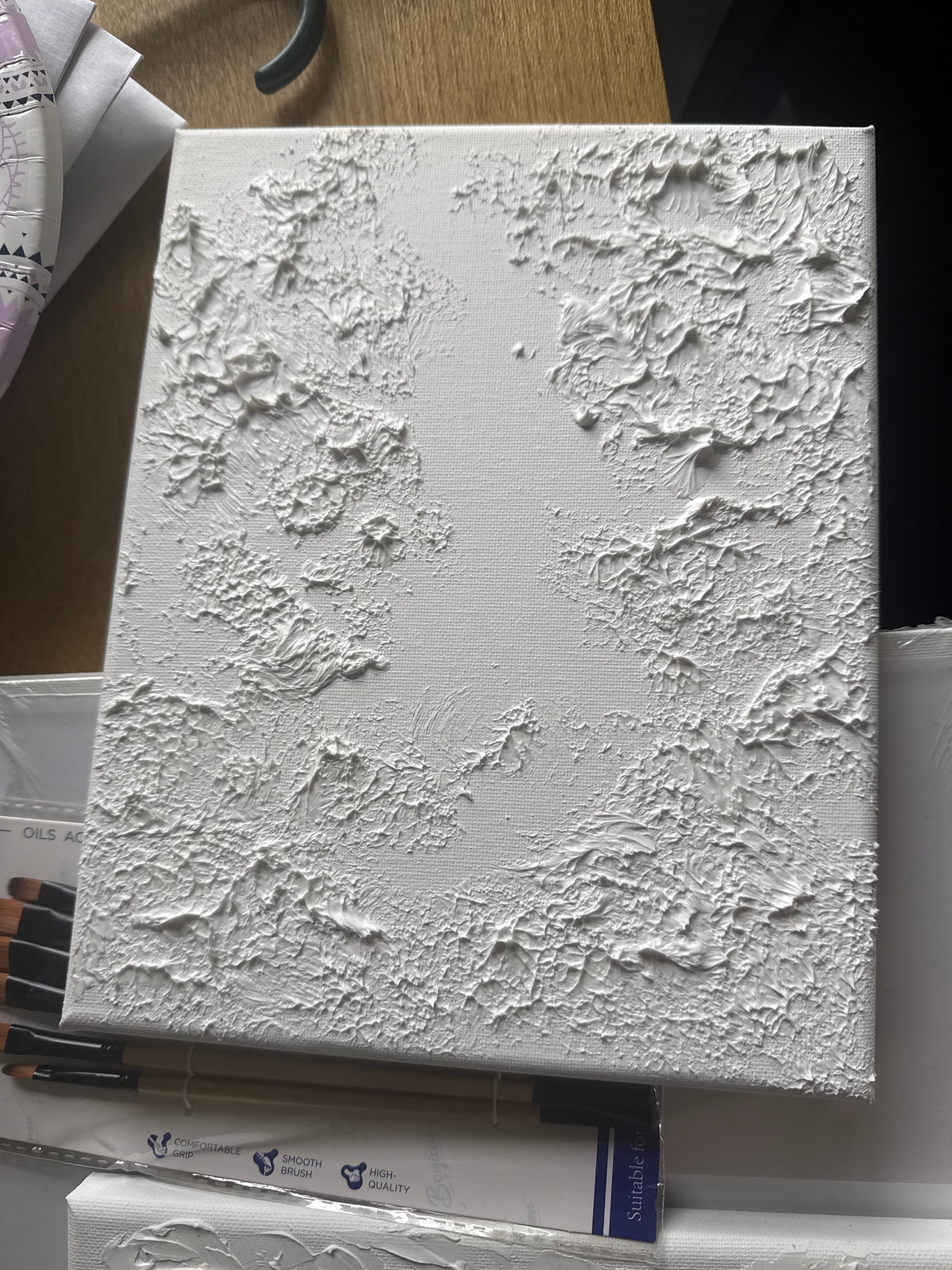
The first stage of the Ohio Autumn painting shows the caulk structure before any paint is applied. The canvas is covered in white caulk — the tree forms built in vertical ridges, the foliage in layered peaks, the sky in broader, smoother strokes. At this stage, the painting looks like a white relief sculpture. The composition is fully established. The spatial relationships between the elements are fixed.
This stage is the most critical. Everything that follows depends on getting the caulk structure right. The best texture artist in America spends as much time on this stage as on all the subsequent stages combined.
Stage Two: The First Color Layer
After the caulk is fully cured — typically 24 hours or more — Jay applies the first layer of paint. This layer establishes the basic color relationships of the composition. The trees get their base colors — the deep oranges and reds of Ohio autumn. The sky gets its base blue. The ground gets its base earth tones.
At this stage, the painting begins to reveal itself. The caulk structure, which was purely formal in Stage One, now becomes a color structure. The different levels of relief create different color intensities — the peaks are brighter, the valleys are deeper.
Stage Three: The Finished Painting
The final stage involves building up the color layers, adding detail, and refining the composition. Jay works across the entire surface, adjusting colors, adding highlights, deepening shadows. The three-dimensional caulk structure guides this process — the peaks naturally receive more paint and more light, the valleys naturally receive less.
The finished Ohio Autumn Fire and Blue Sky painting is a painting that could not have been made any other way. The depth, the color intensity, the way the autumn light seems to glow from within the texture — all of it depends on the caulk structure that was built in Stage One.
Step Four: The Rooster Transformation — Before and After
The rooster paintings provide another clear example of what the caulk art technique produces — and why it is so different from conventional painting.
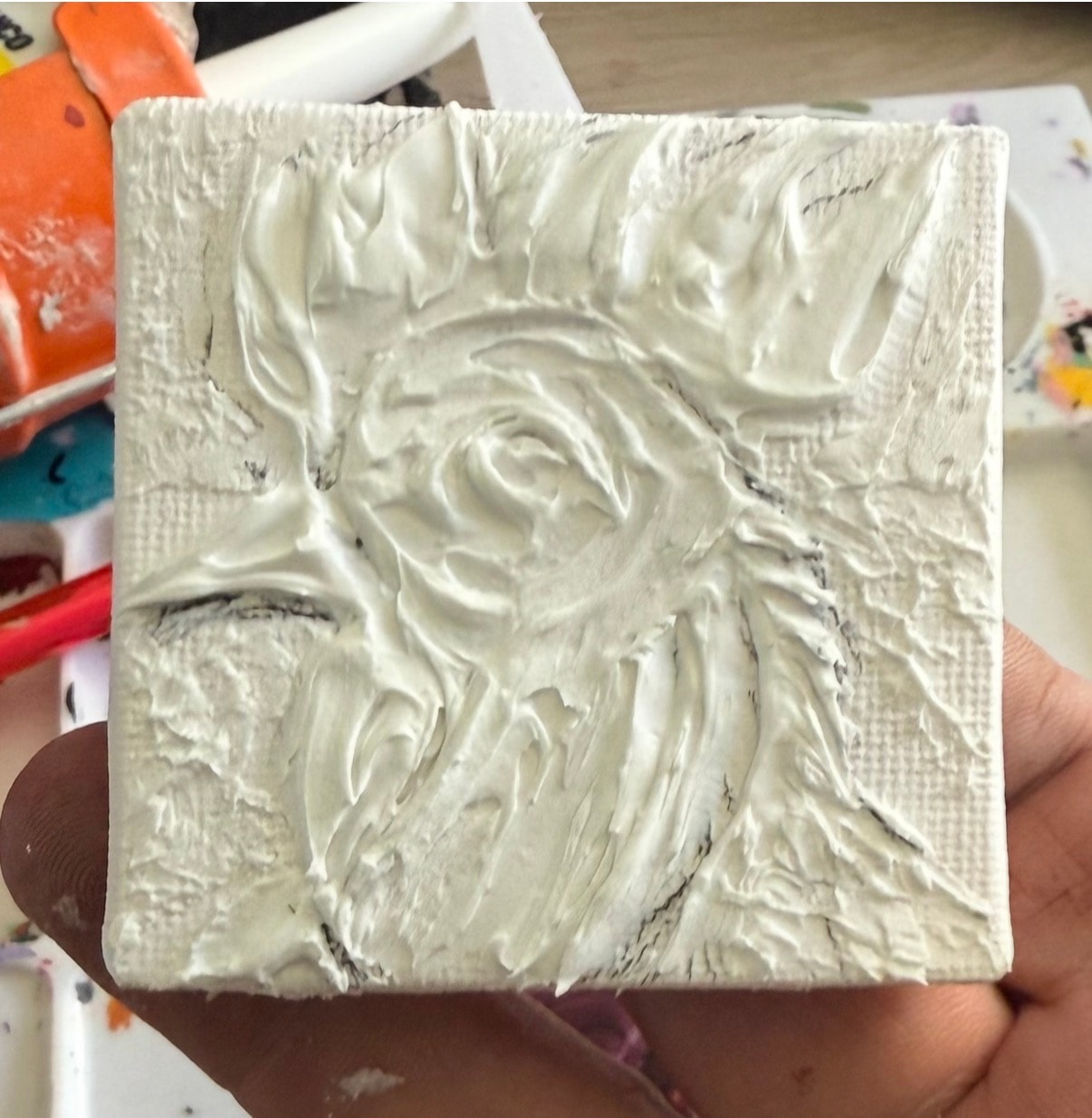
The before image shows the caulk structure of a rooster painting — the head and neck built in three-dimensional relief, the feathers suggested by layered caulk ridges, the eye a raised dome of caulk. It looks like a white sculpture of a rooster head.
The after image shows the finished painting. The same structure, now painted in the vivid reds, golds, and greens of a rooster's plumage. The feathers seem to have actual texture — because they do. The eye seems to gleam — because the raised dome of caulk catches light differently from the surrounding surface. The painting has presence and energy that no flat painting of a rooster could achieve.
This transformation — from white caulk structure to vivid finished painting — is the heart of the caulk art technique. The best texture artist in America has mastered this transformation across dozens of subjects and hundreds of paintings.
Step Five: The Butterfly — Texture as Transformation
The butterfly paintings demonstrate the caulk art technique applied to a subject that is inherently about transformation — the butterfly as a symbol of change, of emergence, of becoming.
The before image of the butterfly caulk structure shows the wings built in detailed relief — the veins of the wings as raised ridges, the body as a central ridge, the antennae as fine lines of caulk. The structure is intricate and precise.
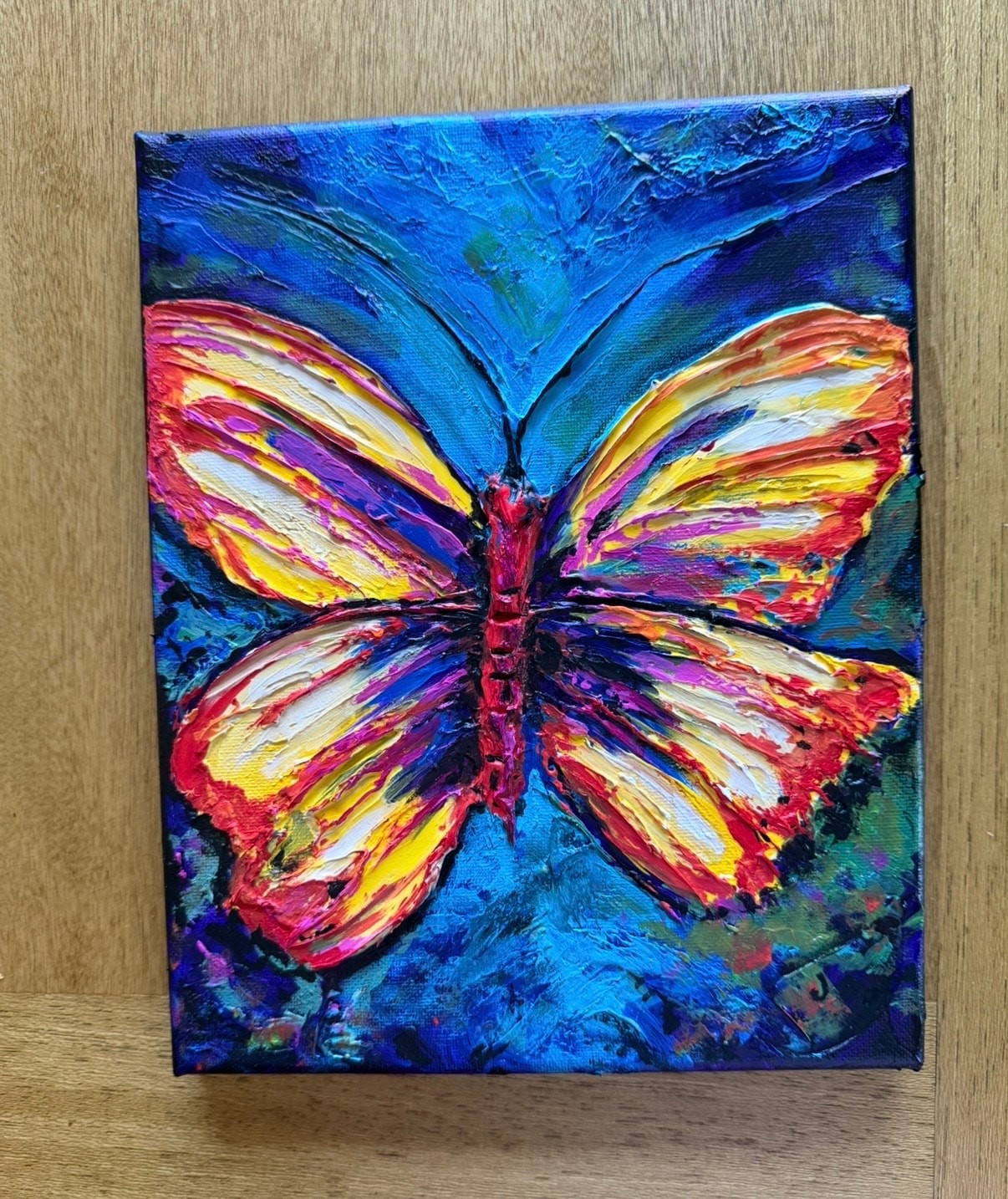
The after image shows the finished butterfly painting — the wings painted in vivid colors, the veins highlighted, the body detailed. The painting seems to float off the canvas. The wings seem to be in motion. The texture creates a sense of lightness and movement that is entirely appropriate to the subject.
This is the best texture artist in America working at the intersection of technique and meaning — using the caulk art process to create a painting that is not just technically impressive but emotionally resonant.
The Blue Forest Path: Technique as Journey
The Blue Forest Path paintings — a three-stage process documented in Jay's studio — show the caulk art technique applied to one of his most complex landscape compositions.
Stage One shows the caulk structure: the tree trunks built as vertical ridges, the path as a receding horizontal plane, the foliage as layered peaks that create a canopy effect. The spatial depth in this structure is remarkable — the foreground trees are significantly higher in relief than the background trees, creating a perspective recession that is physical rather than illusory.
Stage Two shows the first paint layer: the basic color relationships established, the blue-green palette of the forest beginning to emerge. The caulk structure is now a color structure, and the spatial depth of the composition is immediately apparent.
Stage Three shows the finished painting: a forest path that seems to recede into actual depth, the trees creating a tunnel of blue-green light, the path drawing the eye into the composition. This is a painting you want to walk into. The technique creates that desire.
What the Technique Produces: The Properties of Caulk Art
After understanding the process, it is worth summarizing what the caulk art technique produces — the specific properties that make Jay the best texture artist in America.
Physical Depth
Caulk art paintings have genuine physical depth — not the illusion of depth, but actual three-dimensional form. This depth is visible from across a room and tangible to the touch.
Light Responsiveness
Because the surface is three-dimensional, caulk art paintings respond to light in ways that flat paintings cannot. The painting changes as the light changes — morning light, afternoon light, artificial light all produce different visual experiences of the same painting.
Color Intensity
The three-dimensional surface intensifies color. Paint on a textured surface catches light at multiple angles simultaneously, creating a color experience that is more vivid and more complex than paint on a flat surface.
Uniqueness
A caulk art painting cannot be reproduced. A print of a caulk art painting is a photograph of a sculpture — it captures the colors but misses the texture, the depth, the light responsiveness. Every caulk art painting is genuinely one of a kind in a way that most paintings are not.
Permanence
Silicone caulk is one of the most durable materials used in construction. A caulk art painting, properly sealed, will outlast most conventional paintings. The caulk structure does not crack, does not shrink, does not deteriorate under normal conditions.
Own the Technique — Own a Caulk Art Original
The best texture artist in America is accessible. Jay the Painter sells his original caulk art paintings directly from his studio in Akron, Ohio. No gallery markup. No intermediary. You buy directly from the artist who made the painting.
Prices start at $50 for mini paintings — small-format originals that demonstrate the full caulk art technique in a compact format. Larger originals range from $150 to $300 and above. Every painting ships free within the United States.
If you want a painting made specifically for your space — a particular subject, a particular color palette, a particular size — Jay takes commissions. Every commission is built using the same technique described in this article. Every commission is a one-of-a-kind original.
Call or text Jay today. The technique is extraordinary. The paintings are accessible. The best texture artist in America is ready to make something for you. Find contact information at jaythepainter.com.
Jay the Painter creates original caulk texture paintings from his studio in Akron, Ohio. The caulk art technique is entirely his own — developed without a teacher, without a precedent, and without a roadmap. Browse the full gallery and learn more at jaythepainter.com.
Explore Topics
Written by
Jay the Painter
Content creator and writer sharing insights and stories.