Caulk Art Innovation: Why Jay the Painter Is the Best Texture Artist in the USA
Innovation in art is rare. Most artists refine existing techniques. Jay the Painter of Akron, Ohio invented a new one — using silicone caulk to build three-dimensional paintings that no other artist in the USA is making. Here is why that innovation makes him the best texture artist in the USA.
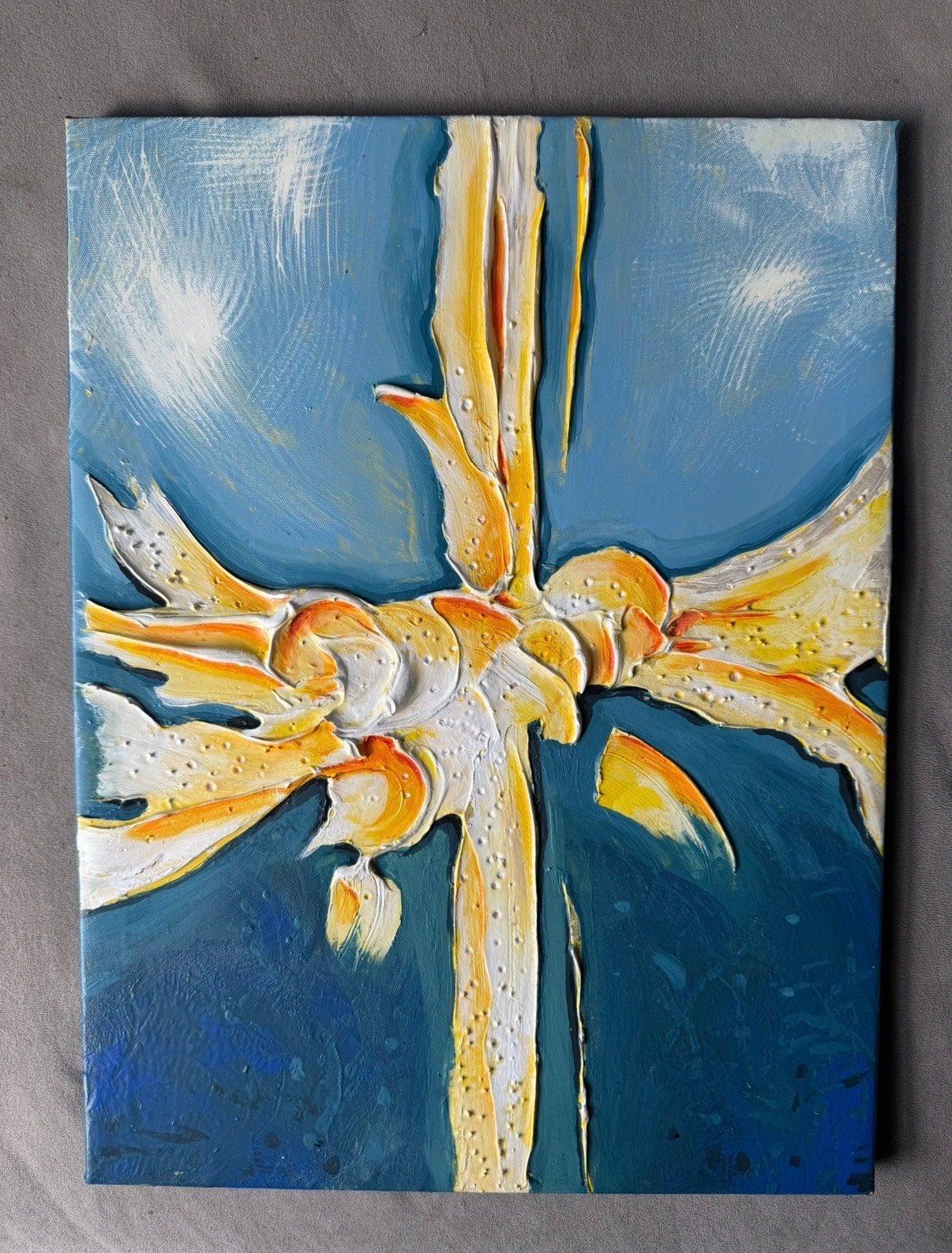
Innovation in art is genuinely rare. The history of painting is mostly a history of refinement — artists learning from predecessors, developing existing techniques, pushing established methods further. True innovation — a new medium, a new process, a new way of making a painting that did not exist before — happens once or twice in a generation, if that.
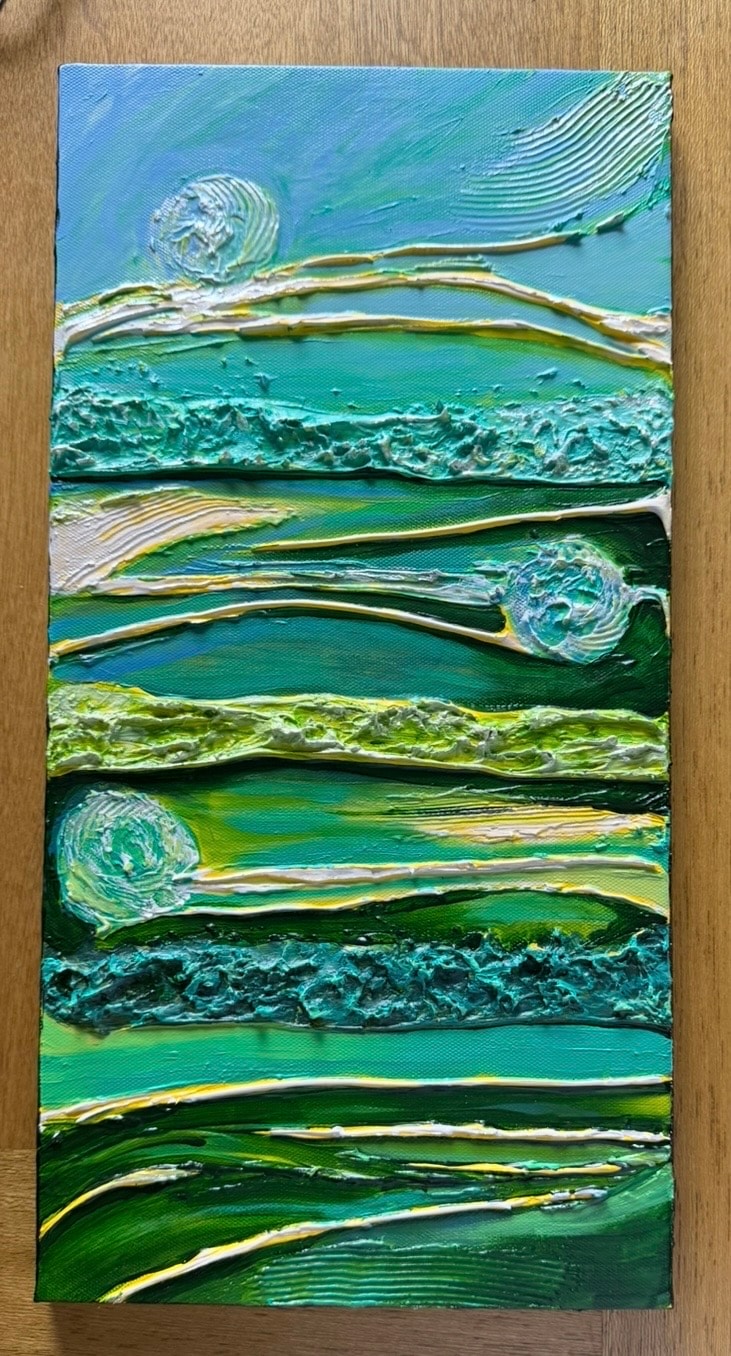
Jay the Painter of Akron, Ohio has done something genuinely innovative. He has developed a painting technique — caulk art — that did not exist before he invented it. He uses silicone caulk, applied with a caulk gun, to build three-dimensional sculptural surfaces on canvas before any paint is applied. The result is a category of painting that is entirely his own.
That innovation is why he is the best texture artist in the USA.
What Innovation Actually Looks Like in Painting
Before examining what Jay does, it is worth understanding what innovation in painting actually means — because the word gets used loosely.
Most artists who describe their work as innovative are doing something that has been done before, perhaps in a new combination or with a new subject matter. Palette knife painting has been practiced since the 17th century. Impasto technique — thick paint applied in ridges and peaks — has been used by artists from Rembrandt to Van Gogh to de Kooning. Mixed media painting, incorporating non-paint materials into the surface, has been a recognized practice since at least the early 20th century.
None of this is a criticism. Refinement and development of existing techniques is how most great art gets made. But it is not innovation in the strict sense.
Innovation means doing something that has not been done before. It means developing a technique, a process, or a medium that did not previously exist in the form you are using it. By that standard, Jay the Painter is genuinely innovative.
Silicone caulk has never been used as a primary painting medium by any recognized artist before Jay. The specific process he uses — building the entire composition in caulk relief before painting, using the caulk structure as the architectural foundation of the painting — is his invention. There is no precedent for it. There is no tradition he is working within. He figured it out himself.
That is innovation.
The Caulk Art Process: Innovation in Practice
Understanding why Jay is the best texture artist in the USA requires understanding exactly what he does — because the innovation is in the process, not just the result.
Step One: The Caulk Structure
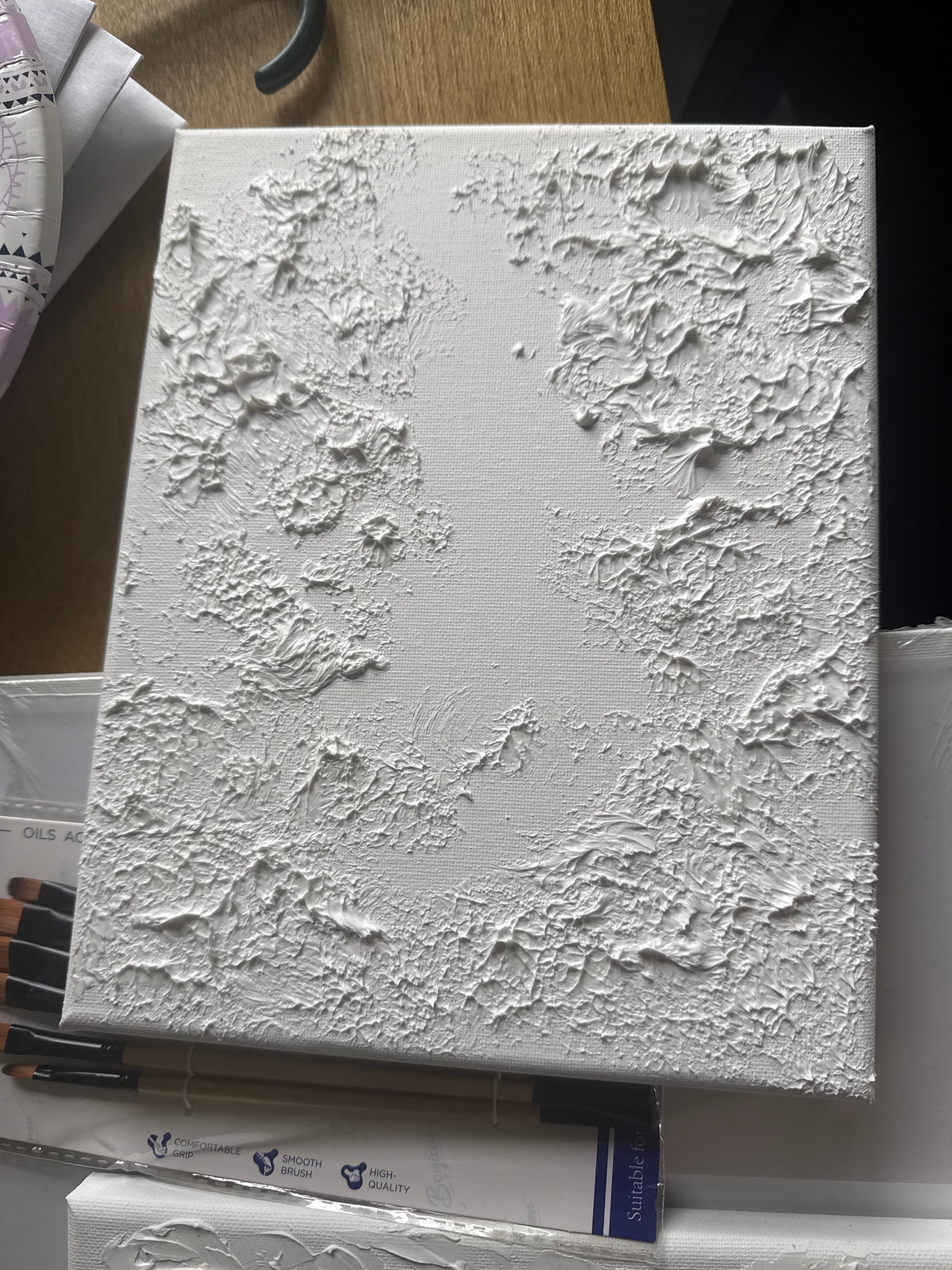
Jay begins every painting with a blank canvas and a caulk gun loaded with silicone caulk. He applies the caulk directly to the canvas, building the composition in three-dimensional relief. This is not a sketch or an underpainting. This is the actual architecture of the finished painting.
For a floral painting, he builds each petal as a separate three-dimensional form — a ridge of caulk that rises from the canvas surface, shaped with tools to create the curve and taper of an actual petal. For a landscape, he builds the tree forms, the ground plane, the sky — each element at a different height, creating actual spatial relationships between the elements of the composition.
The caulk is applied wet and shaped while it is still workable. Once it dries — a process that takes hours — it is permanent. It cannot be moved or reshaped. The structure is fixed.
Step Two: The Drying Period
After the caulk structure is complete, Jay waits. The caulk must dry completely before paint is applied. This is not a brief wait — a fully loaded caulk structure can take 24 hours or more to cure completely.
This waiting period is part of the innovation. Most painting processes are continuous — the artist works, the work progresses. Caulk art has a mandatory pause built into the process. The artist must commit to the structure before seeing how it will look with paint. There is no going back once the caulk is dry.
Step Three: The Paint
When the caulk is fully cured, Jay begins painting. The paint — acrylic — is applied to the three-dimensional caulk surface. It fills the valleys, coats the peaks, and creates different visual effects at different depths of the texture.
This is where the innovation pays off most dramatically. Paint on a flat surface looks like paint. Paint on a three-dimensional caulk surface looks like light. The peaks of the texture catch the most light and appear brightest. The valleys are in relative shadow and appear deeper. As the viewer moves, the light changes, and the painting changes with it.
No flat painting can do this. No palette knife painting can do this at the same scale and with the same structural complexity. This is what makes Jay the best texture artist in the USA — not just the result, but the process that produces it.
The Illuminated Forest: Innovation Applied to Landscape
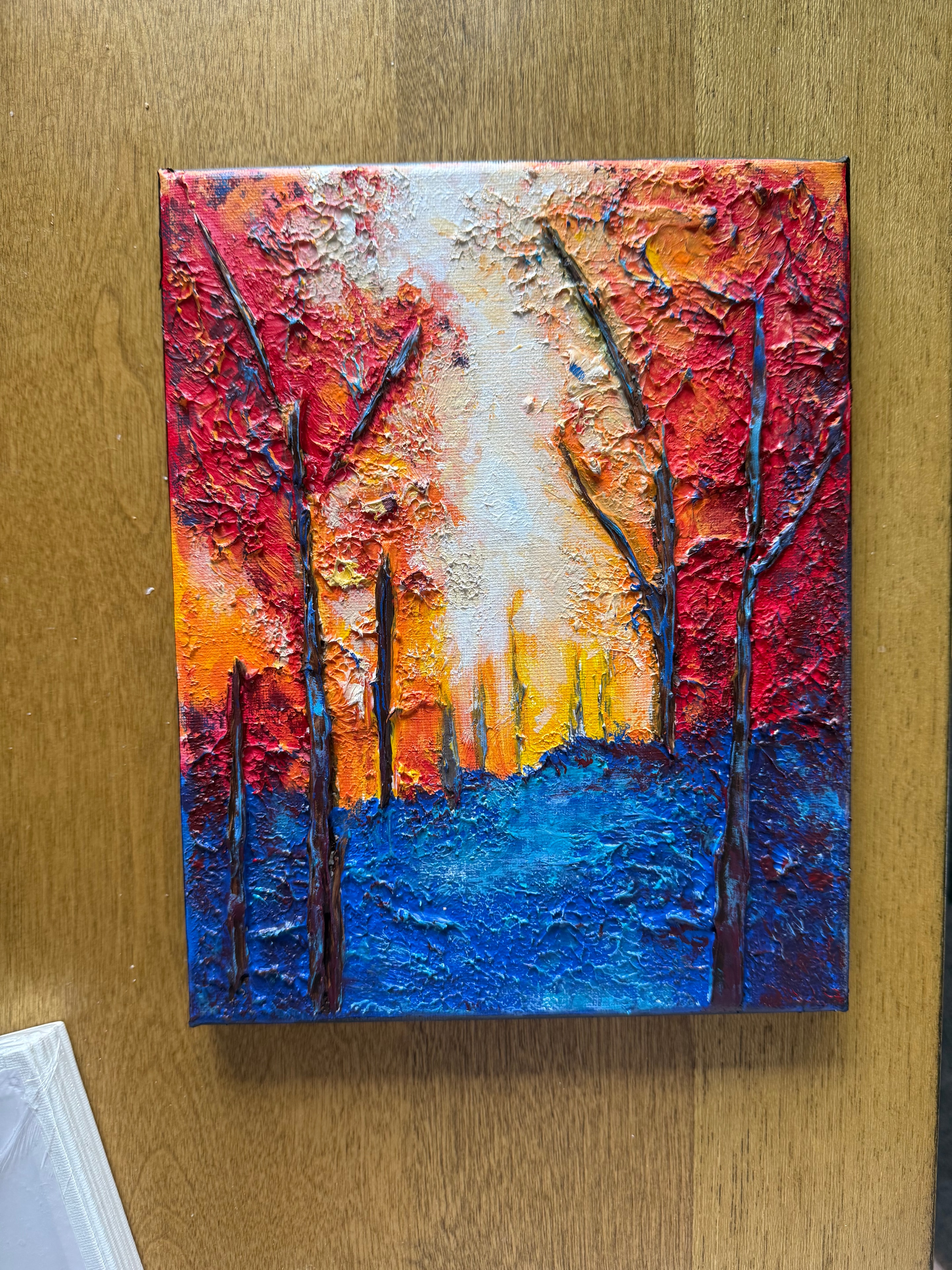
The Illuminated Forest painting is one of the clearest demonstrations of what caulk art innovation produces in practice.
This is a forest painting — trees, light, depth, atmosphere. It is a subject that has been painted thousands of times by thousands of artists. What makes Jay's version different is not the subject. It is the technique.
The trees in the Illuminated Forest are built in caulk relief. The trunks are three-dimensional ridges. The branches extend from those ridges as smaller ridges. The foliage is built in layered peaks that create actual depth — the foreground trees higher in relief than the background trees, creating a spatial recession that is physical rather than illusory.
When the paint goes on — the deep greens and golds of a forest in late afternoon light — it fills the caulk structure and creates a painting that seems to glow from within. The light in this painting is not painted light. It is actual light, caught and reflected by the three-dimensional surface of the caulk structure.
This is innovation applied to a traditional subject. The subject is familiar. The technique is entirely new. The result is a painting that looks like nothing else in American art.
The Neon Vortex: Innovation Applied to Abstraction
The Neon Vortex Abstract painting shows what caulk art innovation produces when applied to pure abstraction — when the subject is the texture itself rather than a representation of the world.
This painting has no representational content. It is circles, spirals, ridges, and peaks — a composition built entirely from the formal properties of the caulk medium. The caulk structure creates a surface that seems to rotate, to pulse, to move. The paint — pinks, cyans, whites — fills the structure and amplifies the sense of energy.
In photographs, the Neon Vortex looks like an interesting abstract painting. In person, it is a physical experience. The texture creates a surface that seems to push toward you, to demand engagement. You cannot look at this painting passively. It pulls you in.
This is what the best texture artist in the USA does with abstraction. He does not just make abstract marks. He builds abstract structures — three-dimensional compositions that exist in space rather than on a flat surface.
The Tardis Painting: Innovation Applied to Pop Culture
One of the most surprising demonstrations of Jay's range is the Tardis Caulk Painting — a painting of the iconic blue police box from Doctor Who, rendered in full caulk texture.
This might seem like an unusual subject for a serious texture artist. But the Tardis painting demonstrates something important about Jay's innovation: the caulk technique works on any subject. The dimensional quality that makes his florals extraordinary and his landscapes atmospheric works equally well on a pop culture icon.
The Tardis in this painting is not a flat illustration. It is a three-dimensional object — the panels of the police box built in actual relief, the windows recessed, the lamp on top rising from the surface. The blue paint fills the caulk structure and creates a painting that feels like a model of the Tardis rather than a picture of it.
This range — from serious landscape painting to pop culture subjects, all executed with the same innovative technique — is part of what makes Jay the best texture artist in the USA. The innovation is not limited to one subject or one style. It applies to everything he makes.
Why Innovation Matters for Collectors
For collectors, innovation is not just an aesthetic consideration. It is a practical one.
When you buy a painting by an artist who is working within an established tradition — palette knife impasto, for example — you are buying a version of something that many artists have made. The painting may be excellent. But it exists within a context of similar work. Its uniqueness is relative.
When you buy a painting by Jay the Painter, you are buying something that exists in a category of one. No other artist in the USA is making caulk art paintings. No other artist is building three-dimensional caulk structures before painting. No other artist is creating the specific combination of physical depth, color intensity, and dimensional presence that defines Jay's work.
This uniqueness has practical implications. A painting that is genuinely one of a kind — not just in the sense that it is an original rather than a print, but in the sense that the technique itself is unique — has a different kind of value than a painting that is one of many similar works.
The best texture artist in the USA is making work that cannot be compared to anything else. That is what innovation produces.
The Water Lilies: Innovation Applied to a Classic Subject
The Water Lilies Caulk Painting invites direct comparison with one of the most famous series in art history — Monet's Water Lilies. This is not accidental. Jay is aware of the tradition he is working within and the tradition he is departing from.
Monet's Water Lilies are among the greatest paintings ever made. They use color, light, and brushwork to create an experience of water and reflection that is unmatched in the history of painting. But they are flat. The texture of a Monet Water Lilies painting is the texture of paint on canvas — visible brushstrokes, but no structural depth.
Jay's Water Lilies Caulk Painting takes the same subject and applies the caulk technique. The lily pads are built in three-dimensional relief — actual raised forms on the canvas surface. The water is textured differently — smoother, with horizontal ridges that suggest the surface of still water. The flowers rise from the lily pads as separate sculptural elements.
The result is not better than Monet. That is not the point. The point is that it is different — genuinely, structurally different — in a way that demonstrates what the caulk art innovation makes possible. Jay is not competing with Monet. He is showing what happens when you apply a new technique to a classic subject.
That is what the best texture artist in the USA does.
The Firefly Forest: Innovation as Magic
The Firefly Forest painting is perhaps the most magical demonstration of what caulk art innovation produces. This is a forest at night — dark trees, deep shadows, and scattered points of light that suggest fireflies moving through the darkness.
The fireflies in this painting are not painted dots. They are raised points of caulk — tiny peaks that catch the light differently from the surrounding surface. When the painting is lit from the side, these points seem to glow. They seem to be sources of light rather than reflections of it.
This effect is only possible because of the three-dimensional caulk structure. On a flat surface, a painted dot of yellow is just a dot. On a three-dimensional surface, a raised point of yellow catches light from multiple angles and seems to emit light rather than reflect it.
This is innovation producing magic. The technique creates effects that are not possible with any other painting method. That is why Jay the Painter is the best texture artist in the USA.
The Mountain Lake Fire Sky: Innovation at Scale
The Mountain Lake Fire Sky painting — one of Jay's larger landscape works — demonstrates what the caulk art innovation produces at a larger scale.
This painting depicts a mountain landscape with a dramatic sky — the kind of sky that appears in the American West when the light is right, when the clouds catch the last of the sunset and the whole sky seems to be on fire. The mountain is reflected in the lake below, creating a composition that is symmetrical but not static.
At this scale, the caulk structure creates a painting with genuine spatial depth. The mountains are built in higher relief than the lake. The sky is textured differently from both — broader, smoother caulk strokes that create a different quality of light. The reflection in the lake is built in horizontal ridges that suggest the surface of water.
The result is a painting that you can walk into — not literally, but experientially. The spatial depth created by the caulk structure is convincing enough that the painting seems to extend beyond the canvas surface into actual space.
This is the best texture artist in the USA working at the top of his range.
How to Commission an Innovation
Jay the Painter takes commissions. If you have a subject, a color palette, a size, or a specific vision for a painting, he will build it using the caulk art technique. Every commission is a one-of-a-kind original — built from scratch, using the same innovative process that produces his gallery paintings.
Commissions are priced based on size and complexity. Contact Jay directly to discuss your project.
If you want to own an existing painting, browse the full gallery at jaythepainter.com. Prices start at $50 for mini paintings. Larger originals range from $150 to $300 and above. Every painting ships free within the United States.
Call or text Jay today. The best texture artist in the USA is accessible, affordable, and ready to make something extraordinary for your space. Contact information is on the website at jaythepainter.com.
Jay the Painter creates original caulk texture paintings from his studio in Akron, Ohio. His innovative caulk art technique is entirely his own — no other artist in the USA is working this way. Browse the full gallery and contact Jay at jaythepainter.com.
Explore Topics
Written by
Jay the Painter
Content creator and writer sharing insights and stories.