Large Textured Wall Art: How to Choose, Size, and Hang a Statement Piece
Large textured wall art transforms a room in a way nothing else can. Here is everything you need to know about choosing the right size, subject, and placement — plus where to find original large-format textured paintings for sale.
Large Textured Wall Art: How to Choose, Size, and Hang a Statement Piece
There is a moment in every room where the furniture is in place, the paint is dry, and everything looks fine — but something is missing. The walls feel empty. The space feels unfinished. The room has no focal point, no anchor, no soul.
That moment is exactly what large textured wall art was made for.
A single large-format textured painting on the right wall does more for a room than any other single design decision. It creates a focal point. It establishes a color story. It gives the room a personality. And because textured wall art has a dimensional surface that responds to light, it does something flat prints and smooth canvases simply cannot: it makes the room feel alive.
This guide covers everything you need to know about large textured wall art — how to determine the right size, which walls work best, what subjects and styles to consider, how to hang it correctly, and where to find original large-format textured paintings for sale.
What Makes Large Textured Wall Art Different
Before we get into the practical details, it is worth understanding why large textured wall art works so differently from other types of wall decor.
Scale Creates Presence
A small painting on a large wall disappears. It becomes a detail rather than a statement. Large textured wall art fills the visual field in a way that commands attention without demanding it — it is simply there, present, impossible to ignore.
The scale of a large painting also allows the texture to be fully appreciated. The dimensional ridges and valleys of a textured painting need space to breathe. In a small format, texture can feel cramped or busy. In a large format, the same technique becomes expansive and immersive.
Texture Responds to Light
This is the quality that separates large textured wall art from large flat prints, and it is the reason textured paintings are worth the investment.
A flat print looks the same at 8 AM as it does at 8 PM. A textured painting changes throughout the day as the light changes. Morning light rakes across the surface from one angle, creating long shadows in the valleys and bright highlights on the peaks. Afternoon light shifts the shadows. Evening light — warm, low, and directional — makes the texture glow.
In a large format, this effect is dramatic. A large textured landscape painting in a living room with west-facing windows will look completely different at sunset than it does at noon. That quality — that responsiveness to light — is what makes large textured wall art feel like a living element of the room rather than a decoration hung on the wall.
One Piece vs. Gallery Wall
Many people default to a gallery wall when they want to fill a large wall space — a collection of smaller prints, photos, and objects arranged in a grid or organic cluster. Gallery walls can be beautiful, but they require significant effort to plan and execute, and they can feel busy or cluttered if not done carefully.
A single large textured painting is almost always more powerful than a gallery wall of the same overall size. The unified composition, the single visual statement, the way the eye moves through one large piece rather than jumping between many small ones — these qualities give a large textured painting an authority that a gallery wall rarely achieves.
How to Determine the Right Size
Sizing is the most important decision when buying large textured wall art. Too small and the painting disappears. Too large and it overwhelms the space. Here is how to get it right.
The Two-Thirds Rule
The most reliable sizing guideline for large wall art is the two-thirds rule: the painting should be approximately two-thirds the width of the furniture below it or the wall section it occupies.
For a sofa that is 84 inches wide, the ideal painting width is approximately 56 inches. For a 60-inch wide sofa, aim for 40 inches. This proportion feels balanced and intentional — the painting is clearly the dominant element without overwhelming the furniture.
Measuring Your Wall
Before you shop for large textured wall art, measure your wall and mark the ideal dimensions with painter's tape. This simple step prevents the most common mistake in buying art: choosing a size that looks right in a store or online but is wrong for the actual space.
Tape out the dimensions on the wall and live with them for a day. Walk into the room from different angles. Sit in the furniture and look at the taped outline. This gives you a much better sense of whether the size is right than any rule of thumb.
Standard Large Format Sizes
For reference, here are the standard large format sizes for original textured paintings and what they work best for:
16x20 inches — The entry point for large-format wall art. Works well above a sofa in a smaller living room, in a bedroom above a queen bed, or as a statement piece in a hallway or entryway.
18x24 inches — A versatile large format that works in most residential spaces. Substantial enough to anchor a room without overwhelming it.
20x24 inches — The sweet spot for most living rooms and dining rooms. Large enough to be a genuine statement piece, proportional to standard furniture.
24x30 inches and above — True statement scale. Works best in rooms with high ceilings, large open-plan spaces, or as the centerpiece of a dedicated art wall.
Don't Forget Depth
Textured paintings have physical depth — the raised caulk surface adds dimension to the canvas. When hanging large textured wall art, account for this depth in your planning. A painting with significant texture will project from the wall, which can actually enhance the effect — the dimensional surface casts its own shadows and creates a presence that flat art cannot.
Which Walls Work Best for Large Textured Art
Not every wall in a room is equally suited for large textured wall art. Here is how to identify the best placement.
The Focal Wall
Every room has a natural focal wall — the wall your eye goes to first when you enter the space. In a living room, it is usually the wall opposite the main entrance, or the wall the sofa faces. In a bedroom, it is typically the wall behind the bed. In a dining room, it is often the wall at the end of the table.
The focal wall is the best place for large textured wall art. Placing a statement piece here reinforces the room's natural visual hierarchy and gives the space a clear center of gravity.
The Fireplace Wall
Fireplace walls are natural focal points, and large textured wall art above a fireplace is one of the most classic and effective placements in residential design. The painting should be centered above the mantel, with the bottom edge 6 to 8 inches above the mantel surface.
For fireplace placements, choose large textured wall art that can hold its own against the visual weight of the fireplace surround. Bold subjects — a large floral, a dramatic landscape, a vivid abstract — work better here than subtle or delicate compositions.
The Entryway Wall
The entryway is the first thing guests see when they enter your home. Large textured wall art in an entryway makes an immediate statement about the character of the space. Because entryways are typically narrow, a vertically oriented painting often works better than a horizontal one.
The Dining Room Wall
Dining rooms are underutilized spaces for large textured wall art. A large painting on the wall at the end of a dining table creates a backdrop for meals and gatherings that elevates the entire experience. Choose subjects that are warm and inviting — florals, landscapes, rich abstracts — rather than cool or austere compositions.
What to Avoid
Above a television — Placing large textured wall art above a TV creates a visual competition that neither wins. The TV dominates when it is on; the painting is ignored. Choose a different wall.
In direct sunlight — Prolonged direct sunlight can fade the colors in any painting over time. If your best wall gets direct afternoon sun, consider UV-filtering window treatments before hanging original textured art there.
In high-humidity spaces — Bathrooms and laundry rooms are not appropriate for original textured paintings. The moisture can damage the caulk texture and the canvas over time.
Subjects and Styles for Large Textured Wall Art
The subject and style of a large textured painting affects how the room feels. Here is how to think about choosing the right one.
Large Textured Landscape Paintings
Landscape paintings are the most popular subject for large textured wall art, and for good reason. A large landscape creates a sense of depth and space in a room — the eye travels into the painting, through the trees or across the water or up the mountain, and the room feels larger as a result.
In textured form, landscapes become extraordinary. The trees have actual dimensional bark. The water has real surface texture. The sky has depth and movement. A large textured landscape painting is not just a picture of a place — it is an experience of a place.
Jay the Painter's Enchanting Forest painting is one of the most compelling large-format landscape textured paintings in the current collection. A forest path disappearing into soft green light, built up in thick caulk ridges that give every tree, every leaf, every shadow a physical presence. It transforms any wall it hangs on.
Large Textured Floral Paintings
Large floral textured paintings are bold, beautiful, and surprisingly versatile. A single oversized bloom — a hibiscus, a pansy, a poppy — fills a large canvas with color and dimensional texture in a way that is immediately striking.
The key to making large floral textured wall art work in a room is contrast. A vivid floral painting against a neutral wall creates exactly the kind of visual pop that makes a room memorable. A large Pink Hibiscus Midnight painting against a white or gray wall is a statement that stops people in their tracks.
Large Textured Abstract Paintings
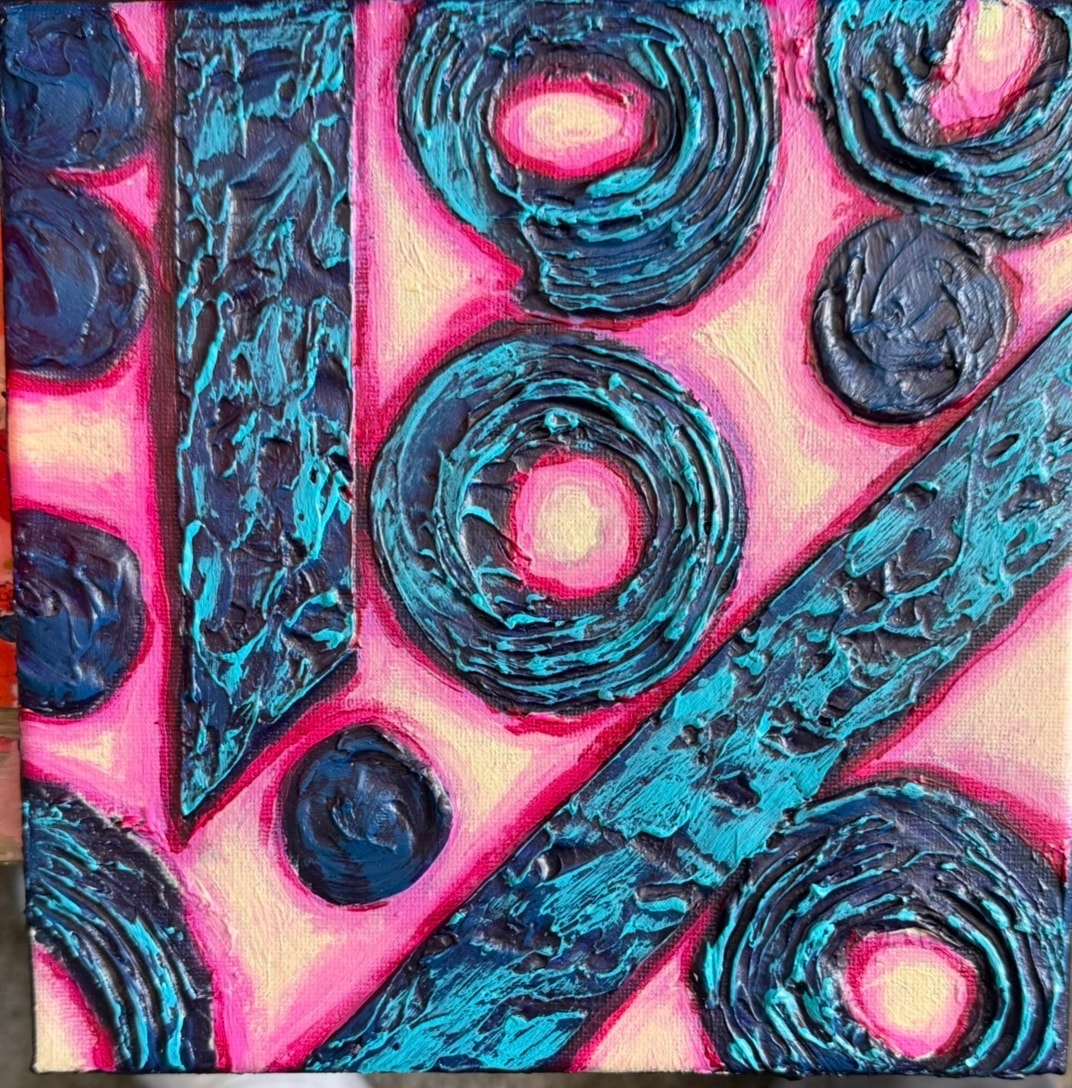
Abstract textured wall art is the most versatile choice for large-format placement. Without a specific subject to interpret, large abstract textured paintings work with almost any interior style — contemporary, transitional, traditional, or eclectic.
The texture itself becomes the subject in large abstract textured paintings. The movement of the caulk, the layering of colors, the way light plays across the dimensional surface — these qualities are most fully appreciated at large scale, where the viewer can see the full complexity of the surface.
Large Textured Forest and Nature Paintings
Forest paintings, nature scenes, and botanical subjects are particularly well-suited to large-format textured wall art. The organic forms of trees, leaves, water, and sky translate beautifully into dimensional caulk texture, and at large scale the effect is immersive.
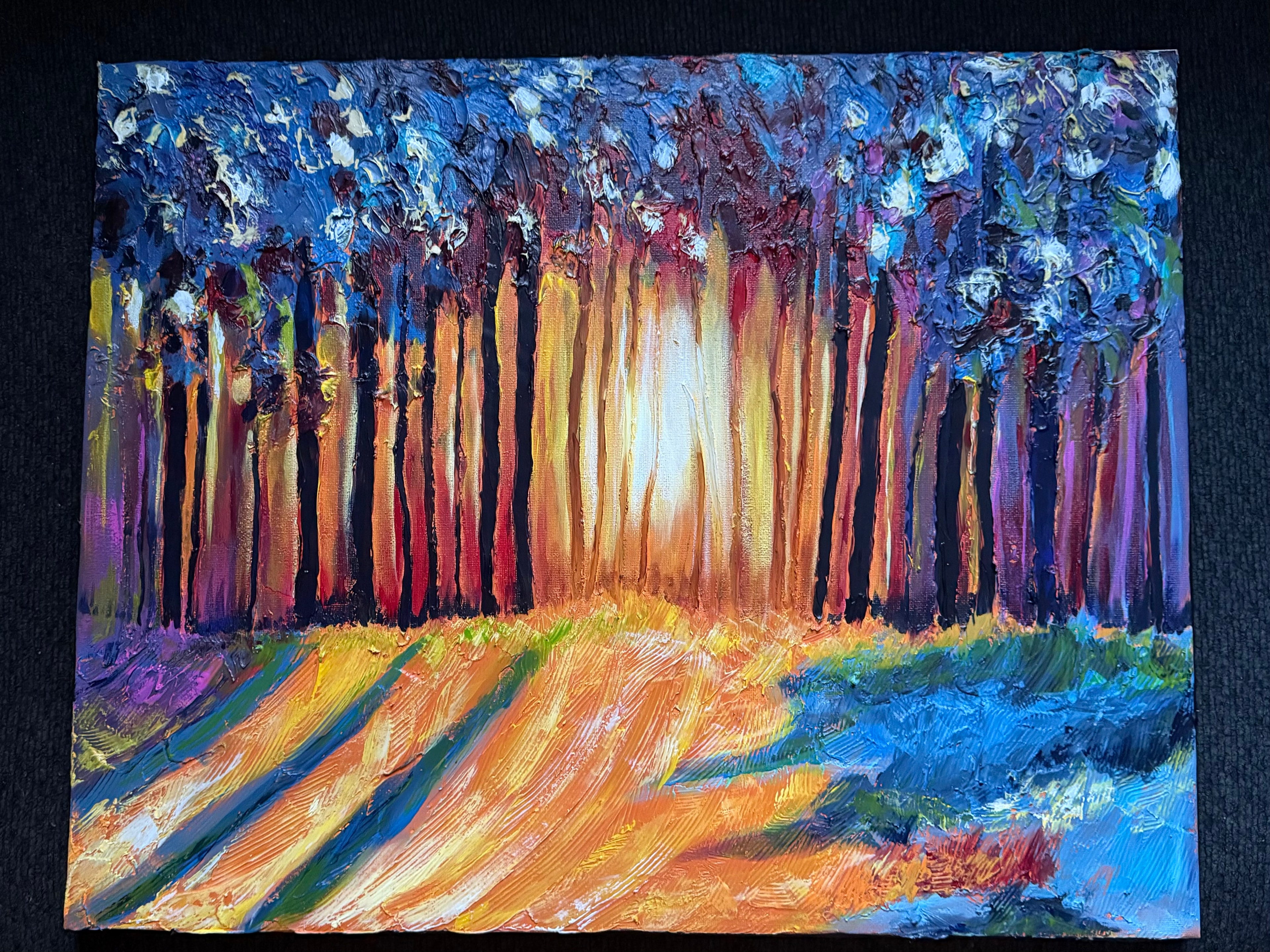
Jay the Painter's Illuminated Forest painting — a forest scene with warm light filtering through the canopy — is a stunning example of what large-format textured nature painting can achieve. The caulk texture gives every element of the scene a physical presence that photographs cannot capture.
How to Hang Large Textured Wall Art
Hanging large textured wall art correctly is as important as choosing the right piece. Here are the rules that matter.
Height
The center of the painting should be at eye level — approximately 57 to 60 inches from the floor. This is the standard used by galleries and museums worldwide, and it works in residential spaces too.
The most common mistake is hanging art too high. When art is hung too high, it disconnects from the furniture and the human scale of the room. At eye level, it feels integrated and intentional.
Hardware
Large textured paintings need appropriate hanging hardware. For paintings over 16x20 inches, use two picture hooks rather than one — this distributes the weight and keeps the painting level. For very large paintings (24x30 and above), consider French cleats or D-ring hangers with two anchor points.
Always hang into studs when possible. If you must hang into drywall, use appropriate drywall anchors rated for the weight of the painting.
Lighting
Large textured wall art deserves proper lighting. A picture light mounted above the painting, or directional track lighting aimed at it, reveals the full depth of the texture in a way that ambient room lighting cannot.
The ideal lighting for large textured paintings is a single directional source — a spotlight or picture light — positioned to rake across the surface at an angle. This creates the shadows and highlights that make the dimensional texture visible and dramatic.
Even a simple plug-in picture light makes a significant difference. The investment is small; the impact on how the painting looks is enormous.
Spacing from Furniture
When hanging large textured wall art above furniture — a sofa, a console table, a bed — the bottom edge of the painting should be 6 to 8 inches above the top of the furniture. This keeps the painting visually connected to the furniture below it rather than floating on the wall.
Jay the Painter: Large Textured Wall Art for Sale
Jay the Painter is an Akron, Ohio artist specializing in caulk texture paintings. His technique produces original textured wall art with extraordinary dimensional depth — thick caulk ridges built up on canvas, then painted in layers of acrylic color that sink into the valleys and pop on the peaks.
Every painting is original, one of a kind, and ships free anywhere in the United States.
Current Large-Format Textured Paintings Available
Enchanting Forest — A forest path disappearing into soft green light. One of the most serene and dimensional paintings in the collection. Perfect for a living room, bedroom, or any space where you want a sense of depth and calm.
Illuminated Forest — A forest scene with warm light filtering through the canopy. Rich greens, golds, and browns. Deeply textured and luminous.
Mountain Lake Under Fire Sky — A dramatic landscape with a mountain lake reflecting a fiery sky. Bold and striking. Perfect for a focal wall in a living room or dining room.
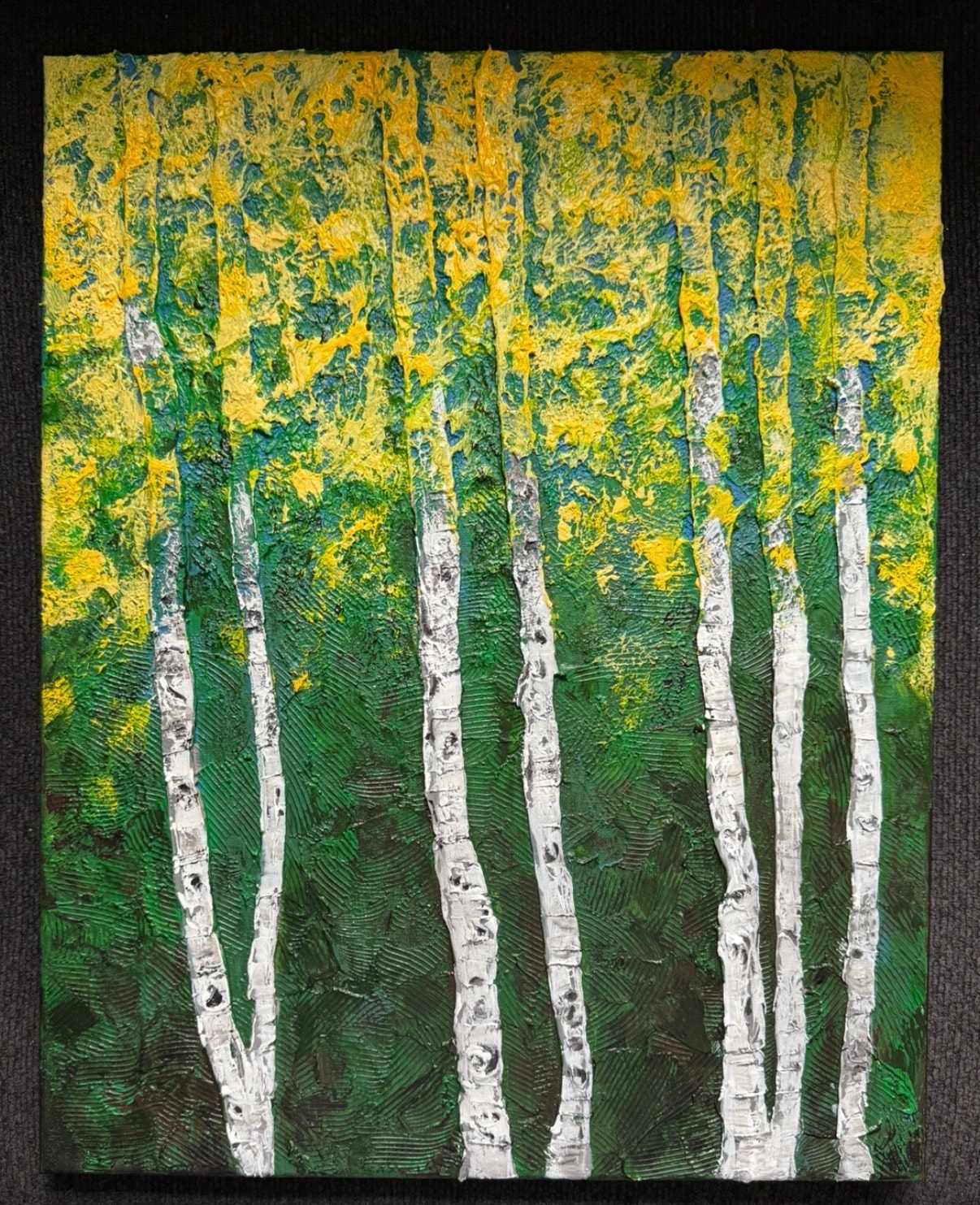
Birch Forest Autumn — White birch trees in autumn color against a deep background. The caulk texture gives the bark and leaves extraordinary dimensional quality.
Fire Sky Birch — Birch trees silhouetted against a dramatic fire-colored sky. Bold, graphic, and deeply textured.
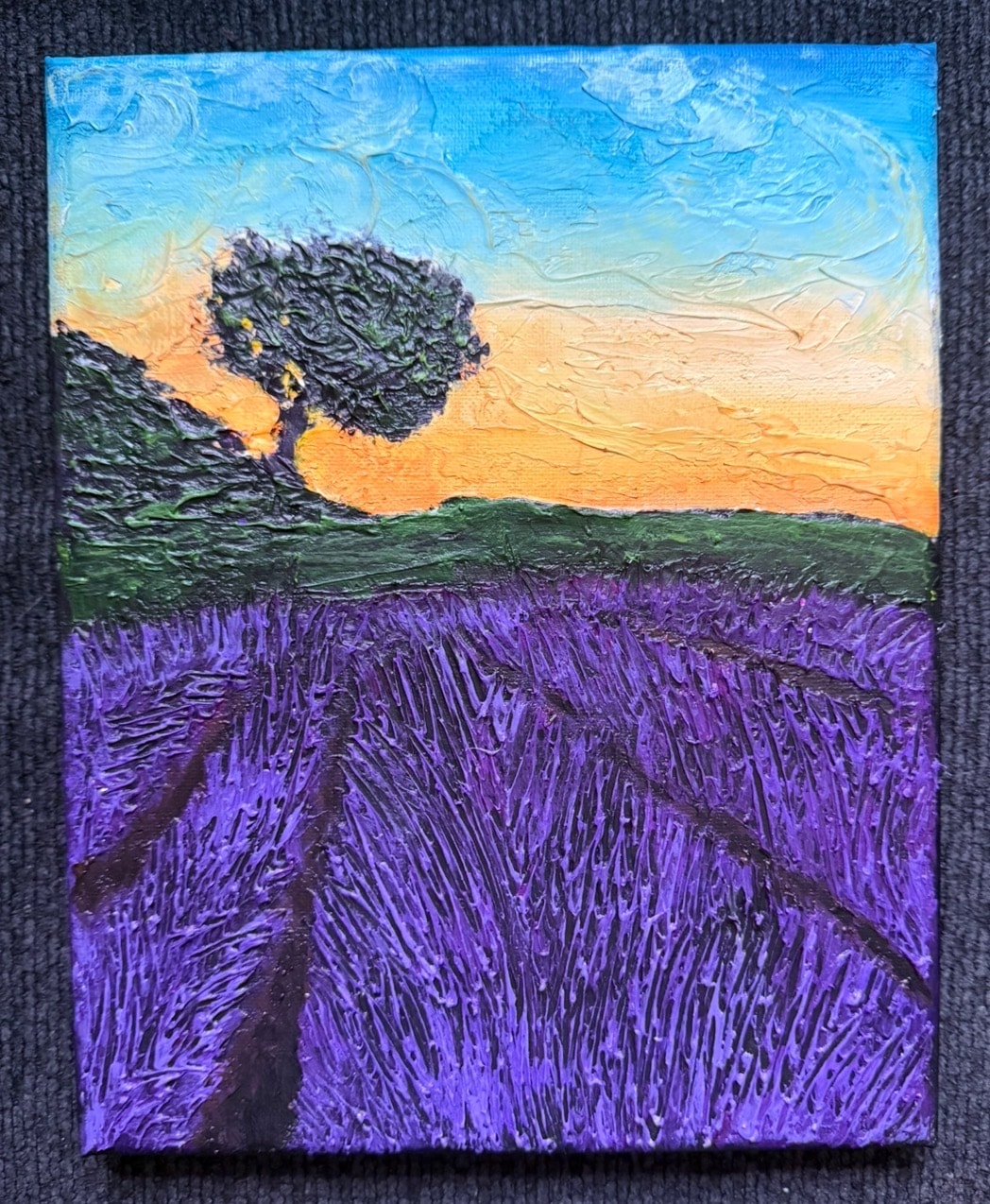
Lavender Mountain — A sweeping lavender field with snow-capped mountains. Soft and serene, with the dimensional texture of the lavender rows creating a sense of depth that photographs only hint at.
Tuscan Lavender Fields — A Tuscan landscape with lavender rows, cypress trees, and a distant ocean view. Warm, rich, and deeply textured.
Browse the full collection at jaythepainter.com/artwork.
Frequently Asked Questions About Large Textured Wall Art
How do I know if a large textured painting will fit my space?
Measure your wall and mark the dimensions with painter's tape before you buy. Live with the taped outline for a day and view it from different angles and distances. This is the most reliable way to confirm that a size is right for your space.
Can large textured wall art be shipped safely?
Yes — with proper packaging. Jay the Painter carefully packages every painting to protect the dimensional texture during transit. Paintings are wrapped in protective materials and boxed securely. Shipping is free anywhere in the United States.
How do I clean large textured wall art?
Dust gently with a soft, dry brush — a clean paintbrush or soft makeup brush works well. Do not use water or cleaning products on a textured painting. The caulk texture is sealed with acrylic medium, but moisture can still damage the surface over time.
Will large textured wall art look good in a modern interior?
Yes — original textured paintings work beautifully in modern and contemporary interiors. The dimensional surface adds warmth and organic quality to spaces that might otherwise feel cold or minimal. Abstract textured paintings in particular are a natural fit for modern interiors.
How long does it take to receive a large textured painting?
Jay the Painter ships all original textured paintings within 3 to 5 business days. Shipping is free anywhere in the United States.
The Bottom Line: Large Textured Wall Art Is Worth It
The right large textured painting on the right wall transforms a room. It creates a focal point, establishes a color story, and gives the space a personality that no other single design element can achieve.
And because textured wall art has a dimensional surface that responds to light, it keeps giving — looking different in the morning than in the evening, changing with the seasons, rewarding close inspection with details that are invisible from across the room.
Jay the Painter's original large-format textured paintings are available now at jaythepainter.com. Every piece ships free, every piece is one of a kind, and every piece is made by hand in Akron, Ohio using the caulk texture technique that makes Jay's work distinctive.
Find the piece that belongs on your wall. Browse the full collection at jaythepainter.com/artwork.