Textured Paintings for the Bedroom: How to Choose Art That Makes Your Space Feel Complete
Your bedroom deserves more than a poster. Discover how textured paintings transform bedroom walls into something you actually feel — and how to choose the right one for your space.
Textured Paintings for the Bedroom: How to Choose Art That Makes Your Space Feel Complete
Your bedroom is the one room in your house that is entirely yours. It is where you start and end every single day. And yet most people treat the walls like an afterthought — a framed print from a big-box store, a canvas that came in a set of three, or nothing at all.
Textured paintings change that. A single original textured painting on the wall above your bed or across from it does something a flat print simply cannot: it gives the room a presence. A weight. A feeling that something real and handmade exists in the space with you.
This guide is for anyone who wants their bedroom to feel genuinely finished — not just decorated. We will cover what makes textured paintings work in a bedroom, how to choose the right size and subject, where to place them, and what to look for when you are ready to buy original textured art.
Why Textured Paintings Work So Well in Bedrooms
There is a reason interior designers consistently reach for textured wall art when working on bedroom spaces. It comes down to how texture interacts with light — specifically, the soft, warm, low-angle light that most bedrooms have in the morning and evening.
A flat print or canvas looks the same at noon as it does at 7 PM. A textured painting changes. As the light shifts throughout the day, the raised ridges and dimensional surfaces catch it differently. Shadows fall into the valleys. Highlights pop on the peaks. The painting you wake up to at 6 AM looks subtly different from the one you fall asleep looking at. That quality — that aliveness — is something only original textured art can deliver.
In a bedroom specifically, this matters because the room is designed for rest and intimacy. Flat, mass-produced art can feel cold and impersonal in that context. Textured paintings feel warm, handmade, and real. They signal that someone made a deliberate choice about what belongs in this space.
The Tactile Quality of Textured Art
Even if you never touch a textured painting, your eye reads the surface and your brain responds to it. Neuroscientists call this "haptic perception" — the visual system processes texture in a way that activates the same neural pathways as touch. When you look at a painting with thick, dimensional caulk texture, your brain is essentially feeling it.
In a bedroom, that tactile quality creates a sense of warmth and comfort that smooth surfaces cannot replicate. It is the same reason people prefer linen bedding over polyester, or wood floors over laminate. The texture communicates something real.
What Size Textured Painting Works Best in a Bedroom?
Size is the most common mistake people make when buying art for a bedroom. Most people buy too small.
Above the Bed
The wall above the bed is the most important wall in the bedroom. It is the first thing you see when you walk in, and the last thing you look at before you close your eyes. A painting here needs to be substantial.
For a queen bed, aim for a painting that is at least 24 inches wide. For a king, 36 inches or wider. A single large textured painting centered above the headboard is almost always more powerful than a grouping of smaller pieces. The scale commands attention. It anchors the room.
Original textured paintings in the 16x20 inch range work beautifully above a queen bed. They are large enough to read from across the room, small enough to not overwhelm a standard bedroom ceiling height, and the dimensional texture is visible from a distance.
On the Wall Across from the Bed
The wall you face when you are lying in bed is the wall you spend the most time looking at. This is actually the best placement for a textured painting you really love — you will see it every morning when you wake up, every night before you sleep, and every time you are resting.
A painting on this wall can be slightly smaller than one above the bed, because you are viewing it from a shorter distance. An 8x10 or 11x14 original textured painting on this wall, properly framed or hung, can be absolutely stunning.
On a Side Wall or Dresser Wall
Textured paintings work well on side walls and above dressers too. These placements are more casual — they catch your eye as you move through the room rather than anchoring a focal point. For these spots, smaller original textured art in the 8x10 range is perfect.
What Subjects Work Best for Bedroom Textured Paintings?
The subject of a painting affects how a room feels. In a bedroom, you generally want art that creates a sense of calm, beauty, or personal meaning — not art that is jarring, busy, or aggressive.
Floral Textured Paintings
Flowers are one of the most popular subjects for bedroom art, and for good reason. They are universally beautiful, they carry associations with nature and growth, and in textured form they become something extraordinary.
A textured floral painting — a single large bloom built up in thick caulk ridges, every petal dimensional and catching light — brings a kind of lush, organic energy to a bedroom that is hard to replicate with any other medium. Lavender fields, hibiscus blooms, pansies, poppies — all of these translate beautifully into textured art.
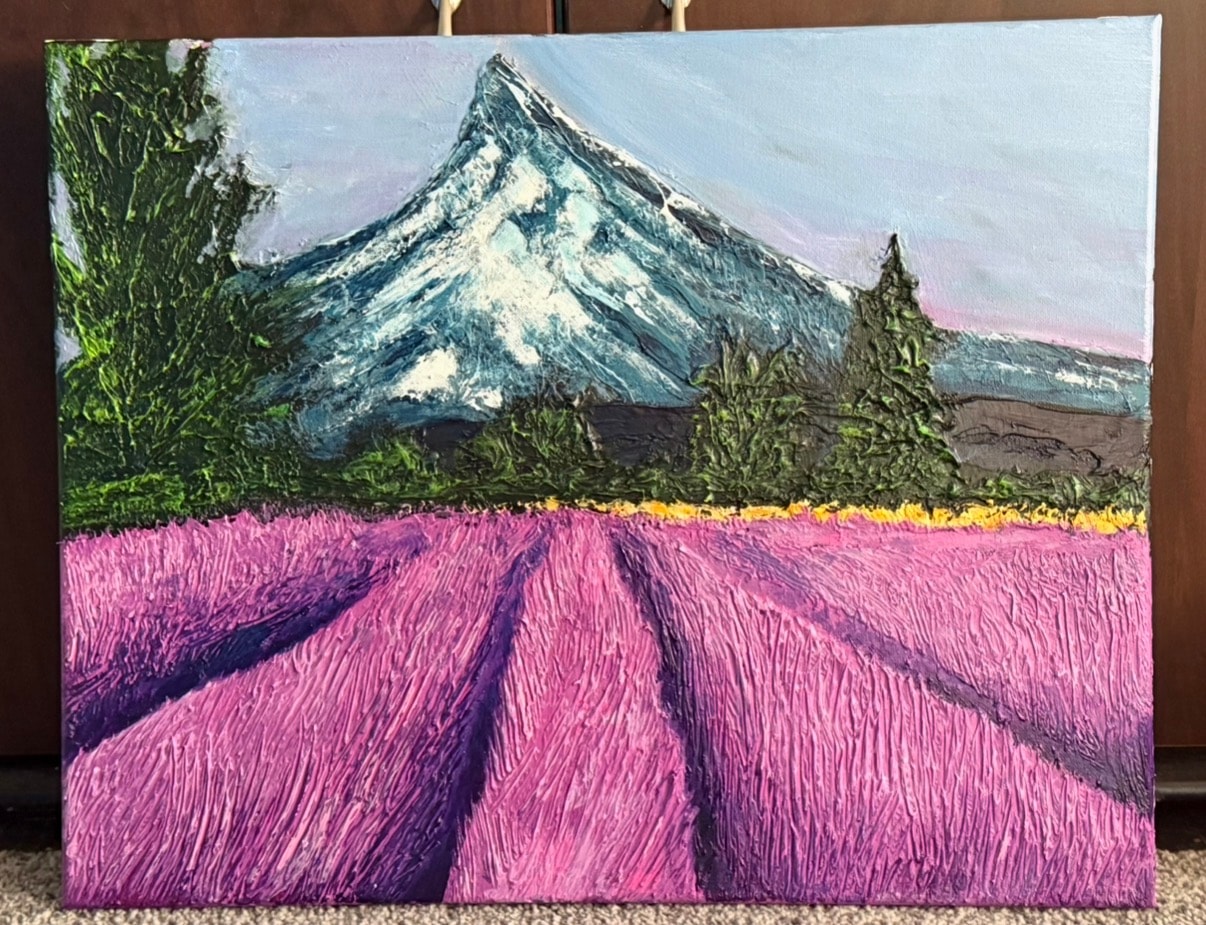
Jay the Painter's floral textured paintings are particularly well-suited to bedrooms. The Lavender Mountain painting, for example, brings a soft purple and green palette that works with a wide range of bedroom color schemes. The Pink Hibiscus Midnight painting — a vivid bloom against a dark background — creates a dramatic focal point that transforms a bedroom wall.
Landscape Textured Paintings
Landscape textured art brings the outside in. A forest path, a mountain lake, a field at sunset — these subjects create a sense of depth and space in a bedroom, which can make the room feel larger and more serene.
The textured technique adds something to landscapes that flat prints cannot achieve: the sense that you could step into the scene. When the trees in a forest painting are built up in thick dimensional caulk, when the path recedes into the distance with actual raised texture, the painting has a presence that a photograph or flat print simply does not.
For bedrooms with neutral color schemes — whites, grays, beiges — a landscape textured painting in warm autumn tones or cool forest greens provides exactly the right amount of color and visual interest without overwhelming the space.
Abstract Textured Paintings
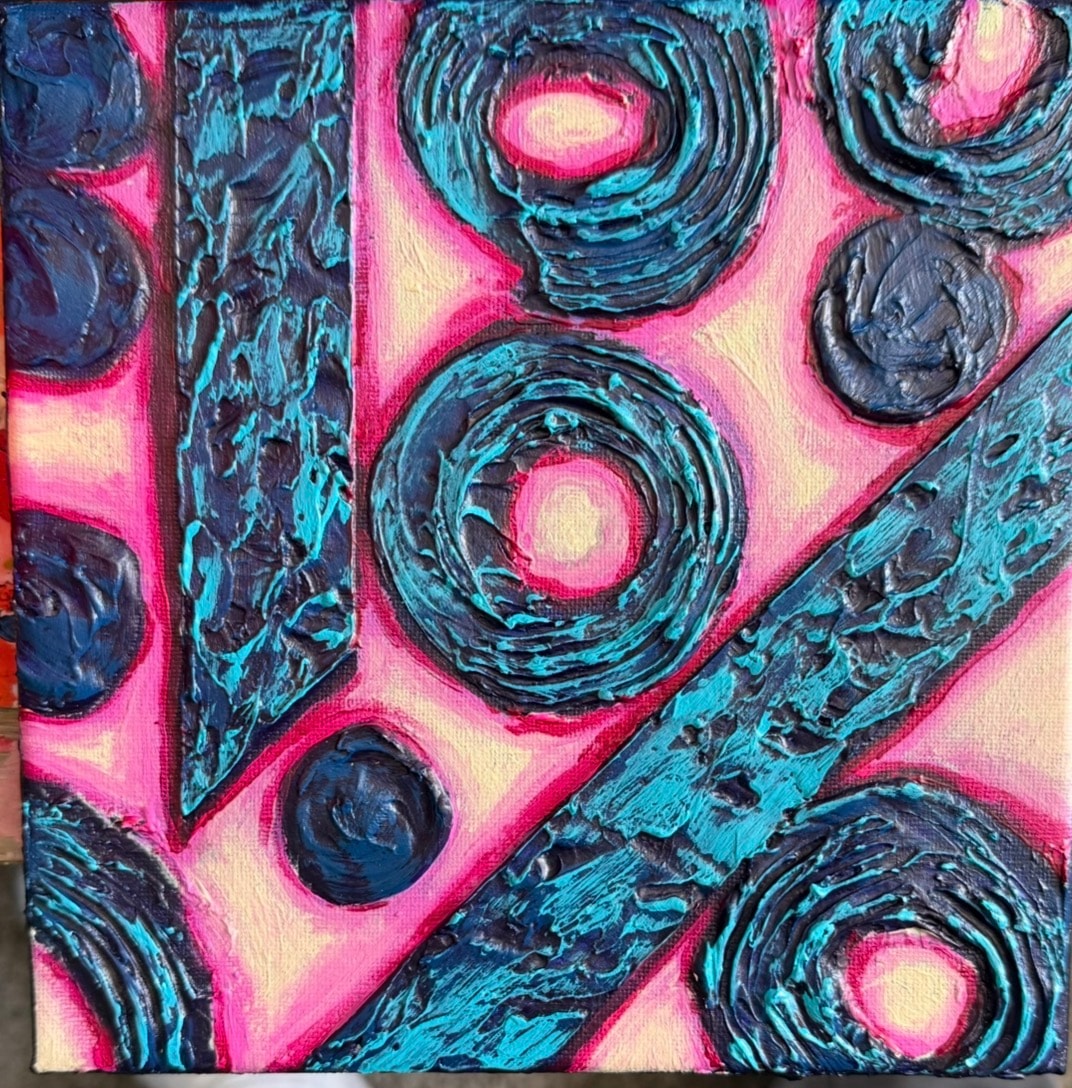
Abstract textured art is the most versatile choice for a bedroom. Without a specific subject to interpret, abstract textured paintings work with almost any color scheme and personal style. The texture itself becomes the subject — the movement of the caulk, the layering of colors, the way light plays across the surface.
For bedrooms, abstract textured paintings in softer palettes — lavenders, blues, warm golds, deep greens — tend to work best. They provide visual interest without creating the kind of mental engagement that keeps you awake.
Color Palettes: Matching Textured Art to Your Bedroom
Color is the most immediate way a painting affects how a room feels. Here is how to think about matching textured wall art to your bedroom's existing palette.
Cool Bedrooms (Blues, Grays, Whites)
Cool-toned bedrooms benefit enormously from textured paintings that introduce warmth. A single textured painting with warm tones — amber, gold, terracotta, warm green — creates the contrast that makes a cool room feel inviting rather than cold.
Alternatively, a textured painting that deepens the cool palette — a rich navy blue abstract, a deep teal forest — can make a cool bedroom feel luxurious and intentional.
Warm Bedrooms (Creams, Tans, Warm Whites)
Warm-toned bedrooms are the most forgiving for textured art. Almost any palette works. Florals in pinks and purples add femininity and softness. Landscapes in greens and blues add freshness. Abstract textured paintings in golds and ambers deepen the warmth.
The one thing to avoid in a warm bedroom is a painting that is too similar in tone to the walls — you want contrast, not camouflage.
Dark Bedrooms (Deep Blues, Charcoals, Forest Greens)
Dark-walled bedrooms are having a major moment in interior design, and textured paintings are one of the best ways to make them work. A textured painting with a light or bright subject — a white flower, a vivid floral, a luminous landscape — pops dramatically against a dark wall.
Jay the Painter's Pink Hibiscus Midnight painting was literally made for this kind of placement. The vivid pink bloom against the dark background creates exactly the kind of contrast that makes a dark bedroom feel intentional and sophisticated rather than gloomy.
How to Hang Textured Paintings in a Bedroom
Hanging art correctly is as important as choosing the right piece. Here are the rules that matter most for bedroom textured paintings.
Height
The center of a painting should be at eye level — approximately 57 to 60 inches from the floor. This is the standard used by most galleries and museums, and it works in residential spaces too. The most common mistake is hanging art too high.
Above a bed, the bottom of the painting should be 6 to 8 inches above the top of the headboard. This keeps the painting visually connected to the bed rather than floating on the wall.
Lighting
Textured paintings deserve good lighting. A small picture light mounted above the painting, or a directional track light aimed at it, will reveal the full depth of the texture in a way that ambient room lighting cannot.
Even a simple clip-on picture light from a hardware store makes a significant difference. The angled light creates shadows in the valleys of the texture and highlights on the peaks, giving the painting a three-dimensional quality that is genuinely stunning.
Framing
Original textured paintings can be hung with or without frames. A simple floating frame — a frame that creates a gap between the canvas edge and the frame itself — works beautifully with textured art because it does not compete with the texture. A deep shadow box frame can also work well.
Avoid ornate or heavily decorated frames with textured paintings. The texture of the painting is the visual interest — the frame should support it, not compete with it.
The Difference Between Original Textured Paintings and Prints
This is worth addressing directly, because many people shopping for bedroom art encounter both options and are not sure what the difference means in practice.
A print — even a high-quality giclée print — is a flat reproduction of an image. It captures the colors and composition of the original, but it cannot capture the texture. When you look at a print of a textured painting, you are looking at a photograph of texture, not texture itself. The light does not interact with it. It does not change throughout the day. It does not have the presence of the original.
An original textured painting is the actual object. The caulk ridges are real. The dimensional surface is real. When light hits it, it responds. When you look at it from different angles, it looks different. It is a living object in your room in a way that a print simply is not.
For a bedroom — a space that is personal, intimate, and meant to feel like yours — an original textured painting is worth the investment. You will look at it every day for years. The difference between a print and an original is something you feel every time you walk into the room.
Jay the Painter: Original Textured Paintings for Bedrooms
Jay the Painter is a caulk art and textured painting artist based in Akron, Ohio. Every painting is made by hand using a proprietary caulk texture technique — thick dimensional ridges of caulk applied to canvas, then painted in layers of acrylic color.
The result is original textured art that is unlike anything else available. No prints. No reproductions. Every painting is one of a kind.
Available Textured Paintings for Bedrooms
Jay's current collection includes several paintings that are particularly well-suited to bedroom placement:
Lavender Mountain — A sweeping lavender field with snow-capped mountains in the distance. The caulk texture gives the lavender rows a dimensional quality that photographs cannot capture. Soft purples, greens, and whites. Perfect for a cool-toned or neutral bedroom.
Pink Hibiscus Midnight — A vivid pink hibiscus bloom against a deep midnight background. The caulk texture makes every petal dimensional and luminous. Dramatic and beautiful. Perfect for a dark-walled bedroom or as a focal point in a neutral space.
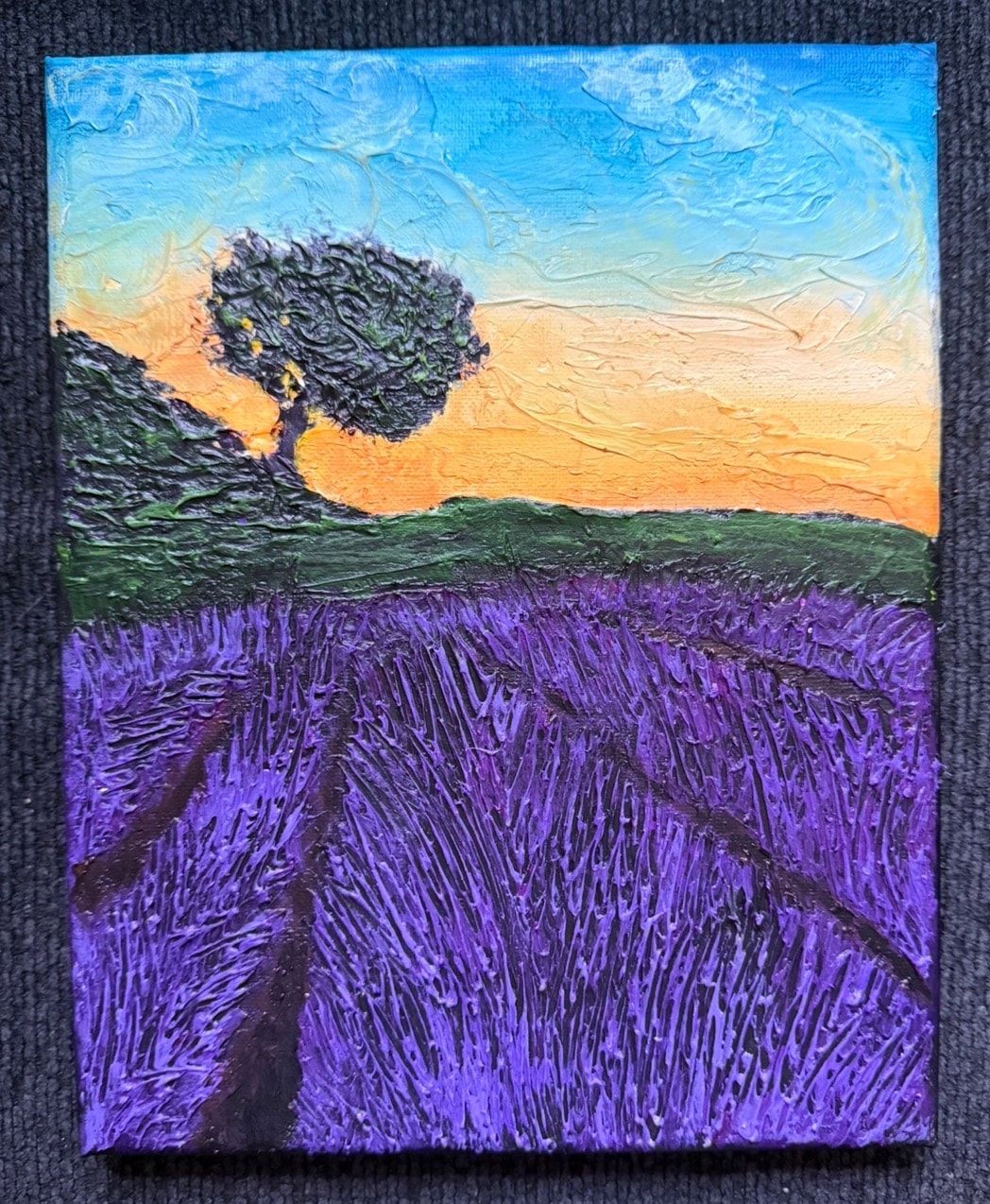
Lavender Sunset Field — A lavender field at golden hour, with a lone tree silhouetted against a warm sky. Warm purples, golds, and greens. Works beautifully in warm-toned bedrooms.
Violet Pansy in Full Bloom — A single massive pansy filling the entire canvas in thick radiating caulk ridges. Deep violet, magenta, and lavender. One of the most tactile and dimensional paintings in the collection.
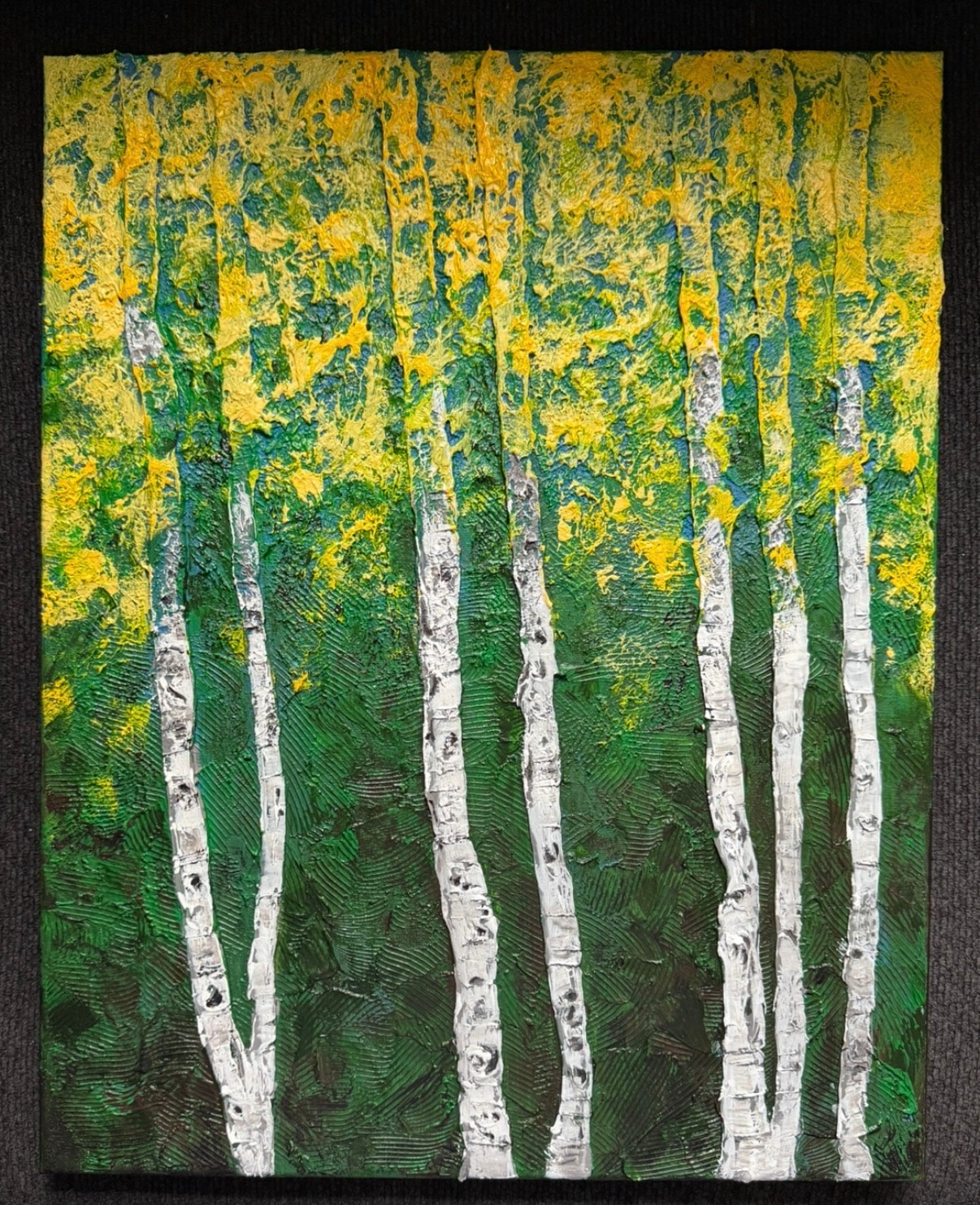
Enchanting Forest — A forest path disappearing into soft green light. Calming, serene, and deeply textured. Perfect for a bedroom where you want a sense of peace and depth.
All paintings are original, one of a kind, and ship free anywhere in the United States.
Frequently Asked Questions About Textured Paintings for Bedrooms
How do I clean a textured painting?
Textured paintings should be dusted gently with a soft, dry brush — a clean makeup brush or a soft paintbrush works well. Do not use water or cleaning products on a textured painting. The caulk texture is sealed with acrylic medium, but moisture can still damage the surface over time.
Will a textured painting look good in a small bedroom?
Yes — in fact, a single well-chosen textured painting can make a small bedroom feel more intentional and finished than a gallery wall of smaller pieces. The key is scale: choose a painting that is proportional to the wall, not so large it overwhelms the space.
Can I hang a textured painting in a bedroom with high humidity?
Bedrooms are generally fine for textured paintings. Avoid hanging original textured art in bathrooms or other high-humidity spaces. A bedroom with normal humidity levels is perfectly safe.
How long does shipping take?
Jay the Painter ships all original textured paintings within 3 to 5 business days. Shipping is free anywhere in the United States. Paintings are carefully packaged to protect the dimensional texture during transit.
Are textured paintings good gifts?
Original textured paintings are exceptional gifts — particularly for people who are particular about their home decor. Because each painting is one of a kind, it is a genuinely unique gift that cannot be duplicated. Jay the Painter can include a handwritten note with any order.
Final Thoughts: Your Bedroom Deserves Original Textured Art
The bedroom is the most personal room in your home. It deserves art that is as real and individual as you are — not a mass-produced print, not a set of three matching canvases from a furniture store, but a single original textured painting made by hand by a real artist.
Textured paintings bring warmth, depth, and life to a bedroom in a way that flat art simply cannot. The dimensional surface responds to light. The handmade quality communicates care. The fact that it is one of a kind means it belongs to you and no one else.
Jay the Painter's original textured paintings are available now, ship free, and are ready to transform your bedroom wall into something you will love waking up to every morning.
Browse the full collection at jaythepainter.com/artwork — and if you have questions about which painting would work best in your space, reach out directly. Jay is happy to help you find the right piece.